

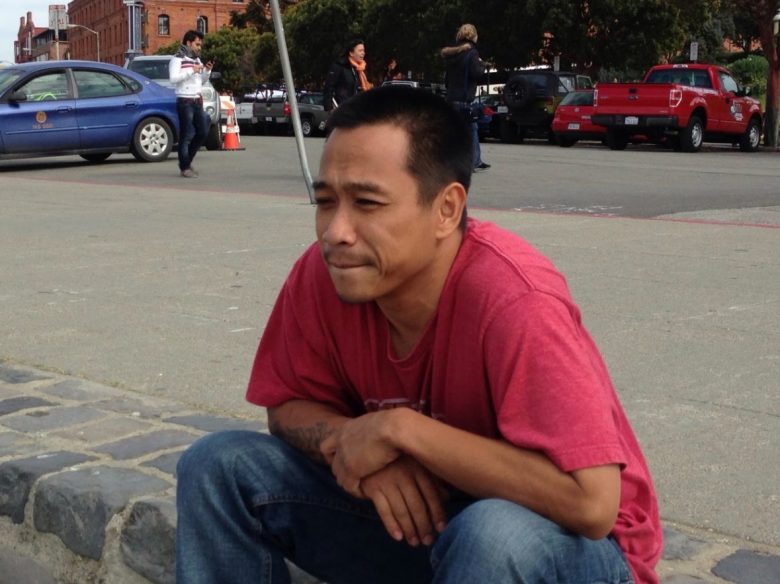

San Francisco Supervisor Bilal Mahmood today called for an investigation of GEO Group, a for-profit prison and detention center operator that runs a halfway house in the Tenderloin.
“We’ve heard now several complaints over the last several weeks about overcrowding, exploitation, about the living conditions at the facility,” Mahmood, the District 5 supervisor, said.
Those complaints culminated following last week’s death of Melvin Bulauan, who moved into the facility at 111 Taylor St. earlier this month, and a week later was found dead.
It’s unclear if Bulauan’s death had anything to do with GEO Group’s procedures. Mahmood said he would subpoena representatives from the company to testify before the Board of Supervisors this fall to answer questions about the facility, as well as their involvement with the federal government in detaining immigrants.
Bulauan, 44, had a stint of sobriety last year during a term in San Quentin prison and, later, a stretch in the psychiatric ward in Atascadero State Hospital. Upon release, his family said, he did not want to be placed back in the Tenderloin.
Born in the Philippines, Bulauan grew up in San Francisco. He spent years in the Tenderloin struggling with drug addiction and mental illness, shuffling in and out of facilities, according to his family. In July 2023, Bulauan attacked a man in the street while suffering a psychotic break, his public defender reportedly said.
Bulauan served at least part of a sentence for that attack at San Quentin before his transfer to Atascadero. But earlier this month, doctors released him from Atascadero and sent him back to the Tenderloin. More specifically, he was placed in the Taylor Street Center, a reentry facility at 111 Taylor St. run by GEO Group, a global prison and detention facility operator.
Less than a week after his arrival at the Taylor Street Center, Bulauan was dead. His body was found on July 14, just a block away.
The halfway house is located at the epicenter of San Francisco’s street drug scene. Drug and mental health recovery centers are often right in the middle of the environments many are trying to escape, sometimes by design.
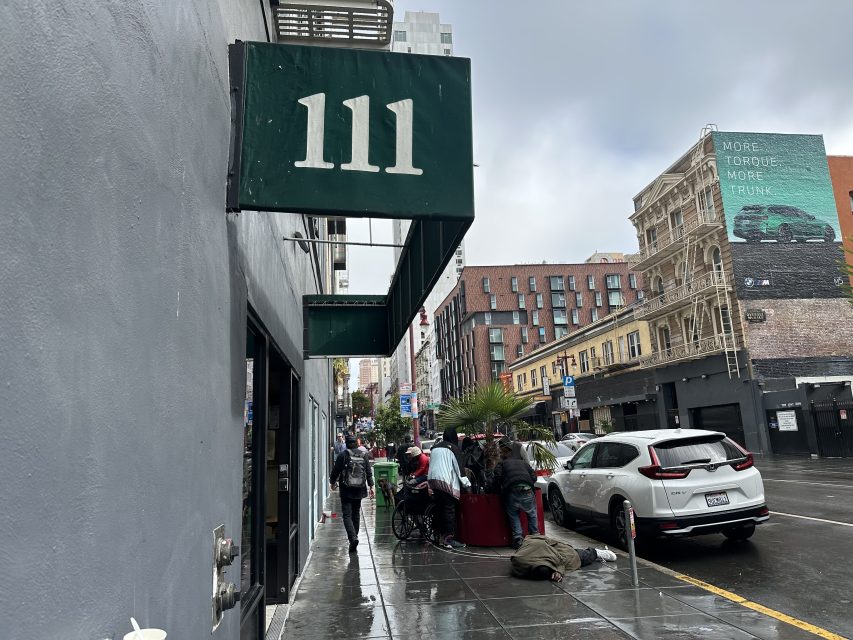
The location was already in the news last week because of an effort by trans advocates to reclaim the building, which is the site of the historic Compton’s Cafeteria riot in 1966. GEO has operated at the site for 30 years.
“He was self-aware that this was not a good place to be at,” said Bulauan’s sister, Michelle San Miguel, who noted that they had grown up in the area and knew it inside and out. “Why would we decide to put him in this location? It’s almost like we wanted the cycle to continue.”
On July 13, less than a week after he arrived, Bulauan’s family said he began calling them repeatedly, in distress. Bulauan had bipolar disorder, depression, and schizophrenia, and had been in and out of treatment and incarceration. Still, said Anjru Jaezon de Leon, Bulauan’s 25-year-old son, the calls raised red flags; he had never heard his father admit to being afraid.
His family believes that Bulauan’s history and behavior would justify keeping him under closer supervision. Instead, he was permitted to leave the facility.
GEO Group receives funding per resident, and contracts with the California Department of Corrections and Rehabilitation and the Federal Bureau of Prisons to run the Taylor Street Center.
It runs two programs: One in which residents are still serving time and have more restrictions, and a second for residents in transition from prison. It’s unclear what program Bulauan was enrolled in.
The director of the Taylor Street Center and GEO Group’s spokesperson did not respond to multiple requests for comment.
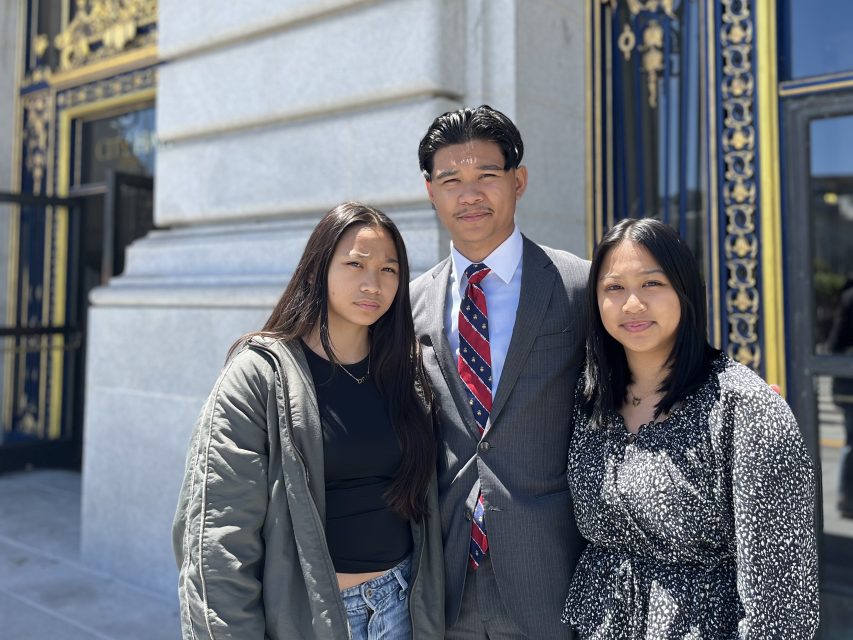
Three of Bulauan’s children, aged 17 to 25, pleaded for attention to their father’s death on Thursday before the city’s Reentry Council, a committee that supports local services for people leaving jail.
“We spent our lives watching our dad cycle through incarceration and untreated addiction in this city,” de Leon said at the council meeting. “His death is not an isolated tragedy, but part of a larger pattern of institutional failure.”
Members of the council were apparently moved by the speeches, one wiping her eyes.
De Leon and his younger siblings grew up in the foster care system, but had always kept in touch with their father.
The night before Bulauan died, de Leon said he tried to ask his father questions on the phone to understand how he was feeling. “Among some of his last words, he told me that: ‘Anjru, I’m scared, I’m feeling anxious, and I would rather go back to jail than stay here.’”
De Leon and his family members began to call the facility for help, and soon were driving from across California toward San Francisco.
But their calls to the Taylor Street Center failed to get their father help.
“Before I could even complete my question, they hung up on me every time,” de Leon said. He tried three times. His grandmother, calling separately, was also hung up on.
Another of Bulauan’s daughters, who wanted to be known as Leigh, was told by a front desk worker that they couldn’t provide information about residents, but was also told that they didn’t know anyone by Bulauan’s name.
“The workers just kept contradicting themselves,” Leigh said. She hit the road from Sacramento to check on her father at 111 Taylor St.
By the time Bulauan’s family arrived a couple of hours later — from Sacramento, Merced, and Concord — Bulauan was gone. The family was surprised he’d been allowed to walk out of the facility, considering the bevy of permissions they needed to obtain to take him out for a visit the week before. At that point, the family said, Bulauan seemed stable.
“I was under the impression that if he left that facility, he would be in violation of his parole,” de Leon said. “The fact that they just let him walk out the front door … that really concerns us.”
The family searched the streets of the Tenderloin, to no avail. The next day they received a call from the office of the medical examiner that Bulauan had been found dead.
A fire department spokesperson confirmed that around 2:50 a.m. on July 14, the department received a 911 call for a suspected overdose on the 200 block of Taylor Street, and medics were unable to revive the person.
The office of the medical examiner did not confirm the cause of death, but Bulauan’s family knew he was afraid of using drugs again.
“This was really a genuine first time he didn’t want to use,” de Leon said.
In March, Mission Local reported on a man who was released under a “safe discharge” alone in a taxi to the Medical Respite and Sobering Center in SoMa, just a block from the streets where he had long lived and struggled with addiction. Soon after, he was arrested, and died in his jail cell.
“You’re trying to rehab these people back into the community, but you’re literally putting them back where they came from,” said San Miguel, Bulauan’s sister. “That’s a complete disservice.”
GEO Group has also been accused of coercing detainees to work for a dollar a day, not protecting inmates from gang violence and unsanitary conditions. The unsafe conditions during COVID were highlighted in a documentary by the Adachi Project, a project of the San Francisco Public Defender’s Office, in 2021.
Melvin Bulauan’s family is raising funds for his funeral here.
The implied argument here is that we need more services based outside the “containment zones” where open drug sale and use are tolerated. Other districts will protest, but it does make sense… for the people who are ready to stop using drugs and want to be out of that environment. I understand sober-required supportive housing is tough to come by in the city (or simply not allowed?). Harm reduction is also good, but this man serves as an example of someone who was asking for something more. Can/do we have both? (Note: for-profit prisons shouldn’t exist, so go get em, Bilal)
ages ago I walked the Presidio with Religious Witness with the Homeless—–late 1999/ early 2000 if I recall correctly—and one of their proposals was that half-way houses get put there for the very reason that people in recovery should NOT be living where they were buying and using. Nothing came of it of course but something to contemplate….
The staff treatment of the family is a primary concern, and if it happened to multiple family members from different employees, the site clearly has a problem in its work culture. Who’s hiring and training these folks? This family was ready to be in a partnership and ended up racing to town from distant spots only to have the coroner identify a body at 3am that turned out to be their father. If Mr. Bulauan was wrongfully allowed to leave due to neglect or incompetence, that needs to be addressed. A story that demands an investigation. Condolences to the family.
Drug dealers should not exist…. yet here we are. Any prison is a good prison. There are no good drug dealers.
MEDA and Mission Housing are trying to force through permanent supportive housing for addicts and people facing psych issues as Phase I of development of 1979 Mission, right at ground zero of fentanyl central.
I am sure that will work out as splendidly as the frontage of 1950 Mission has.
The issues are the laws that release people onto the streets that have severe psychiatric conditions. Furthermore, when a person has psychiatric issues and a history of violence, they need to be even more careful about letting them out of a locked facility. The facility this man was staying at is a bridge between prison and the streets. It is not a psychiatric facility, or a jail. It is not a locked facility. People are free to leave. If I were his family, I would try to get an attorney to subpoena his mental health records to find out if he should’ve legally been released from state care. There’s no case with Reentry services who actually are not the enemy. They didn’t answer questions because they are not legally supposed to.
I received a call from medical examiners office my loved one was found dead 4-5 days later at The Norma hotel which is a halfway house. No one has had the decensy to call me or return my calls. The case manager at this place has gone missing!How is this possible? How many other families has this happened too? Our family NEEDS ANSWERS
“Ego’s” that’s what you get in halfway houses. Just because a counselor finished his education with a certificate doesn’t mean his whole attitude or demeanor has changed towards others and that’s what we have here. The next man is not concerned about another man going back to prison, in fact if he does not like him, they will probably help to make him go back…
Gov. Gavin Newsom created more problems in San Francisco than everyone else combined.
Gavin Newsom not alpha – feminine man with excessively distracting hand gestures. Watch him on The Diary Of A CEO. Pretty pathetic. There is no way Newsom will be president of the United States of America because he hates poor people in general and particularly Black people. Newsom is an incompetent politician and a coveted racist: waste of time, waste of money. The Democratic Party will regret getting this guy as their nominee for 2028 presidential election. Mark my word! Full stop.
The result of failed social services in San Francisco specifically and Californian at large resided on Gavin Newsom’s failed governments in the city and at state levels. Why would we want that fool as president of the United States? Additionally, there are questions as to how legitimately Newsom gathered all of his wealth simply leeching off the taxpayers money to advance his campaign funding goal to run for office. God will punish such a desperate selfish evil individual!
Blame San Francisco’s problems on Gavin Newsom evilness and greedy.
Is that corruption way out of control? Really? That guy is a joke terrible human being…