


This is part of a series on small businesses in San Francisco.
In the age of Amazon and ebooks, it’s the rare brick-and-mortar bookstore that has made it into its sixth decade.
Then there’s Green Apple Books, a store that began as a 750-square-foot space at 506 Clement St. and has now doubled in width, added a mezzanine for children’s books and second floor, and opened two new outlets: Green Apple Books in the Park in the Inner Sunset, opened in 2014, and Browser Books in Fillmore, bought in 2019.
Green Apple was founded in 1967 by Richard Savoy, who ran it for almost 40 years. But it’s a case study not only in the longevity of a small business, but also in succession planning. The store is now owned by two of his longtime employees.
Pete Mulvihill started at Green Apple Books after graduating from college, working as a temp. One evening, Savoy took Mulvihill, plus coworkers Kevin Ryan and Kevin Hunsanger out to dinner.
“Do you want to buy the store?” Savoy offered, Mulvihill recalls. Mulvihill was excited by the idea, but on an hourly wage of $8, he felt buying the store was out of reach.
To solve this, Savoy came up with an owner-financed buyout plan, where the three men worked for 10 years, giving a portion of their profits to the owner until they were ultimately able to buy the store in 2008.
Hunsanger sold his shares in 2018, but both Mulvihill and Ryan have stayed on as co-owners, each owning half of the store. “I wouldn’t still be here 30 years after I started if I didn’t like it,” Mulvihill said.
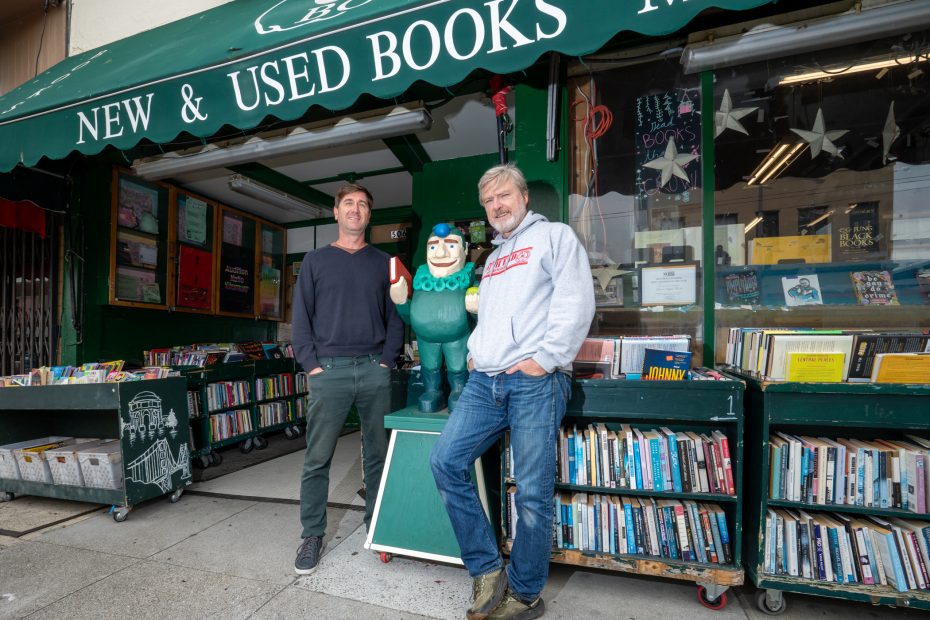
For Mulvihill, the store, which sells new and used books, is “a nice ecosystem.” The store attracts “people who seek stories” and “want to understand more about the world or themselves,” he said.
Mulvihill’s not blind to the looming presence of Amazon, which offers unparalleled convenience and competitive prices. Still, he believes in the preserved art of browsing a bookstore that cannot be replicated online.
“Online is very efficient; you can find any book you want in the world, you can pay to have it delivered within a day or two, but there’s not a lot of humanity to it.”
Green Apple’s old-timey feel and helpful staff may contribute to its appeal. Some people come into the store looking for one specific book and leave with that one, while others come in for one and end up with four. Those purchases fuel the business, allowing it to survive.
“Enough people come in every day and buy enough books that we can pay the rent and pay for our staff and pay for the health insurance and all that,” Mulvihill said.
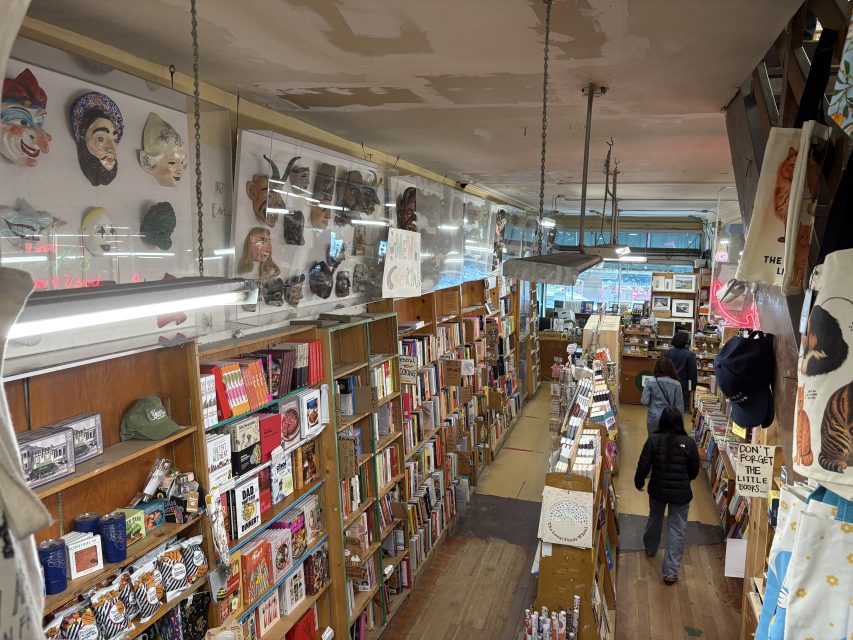
It’s also an important visit for many, like the group of philosophy professors who pull in front of the store in their bus and ravage the philosophy section once a year.
In 2013, a cohort of California College of the Arts DMBA students came in to do a case study on why Green Apple Books has succeeded for so long. Ultimately, they decided on four factors that keep the store in business: Enlightenment, community, beauty, and duty.
Enlightenment is linked to the discoveries made through browsing. It’s the serendipity of finding something you didn’t know existed when you enter a bookstore.
Community is the familiar faces found at independent bookstores, like when Mulvihill spotted his child’s third-grade teacher in the store. The Clement Street location is unique in buying used books from customers, which Mulvihill described as a win-win situation.
Buying used books from community members provides more flexibility for profit margins, and it also adds variety to the store’s selection. What’s more, it increases the community’s presence on the shelves.
As for beauty, Mulvihill said, the store is “funky, a little dusty, but to a certain customer, it’s beautiful.”
Duty, he says, is the sense of obligation many patrons feel about keeping the business alive.
During the pandemic, he feels many customers got a taste of the world without independent stores, and realized the importance of preserving them.
“Our customers are clearly book people who are happy to come up the stairs and go to the back section to find what they want instead of getting it for five bucks less on Amazon.”
Maybe this falls under “Enlightenment”, but the convenience of Amazon is mired by the recent proliferation of AI-generated slop books, some with outright fraudulent authorship attribution. The curation of the staff at Green Apple goes a long way.
I like the overwhelming smell of books in there. It reminds of childhood somehow.