

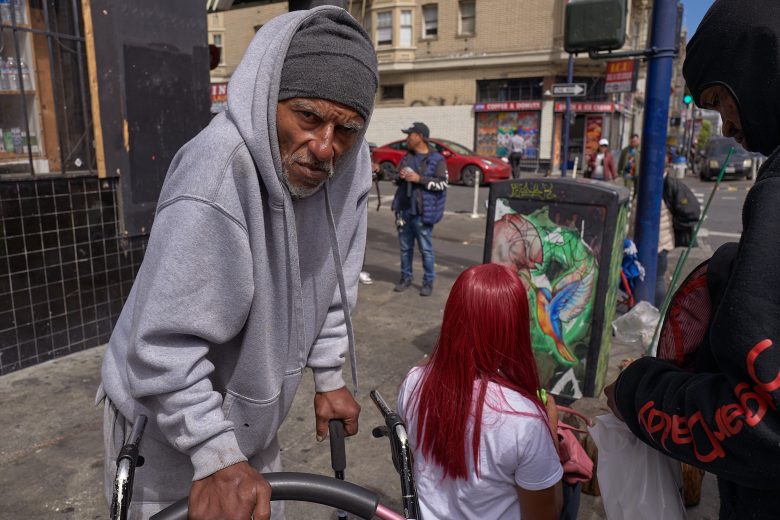

Mayor Daniel Lurie has spent much of his first 100 days and beyond policing addiction in a few areas of the city where its effects are most visible.
Addiction — and, by association, homelessness — has been a flashpoint of political discussion in the Bay Area for a long time. This is a snapshot in time of two different eras: The dawn of sweeps under then-Mayor London Breed, and the rise of the Sixth Street triage center under current Mayor Daniel Lurie (the center closed on June 9, with plans to transform it into a more park-like space).
My interest in this story emerged from my own experience. I am a recovering addict. My drugs of choice were stimulants and alcohol, which I used chronically to self-medicate symptoms of post-traumatic stress for more than a decade. I have many friends who survived their addictions, and many friends who haven’t.
As a photographer, I’ve been documenting the people at the receiving end of this enforcement, in their own words. Here’s what they’ve told me.
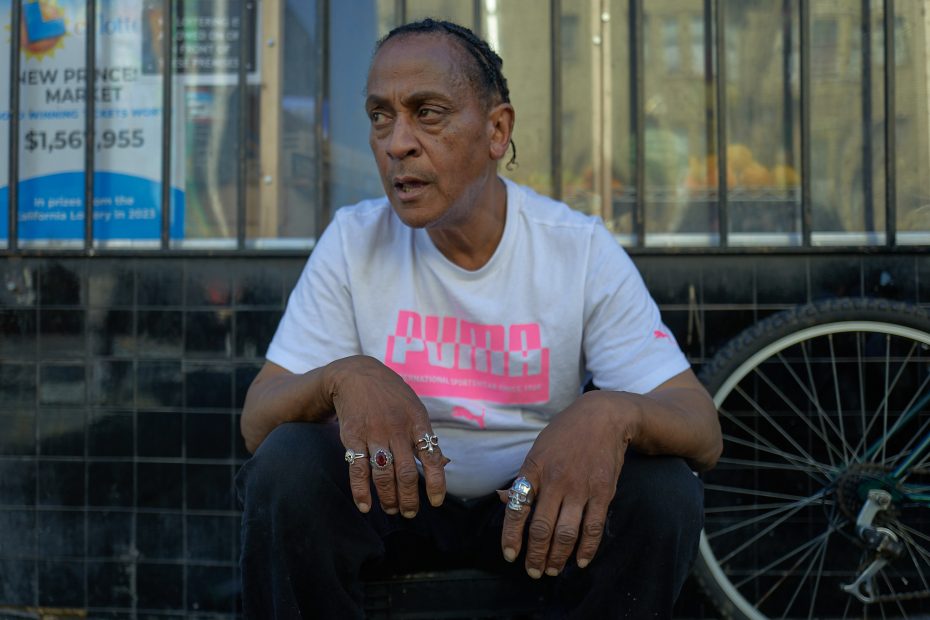
July 2024, Willow Street
In July 2024, Breed announced widespread sweeps of homeless encampments. This was inspired by national events; the U.S. Supreme Court had just repealed Grants Pass v. Johnson, which had ruled that displacing people living on the street without offering them housing constituted a violation of the Eighth Amendment protection against cruel and unusual punishment.
After the verdict, Gov. Gavin Newsom ordered all major cities in the state to begin “to address dangerous encampments while supporting and assisting the individuals living in them.” For many cities, this meant a stepped-up displacement of encampments without alternative shelter. San Francisco was one of them.
I came to Willow Street with my camera, and followed city police, the Homeless Outreach Teams, and San Francisco Public Works. Together, they outnumbered the people they were evicting by nearly two-to-one.
The HOT team moved in first, telling the people camped on the street that they needed to leave, closely followed by police officers, who ordered people out of their tents. Public Works employees dismantled the tents and threw possessions like clothing, tarps and blankets into the back of two large flatbed trucks.
The people being displaced moved away slowly with whatever they could carry. A few of them, approached by one of the outreach workers, agreed to go to one of San Francisco’s temporary housing sites.
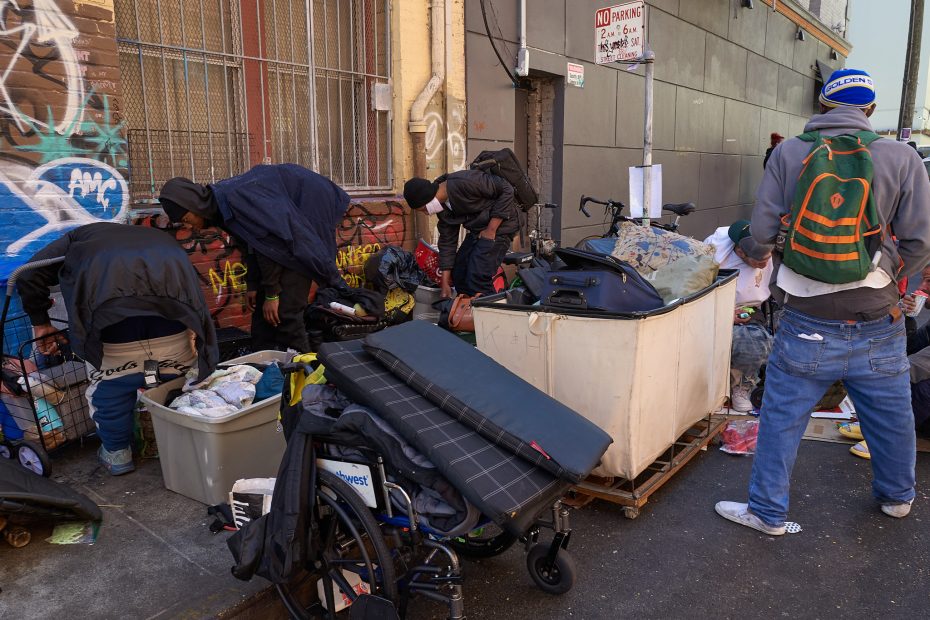
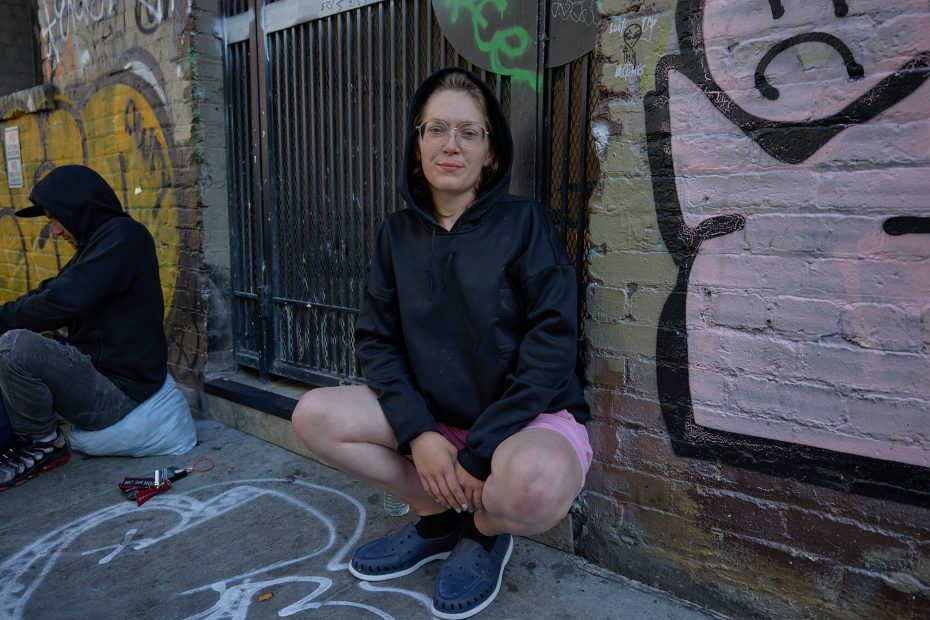
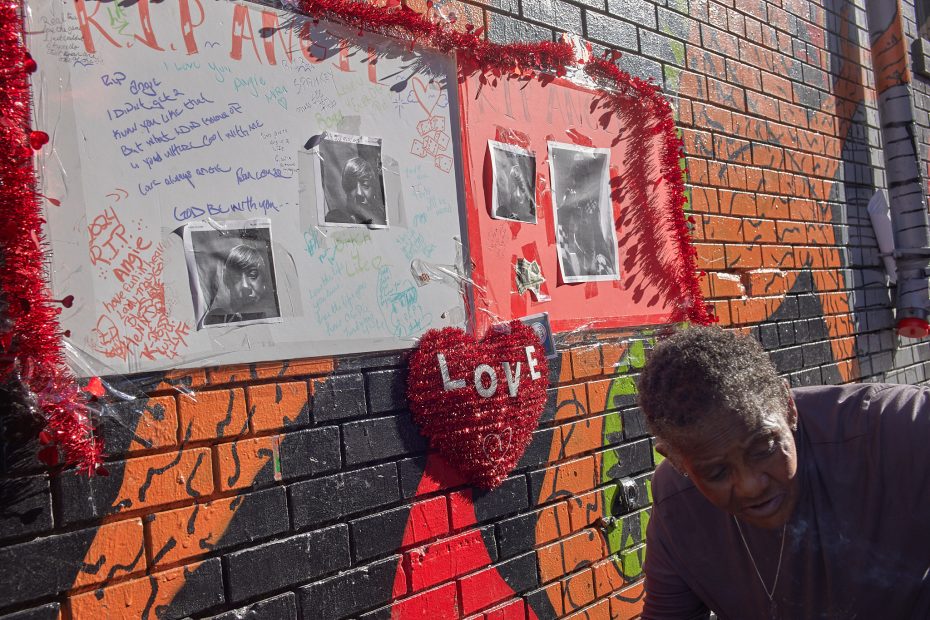
By the end of the sweep, the only thing that remained were small puddles of water filled with white suds from the powerwasher used to clean the sidewalk. Across the street, Angelina Schaffet sat, watching the scene from one of the many concrete barriers lining the sidewalk, her belongings and tent packed up next to her.
“I can’t share a room with anyone because of some past experiences,” Schaffert said, “I have friends in the neighborhood that I can stay with when I need to, but I am not going to a shelter. Why would I? They’re not safe. People will steal your stuff when you are not looking. It’s especially not safe for women. I’ve never gone to one, but I have a friend who was sexually assaulted in a shelter here.”
A few days later, I came back to Willow Street. A few tents were back, one of them occupied by a woman who asked not to be photographed, but insisted I follow her on a tour of the neighborhood.
“There are people who just don’t pick up their mess,” she said, walking past trash can after trash can, either overflowing with garbage or padlocked shut. “But most of us want our space clean.”
Even going to the bathroom is hard, she said. There are porta-potties in the neighborhood maintained by Public Works, but those are padlocked every night, too.“ The problem is not just needing to use the bathroom,” she added. “For the women here, it is hard to use feminine products too.”
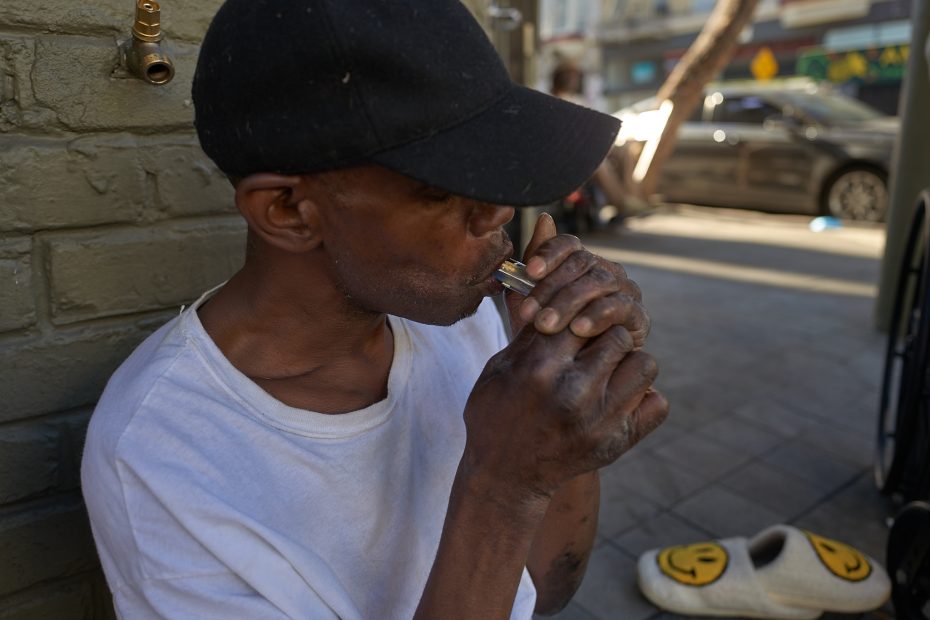
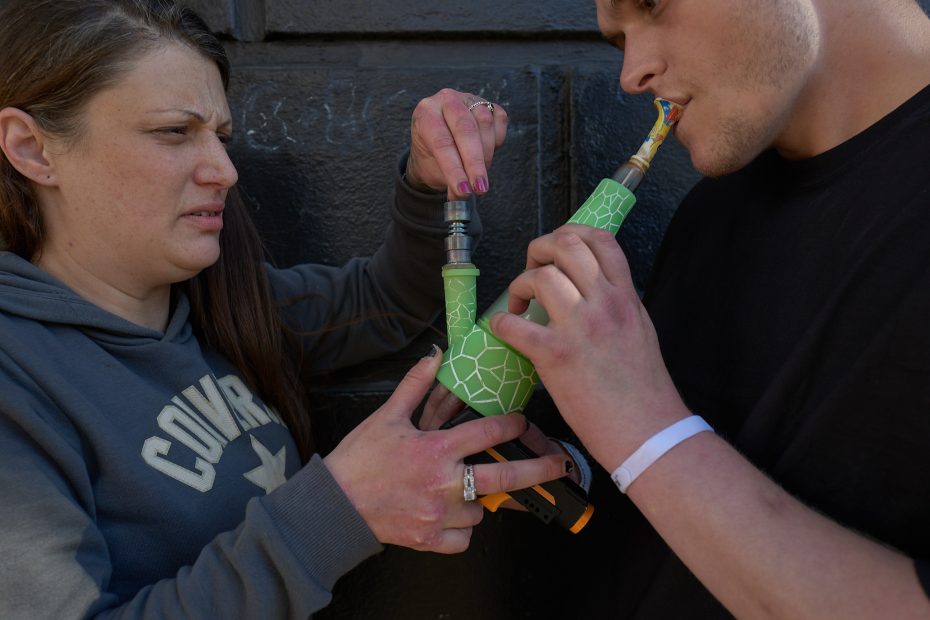
On the corner of Jones and Ellis streets, Smokey helped Monique put on her shoes. As she sat in a wheelchair, Smokey on the sidewalk beside her. The two smoked from a broken glass pipe that had turned an oily dark brown from use. “Hard white,” said Smokey: Like crack, he said, but more powerful and shorter-lasting.
“I can’t function anymore without it,” he added, “I wake up in the morning feeling stagnant. I can’t do anything unless I smoke. I might as well be in jail, because these drugs keep you here and make it impossible to leave. The Tenderloin is like a refugee camp without the barbed wire.”
“It’s a jail cell out here,” Monique added. Hard white works as a form of medication for her schizophrenia, she said. “It keeps the voices quiet. And when I can’t get it, the voices are unbearable.”
“The police are the real gangsters. The politicians don’t care about us,” said Smokey. A better solution to the homelessness crisis, he said, would be to give work to those experiencing homelessness. “They should start by giving money to the homeless to clean and take care of the streets.”
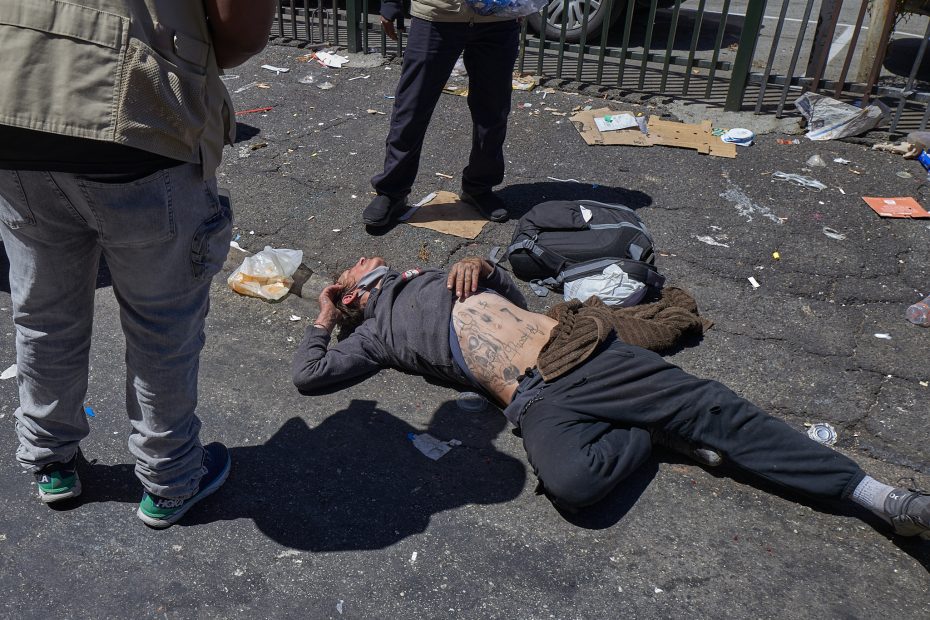
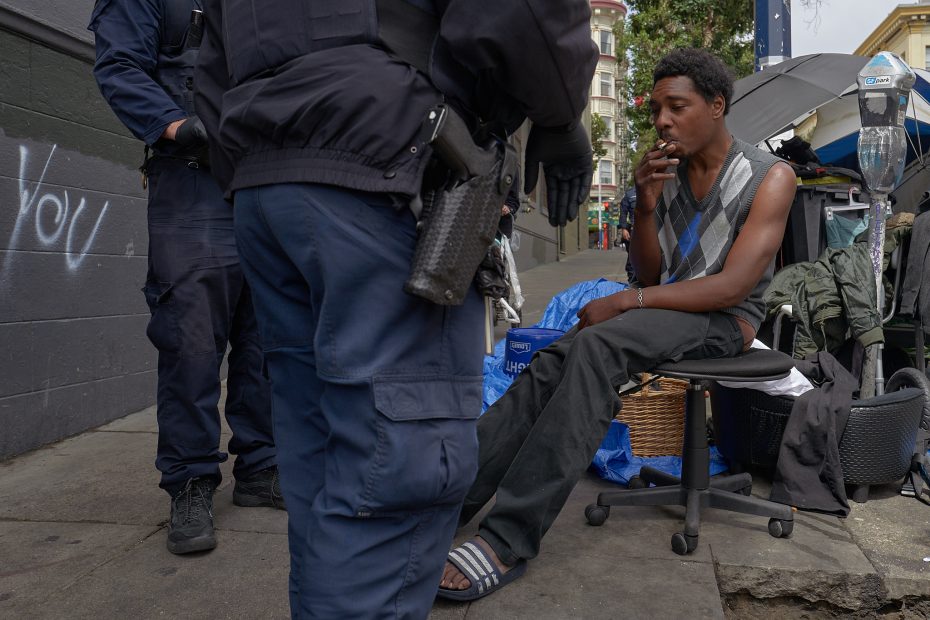
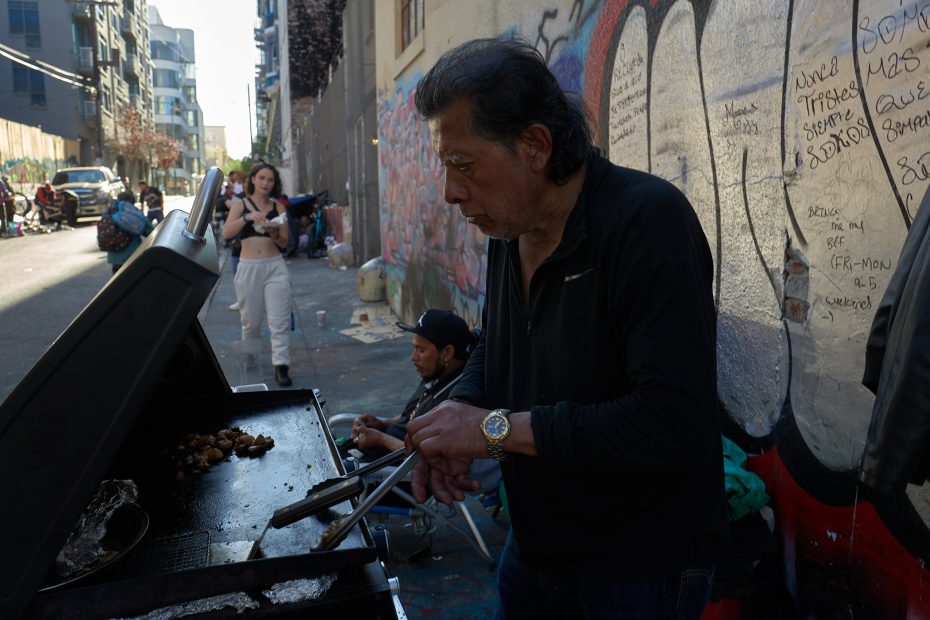
I met Mike one afternoon near an RV parking site that San Francisco set up at Candlestick Point, one of the city’s navigation centers intended to serve as a bridge toward permanent housing.
His RV was parked along the side of an otherwise empty road lined with “No Parking” signs and leading to the lot’s entrance. Down the street, outside the nearby apartments, a tow truck sat idling.
Mike said he has lived in his RV in San Francisco for nine years. “The navigation center provides a lot of good services,” he said. “You can get an ID. There is Wi-Fi, laundry, and food. But there is a lot about it that is difficult.”
The navigation center has a strict no-guest policy, Mike said. That, combined with Candlestick’s location far outside the city center, leads to feelings of great isolation. “It bends your life, in a way,” he said,. “If you can’t build relationships with other people, no amount of amenities is going to fix that.”
February 2025, Sixth Street
With the new year came a new mayor, and a new homelessness policy.
One of Lurie’s first acts in office was passing, with the help of a 10-1 vote at the Board of Supervisors, a “fentanyl emergency ordinance” that gave him more power in doling out city contracts to address drug use, mental health and homelessness. The public bidding process was shelved in favor of allowing the mayor to grant contracts at-will, so long as the total amount is less than $25 million.
SFPD also stood up what it called a “triage center” for homelessness services in SoMa, based out of a small parking lot on the corner of Sixth and Jesse streets. The center was intended to be a base for many of the city’s homeless services, as well as a place for the San Francisco Police Department to process arrests for drug dealing.
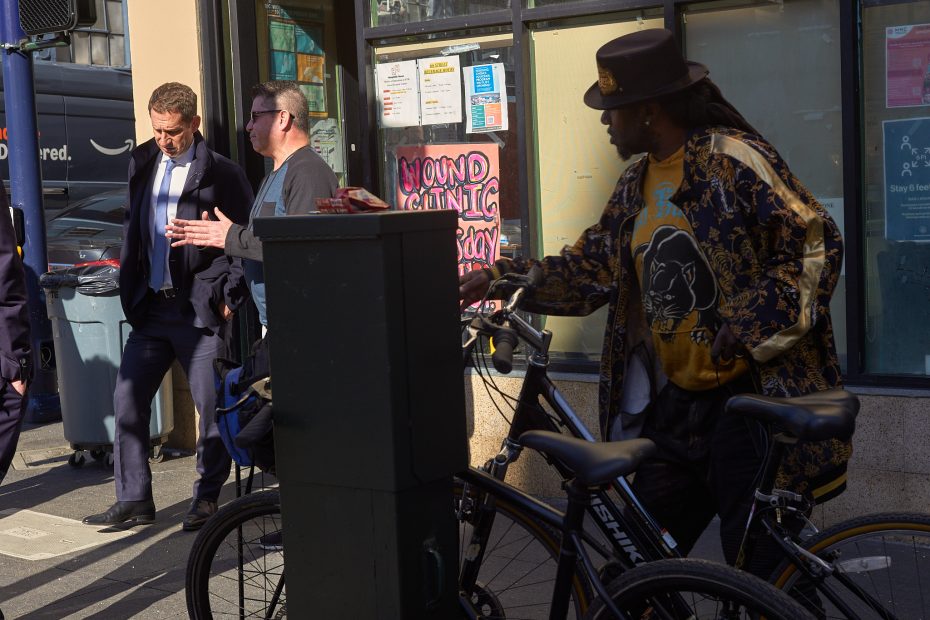
I met Cari Manalac near the new triage center. She had both legs amputated in late 2024, while she was living in a city-funded single-room occupancy hotel, she said. “I am using fentanyl right now for the pain,” she said. “But I try not to use too much.”
She had recently been placed in a studio apartment, and it has been great, she said. “My new apartment is outside of this area. I don’t have to be around all of the drug use.”
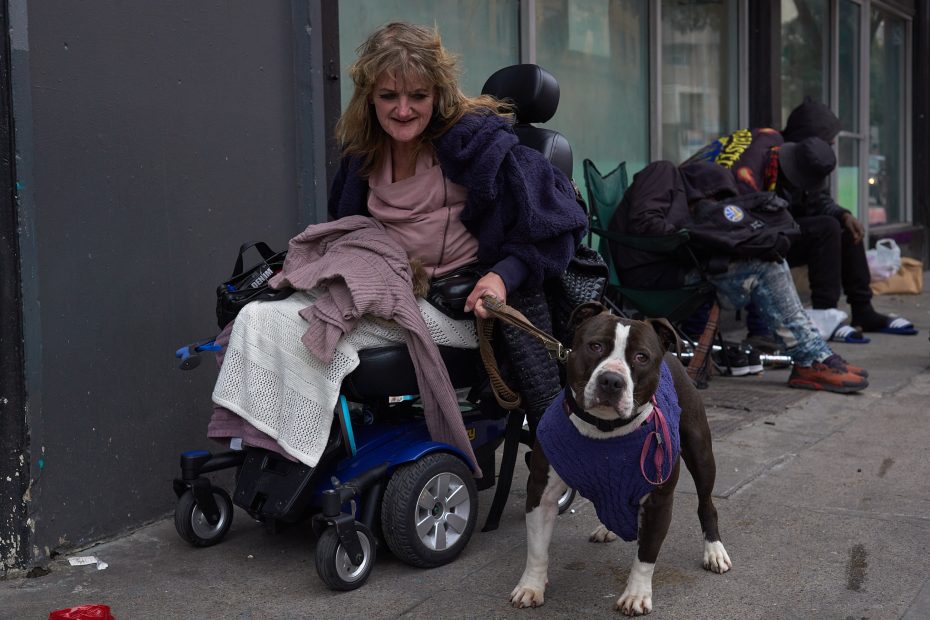
What she thinks would help the homeless, said Manalac, would be a place for people to go to talk about the violence they’ve experienced.
“My friend experienced sexual assault by a staff member while living in one of the single room occupancy buildings,” she said. “It is really hard when this happens, because if you report it, and they start investigating the person who hurt you, there is a chance that that person will attack you again. A lot of people just won’t say anything out of fear.”
Zuckerberg San Francisco General Hospital’s Trauma Center offers free services to victims of sexual assault that do not require anyone to file a police report. Still, fear of reprisal was common among the people I interviewed for this story.
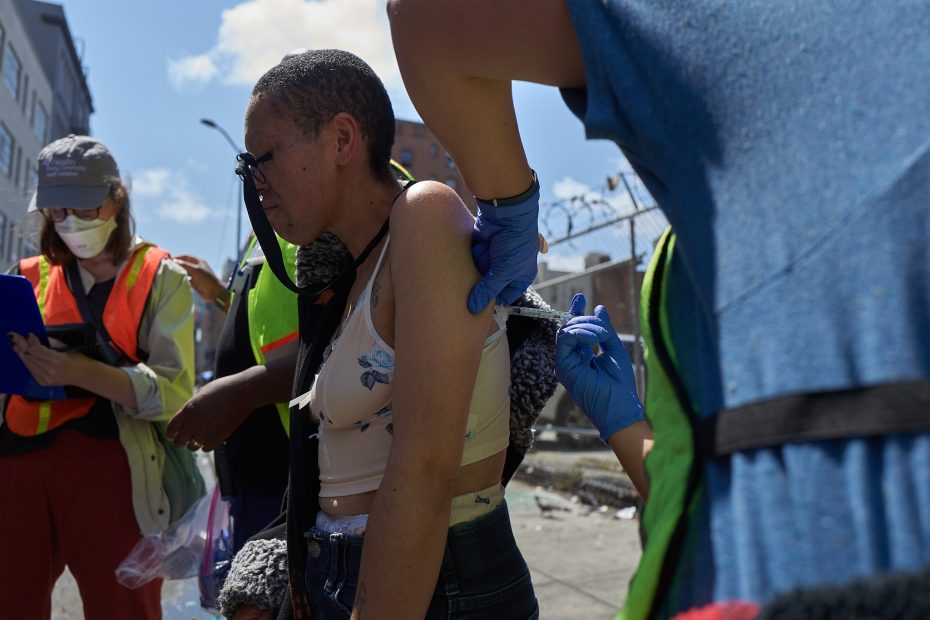
Research shows that clearing encampments carries its own public-health risks. A 2023 study published in the Journal of the American Medical Association found that “ongoing involuntary displacement” was correlated with a significant rise in deaths (both from overdoses and other health issues), a greater number of hospitalizations, and fewer people going on medications to make it easier to get off of opioids.
Additionally, a commentary published by the American Academy of Political Science and Social Science states that the most effective solutions to homelessness focus on preventing at-risk populations from losing their homes to begin with.
Another study of 2,282 families in a program called Family Options found that long-term housing subsidies were the only factor that consistently reduced homelessness, food insecurity and other aspects of adult and child well-being. Other interventions, like counseling or substance abuse programs, did not have a statistically significant effect.
According to the January 2024 point-in-time count conducted by San Francisco’s Department of Homelessness and Supportive Housing, homelessness is rising, despite the city’s numerous programs aimed at providing mental health services and moving people from their vehicles and tents into housing. To fund these programs, the city allocated just over $846 million through the 2024-25 fiscal year, and $677 million through 2025-26.
The Department of Homelessness and Supportive Housing reported that “San Francisco continues to experience a high rate of inflow into homelessness.” Specifically, it continued, 8,323 homeless individuals were observed on the night of the point-in-time count, but more than 20,000 people seek homeless services in San Francisco over the course of a full year.
These figures suggest, the homeless department concluded, that for every person it helps get into housing, “approximately three people become homeless.”
‘Apple, but no sauce‘
I met Nicole, who was living out of a tent near Lurie’s triage center. She thought the pairing of a police outpost with social services was a terrible idea. “I ain’t going nowhere near there, if that is where the police are holding people.”
The tough-on-crime strategies that Lurie and Breed enacted in the Tenderloin and SoMa are equally unsuccessful, she added. It seemed to her like there were even more people living on the streets now, though the city’s monthly tally of street tents reached a record low in April this year, the lowest since tracking began in April 2019.
Still, Nicole said, “The city is not doing as much as it can. It’s sickening to me. They have so many resources, but they don’t use them well.”
The triage center had done little to help her, she added. “Yeah, they hand out some food, but there hasn’t been much else there since it opened, and some days they don’t even have food. They got hot water, but no tea. Apple, but no sauce.”
The city is failing to take care of its most vulnerable population, she said.
I asked Nicole what she thought would be helpful. Treatment for addiction, she said. But not the coercive kind. “You can’t force no one to get sober. All it does is build up frustration and anxiety in the person. When they leave treatment, they go right back to using.”
“This place is a container,” she said. “They shove us all into SoMa or the Tenderloin and just shuffle us around.”
Nicole says”“You can’t force no one to get sober. All it does is build up frustration and anxiety in the person. When they leave treatment, they go right back to using.”..the problem is right there, with that type of rational.Yes we can force you into treatment and if you don’t want to, well get the hell out of SF, go back to your red state or get arrested and put in jail.Compassion is one thing, stupidity is another one.
Every store that was temporarily shut down for selling single cigarettes is still selling “chico sticks”. Too many non profit workers are selling and using cannabis on the clock and in uniform. San Francisco is playing 2 ends against the middle and the media is too afraid to confront them on it. Too many wheelchair drug dealers because no one has the time to watch. Crime is always 2 steps ahead of law because crime lives where you won’t look. The users and the advocates are hiding the truth.
“It seemed to her like there were even more people living on the streets now, though the city’s monthly tally of street tents reached a record low in April this year, the lowest since tracking began in April 2019.”
You either believe in facts, or you don’t. I wish journalistic organizations would choose to believe in facts.
“Shanon and Kyle in the Tenderloin on August 20, 2024. The two have a home in the north of the state, but travel to San Francisco regularly to visit family.” Photo of them smoking fentanyl. Got it. They come here for the easy drugs.
Trying to make poverty and addiction invisible, rather than solve it, has been the policy of centrist (ie. neoliberal/capitalist) SF mayors for 40+ years. Meanwhile, material conditions and affordability for everyone is getting worse nationwide, more and more people are struggling to survive, more and more being pushed into living in RVs, cars, or tents on the streets.
This kind of policy is cheap, empty calories for a politician, it makes it look like they’re doing something in the short run, but doesn’t solve anything in the long run. They truly don’t want to end poverty and homelessness because that would require massive public spending, which they are ideologically opposed to.
The game is to wait for another crisis to come along to distract people, or constantly find people to blame for the failure of sweeps and other carceral policies. Eventually you run out of people to blame, as London Breed found out.
The grim long-term hope for Lurie and those before him, is that the city will eventually become SO gentrified under their watch that it exhausts the supply of working class people who can fall into homelessness, and they can finally incarcerate (or killed) the last one. The numbers don’t support this ever really happening, but that’s the only way the 40+ year policy of sweep-and-incarcerate can ever hope to “solve” the problem (if the problem is VISIBLE poverty and homelessness).
Daniel Lurie is an inexperienced politician, and a poor strategist. He was lucky to find the political circumstances to lead him to Room 200. But he’s also an oligarch. He’s never had to be good at anything besides being rich and getting richer, and he doesn’t seem to care about having a political future. He’s mostly concerned with lining his pockets the pockets of the capitalist class.
He could be a one-termer, but maybe not. The oligarch class has lots of money to throw at propaganda to confuse and manufacture consent for these policies, which they’ve been very successful at doing post-Covid (as has been well pointed out by the Phoenix Project, and others), meanwhile London Breed was able to gerrymander the Supe Districts to make it more difficult for progressives to get on the board and obstruct a centrist mayor. Meanwhile, the left seems farther away than ever from being able to mount a significant challenge at the Mayoral level.
But again, none of these policies will EVER work. But they’ll distract us all long enough for the super wealthy to continue making a lot of money in San Francisco at all of our expense.
Homeless persons are not always addicts
Addicts are not always homeless
Unfortunately in the Tenderloin, Lower Polk etc , they are both homeless and addicts
It is illegal to sell distrubute , share or use drugs .
Persons in these areas run around like rats looking for poison.
Lawlessness is lawlessness .
The problem is the drugs.
Once that is taken care of then persons may consider moving
Until then they will keep coming until
they cannot .
Arrest , mandatory treatment and housing where available .
Or packup a leave
It is wrong to allow persons to stay on sidewalks after refusing help .
Call it what you want but the “sweeps” should include a paddy wagon to jail, treatment or out of the city
This enabling and babysitting persons who want to live on the sidewalks needs to stop
Mature a little
Go get a job
Grow up
Game over
Really getting old
They are selfish and most are over this crap
SF should shut down liquor stores in the Tenderloin. Shut down stores that sell tobacco products, lighters, brillo, glass pipes and rolling paper. The city is using homeless people as a commodity to give drug dealers jobs monitoring and cleaning up after drug users.
Odd how no one seems to mention the serious housing crisis going on that’s only worsening. After decades of consistent stagnant wages that most of us live on or try to now with the cost of nearly everything skyrocketing, it’s no wonder we have a homeless problem. Seniors unable to enjoy what should be their retirement because their having to work to pay astronomical property taxes is shameful. The central appraisal district is a joke. In many areas the school bonds are defaulting. Let’s not mention how the national debt just hit a trillion in 2000 and just 5 years later 35 trillion more??? Face it, the system is fixed to squeeze every penny from the average working citizen. The generations after baby boomers are going to have it worse. Companies did away with pensions and social security is meant only to be a supplement to what we are supposed to have saved for retirement during our working lives but that’s not realistic when at the end of the day there’s nothing left to save. Although addiction gets labeled along with being homeless, it isn’t necessarily the cause. Drug use occurs at all levels of economic status for whatever reasons. Maybe the answer is trying what works for those countries that don’t have or have fixed their homeless problem. Maybe some human compassion, most people are average people just trying to live.
My solution? New Kowloon.
Adults only.
Put them back under the bridges, it’s the least bad place they could live.
Erect multi-story frameworks with earthquake bracing that can be easily removed. No actual walls, just chain-link.
Let them use stairways. Handicapped/elderly/morbidly obese get 1st floor.
Two entrances/exits manned by 24/7 security.
Photo IDs and sign-in sheets for all tenants.
Porta-Potties and mobile showers.
Let them set up their tents etc. within the confines of this place.
Create safe spacing that forces people to put their tents a safe distance apart from each other.
Allow zero violence.
Have outreach services onsite 24/7 or visiting daily.
Establish basic rules like quiet time during late night hours.
Have a signalling device on every floor to summon help in an emergency.
Put a good roof over it to keep out the sun and rain.
Otherwise let the tenants erect their own tents or other barriers to protect themselves from the weather.
The ‘cost’ to the tenants? Behave yourselves.
Absolute zero tolerance for violence or threats of any kind.
Get the lawyers together and pass a law outlawing tents and stolen shopping carts in ANY public space in San Francisco.
Have Judges on standby 24/7 that the police can contact when they encounter this problem. They show the tent/cart to the Judge via their webcams and the Judge passes judgment on-the-spot.
The tents/shopping carts are seized, leaving all of that trash on the ground with a promise that it will be all thrown in the trash the next day.
Just do this and 80% of your homeless problem will be solved. Harsh Their Mellow.
Appreciate the author for talking to folks with respect and combining their stories with research/data on what does/doesn’t help people. I’m not sure what could be clearer than a study finding “that long-term housing subsidies were the only factor that consistently reduced homelessness, food insecurity and other aspects of adult and child well-being”…
Mr. Mayor,
I’m a connoisseur of politicians and San Francisco hasn’t been blessed with anyone with your level of personal involvement since Willie Brown.
I notice that your staff said that you would not even have a hearing on my idea of building 4 RV/Tent Campgrounds inside the City Limits.
Two on Treasure Island and one on half of each of our Municipal Golf Courses.
A thousand units each with 100 RV’s and 900 Campsites on 62 acres.
Do a prototype on the MSB controlled Harding Golf Course.
Build em permanent and the Working Class Tourists freed by AI and living on generous UBI programs will flock to them.
Imagine, having 4,000 campsites inside a revitalized City with Ohlone Casinos in the Armory and Twitter Building and Legalized Sex Trade as another feature along with decriminalized drugs.
Where was I when I interrupted myself ?
go Niners !!
h.