
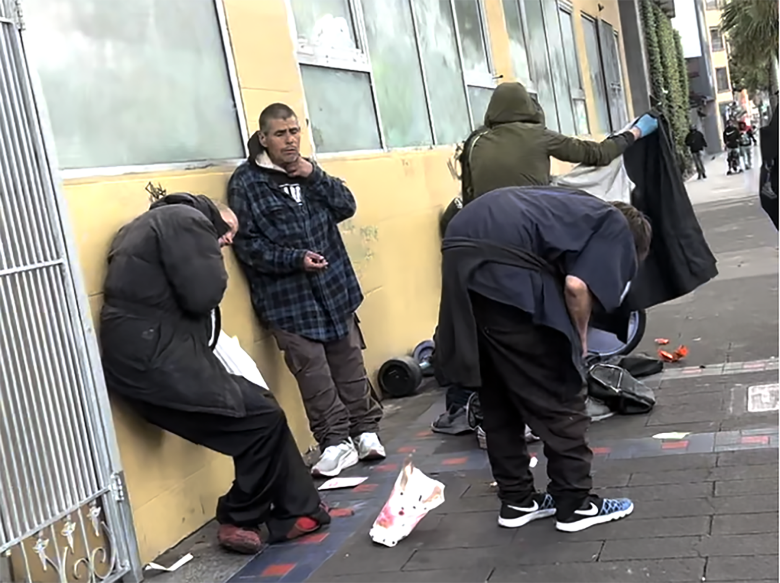
So, would you rather go to the Katy Perry concert or hang out at 16th and Mission streets with people vending raw meat and poultry, and others selling and doing drugs in public?
Okay, fair enough. Plenty of people would rather haggle over room-temperature raw chicken than go to a Katy Perry concert.
Well, about a Golden State Valkyries game? What about a massive pickleball tournament? What about hanging out in Union Square?
Now pretend you’re a cop. Cops are people too, and cops like Katy Perry, basketball, pickleball and hanging out in Union Square. They certainly like that stuff a lot more than dealing with the decades-long mess that is 16th and Mission, where an RV-sized police mobile command unit with flashing lights has sat since March 12.
All of the above are overtime opportunities for San Francisco police officers (and that’s largely just Chase Center; there’s a metric shitload of overtime gigs to choose from).
You’re not going to believe this, but there’s a waitlist for cops hoping to work the Katy Perry concert. Cops are earning overtime six days a week to sit in the Mobile Command Unit at 16th Street BART Plaza, too.
But there’s no waiting list. The emails soliciting police to staff the unit are being sent out again and again and again, which is not indicative of a popular draw. Officers who do take this overtime assignment are asked, in this order, to “keep the van safe [and] free from vandalism.” Almost as an afterthought, they are requested to “as well” address “quality-of-life issues in the area.”
It has been 91 days since the police RV rolled onto the plaza, and there are, to put it mildly, still quality-of-life issues in the area. On the plus side, the van has remained relatively vandalism-free, though someone did scrawl “Pigs” on it on April 10.
So, it’s high time to ask larger questions about what the overarching plan here is. There is a very large vehicle with flashing lights and, at almost all times, a pair of cops within, parked on the southwest 16th Street BART Plaza.
This area, roughly the size of a helipad, is secure and relatively free of clandestine activity. The same cannot be said for the rest of the neighborhood, even the plaza across Mission Street, close enough that people huddled on the pavement searching for their lighters can see the flashing RV lights.
While the city has made some inroads on rampant illegal vending up and down the Mission corridor, vending crops up the moment police turn their backs on sites like 24th Street Plaza. The space between 14th and 16th streets is still overrun on weekends by fencing and drug users. Heaps of detritus accumulate on the streets, and there are no trash cans here, even for those who’d deign to use one.
Mission Local has been sending reporters to the vicinity of 16th and Mission daily to document quotidian life since Mayor Daniel Lurie decided to focus on the area and rolled in the Mobile Command Unit. Additionally, we have been asking the bigger questions, as well.
The answers are sunny, unobjectionable and general: The goal here, we are told, is to make the area more comfortable and usable for everyone who lives and works and travels through the Mission.
Nobody could object to that, at least in the abstract. But what would that even look like? Retired cops at an age where they could draw Social Security remember Mission and 16th as “a drug place,” and that was decades ago.
What then, in the present day, denotes “success”? If you’re wondering what the criteria are, they remain undefined. It has been 91 days, and the city employees who roam the area are still working to create quantifiable goals to measure progress, let alone success.
Absent those, they have to go by the smell test, sometimes literally, unfortunately. They have to go by how people feel.
That’s dicey, because 16th and Mission has never been an oasis. There is, no doubt, plenty of illegal and objectionable behavior here. But there is plenty of desperate behavior, too, of the sort that makes people feel uneasy.
Basing progress on how people feel has its limitations: Voters in recent years have reacted as if San Francisco is withstanding a citywide “Assault on Precinct 13,” even as crime levels drop to historic lows.
Gains in the Mission have come in fits and starts, but they tend to wither the moment that a cop or other city worker isn’t hovering within an arm’s reach. The city’s efforts, as they have unfolded thus far, feel a bit like flying a kite with no wind. If you stop running, the kite falls.
It’s hard to foresee the budget flexibility to put many more workers on the ground here. But it’s also hard to foresee success without them. If only there were a platoon of people like Mark Alvarez, and the money to pay them.
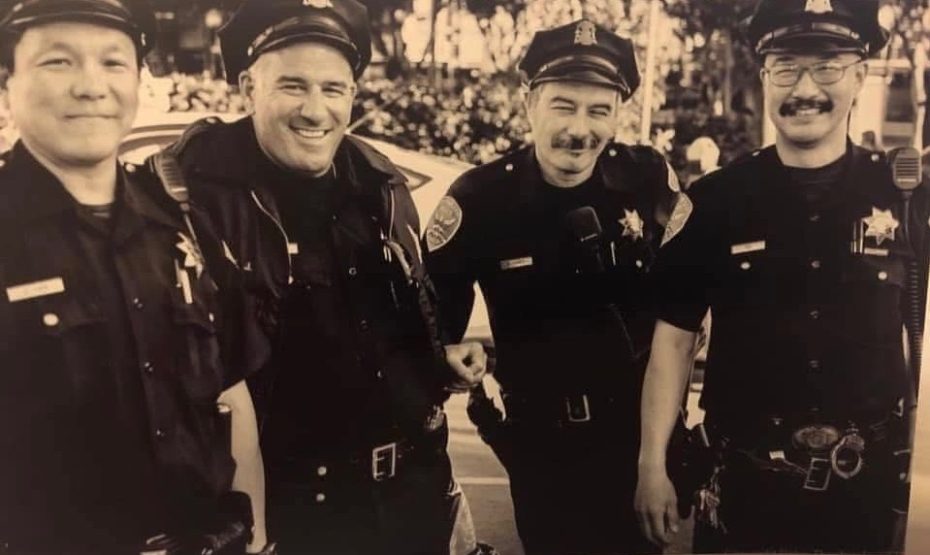
“You are,” Alvarez says, “much less likely to shoot someone you know.”
That’s not true with the general public. But it is with cops, and Alvarez was, for 31 years, a cop. For much of that time, he walked a beat, mostly in North Beach. He knew everyone. Everyone knew him. On one of his toughest days, he knew a local eccentric, Earl, well enough to sense that trouble was brewing. He told other regulars to call him if things went sideways.
They did, and Alvarez got that call (right as he’d sat down to eat lunch, damn it): Earl and another man had a confrontation, and Earl pulled a machete. Alvarez hoofed it to the Grant and Green bar and drew his pistol. But he did not shoot. Never, in 31 years of being a cop, did Alvarez fire his weapon. Instead, he holstered his gun and drew his nightstick. He engaged.
Earl’s still alive. The two are still friendly.
“I think there’d be a lot fewer bad shoots or questionable shoots or bad optics if you have people assigned to an area and they get out of the car and they know people,” says Alvarez. “I even knew the guy Earl was going after. Really, I should’ve booked him, too. He threatened to kill Earl. He was an asshole.”
Police in uniform, a retired department veteran once told me, “are society’s valium. This is a comparison that works on many levels. Just like valium, the mere presence of police does not solve your underlying problems. But they can provide comfort. They can put your problems out of mind.
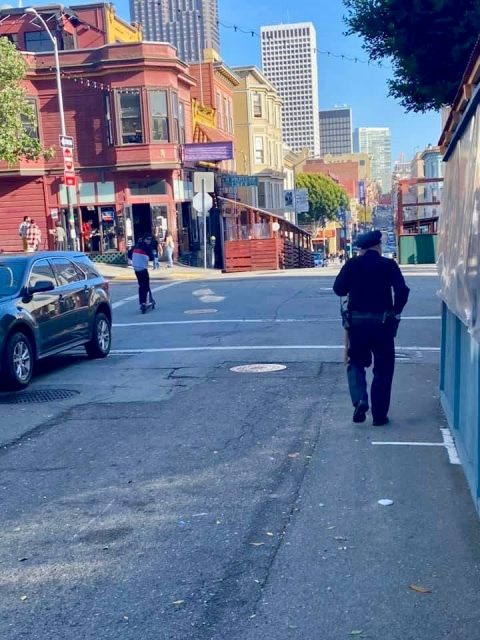
Can police “solve” the problems of 16th and Mission? No; can anyone, let alone on a municipal level? But police can do a hell of a lot more than merely putting problems out of mind. If Mark Alvarez could be cloned and deployed around the Mission, it would accomplish a hell of a lot more than what’s being done.
Over the past two decades and change, just about every San Francisco community has clamored for something akin to Alvarez-like foot-beat officers (and, unlike officers on foot, bike officers can mingle with the community and still move quickly around town).
Progressive politicians call for foot patrols. So do moderate ones. But, even before SFPD staffing levels hit rock bottom and started to dig, the department resisted. Yet when San Francisco did, decades ago, briefly deploy foot patrols for an extended period, people loved it. Some 90 percent of community members polled responded favorably, calling it a “necessary tool.”
Cloning would be a great way to fill the SFPD’s dwindling ranks. But, even then, getting beat officers would be difficult. For older cops, it was brushed off as too boring; you’d never see a foot patrol officer on an episode of “T.J. Hooker.” For younger officers, who are often more detached than their predecessors, it’s possibly too hands-on. And still boring.
Too bad: Having bodies on the streets has proven to be the one thing that works in the Mission. Illegal vendors and drug dealers know the shifts for city workers and cops as well as the city workers and cops do; They are standing by with their suitcases, awaiting lunch breaks and shift changes, ready to spring into action and start hustling at a moment’s notice.
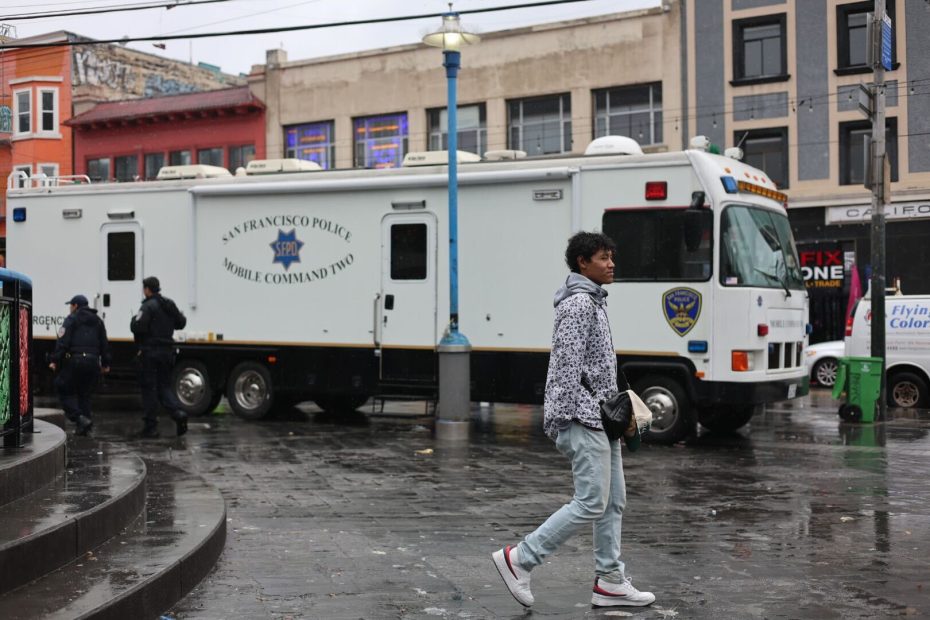
Nearly 100 days into the concerted effort into the Mission, non-public-safety workers are only now beginning to be deployed with the flexibility to not work banker’s hours. Better late than never: Few on the Mission’s streets these days work banker’s hours.
So many of San Francisco’s intractable problems can only be solved with a pile of money, a time machine or, it feels, both. This is no different. When Alvarez was a young cop, he knew every drunk on his beat by name. He’d find ways to get the ones with homes home and the rest, often a real crowd, were loaded into the wagon and taken to sleep it off at the drunk tank.
We’re not doing that anymore. Sometimes, Alvarez notes, inebriated people died at the drunk tank. “So now,” he says with a sigh, “we just leave them there,” on the street.
Liability is a hell of a thing. So’s fentanyl, which past generations didn’t have to cope with. Combine the two and, in today’s San Francisco, it’s harder to sweep our problems under the rug.
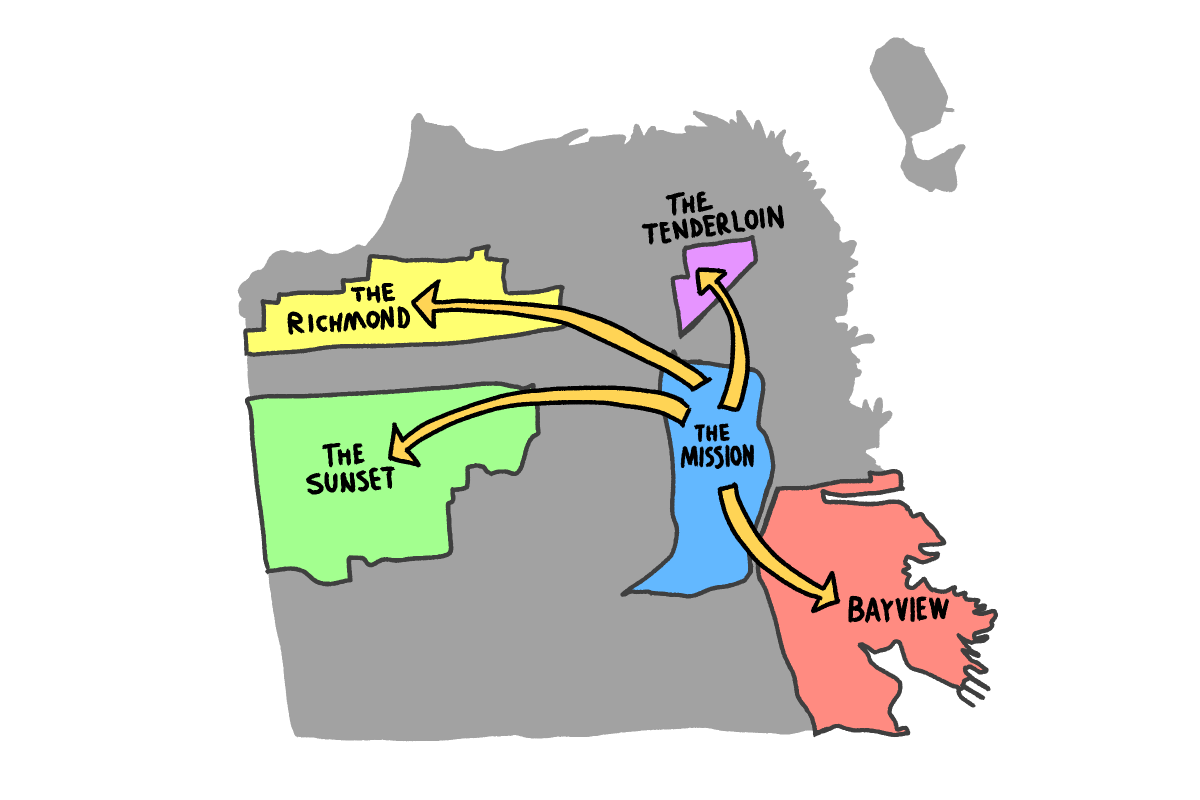
In the Mission, the powers that be continue to squeeze the toothpaste tube. Take away people’s tents, and you see terrible things in open air. Crack down in the Tenderloin, and desperate people make their way to 16th Street Plaza. Move in on the plaza and they go to the alleys. Move in on the alleys and they go to Mission and 15th.
The city’s overarching, long-term overdose reduction plan called for a series of safe-consumption sites; safe-consumption sites, in fact, were the backbone of the plan. We’re not doing that and, absent a new plan, people are doing drugs in unsafe sites, as well as places we’d rather they not. Unless a cop or someone in a fluorescent vest is hovering over them, that tends to be the case.
The conditions at 16th and Mission remain intractable. And that’ll be the case after the Katy Perry concert next month. And, for that matter, the Lady Gaga concerts after that.
Good news, though: There is, at present, only a waiting list for police sergeants working overtime on one of the three Gaga shows.
Thank you for your diligent coverage on the plaza and how ‘progress’ is measured. I know that architecture and urban design might be beyond the scope of these articles but I always believed that part of the issue with 16th (and 24th St.) BART plazas is that there are no active retail or residential frontages along either of the public spaces. I’ll be curious to see what affect the 16 story Marvel (née Monster) and its hundreds of new residents will have on the vitality of the plaza.
Terrific article! the best I’ve read so far on the efforts being made at 16th & Mission. Well-informed, fair, balanced, non-judgmental, constructive (foot patrols), informative, positive and forward-looking.
Mark Alvarez may not remember me, but I certainly remember him. One could simply look at him and know he was trustworthy. I always felt safe when he was around. The admiration and gratitude people had for him in North Beach can’t be overstated.
No plan. PThat’s the plan. Sooner than later ML will stop its daily reports, the van will be redeployed to stop protests, and things will go back to normal, the ongoing deterioration of the neighborhood — it’s not downtown; it’s not PAC Heights, it not even Noe Valley. The cops forever have designated the area as a containment zone like the Tenderloin which makes their job a lot easier. It’s past time, like 40 or 50 years past time to admit that this has been and remains the plan.
Three David Forty Two 3D42
That’s the radio-call-sign for the foot beat cop that works 16th and Mission
That was me in 1982
Like my colleague in North Beach. I knew all the street people and store owners . It was a real community effort, when it worked.
It was hard , grinding. non-glamourus duty , but it was satisfying and sometimes even fun.
Then politics got involved .
Self centered people who didn’t know what was going on were giving orders, and now no one wants that job .
Being second guessed by “ activists “ and politicians and the media with their agendas will do that.
After 30 years on the job , that’s what I see
10-7
Simple reply
Stop the drug supply .
If persons were angels we would not need laws . It is illegal to sell buy distribute or use illegal poison
Until this city gets control of the drug supply and demand , those involved with this scene will continue to ruin the place for all.
Lawlessness is lawnessness
Why are we still playing this game with the drug deakers and addicts
By now this city should have these crime under control and not going on 24/7 .
It really should not be that hard
Local control should be done asap at all cost
Harm is happening
Mission Local can do it,
If you ran Free ads for Patrol Specials.
Every day.
Until we get back up to around 300 of them.
500 would be better.
Presently the SFPOA has the ranks of Specials down to a half dozen or so.
Let them run the 30 Kobans at BART stops and Tourist areas.
go Niners !!
h.