
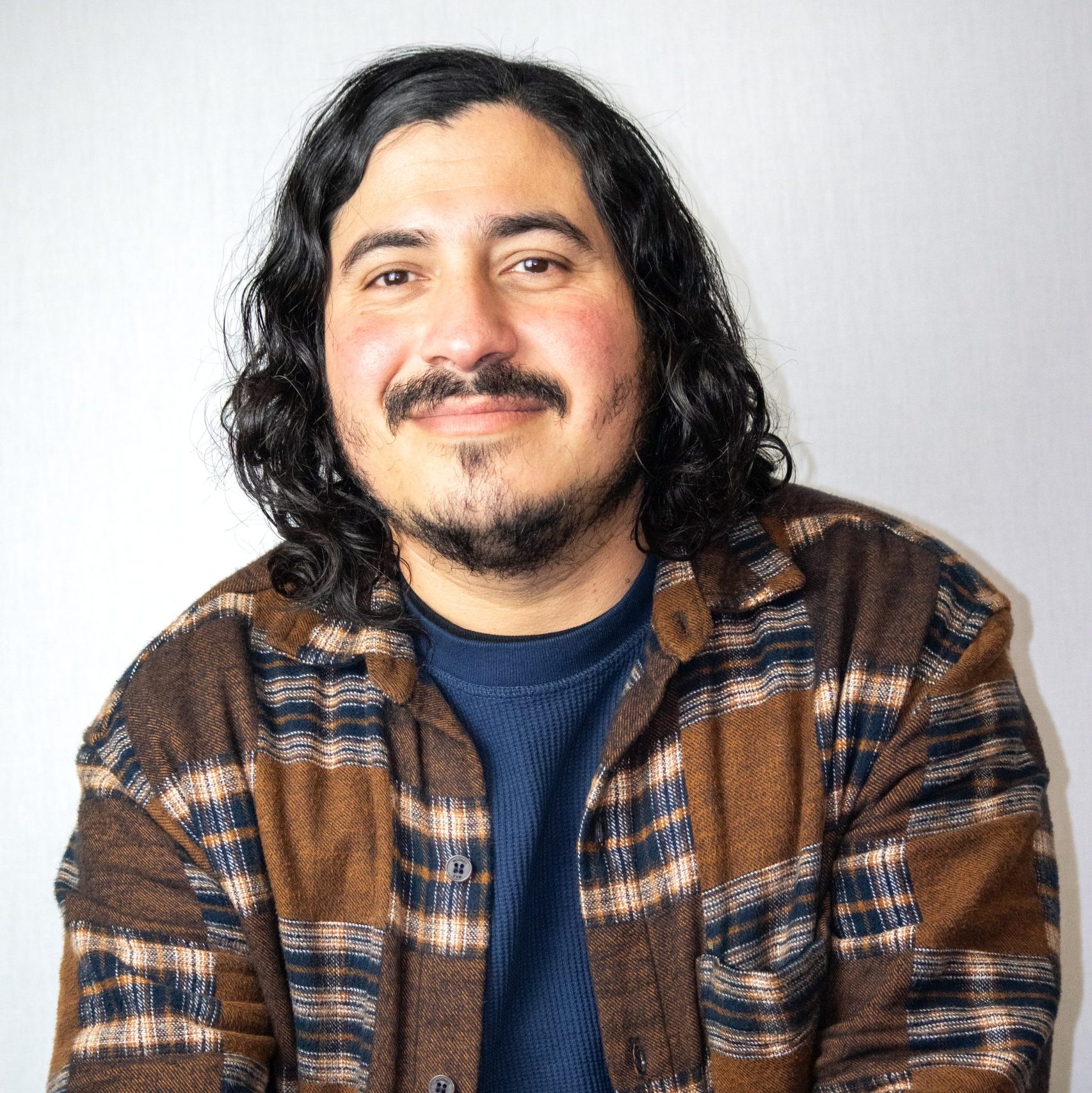


In January, Mission Local interviewed District 9 supervisor Jackie Fielder about her first days in office, when she called the issue of illegal vending and street conditions one of the district’s “tremendous challenges.”
Four months later, we checked back in and delved specifically into the street conditions around the 16th Street BART Plaza and nearby streets, which have become a nexus of the new mayoral administration’s goal of cleaning up public spaces across the city.
Since her campaign, Fielder has described conditions at the plaza as a high priority. On Wednesday, April 23, shortly before a town hall about 16th and Mission, Fielder spoke with Mission Local about where she agrees, and disagrees, with the current administration’s efforts to address criminal activity in the area.
The interview has been edited for length and clarity.
Mission Local: You’ve said that your office has been monitoring the 16th Street BART plazas on a daily basis. What are your thoughts six weeks into the arrival of the police command center?
Jackie Fielder: I ride the bus and I hop off at 16th Street to look for myself. There’s no one quick solution. The first step is to have attention on it — my office, but also the mayor’s office. I was glad that the mayor took me up on an offer to walk around to see for himself what residents, business owners, community organizations and folks passing through see on a daily basis. I don’t know that we’ve seen a mayor who has given as much attention to 16th Street as Daniel Lurie. I’ll give him credit for that.
I want to see more treatment, more shelter and housing. But, it’s hard to divorce this conversation from the enforcement actions and the attention that’s been given to Sixth Street [another focus of the mayor’s efforts to crack down on public drug use] and other areas of the city.
ML: What do you think has been missing so far in these police operations?
Fielder: I think there might be just fundamental differences in how people think about the problem of homelessness, mental illness and public drug use.
I’m of the belief that people are not going anywhere, and that’s why we see displacement after enforcement actions. Even now, as the police presence is concentrated at the plaza, you see a lot of activity in the alleyways. The presumption from those that want an enforcement approach only is that if you make it uncomfortable — as we’ve heard from our district attorney — enough for people, they’ll leave. I hate to break it to people, but some of these people are part of the community.
It’s disappointing to see that the city has, under this mayor, dramatically increased their arrests of homeless people for sleeping on the streets. That’s largely thanks to the U.S. Supreme Court decision that our city attorney, David Chiu, helped with the amicus brief around the Grants Pass decision [In June 2024, the Supreme Court ruled that it was legal for municipalities to fine, move, or incarcerate people even if they have no shelter for them to go to]. The presumption is that people will go away. The problem is, they’re not going to.
We have always been a place looking out for the most vulnerable. I think District 9 exemplifies that. We’ve been a place for misfits, for people who have been rejected from their families for being queer, for minorities and people of color. We have a history of looking out for the most vulnerable people.
I think San Francisco is heading in a way that’s quite the opposite of being a city only for the rich and those who can afford to live here, and screw everyone else. I don’t think that’s what District 9 believes. We need somewhere for people to go if they can’t hang out in the plazas or the alleyways. They need to be able to exist somewhere.
There has not been a commensurate increase in absorbing people through treatment, respite centers or sobering centers. The administration has acknowledged that. We’re currently looking for a site for people to get treatment when they’re ready. There are costs that we have to put up. Law enforcement is the more politically expedient way, because it shows that you’re doing something. Rarely, we’ve seen the media hold the city accountable for what happens after these actions.
ML: You’re a supporter of people having access to treatment, to low-income housing. Mayor Lurie said that the city was going to deliver 1,500 shelter beds within six months. That sounded pretty ambitious, and that’s proven to be. Assuming that the city doesn’t have the facilities to offer a shelter bed to every single person, what do you do in between?
Fielder: I don’t think it’s impossible. There’s different types of shelter, right? You can have a hotel. You can have a tiny cabin on a parking lot. You can have a safe site parking for RVs. But in a lot of instances, it is actually more economically reasonable to get someone housed and pay for that.
Given this mayor’s vast connections in the corporate world, I have a difference of opinion with him around how that money should come to us. I think that the wealthiest people should be taxed. We see rising inequality, especially in this city, one of the wealthiest and also most inequitable cities in the country.
He would rather have philanthropy and have wealthy benefactors dictate where the money goes, because they want to make sure that it’s being spent well. There’s empirical studies where guaranteed basic income for family homelessness is highly successful. That includes case studies from San Francisco and Los Angeles.
Back to what to do in the meantime — that’s exactly it. There’s not a lot of attention to what to do in the meantime. Certain places exist already, which is great. We’re trying to make sure that all of our community partners and departments are aware of what does exist for people to go seek resources and respite and showers and all of that. They need somewhere to exist.
ML: You mentioned the connections the mayor has with private donors. You had some concerns with the “behested” language in the mayor’s fentanyl ordinance. [Lurie, with board approval, eased language around “behested payments” that allow elected officials to solicit private funds for public projects.] Do you think there should be a cap on how much money the city can receive from private donors?
Fielder: It’s not even just about what the city receives. I have questions about how philanthropy and the billionaires behind them are making decisions or strong recommendations for the city. The coupling of power with money, money and the ability to input how city funds are spent — that makes me pretty cautious.
I want to make sure that government officials are making decisions in the best interest of San Francisco residents, and not billionaires.
Certainly they are funding some valid and needed initiatives, but it’s also the relationship between contractors and city departments. There is a ton of pressure from a few shelter contractors to have a shorter length of stay policy for families. That has had a ton of play with the homelessness department and the mayor. I’m advocating for a longer length of stay, as long as the city is not committing adequate resources to house homeless families. There’s just a very weird alignment of big philanthropy and some of our top city officials making decisions, some of which may be sound policy-wise. But it just makes me nervous.
ML: You mentioned that you were looking for a treatment facility. Is this facility in District 9?
Fielder: I’m looking in District 9, for sure. I know the mayor’s office is looking all throughout the city for sites. It’s really unfortunate to see the District 6 supervisor reject a completely state-funded treatment facility in his district, I believe on the grounds that they already have a lot. I’m all for ensuring that District 9 is welcoming.
ML: Has your office identified a site of interest?
Fielder: The mayor’s office has identified a couple sites. My office is always looking for more. I’ve been pretty adamant that some of the shelters be for families. We need to expand the capacity to ensure that the families on the waitlist also are able to use emergency shelter.
ML: Are you able to share the location of these potential sites?
Fielder: Not ready to share at the moment, because it’s not clear how solid that is. But when I know, I’ll let you know.
ML Would they be shelter beds and treatment?
Fielder: I don’t know. It’s kind of in the hands of the mayor’s office. I specifically lobbied for family shelters.
ML: A statement that you shared a couple weeks ago mentioned street vending reform. Does this mean that you support Sen. Scott Wiener’s legislation?
Fielder: When it comes to food vending, our local codes are out of compliance with a 2022 law that was passed. There are a lot of decisions to be made around where, specifically, food vendors can be, that the city has kind of punted indefinitely. I want to be able to give certainty to food vendors who are part of our community.
When it comes to retail and merchandise vending, as you know, Scott Wiener has introduced a bill to make it so that police officers would be able to enforce vending laws. Right now, under a 2018 law that decriminalized vending, only Department of Public Works employees can do that.
When I had this all-hands meeting with the Vendors Association, with Public Works employees, BART and community organizations back in February, it seemed like the Public Works employees indicated that things were getting better. I’m sympathetic to their not wanting to be in the role of enforcement officers, and it’s a huge demand on city resources to have two employees from two different departments conducting this.
At the same time, even though we’re a sanctuary city, I have serious concerns about exposing our immigrant population to more law enforcement. We’re seeing, in real time, that the Trump administration is not honoring due process, and is even deporting people that are legally here.
Regardless of how this bill goes, we need to get every aspect of vending, whether it’s food or retail, up to code. There’s still just a segment of Mission Street that is open to permanent vending. I want to be able to expand that area where legitimate vendors are allowed to be.
It’s a lot more complicated than I had thought. We’ve talked about the red tape on small businesses, home remodels and housing development. The same red tape exists for vendors, both retail and food. The Office of Economic Workforce Development, Public Works, Department of Public Health, the Fire Department — all of these individual departments that are responsible for certain parts of public health and safety.
It’s a whole nightmare, because they could get rejected without really knowing the reasons. So the reform that we’re undertaking is also about sorting out who has the power to map where vendors can be.
ML: You talked about a proven strategy to address the drug crisis. You also talked about a budget for 16th Street. Can you elaborate?
Fielder: There is a model that is proven to have worked in Zurich, Switzerland. Back in the ’90s. Zurich was facing very similar issues when it comes to public drug use. People deteriorating in public parks and on public streets and sidewalks.
They wanted to bring people inside and get them treatment and help. The majority of the people that they identified as using drugs had then been put onto medicated-assisted therapy. They had pretty big success with it. It’s called the Four Pillars. Dean Preston asked the budget and legislative analyst to come up with a report on it.
The four pillars are enforcement, treatment, harm reduction and prevention. I would love to know how much of each pillar we’re investing in as a city government. The other big nugget from there is that there was a lot of collaboration: Learning and shadowing between street outreach workers, medical practitioners and law enforcement. Law enforcement going through academy training had to also learn about harm reduction and safe consumption sites.
When it comes to the budget, there’s a lot of talk of austerity, but I think — especially as it relates to 16th Street — what we need the most is investment. Investing in treatment. Investing in activations of the plazas. Investing in youth violence intervention programs. Investing in respite centers. Investing in shelters.
ML: How has it been, being a District 9 Supervisor? Has it been as busy as you thought?
Fielder: It’s been a lot busier than I thought. I love this job. I love representing District 9. I really hope, in my second half of the year, to get more out into the community to share what we’ve been working on, and to get people’s feedback. But it’s been really rewarding so far.
“The presumption from those that want an enforcement approach only is that if you make it uncomfortable — as we’ve heard from our district attorney — enough for people, they’ll leave. I hate to break it to people, but some of these people are part of the community. ”
This is quite a bizarre statement. Even people who are part of the community need to obey the laws. We don’t give a pass to people who run a red light, or fail to pay taxes, or commit murder, simply because they are part of the community. We don’t limit law enforcement to outsiders. Second, even if “some” of the drug users on our streets are part of the community, many are not. Enforcing our laws against those who came here because they (correctly) heard that you can steal, and buy and do drugs in San Francisco largely with impunity may very well prompt some number of those to leave. That would not be a bad thing. I don’t believe in long prison sentences, and treatment and housing certainly needs to be part of the solution. But we do not have the responsibility or means to enable, house, treat, to pay for everyone who happens to show up here. Any civil society needs to enforce its laws.
” But we do not have the responsibility or means to enable, house, treat, to pay for everyone who happens to show up here. Any civil society needs to enforce its laws.”
Somehow you do not see your own contradiction? Enforcing laws = putting people in jail, giving them ‘housing,’ ‘treatment,’ etc, all at the cost of taxpayers. It’s a greater expense than literally paying their individual rent, greater even than inpatient drug detox therapy in many cases. So it would behoove you to consider other options if the ‘law and order’ approach as tried is both unaffordable at scale, ineffective individually at reducing addictions and associated behavior, and often brief enough to make exactly no difference in any case. Nobody has the MEANS to leave on their own once down that road. You oversimplify with tropes about law and order as if that were really all there was to it, just bootstrap tugging. Please. Even a lawyer is smarter than that.
Removing select people from society….putting convicted law breakers in jail has a benefit to many of us beyond the cost in dollars.
As someone who lived with encampments directly in front of my home for eight years, I had many opportunities to speak with and get to know some of the individuals living in tents. From my experience, very few were longtime San Franciscans or people evicted from the Mission. More often, they were young, non-Hispanic individuals—many struggling with addiction or mental health and preferred the street since they couldn’t continue with their addiction in shelters or, sadly, were kicked out of shelters because of behavioral issues.
What became clear to me is that many had come from outside the city, drawn by the availability of free tents, financial assistance, and access to cheap drugs. They came here because San Francisco’s permissive environment often allowed people to remain stuck in destructive cycles without facing the pressures or consequences they might encounter in their hometowns. It’s a complex issue, but one that requires honest conversation and more balanced responsibility — sadly, Fielder does not seem to have maturity to have that conversation.
Sorry Representative, lot of what you are suggesting has already been proposed; more services, treatment, etc..now we are at a stage where laws have to take over..no more mister nice guy.. drug addicts on buses, direction some nice jails in the woods up north.From time to time we see one of those people who “made it” on the local news but the large majority of those people are beyond salvation , they do not want to go to shelters because of the rules, do not want and refuse treatment; they just come here for the free food, the free phones, the free needles, the accessibility of drugs, the nice weather and the lawlessness. get them out! the sooner the better. The last few years this city has taken empathy and compassion out of a lot people.
Re: Zurich. Are we being lied to, when they skip over the part where the Zurich model was designed to play out in the whole country (Switzerland)? Born from the realization that Zurich couldn’t possibly handle the “clients” as a whole, drug tourists were sent back to their hometowns were the pillars were also implemented, under the wing of Switzerland’s federal government, the Federal Commission on Narcotic Drugs.
Fielder: “these people are part of the community.”
This is what’s wrong with progressives. Normal people look at passed-out junkies from out of town and see a problem. Progressives like Fielder look at passed-out junkies from out of town and see friends and neighbors who should be given unlimited support from taxpayer dollars.
70% of homeless individuals in SF are from here. Are they not part of the community, just because they are trying to survive?
Many street people say they’re from here, b/c the service providers tell them to say so. To OP’s point though, this is about the addict zombies, not fallen-on-hard-times-needs-a-leg-up types. The latter aren’t going to hang around our drug circus chaos conditions. Like that sober (non-local) fellow I saw on the 49 the other day. He didn’t know how to ride Muni, got in everybody’s way, and asked the bus driver how to get to Burlingame. (Catch the 49R and SamTrans, dude had never heard of either). Good luck to him.
Exactly. Just because somebody occupies the same space doesn’t mean they’re part of a community.
Community = a group of people consistently living towards the same set of values and holding themselves accountable to those values over time.
‘Investing’? Investing is to achieve a return on your investment. How is warehousing vagrants and drug addicts going to profit society? All it will do is to saddle society with huge fixed costs on a negative return. China invest in STEM education and development. Thais true INVESTMENT! What we do is waste money on a bottomless pit of misery spread out for everyone to experience. Which is why much of SF is boarded up and will remain so.
I agree with your first sentence. No need for name-calling though. It is also possible to invest in people: The loved brothers, sisters, children who you are calling ‘vagrants’ and ‘drug addicts’. Maybe nobody has had the resources to invest in them? Maybe all the investment went to robot taxis and computer AI? Because you understand what “investment” means, it must be particularly grating that so much money is being spent on policing (which is advertising).
As always Mission Local’s interview are great, and show the subject as they are. The Ronen interview was illuminating about why nothing ever got done, and this one shows Fielder’s views pretty clearly.
I agree with Fielder a bunch and disagree a bunch too, and here’s my challenge for her: Show me you can make your policies work.
I strongly prefer policies that treat those struggling with humanity. But I also sympathize with the overall attitude in the city that we need to make it livable for most people.
Fielder needs to show that assisting the less fortunate helps overall. That we can set up assistance and treatment regimes that work, and that help the individuals suffering from addiction, but also relieve the burdens on the functional people who just want their neighborhood to become more pleasant to live in.
I wish her luck! We’ve seen a long line of failures (Ronen, Campos, …) who only gave excuses when their policies turned out poorly. Fielder wasn’t my first choice, but if she can really solve these problems then she will be next time.
Even more to the point: let’s use these same metrics to measure and evaluate the strategies and actions of Mayor Lurie. He is THE MOST POWERFUL MAYOR in America today (due to San Francisco’s City Charter, our Constitution). If you think Supervisor Fielder has the power of the purse, powers to appoint supervisors and department and commission heads to enact her policies, think again. Use the same yardstick to evaluate Lurie’s performance.
Excellently put. Couldn’t agree more.
I hope that she is successful for District 9 however she does strike me as an “AOC Wannabe”
Wow, that is a master class in dodging all questions. She didn’t answer one. All a bunch of non answers. She is either completely incompetent or a flat out liar. She has not found one site in her district to house folks and has given no legislation for how to deal with the plaza, drug dealing and vendors. She is NOT a leader and a compete wuss. I wish reporters would say, “you didn’t answer the question” and let them try again. When they don’t answer again, the reporter should state, “ok, for a second time you dodged the question, we’ll move on to the next question.”
The Mission voted for Jackie Fielder.
As this article proves definitely, the situation at the 16th Street BART Plaza is the Mission getting EXACTLY what it voted for…
All I heard was the same socialist talk, make rich pay for the poor, don’t ask them to do anything except use resourses that others eraned. Want to know what to do with everyone on the street? Put them to work!. SF has made it easy to be homeless paying them $650 a month plus foodstamps. free medical care, Why work when you have people that want to blame society for ones drug use and homelessness? Yes a few families lost housing legitimatly but most would rather buy drugs than pay rent. after 25 years of doing the same thing and failing it’s time for a new approach. Accountability and responsibility. SF needs to learn that people will do what you allow them to do. Stop rewarding bad behavior and expect them to stop. Stop expecting everyone else to care when the person you are trying to help doesn’t.
She’s doing a great job.
Santiago Lerma said at the April 30 town hall at 1950 Mission that almost all of the people they’ve done outreach to in the fentanyl crackdown are neither homeless nor from San Francisco.
Why should San Francisco take on the burden of treating addicts who do not live here, especially when treatment success rates fo treatment for opiate abuse is as negligible as it is expensive?
Progressives have had DECACES to come to terms with psych and substance treatment (homelessness too) and made that a centerpiece of the progressive branded nonprofits’ politics. I’d hoped that approach would have succeeded. But they did not. It was clear that it was failing in the early 2010s. They’ve set themselves up for further failure by doubling down on what’s failed after it’s failed, changing nothing. That model of politics and advocacy has not been able to, and will never be able to, execute and deliver, good intentions and the maliciousness of The Other notwithstanding.
If D9 needs to increase substance and psych treatment capacity, by all means, let’s site new facilities in Bernal Heights or The Portola, and let’s give The Mission, which is not an infinite sink for what is little more than nonprofit monetizing of human misery, a break.
Y’all be talking trash about my girl JF.
Be cool with it yo.
Every time I read “district resident” she talked about drug addicted and homeless people – she isn’t representing people who are trying to live their lives and contribute.
“We need somewhere for people to go if they can’t hang out in the plazas or the alleyways.” That quote tells you who she is interested in representing.
How about we need clean streets and safe places for the kids living in the district to play on.
There is always a set of priorities:
1. Normal hard working families or druggies in the alley.
2. Empty storefronts or vendors selling stolen goods by the BART station.
3. Gangsters on their bikes or people or elderly people trying to cross the street.
Jackie please make the Mission district look clean and safe for legal citizens who are not shooting up drugs in the alley first. Then we can talk about what we can do next.
Unserious and Naive.
Lurie or Breed?
And in the same style with which they attacked Boudin and Preston, the MAGAts are tearing into Supervisor Fielder. Watch for a well-funded smear campaign to follow and a condemnation or two from the illegitimate DA. Fielder was elected because of her progressive convictions which include honoring the value inherent in every person. That same value is present even in those who try to hide it—like the imperious nihilists who commented on this article. You rock on, Jackie F! Don’t let the bastards get you down. Power to the people!
Public squalor is the progressive kill switch. The more progressives associate with increasingly desperate public squalor, the deeper the wedge they drive with the electorate. This is why progressives are at their weakest position since district elections were restored in 2000.
Labor threw down for Jackie, outspending that other person. Our neighbors at 1950 Mission affordable housing, on the other hand, are asking to be moved because street conditions are hostile to raising children. The way that the cards fall will demonstrate where the supervisor stands. Who’s side are you on, our lower income neighbors or deep pocketed interests with economic business before the supervisors?
All it would take to short circuit the inevitable crypto swindler backlash would be for Fielder’s office to give meaningful consideration to residents who are not in the nonprofit orbit, who they view as outside of their comfort zones.
The days of absolute nonprofit rule over the Mission are coming to an end one way or another.
I’m sounding like a broken record proven accurate in prediction. Like on homelessness in SF, like on left populism within the national Democrats, we can put the nonprofits back into their boxes the easy way and give residents space for political self determination, or it will be done to us the hard way and the rest of the progressive political agenda, the vast bulk, will suffer.
Like the right wing, the nonprofits (and progressives who purport to act on behalf of “the people”) hold residents in contempt. One thing I learned volunteering in progressive supes offices long ago was to empathize with people from different walks of life in order to find common ground to get things done.
This garrison mentality progressivism is losing and is bound to lose.
Wow, so much vitriol and zeal in kicking people when they are down, so they “go somewhere else”. Like where?
This has been a death by a thousand cuts over the last fifty plus years. The oligarchs’ wealth increases at least 10% a year, every year, since the 1930’s; yet the rest of us have stagnated. If incomes go up even 5% in a year, alarm bells start ringing about “inflation.” You’re seeing the effects: The most vulnerable end up on the streets first. But we’re all headed there. Unless you have a trust fund, you are one medical bill, one house fire, one disaster away from the streets my friends. There’s plenty of money and political will when the oligarchs want it: $90 million in “overtime” for cops who show nothing but disdain for the people of this City; who already have cushy retirement and benefits packages; who are allowed to use the authority and protections given to them as a way to earn an extra buck. How many billions spent so that Taxis — another source of income for locals — gets eaten up by big money? How much of the city budget panders to SFO, drivers from out of town and downtown corporations? The population of SF has fallen off a cliff, yet there’s too little housing? Where did it all go? We’re always told the medicine (capitalism) is not working because we’re not taking enough: Maybe the medicine is what is poisoning us.
There is one pillar of the Zurich model that dwarfs the others: keeping opioid addicts high via clinicians. In Zurich, you can get prescription methadone in pill form, timed-release morphine, and pharmaceutical heroin. The last two would never fly here, and that is really unfortunate. But methadone should be given out much more readily than it is. That cop RV should have a food truck window and be handing out methadone shots.
The next mayor of San Francisco!!
More buffoonery from our elected representative. Yes it’s shocking that District 6 would reject a huge “treatment center” for addicts, criminals, dealers, vandals and thieves. But by all means let’s bring them into District 9 because we don’t have enough of that. And let’s keep the lucky host neighborhood a secret.
Jackie Fielder seems to be surprised that Mission Local, unlike most media, is following up on the police activity at 16th and Mission.
Pop a cork.
People need to understand that politicians like Jackie Fielder and former city supervisor Dean Preston are not genuine socialists.
Rather, they belong to a political party, the Democratic Socialists of America, whose chief mission is– not to push the capitalist Democratic Party to the left, as it professes (and which it has never accomplished, as the Democratic Party along with the entire political establishment has moved steadily to the right for decades), but to assure their own professional advancement by drawing the young, the inexperienced, the idealistic, and impressionable into the fold of the capitalist Democratic Party.
People need to understand that the fascist government under Trump, that is now audaciously trampling on the US Constitution and the democratic rights of everyone, would not be in power in Washington without the complicity of the Democratic Party.
Like Bernie Sanders or Alexandria Ocasio-Cortez at the national level, Felder gripes about billionaires and austerity, while selling pipe dreams about giving vulnerable people a “basic income”. Impossible dreams the way things are now.
Do they ever publicly talk or describe “socialism?”
No.
And who can blame them since anti-communism is practically a religion in the United States?
Genuine socialists want to put human needs ahead of private profits, expropriate the oligarchs, and build world socialism for true equality– not equity or an amorphous “fairness” that inevitably favors one interest group over another. (Sanders and AOC are both fervent nationalists.)
So what has Fielder admitted to doing in this interview?
1. Visiting 16th and Mission (on the bus!), and getting Mayor Lurie to visit.
2. Looking for sites to house and heal people that will be more economical than what they will eventually cost… and she will let us all know when she finds them. How much is a life worth?
3. Tolerating police enforcement meanwhile, because it is an “expedient” solution to please those who disagree with her desire for shelter, treatment, and housing.
Fielder doesn’t fail to give a nod to the mayor and his rich friends for already funding “valid and needed initiatives.”
What are these? It would be nice to know.
Democracy with modest aspects of socialism is currently successful in many nations, whereas socialism has never succeeded. That the Dem party has moved to the right isn’t the fault of the Democratic Socialists. Get real.
I’d agree AOC and Sanders both suck when it comes to foreign policy, but if they want to hoot and holler about wealth inequality, healthcare, socialized housing, etc.. I’m not going to knock them for that.
“People need to understand that the fascist government under Trump, that is now audaciously trampling on the US Constitution and the democratic rights of everyone, would not be in power in Washington without the complicity of the Democratic Party.”
You own a red hat with white letters on it. Own it now also.
Thanks for reporting.
Homelessness and drug addiction is challenging .
What is not be discussed is job opportunity and placement .
These people should also be helped to get jobs when able .
There are plenty of jobs in the usa ; but no jobs in SF or the Tenderloin.
Most people move to wear they can work and afford to live .
People cannot expect that they move and live where they want .
They must be able to take care of themselves and work.
It is not realistic or sustainable to think taxpayers can and will provide long term housing for all and jobs here .
Welcome to the real world .