

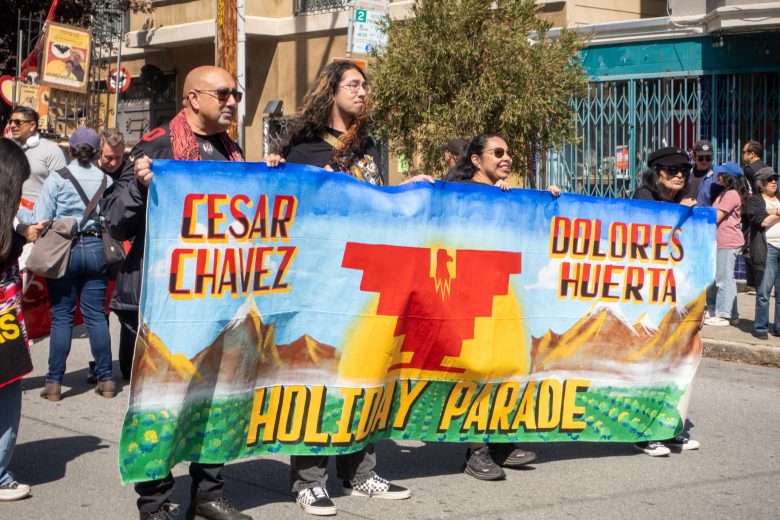

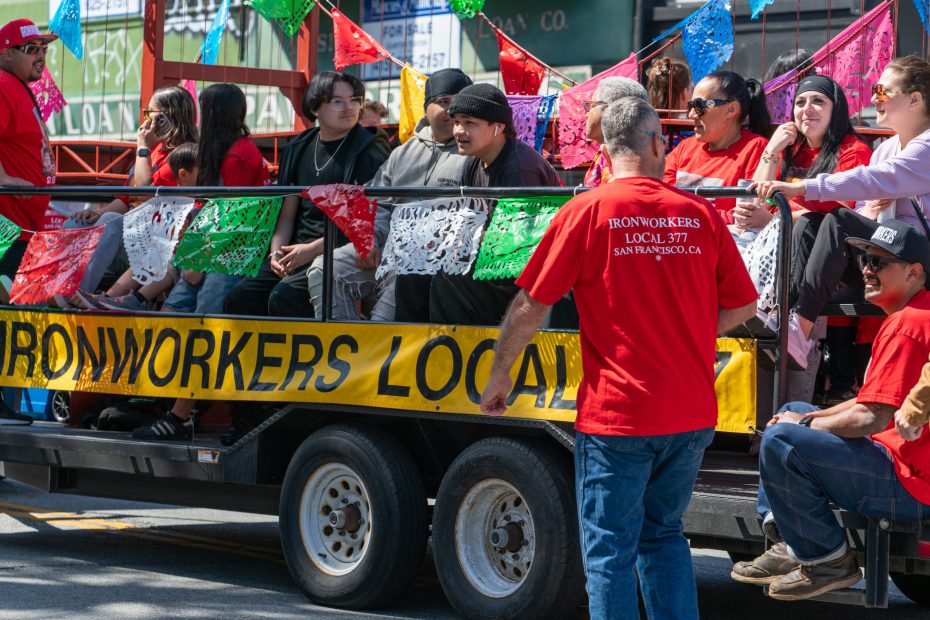
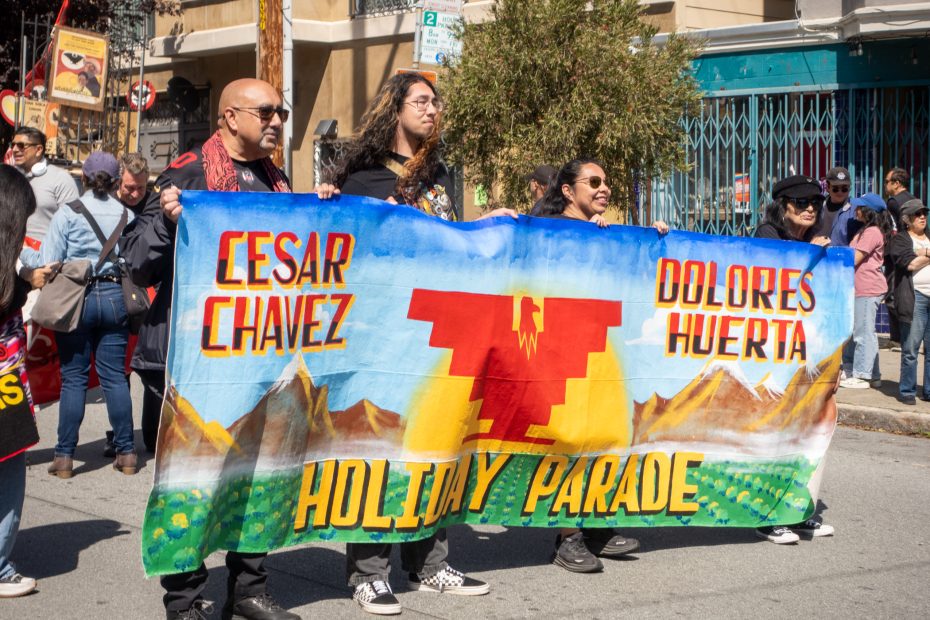
Hundreds of union workers, families, activists, and community members packed the intersection at Guerrero and 19th streets on Saturday morning, ready to march in honor of Cesar Chavez. The weather couldn’t have been better: A perfect 61 degrees, though the sun made it feel warmer.
“¡Sí Se Puede!” (“Yes, We Can!”), the chant during Chavez’s 25-day hunger strike in 1968, became the rallying cry of the United Farm Workers, co-founded by Chavez and Dolores Huerta in 1962.
Today, it rings louder than ever.
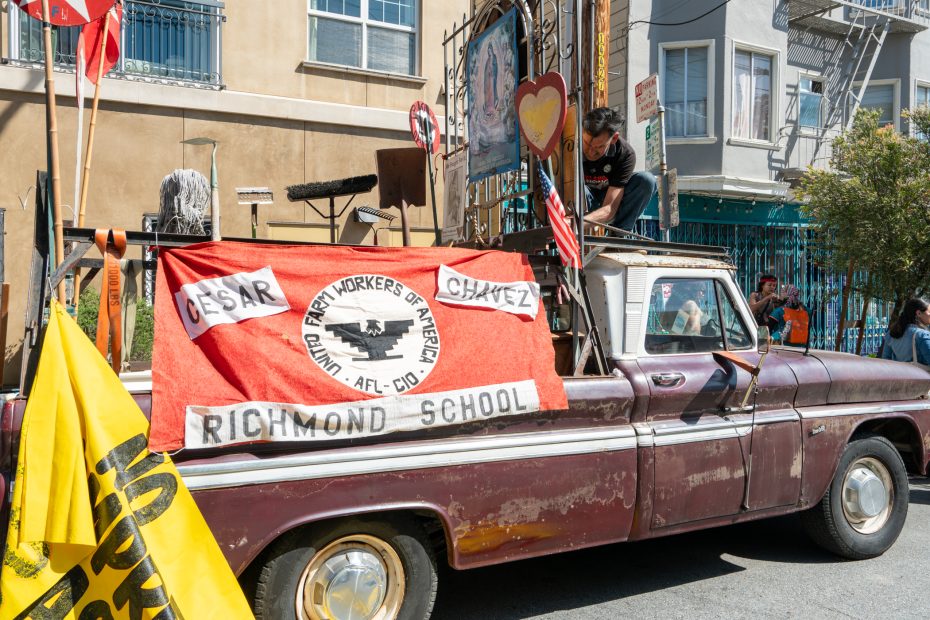
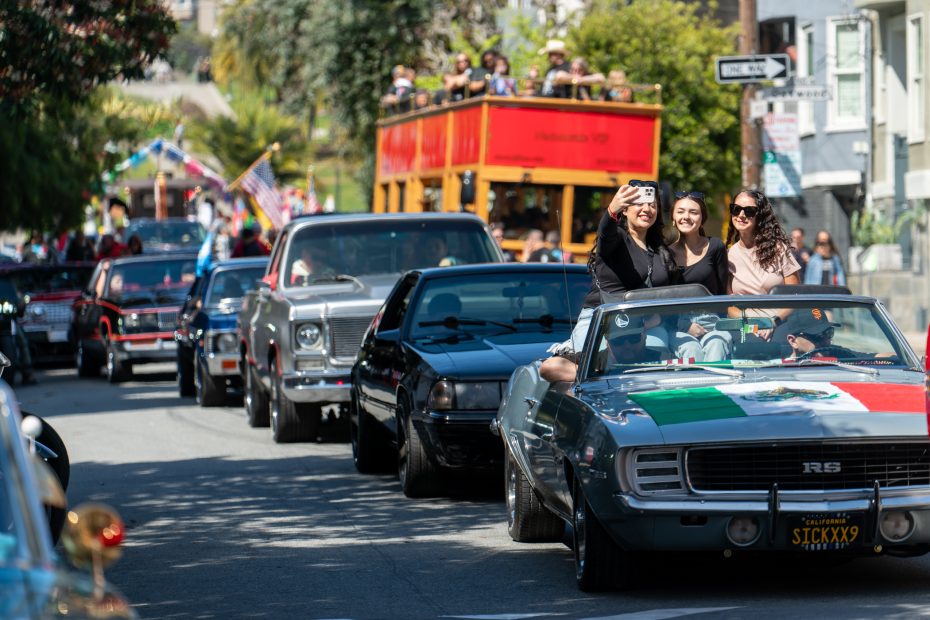
Leading the parade was a 1966 Chevy truck owned by Raymond Martinez, a longtime United Farm Workers supporter who marched during the 1975 grape strike in Modesto. The truck was decked out with vintage images of Chavez and Huerta. Custom raw ironwork held up flags and shovels.
“This truck’s from 1966, the same year Chavez and Huerta led that historic 300-mile march from Delano to Sacramento,” Martinez said proudly.
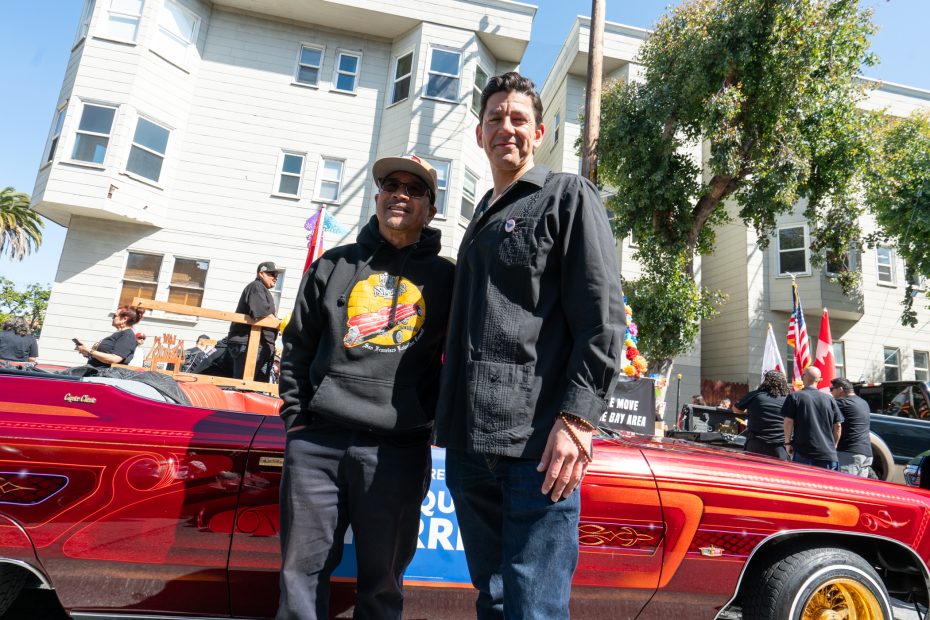
San Francisco’s Assessor-Recorder, Joaquín Torres, was seen leaning against a cart, casually conversing with members of the Transit Union Local 1555.
“The fight Chavez started is more important than ever,” Torres said. “There’s a real war on our culture right now. People trying to erase who we are and everything we’ve built. Today’s about standing together, making sure working people aren’t forgotten or pushed into the shadows”
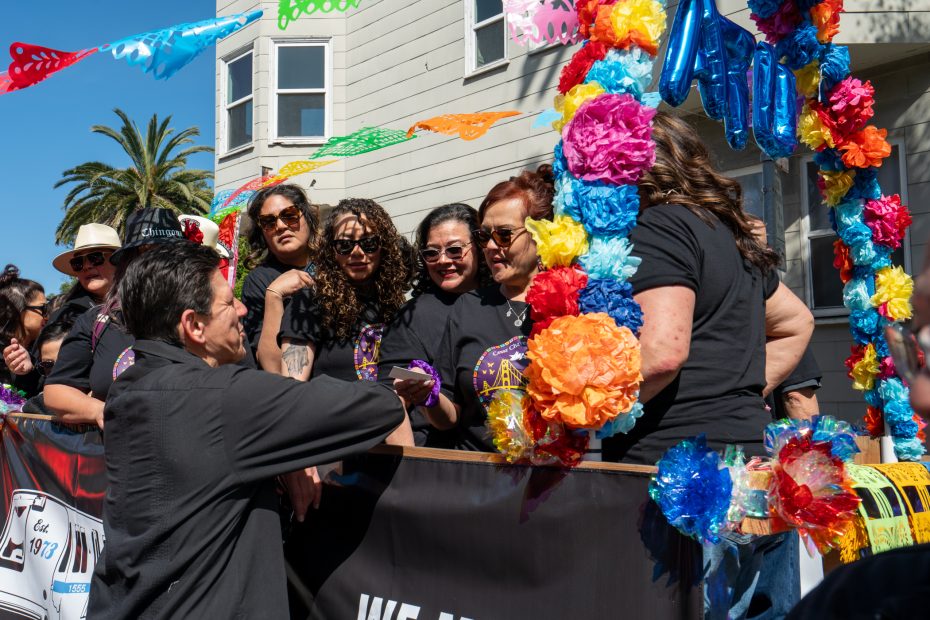
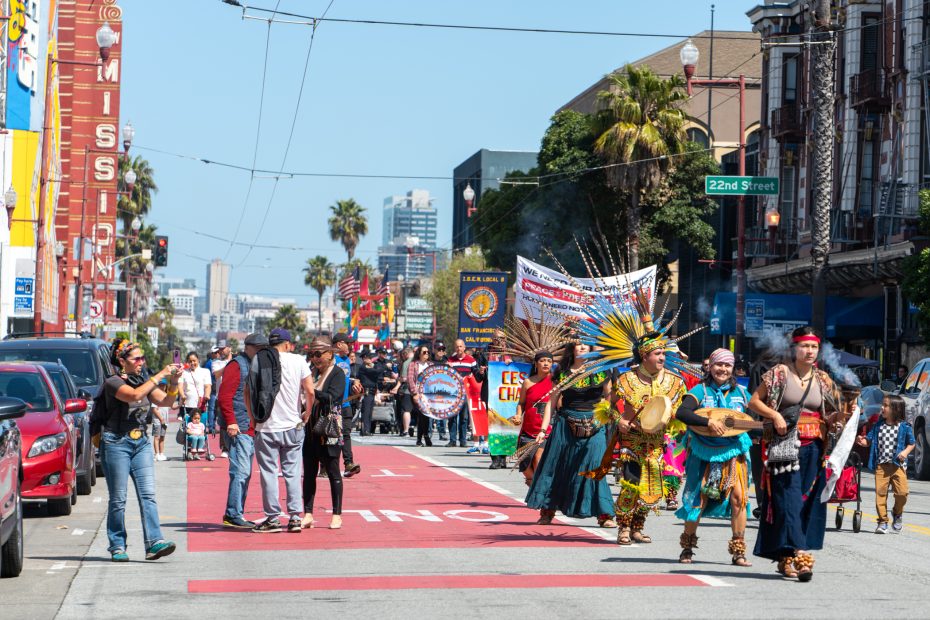
The parade officially kicked off at 11 a.m., rolling out from Dolores Park at 19th Street to 24th Street between Folsom and Bryant streets. A lively festival kept the energy going strong all day.
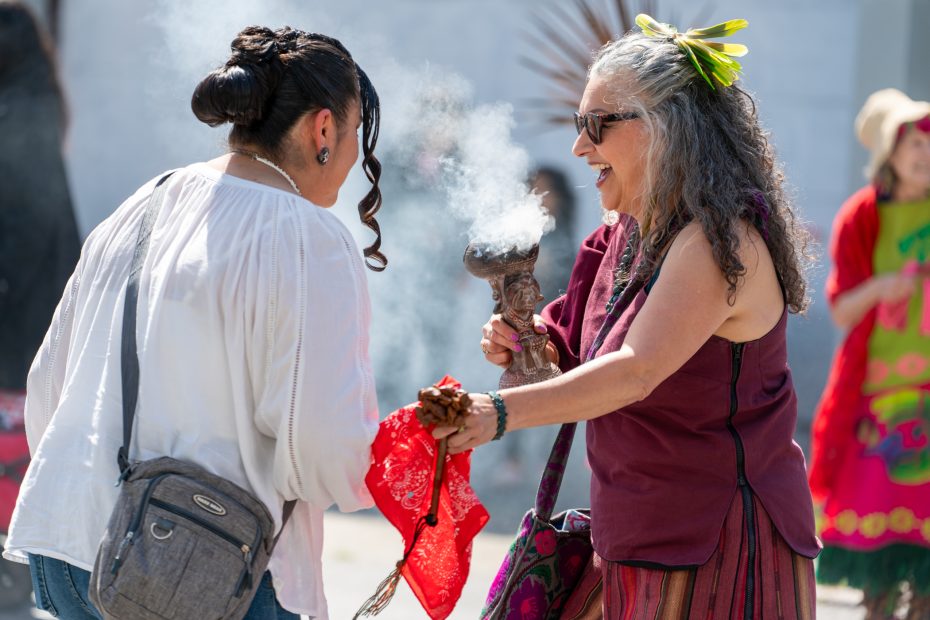
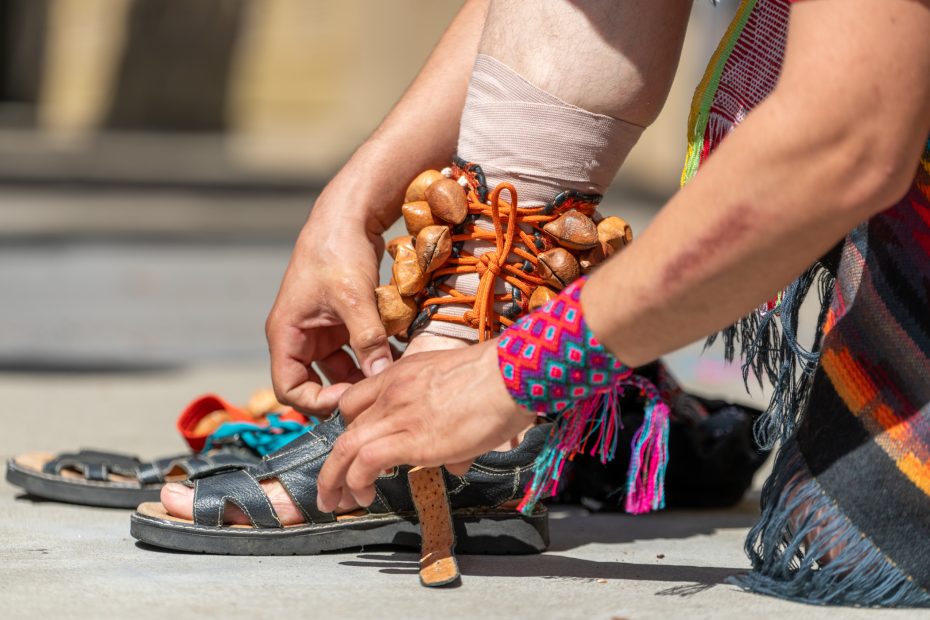
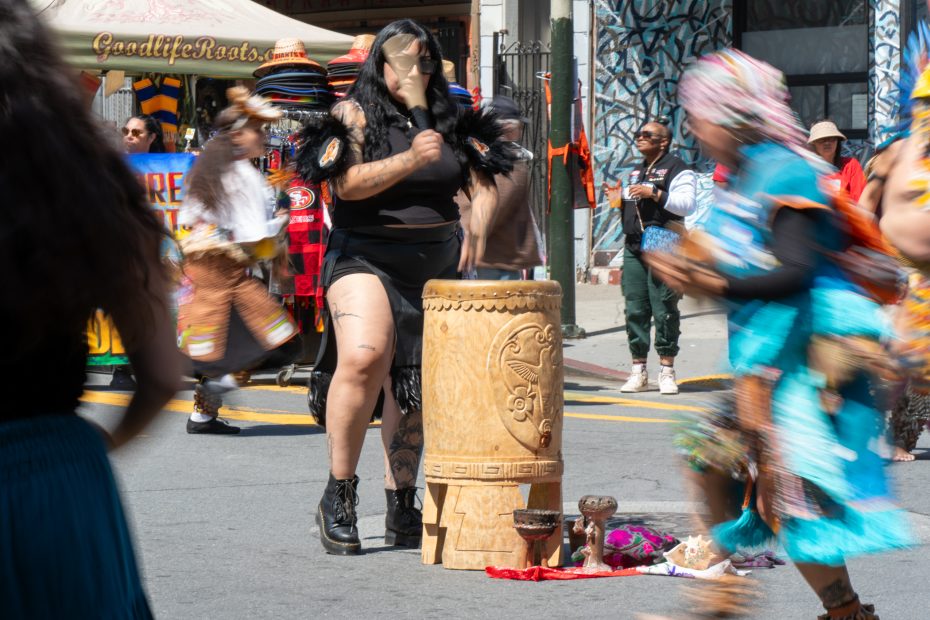
Police officers on motorcycles cleared the way as families waved handmade signs, music floated through the air, and Aztec performers danced in the streets.
Among the crowd was Austin Goldsmith, a retired union carpenter who grew up in the Mission. “My dad, my uncle, my grandpa — they were all union. Union lifts people up. It gives you better wages so you can do better things,” he said, adding that he hopes younger generations will see the value of organizing
Donny Alonzo, vice president of the San Francisco Lowrider Council, reflected on how activism has changed over the years. “I grew up in the struggle,” he said. “Whether it was for the UFW, women’s rights, Filipino rights — San Francisco was where the fight was. And it still is.”
Nearby, Aubrey Herrera leaned against the old Chevy truck, smiling. “It’s my uncle Raymond’s,” she said proudly. Although she didn’t know all the truck’s history, Herrera said she’s committed to staying involved. “Coming to events like this is a fun way to stay connected and follow in my grandma Judy’s footsteps,”
Nice and well written article by Gustavo Hernandez. Thank you for your coverage of the fun family event.
“¡Sí Se Puede!
Viva Cesar Chavez!
The recent outpouring of articles and editorials across the country commemorating Cesar Chavez Day (March 31) all neglected to mention one notable factor in the great man’s bio: Arizona-born Chavez and his elderly mother were both long-time vegetarians for ethical and moral (not health) reasons, he once told me.
Chavez was a champion of the downtrodden, human and non-human alike; many believe he deserves a national holiday. Consider this excerpt from a treasured 12/26/90 letter he wrote to me:
“Kindness and compassion towards all living things is a mark of a civilized society. Conversely, cruelty, whether it is directed against human beings or against animals, is not the exclusive province of any one culture or community of people. Racism, economic deprival, dog fighting and cock fighting, bullfighting and rodeos are cut from the same fabric: violence. Only when we have become nonviolent towards all life will we have learned to live well ourselves.”
Words to live by. Si se puede!
x
Eric Mills, coordinator
ACTION FOR ANIMALS
Oakland
I got to meet Cesar Chavez and Dolores Huerta in 1991 at the Powell cable car turnaround as a representative of ACTUP/SF in solidarity against SFPD abuses, when Huerta was suing the City after SFPD beat her during a march and ruptured her spleen.