


As the Trump Administration issues “gender ideology” directives and anti-trans legislation, San Francisco will celebrate today’s Transgender Day of Visibility, one ensured with an expansion in progress at the Tenderloin Museum, the exisiting Transgender District and the opening of an immersive play on some of the community’s history this month.
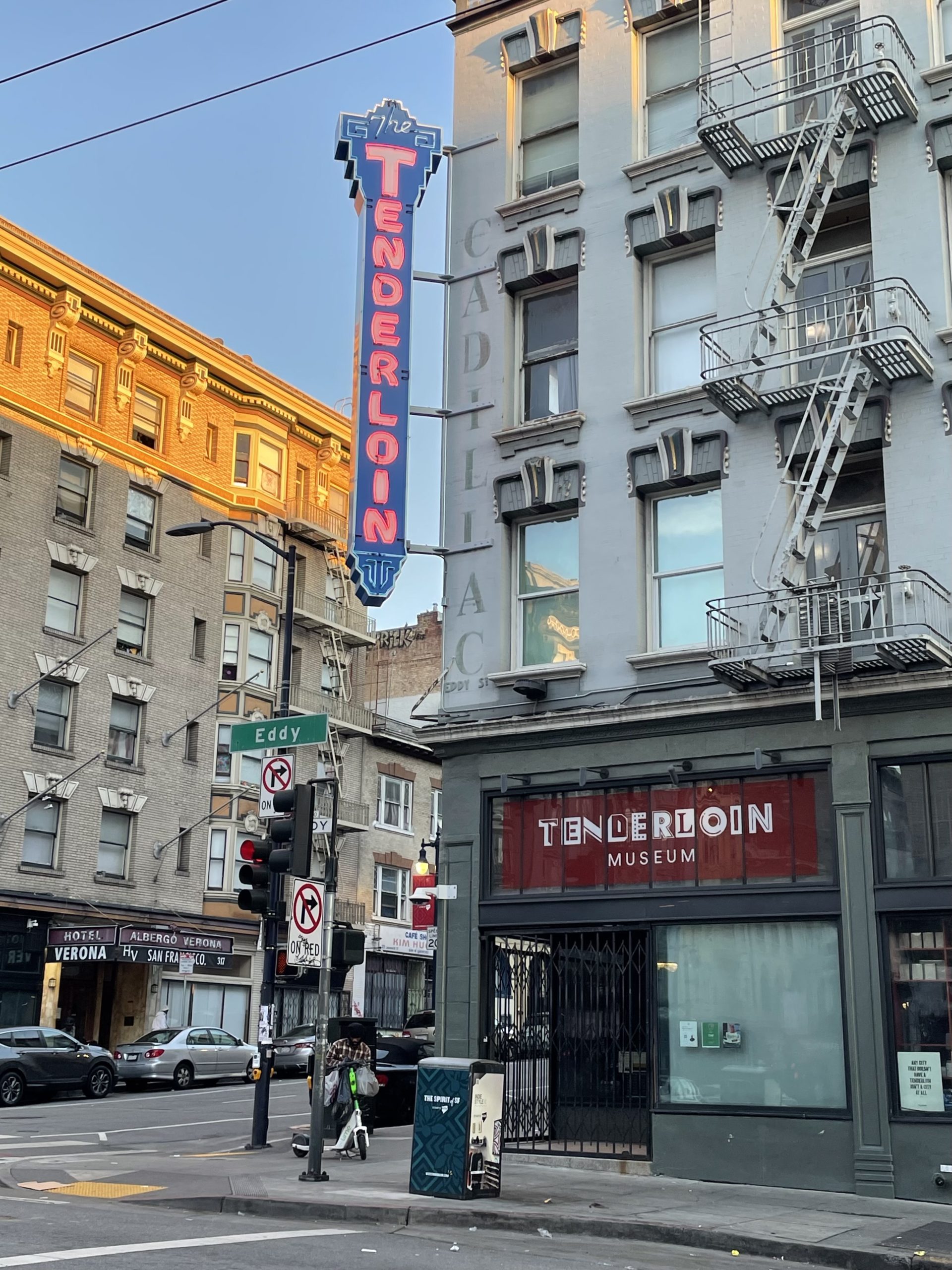
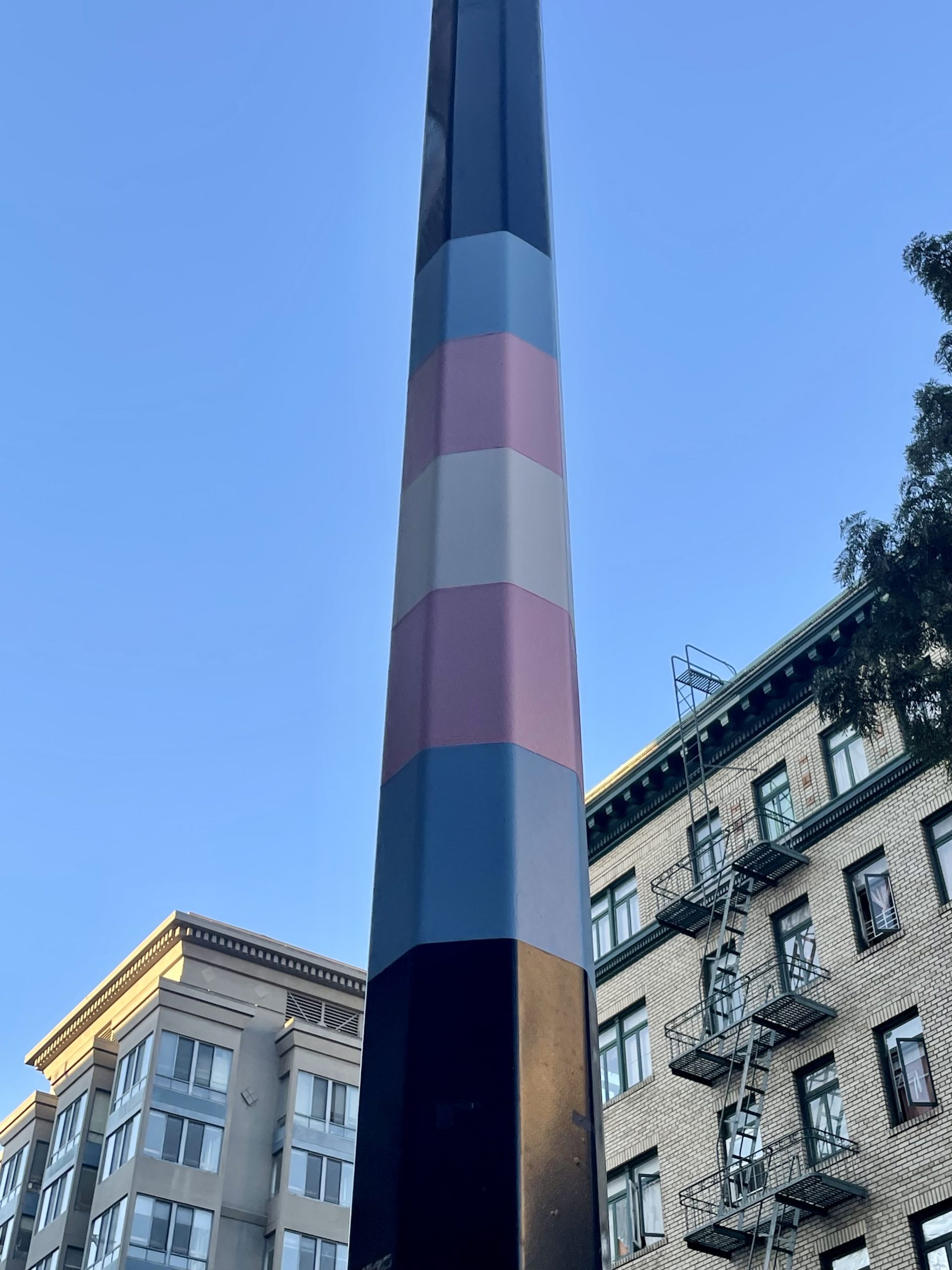
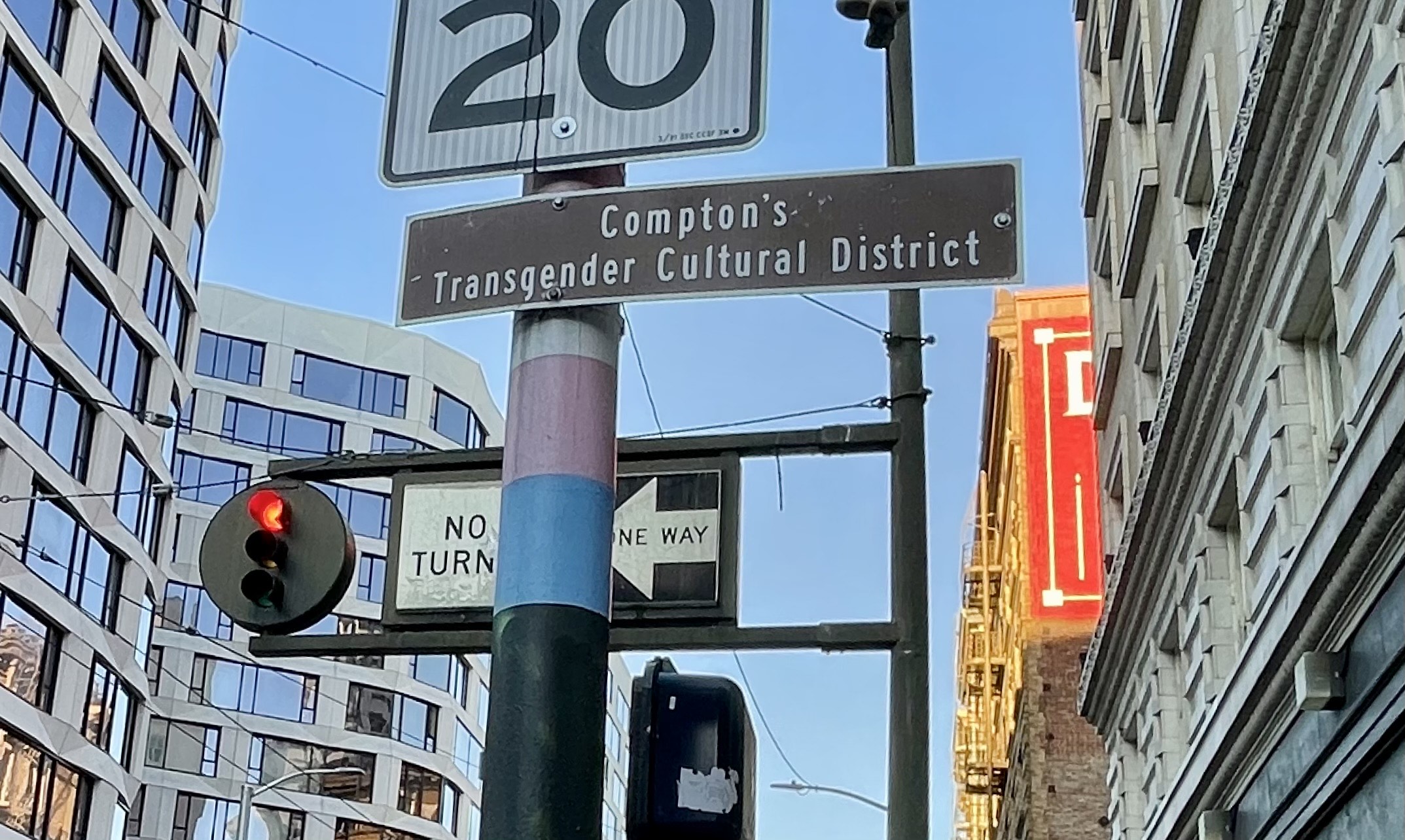
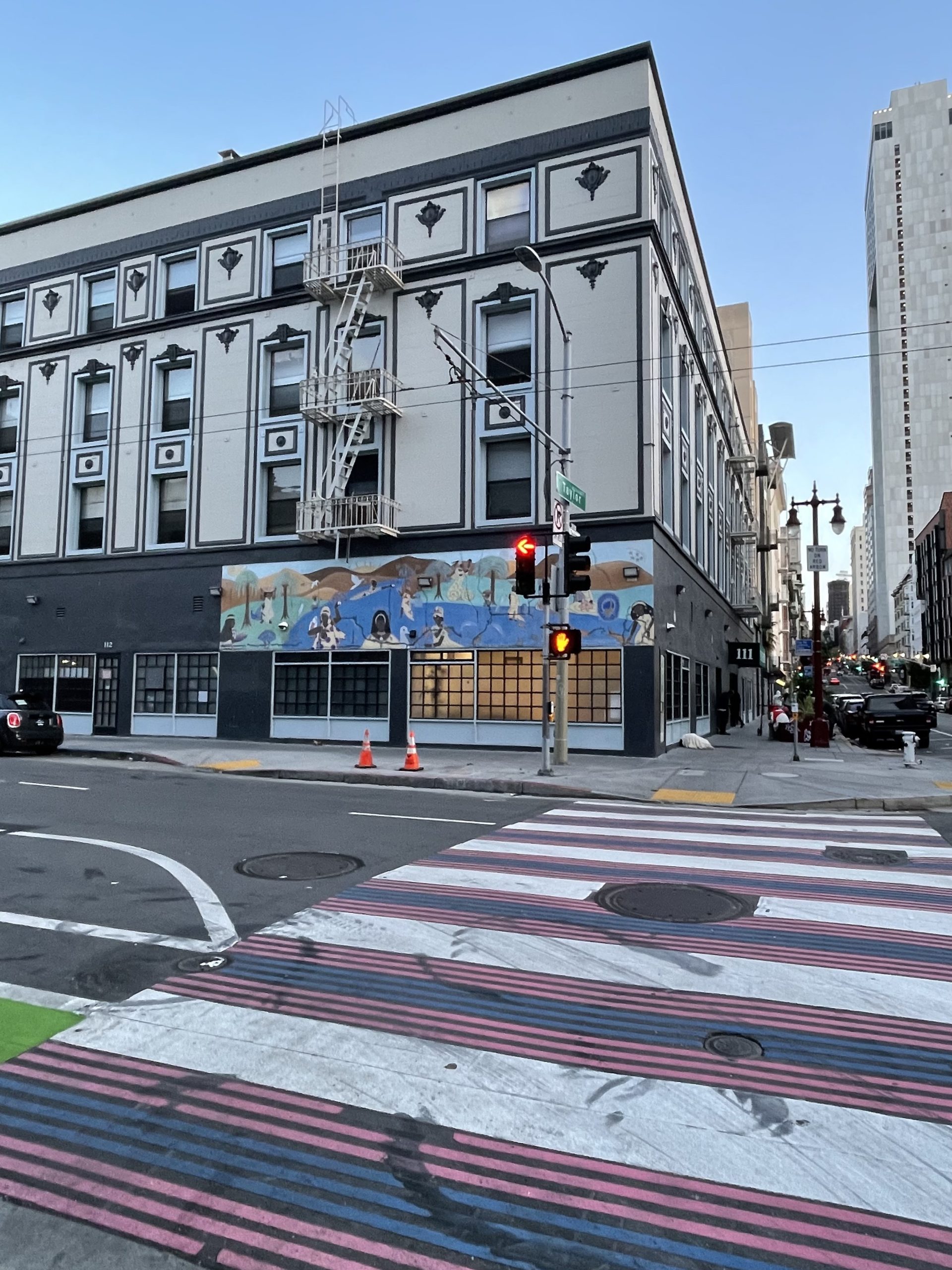
Since opening its doors at the corner of Eddy and Leavenworth streets in 2015, the Tenderloin Museum has invested in recovering and sharing the neighborhood’s trans history. Much of that history unfolded in an eight-block radius marked by stripes of light blue, light pink, and white, indicative of trans pride.
“The modern LGBTQ civil rights movement started here, and a lot of the initial organizing happened within the trans community,” said Katie Conry, the museum’s executive director.
The Compton’s Cafeteria Riot, which took place on the corner of Turk and Taylor streets in August 1966, is a fundamental component of the museum’s exhibitions and public programming.
The uprising ensued after a trans woman in the Compton’s Cafeteria diner resisted arrest by a police officer, and was also fueled by repeated incidents of police harassment and discrimination toward trans and queer people in the neighborhood. It preceded the June 1969 Stonewall Uprising, which occurred in response to a police raid of Stonewall Inn, a gay bar in New York City’s Greenwich Village.
Visibility is not just something that happens in the present. It can be for the future as well.
Sunsan Stryker, trans author, filmmaker, and theorist
“Specifically championing the Compton’s Cafeteria Riot has become such an important part of our mission. It’s a history we’re really proud to showcase,” she said.
“[Centering on] the riot really gives the Tenderloin back its rightful place in history as the leader of the modern LGBTQ civil rights movement, and it gives trans women back their rightful place in history, as the vanguard of the movement,” Conry added.
April 11 will mark the return of one of the museum’s popular offerings, “The Compton’s Cafeteria Riot” play, initially produced in 2018 at a diner on Polk Street.
It’s based on history uncovered by trans author, filmmaker and theorist Susan Stryker and on Donna Personna’s and Collette LeGrande’s 1960s experiences living as trans women in the Tenderloin. Both frequented Compton’s Cafeteria at the time.
“The play destigmatizes their stories, and telling them is more important than ever, as those in power are actively trying to erase them,” said Conry.
And it’s getting its own venue at 835 Larkin St. to give the audience an immersive experience.
“You’ll walk in, and you’ll feel like you’re at Compton’s Cafeteria, in the diner,” said Conry. “You come in and you’re served breakfast for dinner, and then the actors come in and the play unfolds around you.”
In addition to nabbing a new location to hold “The Compton’s Cafeteria Riot” play, the Tenderloin Museum will triple its size with a nearly 7,000 square feet expansion into an adjacent space in the former Cadillac Hotel.
Conry said the additional room will allow “more diversity, more community voices, and more oral histories” and for temporary exhibitions to become part of the museum’s permanent collection.
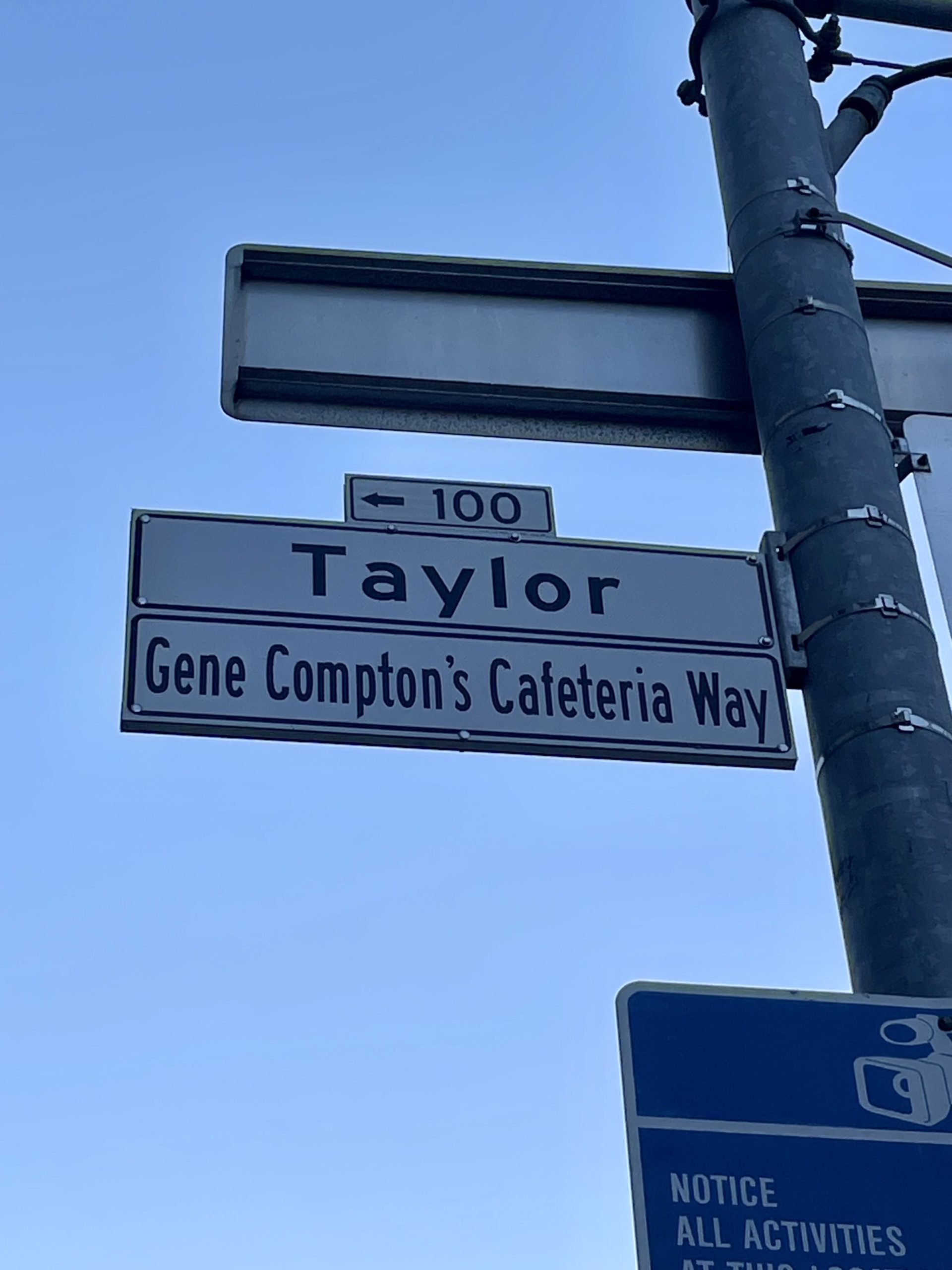
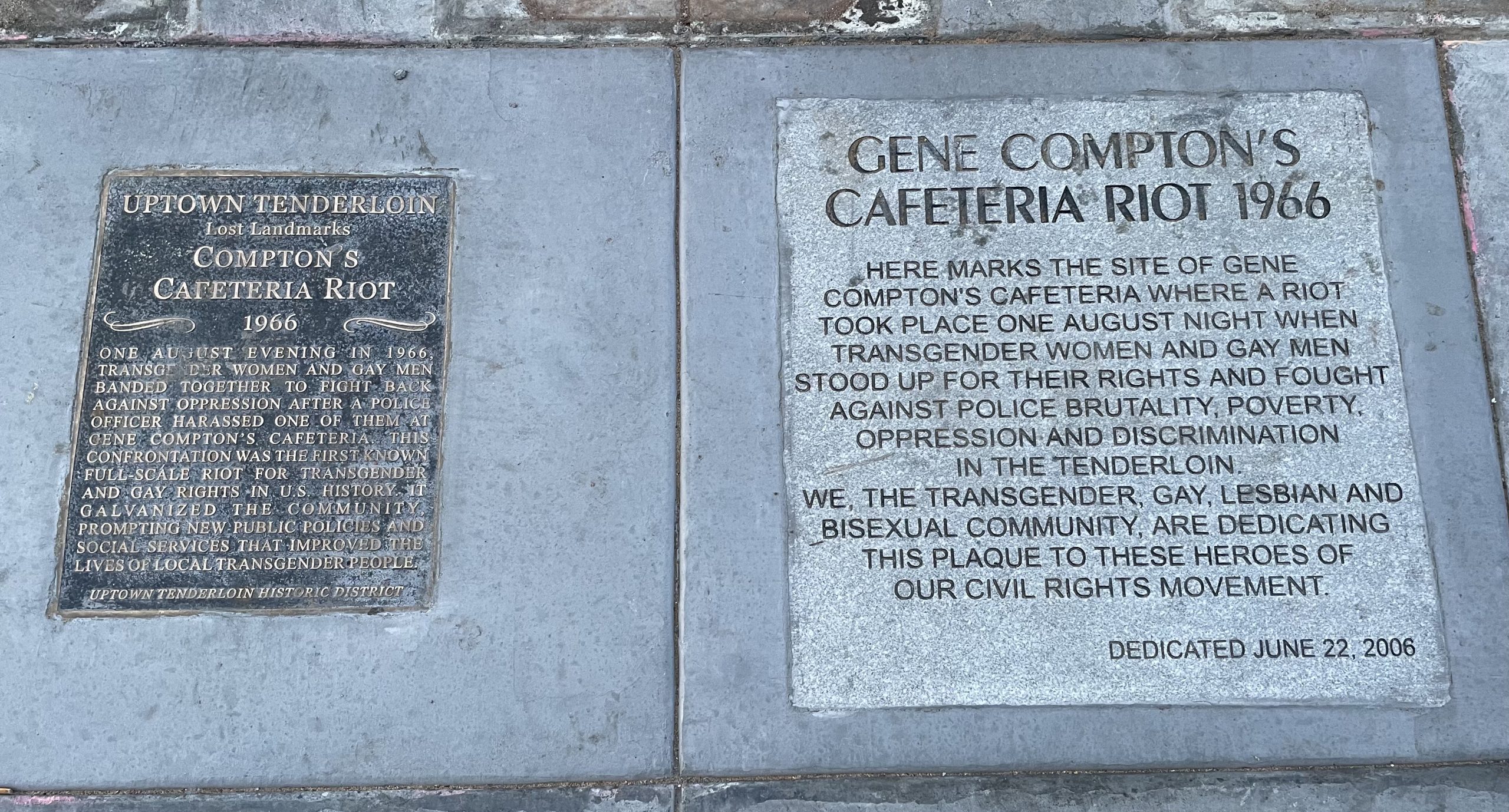
One of those exhibitions is “Transition Times: Re-Membering Anticarceral Resistance in the Tenderloin,” featuring material from Stryker’s comprehensive archive of the neighborhood’s trans history, some of which is also referenced in the Transgender District, including street signs such as “Gene Compton’s Cafeteria Way” and “Vicki Mar Lane” (in honor of San Francisco trans activist and performer Vicki Marlane), and two sidewalk dedications to the Compton’s Cafeteria Riot.
“I feel ambivalent about visibility, honestly. It is not really meaningful in and of itself, unless it changes something. I’m most interested in the kind of visibility the participants in the Compton’s Cafeteria Riot created. Their actions left a trace in their material environment and in historical record, that was there to be seen decades later. Visibility is not just something that happens in the present. It can be for the future as well,” Stryker wrote in an email to Mission Local.
As of late January 2025, the Compton’s Cafeteria building at 101 Taylor St. became a federal landmark, now appearing in the National Park Services’ listing of “National Register of Historic Places” and on the California Register of Historical Resources (listed as 101-102 Taylor St.), as initially reported by the Bay Area Reporter.
In the news and on the minds of LGBTQ-supportive cultural institutions is Trump’s executive order “Defending Women from Gender Ideology Extremism and Restoring Biological Truth to the Federal Government” and its prohibition of agencies’ use of federal funds “to promote gender ideology.”
Although several organizations are challenging the National Endowment for the Arts’ compliance with the order, and the American Civil Liberties Union filed a lawsuit on its behalf, Conry said the attacks have been terrifying.
The museum, a 501 (c)(3) nonprofit, doesn’t depend on federal funding, but it can’t afford to miss any funding opportunities.
“We certainly have concerns, but we’re really committed to these projects and what they’re going to do for the community, and we’re finding a way forward,” she said.
I’m surprised that you didn’t mention that the Compton’s Cafeteria building is now owned by Geo, one of the world’s largest private prison companies. It’s ironic that a site of resistance is being used to imprison people, some of whom may be trans. There are efforts underway to convert how the site is used to something that’s more in keeping with its history.
Stonewall changed everything. Comptons changed nothing. In fact no one cares about Comptons, but historical revisionist queens who are making a mountain out of a non event mole hill…
‘ “The modern LGBTQ civil rights movement started here, and a lot of the initial organizing happened within the trans community,” said Katie Conry, the museum’s executive director.’
That statement is false. The losers gay movement started with the Mattachine Society and the lesbian movement with Daughters of Bilitis in the 1950s.
Comptons was forgotten for decades, unlike Stonewall that was a basis for all manner of movement building.
Will the trans washing of homosexual history never end?
“The losers gay movement”
oops.
“the modern gay movement”
From what I’ve read the man who ran Compton’s Cafeteria was kind to the gay and trans folk and let them sit in his diner without having to buy anything and he even provided them with icewater. He was GOOD to them. Then the police got rough with them and what did they do? Trash Compton’s Cafeteria. Hurt the man who treated you with kindness. I will NEVER be OK about that. That was a shabby day for LGBT etc. and not much to be proud of. When you betray the very people who have been kind to you I do not respect you.
The homophiles movement was hella transphobic so Marcos’ comment is wrong. The anonymous cowards comment is just weird and hateful. Historical revisionist queens? Please. Compton’s riot sparked the lgbt revolution and is why sf is a gay metropolis today. Liberate Comptons from Geo Group!
Look, during ACTUP, there was a women’s caucus, a people of color (Bayard Rustin) caucus and, of course, a people with immune systems disorders (PISD) caucus, but there was no trans caucus.
For a left rooted ACTUP that cared about minority communities enough to ensure that they had secure safe spaces within a coalition with mostly gay white males, it is a tough sell to claim that we knew about trans people and purposefully, maliciously excluded them. There was PLENTY of gender diversity in ACTUP/SF. None of it was trans.
Trans as we know it did not exist until the mid 1990s when it was hatched in the neoliberal academy. Many older transsexuals and gender divergent people, the late San Franciscan Denise D’Anne and Stately Homo of England, Quentin Crisp, for example, reluctantly declared themselves trans later in life but did not consider themselves as such at the time.
Presentism is revisionism, revisionism in this case is homophobic as it erases and revises homo history, as trans people try to retroactively fashion their origin myths out of the historical raw material of others.