Mission Local previously profiled Tenderloin community court, one of eight “alternative courts” in San Francisco used for cases diverted out of the traditional criminal justice system.

Below, we profile “drug court” in comic journalism.
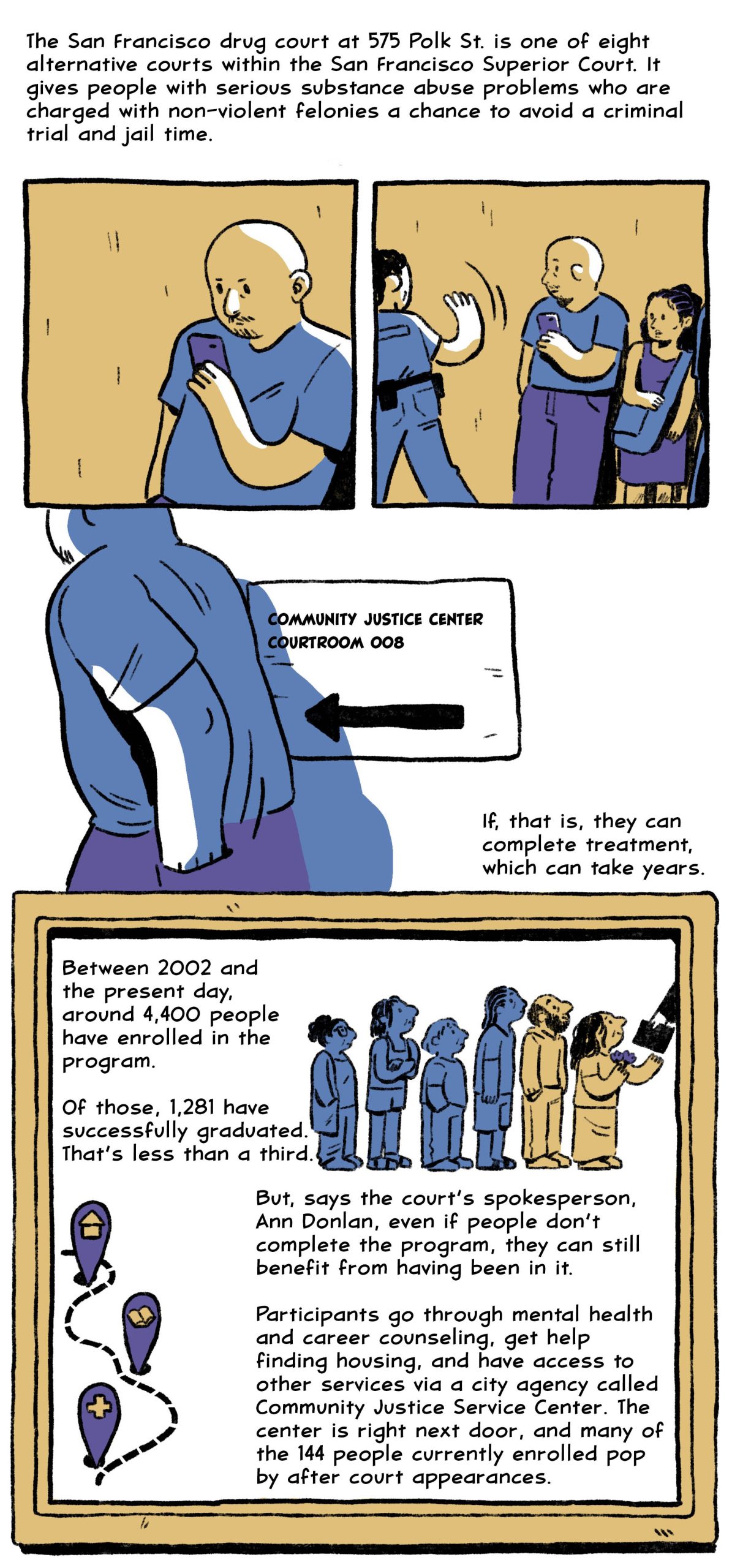

The San Francisco drug court at 575 Polk St. is one of eight alternative courts within the San Francisco Superior Court. It gives people with serious substance abuse problems who are charged with non-violent felonies a chance to avoid a criminal trial and jail time. 

If, that is, they can complete treatment, which can take years. 

Between 2002 and the present day, around ,400 people have enrolled in the program.

Of those, 1,281 have successfully graduated. That’s less than a third.

But, says the court’s spokesperson, Ann Donlan, even if people don’t complete the program, they can still benefit from having been in it. Participants go through mental health and career counseling, get help finding housing, and have access to other services via a city agency called  Community Justice Service Center,. The center is right next door, and many of the 144 people currently enrolled pop by after court appearances.
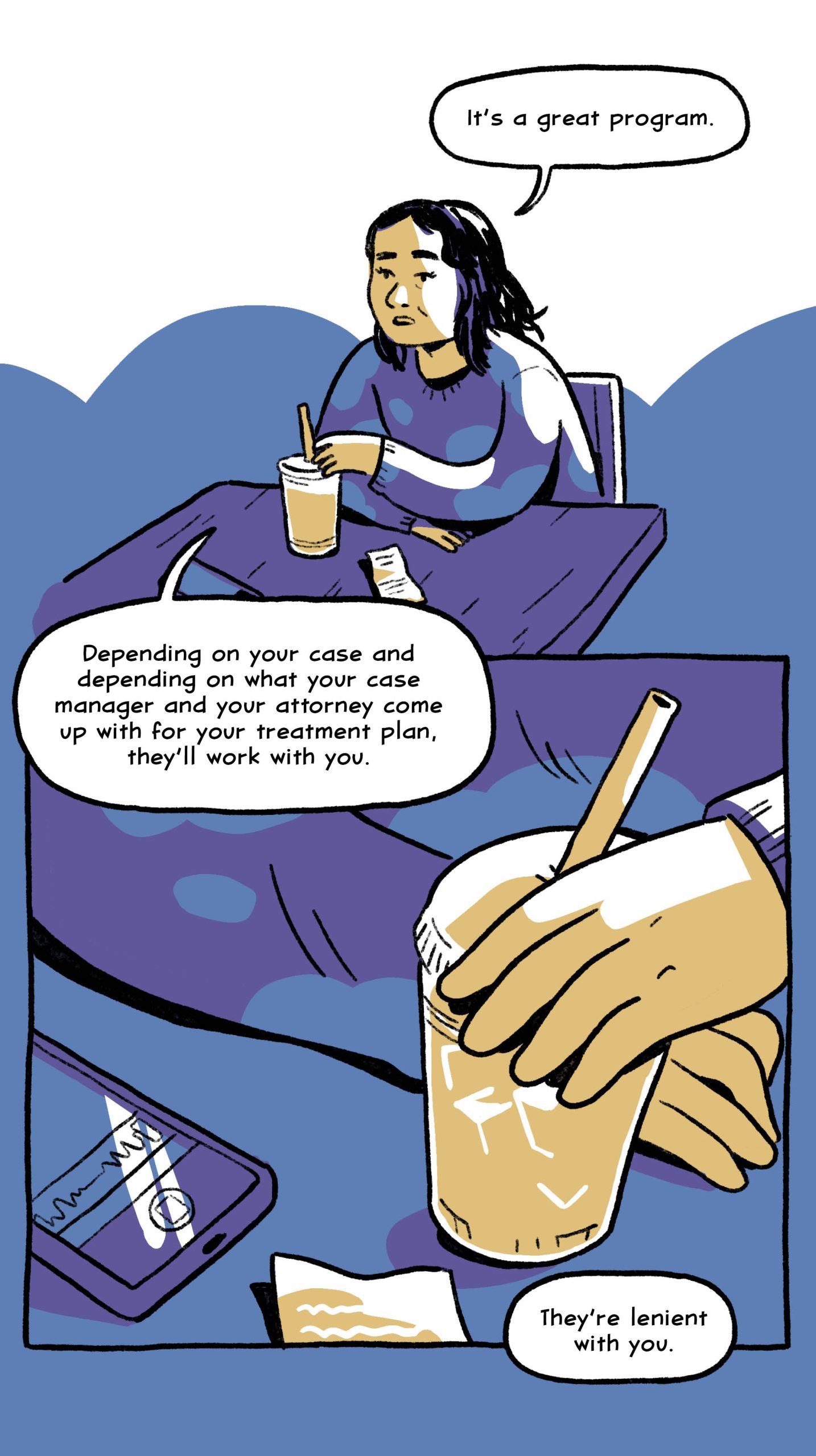
“It’s a great program. Depending on your case and depending on what your case manager and your attorney come up with for your treatment plan, they’ll work with you. They’re lenient with you.”
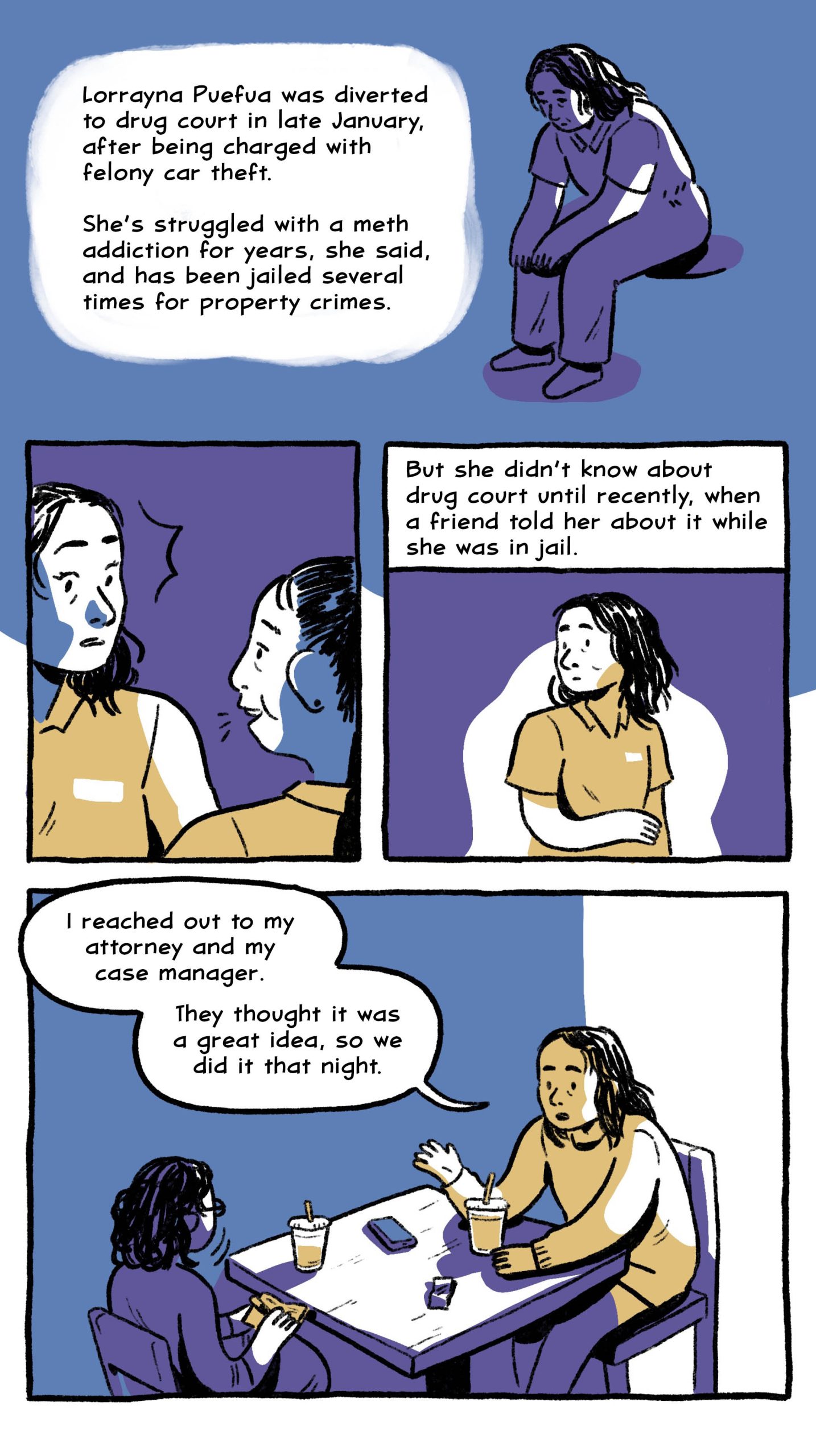
Lorrayna Puefua was diverted to drug court in late January, after being charged with felony car theft. She’s struggled with a meth addiction for years, she said, and has been jailed several times for property crimes. But she didn’t know about drug court until recently, when a friend told her about it while she was in jail.

“I reached out to my attorney and my case manager. They thought it was a great idea, so we did it that night.”
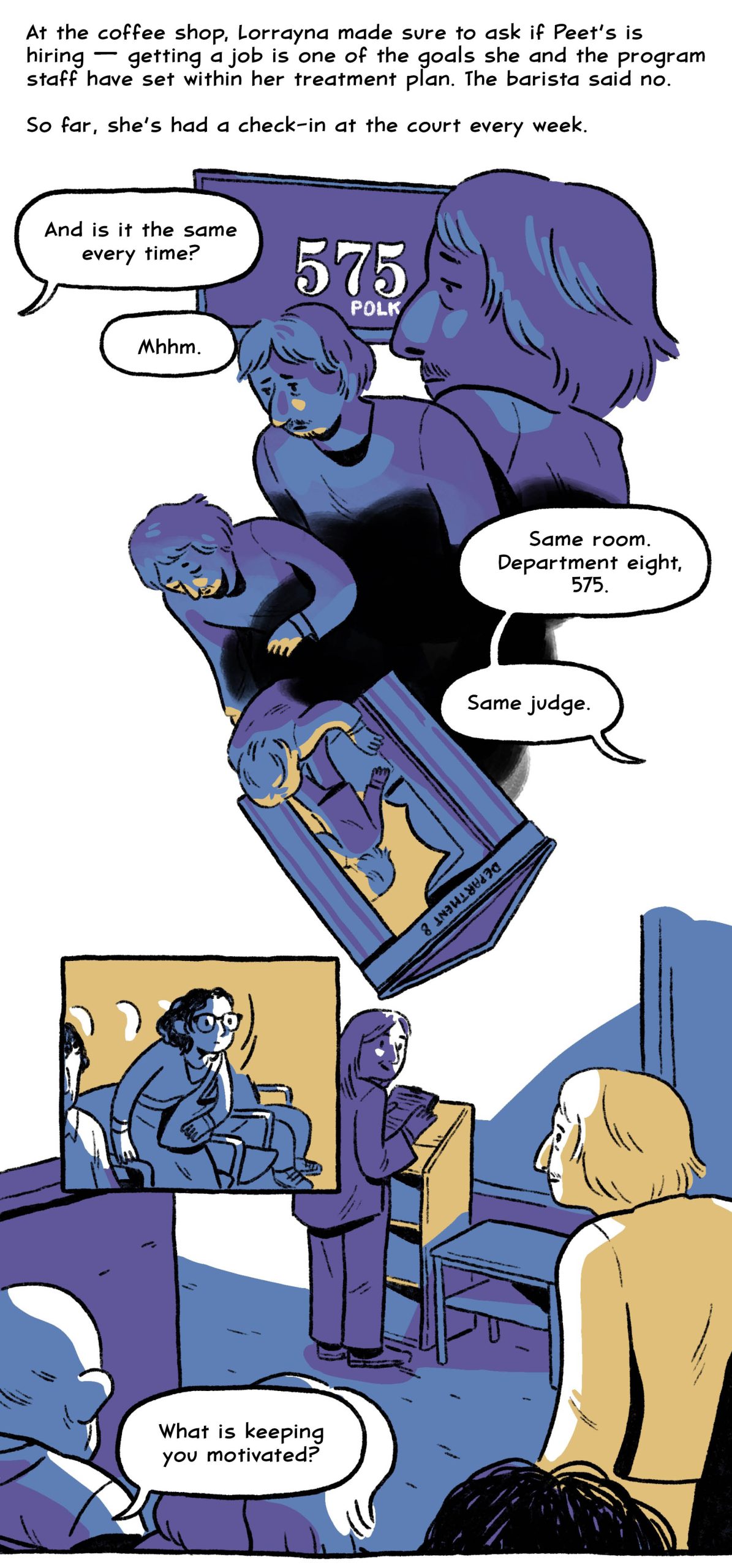
At the coffee shop, Lorrayna made sure to ask if Peet’s is hiring — getting a job is one of the goals she and the program staff have set within her treatment plan. The barista said no.

So far, she’s had a check-in at the court every week.

“And is it the same every time?”

“Mhhm. Same room. Department eight, 575. Same judge.”

“What is keeping you motivated?”
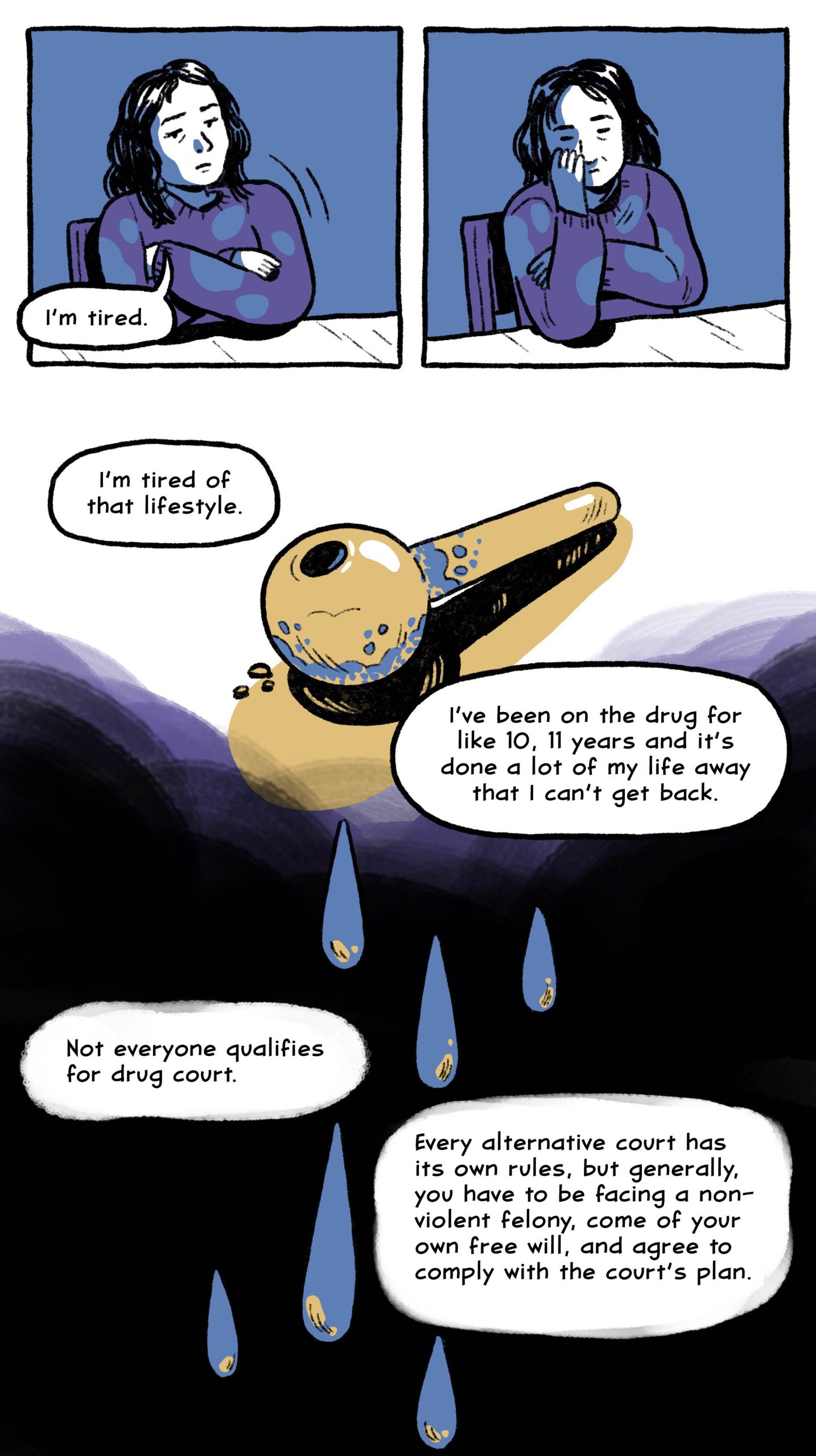
“I’m tired. I’m tired of that lifestyle.”

“I’ve been on the drug for like 10, 11 years and it’s done a lot of my life away that I can’t get back.”

Not everyone qualifies for drug court. Every alternative court has its own rules, but generally, you have to be facing a non-violent felony, come of your own free will, and agree to comply with the court’s plan.
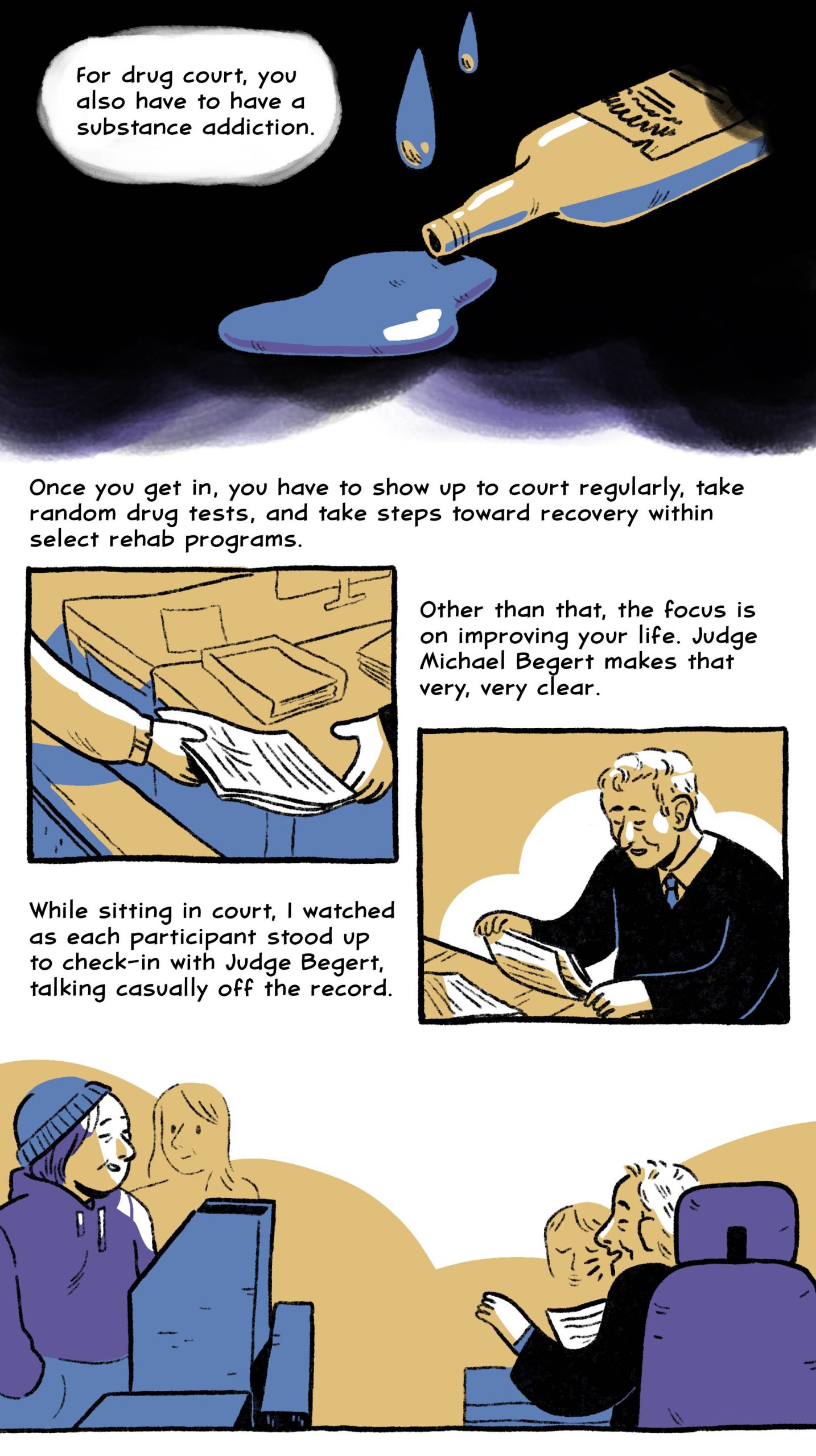
 For drug court, you also have to have a substance addiction.

Once you get in, you have to show up to court regularly, take random drug tests, and take steps toward recovery within select rehab programs.

Other than that, the focus is on improving your life. Judge Michael Begert makes that very, very clear.

While sitting in court, I watched as each participant stood up to check-in with Judge Begert, talking casually off the record.
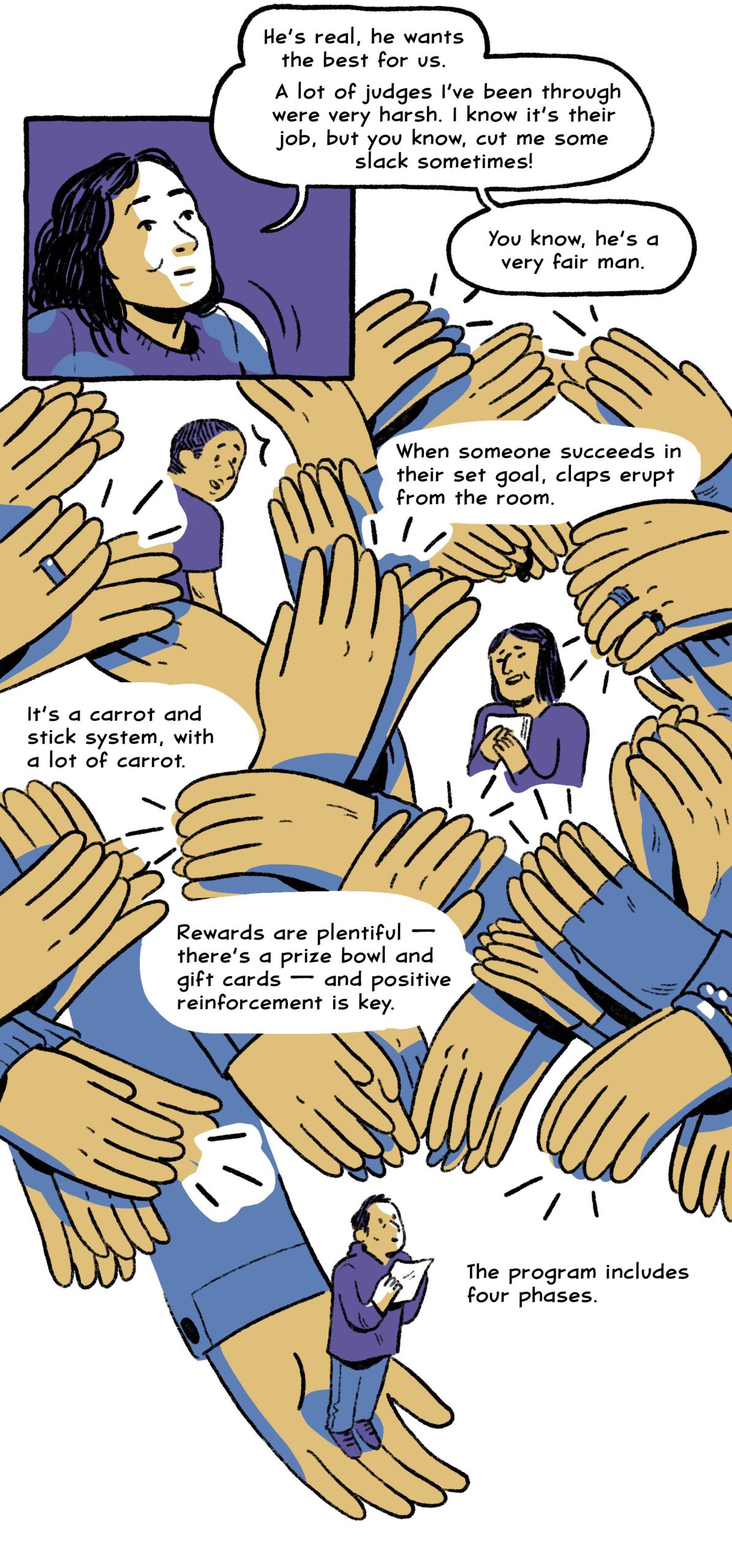
“He’s real, he wants the best for us. A lot of judges I’ve been through were very harsh. I know it’s their job, but you know, cut me some slack sometimes! You know, he’s a very fair man.”

When someone succeeds in their set goal, claps erupt from the room. It’s a carrot and stick system, with a lot of carrot. Rewards are plentiful — there’s a prize bowl and gift cards — and positive reinforcement is key.

The program includes four phases.
Each one gets the participant closer to sobriety, and gaining more agency over their life. It starts out with helping the participants build up hope, creating a strategy for how they will pick their life back up and how they will stay abstinent. 

While sobriety is at the core of this program, falling back isn’t punished.

“Sanctions are not given for relapse or for positive [urinalysis] tests for substances,” reads the drug court handbook. “Relapse is part of the recovery process.”

But to go on to the next phase, participants have to be sober for an extended period of time, starting at 30 days in phase one.

Lorrayna is in phase one of the program with 43 other participants — starting to look for stable housing, a sober support system, a sponsor, a job — it’s a lot, especially for someone just starting recovery.

“It’s everywhere. Drugs.”

It was “a little rough” at first, she told me. But now she’s a month in —

“Everything is starting to turn out.“

“And it’s like I said, I’m proud of myself.”
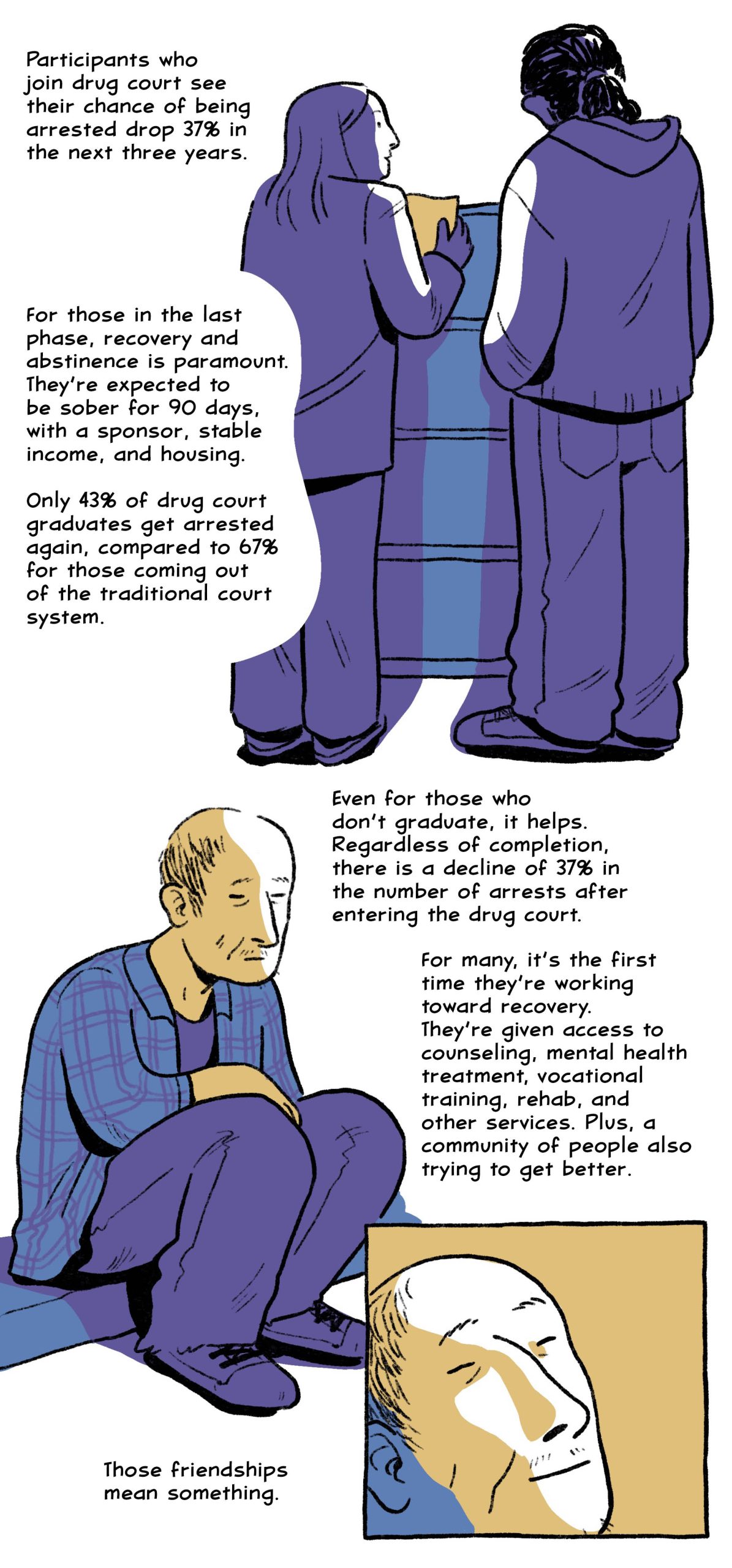
Participants who join drug court see their chance of being arrested drop 37% in the next three years.

For those in the last phase, recovery and abstinence is paramount. They’re expected to be sober for 90 days, with a sponsor, stable income, and housing.  

Only 43% of drug court graduates get arrested again, compared to 67% for those coming out of the traditional court system.

Even for those who don’t graduate, it helps. Regardless of completion, there is a decline of 37% in the number of arrests after entering the drug court. For many, it’s the first time they’re working toward recovery. They’re given access to counseling, mental health treatment, vocational training, rehab, and other services. Plus, a community of people also trying to get better. 

Those friendships mean something.
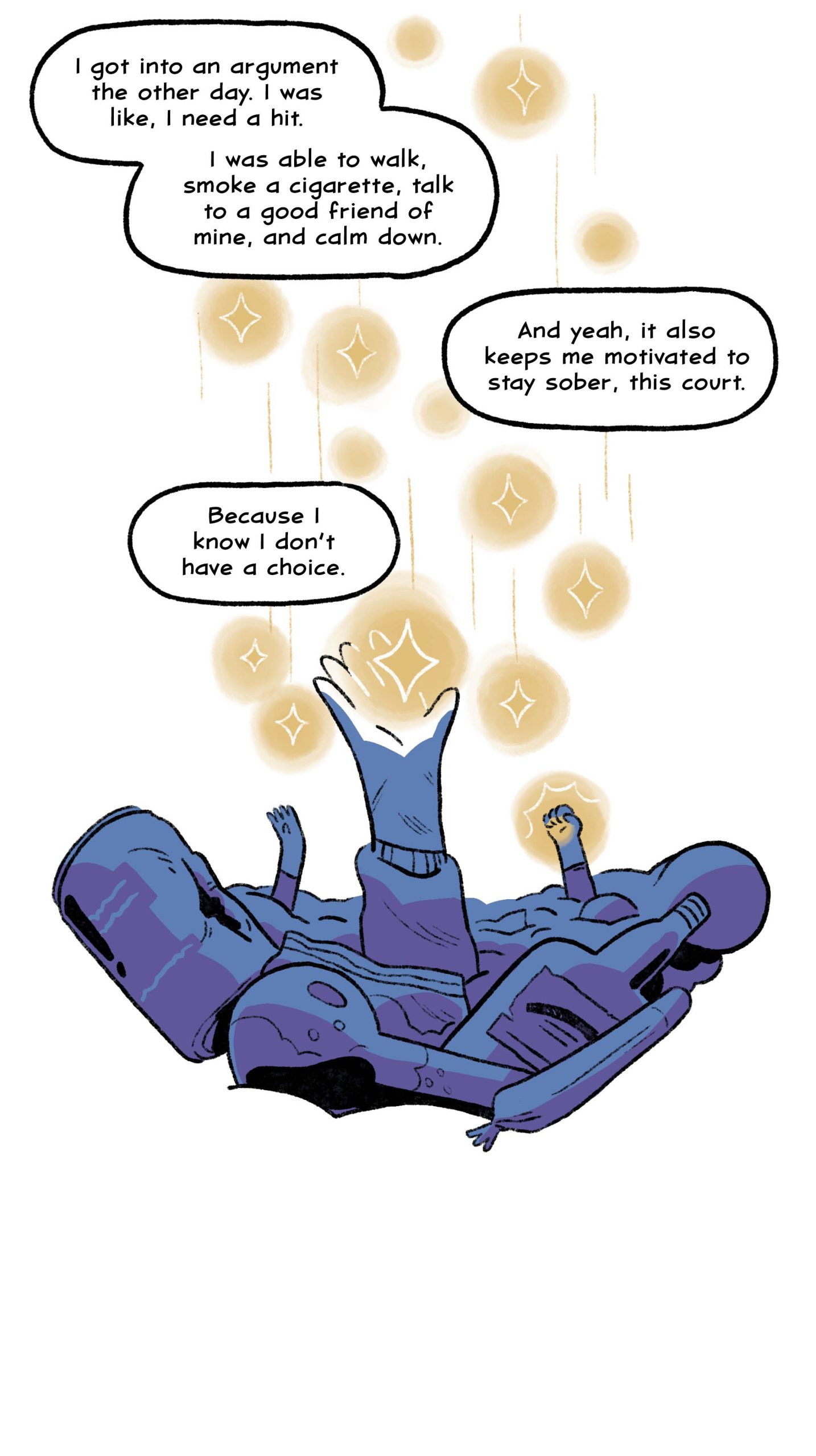
“I got into an argument the other day. I was like, I need a hit.”

“I was able to walk, smoke a cigarette, talk to a good friend of mine, and calm down. And yeah, it also keeps me motivated to stay sober, this court. Because I know I don’t have a choice.”

Follow Us

Ronna Raz is an illustrator and intern with Mission Local.

Join the Conversation

7 Comments

  1. This is why I support Mission Local! Thank you for making a space for creative and thoughtful reporting. This is one of my favorite comic journalism articles so far. Please keep exploring different reporting formats. Well done Mission Local!

    +2
    -1
    votes. Sign in to vote
  2. I wonder at what point these progressives underwent lobotomies!
    Lorrayna, a repeat offender with previous convictions and jail time, was diverted to one out of 14 alternative courts after being charged with car theft, drug use, and other felonies so she could qualify for free housing, meals, and other taxpayer subsidies. The FAILURE rate is 67%, and progressives continue to advocate for enabling and rewarding bad behavior.

    +2
    -2
    votes. Sign in to vote
    1. Hmmm, so you would rather spend hundreds of thousands of dollars putting that same person in prison. It’s not cheaper to lock people up and it’s certainly not more humane, so what is the advantage to society if both the taxpayer and the victims are worse off?

      +1
      -1
      votes. Sign in to vote
  3. Nice artwork
    Drug addiction is rough; however , choices have consequences.
    Zero drug tolerance .Laws are laws .
    Ethically , medically and legally wrong to sell , distribute , share and use drugs .

    Nothing good comes from ingestion illegal
    Poison.

    Drug court is worth a try but must be very strict .
    If persons fail , lock them up.
    Game over .
    They cannot be allowed to harm themselves and the rest of us .
    Clean this mess up.
    Lawlessness is lawlessness .
    Taxpayers will not support addicts who continue to use drugs .
    That is very selfish .
    Self accountability and responsibility.
    Growup and get your acts together .
    Tired of the whining whoa is me .

    0
    0
    votes. Sign in to vote
Leave a comment
Please keep your comments short and civil. Do not leave multiple comments under multiple names on one article. We will zap comments that fail to adhere to these short and easy-to-follow rules.

Your email address will not be published. Required fields are marked *