


Mission Local is holding intro interviews with incoming and incumbent supervisors, including Rafael Mandelman, Shamann Walton, Chyanne Chen, Jackie Fielder, Joel Engardio, Danny Sauter, and Stephen Sherill. You can read those interviews as they are published here.
Mission Local also held exit interviews with elected officials leaving office after the Nov. 5, 2024 election: London Breed, Aaron Peskin, Hillary Ronen, Ahsha Safaí and Dean Preston.
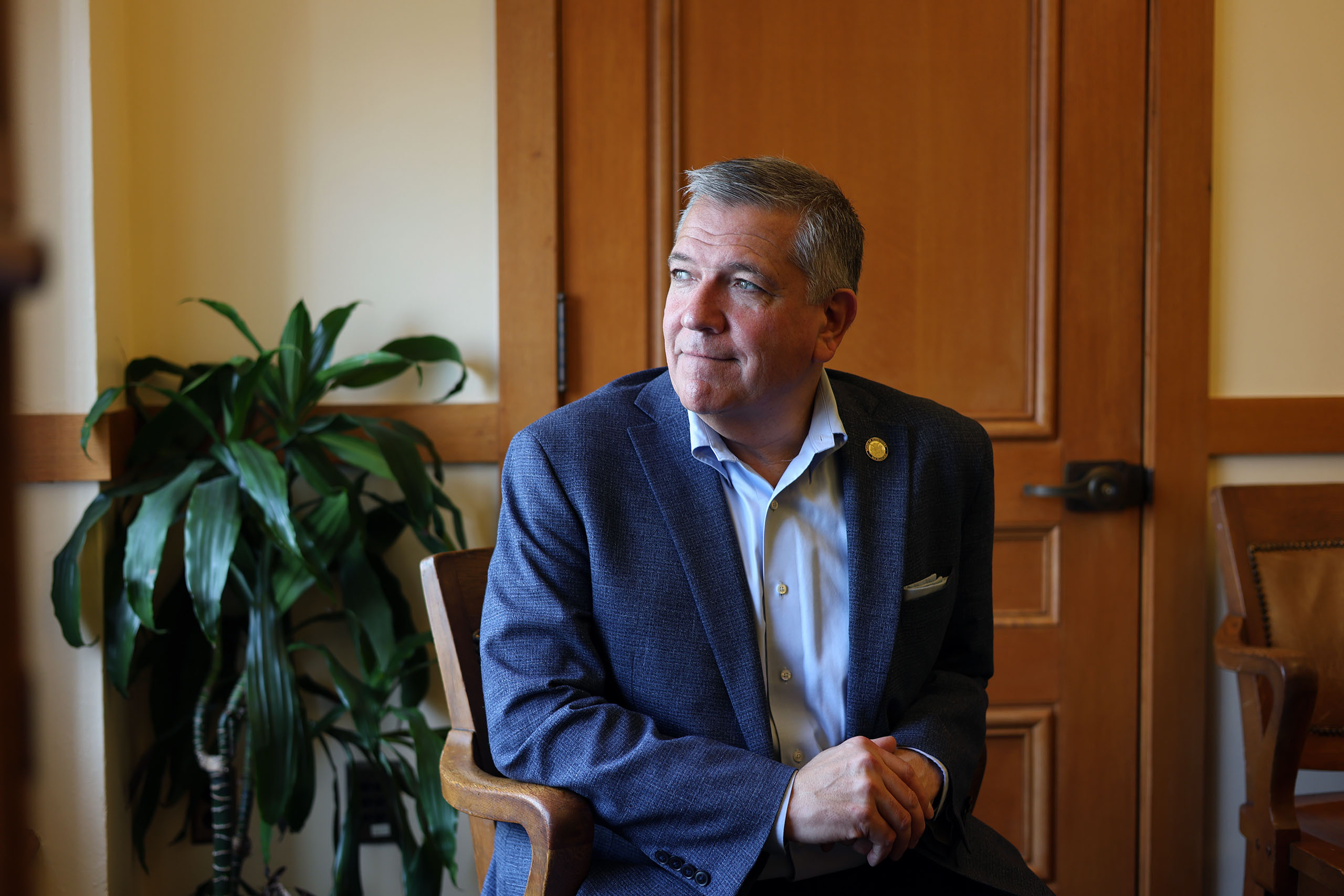
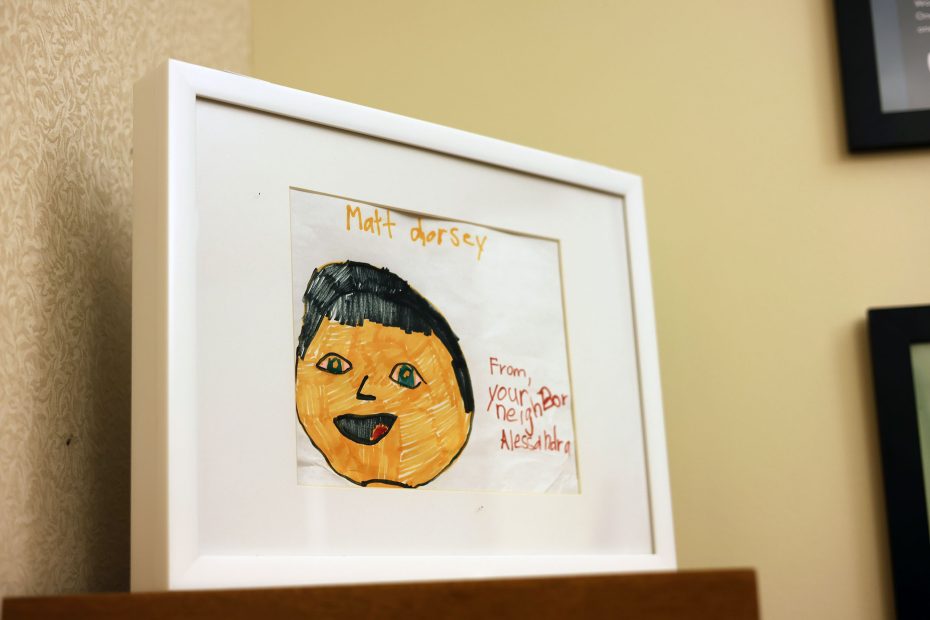
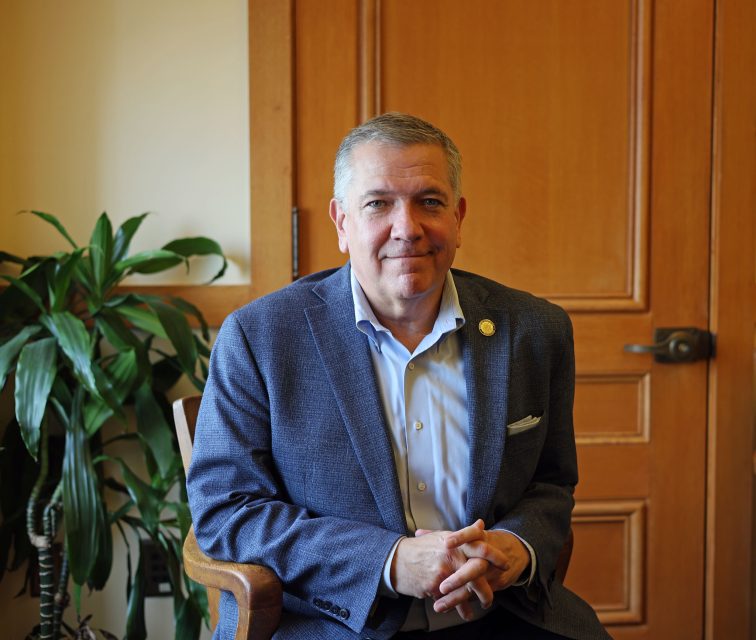
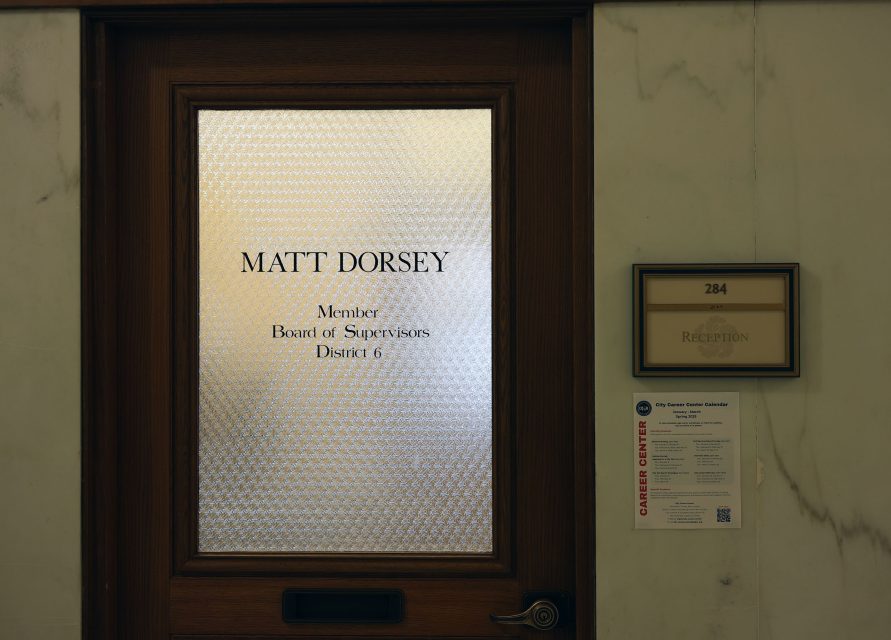
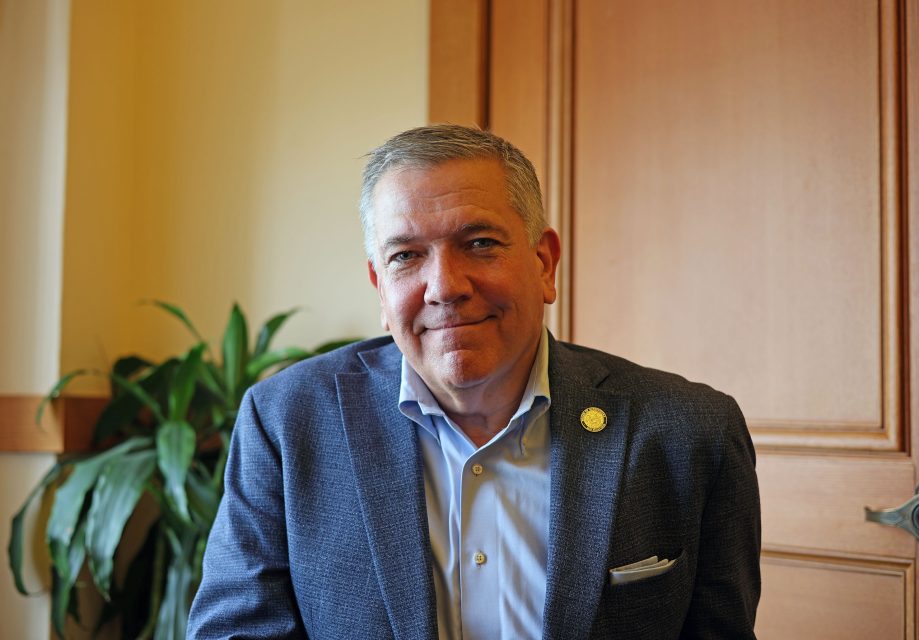
Supervisor Matt Dorsey and his team were still moving into a new office in City Hall on Feb. 28 when he sat down with Mission Local. Dorsey, who wore a cornflower blue suit, politely agreed to photographs, on the condition that he have a chance to tidy up first. He didn’t want to lose his “gay card” for poor decorating, he said, smiling.
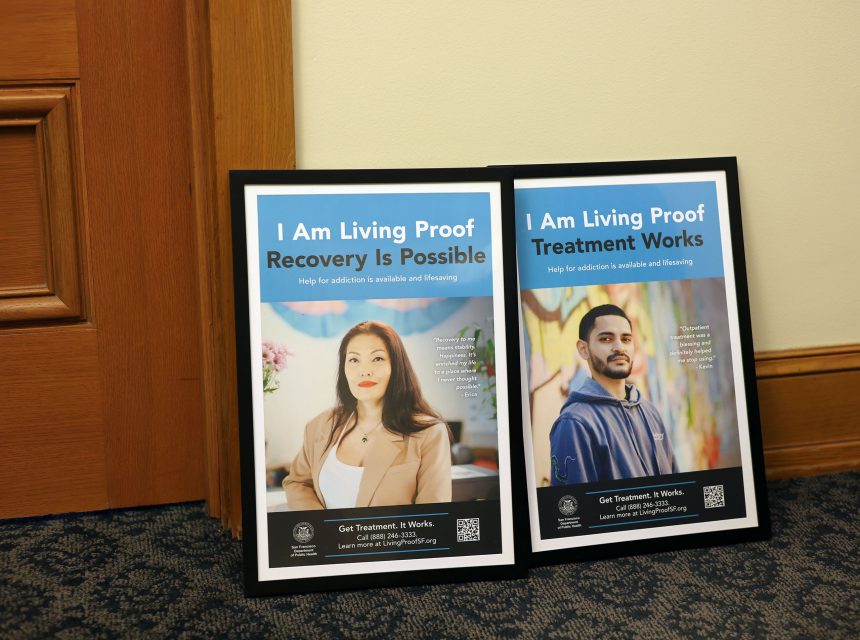
In the office waiting area, framed posters of people beneath inspirational banners leaned against the wall, waiting to be hung as part of a Department of Public Health campaign. “I Am Living Proof Recovery is Possible,” read one. “I Am Living Proof Treatment Works,” read another.
Dorsey was appointed District 6 supervisor by then-Mayor London Breed in May 2022. The following November, he was elected for a full term in a race against former District 6 supervisor Matt Haney’s preferred successor, his former chief of staff Honey Mahogany. Before being appointed, Dorsey was a spokesperson for the San Francisco Police Department and, before that, for City Attorney Dennis Herrera.
Last month, on Jan. 3, Dorsey requested that city agencies responsible for health and public safety deliver a report to the Board of Supervisors on what would be required to “maximize the use of arrests and compulsory detox and treatment to solve drug-related lawlessness” along the Sixth Street corridor and in downtown San Francisco. Specifically, he continued, he wanted a plan that could result in “no fewer than 100 arrests per night.”
He has not yet won that, but Mayor Daniel Lurie is making a show of enforcement. On Feb. 26, police and sheriff’s deputies made 83 arrests in Jefferson Square Park in a coordinated, multi-agency raid. Dorsey had been assured, he said, that all of them had been offered access to treatment.
Being charged with a “treatment-mandated felony” under the newly passed Proposition 36, he said, is an opportunity to get people struggling with substance-use disorders to begin their path toward recovery. “I don’t think of making arrests as punitive,” he added.
Dorsey himself has been through substance-abuse treatment several times, which he talks about openly; it has become a pillar of his political identity. He’s aware that his experience differs from that of someone living on the street; Dorsey always had the benefit of a good job and private insurance. Still, he’s resolute that policing and mandatory treatment is a critical part of the city’s drug policy.
The city’s jails are increasingly overcrowded and chaotic, and the city is facing a budget crisis. Dorsey acknowledged that finding spaces in a treatment program for all these people could create a “chokepoint.”
Money currently going toward street-crisis-response efforts can be redirected toward mandatory treatment, he suggested. People emerging from drug treatment programs could be trained to work with addicts themselves. More than anything, said Dorsey, he wants San Francisco to be famous, not just for cable cars or doom-loop narratives, but as a world leader in substance-abuse treatment and rehab.
This interview has been edited for clarity and brevity.
Mission Local: You’ve been on the Board of Supervisors for almost three years. What are you the most proud of?
Matt Dorsey: When I was appointed, I said that I really wanted to do this because of my own journey of recovery from addiction. I refer to it often as a job I never thought I would want, let alone have.
When I was at the police department, there was a meeting every month to preview the monthly report on overdose deaths. This was at a point where people were so focused on Covid-19 that nobody seemed to care about a public health calamity that was twice as deadly. Month after month, I would look at this number, knowing I was one bad decision away from being there.
I had a relapse during my time in the police department, because Covid — it was a difficult time. It made politics more personal to me.
What I’m most grateful for now is seeing a recovery community that is really finding a voice in politics. There’s a couple of times where I’ve had a press conference or event and we’ll ask, “How many people here have lost someone in the last few years to a drug overdose?” And every hand goes up. We’re talking about between 600 and 800 people per year dying of drug overdose deaths. This is touching everyone.
I’m often invited to drug rehab graduations. I bring certificates and give a little speech, but it’s really important to be reminded: I’ve spent most of my adult life in recovery. The worst thing that can happen to me is to lose my humility.
I’m really grateful, at this point in my career, that I get to work on things that I really care about, and that I think, increasingly, the city I care about, cares about.
ML: You have always been very vocal about your own journey and history with substance use. It seems that you’ve also, over time, become very vocal about wanting to take a more punitive stance towards drug use. You’ve spoken a lot about abstinence as the way to recovery, even though many doctors see harm reduction as the best proven strategy for dealing with addiction. Why have you come out in favor of more punitive measures?
MD: I don’t think there’s evidence that harm reduction is a preferable outcome to long-term recovery and abstinence. Harm reduction is a part of, and should be a part of, a coherent Four Pillars strategy. [The Four Pillars strategy, outlined in a report released by then-Supervisor Dean Preston in November, combines prevention, harm reduction, treatment, and law enforcement drug policies. It’s based on a policy developed in Switzerland in the ’80s.]
Sometimes there is a bureaucratic preference to do harm reduction, because it’s the easiest thing to measure, and it isn’t as complicated as incentivizing and supporting people’s long-term recovery.
One of the things that often comes up in conversations with public health folks is — if we were to look at some of the most successful public health interventions around addictive substances, it’s cigarette smoking. There seems to be a double standard: We will be more accommodating to illicit drug use, but take a much harder line against cigarettes.
I’m not against harm reduction, including, when we can finally do them under federal law, supervised consumption sites. What people would describe as punitive is less about punishment and more about making an intervention in somebody’s addiction.
Most of the cities in Europe that have adopted Four Pillars strategies, they have supervised consumption sites, but take a really impressive line when it comes to public-nuisance behavior. We have to not apologize for enforcing laws that are on the books against public drug use.
There’s a guy named Keith Humphreys, who is former President Obama’s drug policy advisor. He has said that interventions should be swift, certain and mild. It’s not about ruining anybody’s life and or putting them away. This isn’t a return to a drug-war model. It is about making an intervention that can get people into detox and treatment, including mandatory detox and treatment.
Now, I know that there is sometimes debate about whether mandatory drug treatment works. NIDA, the National Institute on Drug Addiction, says that treatment doesn’t need to be voluntary to be effective. Studies that show people going into drug treatment voluntarily will have better outcomes. I think what that’s measuring is a less severe addiction. [A 2015 systematic review found that “evidence does not, on the whole, suggest improved outcomes related to compulsory treatment approaches.”]
The Diagnostic Statistical Manual on Psychiatric Disorders (DSM-5) identifies the criteria for defining what a substance-use disorder is. There’s 11 of them, I believe. And if I’m not mistaken, like, four or five of them are resistance to treatment. [The DSM-5, in its descriptions of different types of substance-use disorders, outlines one criteria as an unsuccessful effort to cut down on the substance, but there is no specific mention of “resistance to treatment.”]
The more severe your addiction, the harder it is going to be. I think that’s why it’s really important to get to people early before they get really locked in. It gets more challenging, the longer people are active in their addictions.
I don’t think of making arrests as punitive. With the Prop. 36 advent of treatment-mandated felonies, none of that works if we don’t have treatment. We have to make sure that criminal justice interventions result in the best services, detox medication, and opportunities to have an off-ramp from addiction. The good news is, the public-safety challenges that we’re facing aren’t intractable gun violence or gang homicide problems. Most of it seems to be public disorder and retail theft, the kind of low-level crime that is driven largely by drug use and drug dealing.
One feature of synthetic drugs is that they’re easier to transport. They’re more easily manufactured. They’re more profitable. They’re more addictive. We’re going to have diminishing returns on [supply] side interventions. So we have to be focused more on demand side, meaning drug users, but making sure that this isn’t about punishment. I trust a city like San Francisco to do that because, historically, we have some programs that we have run out of our jails that are national models.
When [former sheriff] Mike Hennessey was here, we had started Five Keys [the nonprofit provides education programs in county jails and manages several of the city’s shelters]. We have a high school. Our city can do this in a way that will really help people get on the other side of their addictions and restore order.
One thing that I heard a lot when I was running for supervisor — there was a theme of anger that I was hearing from voters. People knew that I was newly appointed, so it wasn’t that they were blaming me for it. But I got a lot of fingers pointed in my face saying, “Fix this. If you don’t, there’s going to be a Rudy Giuliani or Donald Trump who comes along, and we’re all voting for him.”
It was surprising, but with the benefit of hindsight, I look at what played out in 2024 — the biggest shift away from Democrats came in cities that are being led by Democrats. [A New York Times analysis found that voters in the largest urban counties moved more toward Donald Trump since the 2020 election than the nation did as a whole, but that the shift was in line with the demographic makeup of those counties.]
There is real anger out there from people who want to live in cities, who like density and bike lanes. For the urbanists, the people I represent in District 6, public safety is part and parcel of what urbanism has to be. Having a high-quality public realm doesn’t matter if people are afraid to go there, or it’s been taken over by public drug use or other public nuisances.
ML: You said that a lot of the crime that San Francisco deals with is more low-level, community-based crime. You also said that arresting people is not punitive. When people get arrested and are being taken to jail, in what way is that not punitive?
MD: So, the idea is not to punish. Punitive is a form of the word “punish.” Under the Prop. 36 treatment-mandated felonies, the option would be presented that you are going to treatment or to jail. There’s nobody going to jail unless they choose it over drug treatment.
There was a study that Keith Humphreys shared with me. I believe it was a study of alcohol treatment, but I think this would probably apply equally to drug treatment. The number of people who are in drug treatment who identify some mandate or coercion that got them there is over 90 percent. As a three-time drug rehab graduate, I can say: I was about to lose my career. I was going to lose friends. In many cases, it’s people who are going to lose their home, their wife, their kids. There’s some feature of hitting bottom that has got them to a place where they have to address [their addiction]. Criminal-justice interventions can be that for a lot of people.
ML: You just described wanting to have people take the option of going into treatment rather than choosing to go to jail. But it seems like in the courts, people who are applying for mental health diversion are not being given that option, or they’re being tried under felony charges and have less opportunity to expunge their record. In what ways should the court be developing its capacity to offer more people treatment?
MD: I think that’s going to be the biggest challenge. As I said, treatment-mandated felonies don’t work without treatment. So we have to do this.
When I first ran in 2022, my sense of where San Francisco was in politics is that the city, politically, was going through a process that wasn’t different from what a family goes through when they deal with somebody who is struggling with addiction. We come to a realization that tough love is the only love there is.
I get emails from parents with a picture of their kid. They’ll be from someplace that’s usually not San Francisco. [They’ll say]: “If you see him, would you please arrest him? This is probably the only chance he’s got.” It’s heartbreaking.
But I also think that it’s true in some ways. For the people who are coming here who are really at the end of their rope, they may not have the kind of social benefits and private insurance that I had. I had people in my life who just weren’t going to tolerate it and who were tough love with me. If you don’t have that and you’re on the street, I do think that a criminal justice intervention from a city like San Francisco can be life-saving. It may be the only chance they’ve got. I really am interested in the possibilities of recovery.
ML: You said that the programs for treatment in San Francisco’s jails are national models —
MD: I don’t know that [they are] right now. In fact, yesterday, I was trading calls with Sheriff Paul Miyamoto. I think I owe the person who runs jail health a call. It’s my understanding that, especially for opioid use disorder, opioid agonist treatments are readily available — methadone and buprenorphine — and that everybody has access to treatment.
I think scaling that up and making sure that we’re really focused and centered around drug treatment and recovery is going to be hugely important.
ML: Why don’t you feel like the programs right now are a national model?
MD: I don’t know that they’re not. I just don’t know enough about them.
I’ve heard from different advocates that we may not be doing this as well as we could. It probably is worth having a hearing as we move to making use of treatment mandated penalties. I’ve got a couple of letters of inquiry out, and that’s sort of to tee up a hearing.
ML: How are you able to advocate for people to go and receive treatment in the jails if you don’t know what kinds of treatment programs are being offered in the jails?
MD: It is going to be something that comes up during budget. And, right now, I’m vice chair of budget, so I’m really looking forward to digging in on this. I’m not saying that it isn’t a national model, I just haven’t been apprised of it yet.
ML: Why are you such an advocate for people getting treatment through the justice system?
MD: I think the alternative is the worst thing that we can do for somebody who’s out there at the end of their rope in addiction.
When I proposed the Recovery First ordinance, one of the things that I felt really strongly about is just putting a policy toward some kind of goal that’s getting people to a better and healthier place.
When we talk about treatment-mandated felonies and coercive interventions like the criminal justice system, we’re talking more about a stick. Contingency management is more of a carrot. It’s basically paying people to not use drugs. For decades, it has been hugely successful.
Medi-Cal won’t pay for contingency management programs for opioid use disorder. We passed a program called Cash Not Drugs. It’s going to be implemented this year. It’s going to be targeting the folks who would be assessed for and diagnosed with substance-use disorder under Mayor Breed’s Proposition F, that was basically requiring people who are signing up for the county adult assistance program to be assessed for substance-use disorder. If they have a substance-use disorder, they are offered treatment. I think they have to stay in treatment. They don’t have to be sober.
We have a pilot program that’s going to be starting: It’s three years that will offer up to $100 per week if somebody is voluntarily willing to submit to a drug test, and if they’re negative for illegal drugs. They don’t have to be sober from marijuana, just illicit drugs. I’m really optimistic about that.
I want San Francisco to be a destination city for drug recovery. We’re always going to be a destination city. That’s been true of the civic DNA, from the beginning. Sometimes we talk about being a destination city for drug dealing and drug use. That has to change. If it were up to me, by the end of my second term, it would be known as the best city in America to come, get sober, get into recovery, and turn your life around. I want this city teeming with sober people.
ML: It seems like there are a lot of projects you want to work on that are recovery- and treatment-focused. You also submitted a letter of inquiry asking for mass arrests and quotas of how many people were being arrested for drug use and drug selling. And you had described wanting to see these people in programs in jail. But we know that jails are notoriously overcrowded. There’s issues with funding for projects like this. Where do you see the funds and the staffing coming from for all of these goals that you have?
MD: So, a letter of inquiry is a power that we have as board members to ask questions, and we have to get answers. It really wasn’t asking for a quota. Arrest quotas would violate state law. What I was trying to pose in the letter of inquiry is, if we were to make a modest number of arrests per night — 100 people, that’s half the people just on the Sixth Street corridor that the police department estimates are using illicit drugs at any given time — what is our capacity? What are the choke points of where we won’t be able to get them into treatment?
I think we need to do more to make sure that we have the capacity, not at the arrest stage, in the jail phase, because I think we’ve got that. It’s more making sure that treatment, that detox treatment and recovery services can match [jail] capacity. I will say that I know this is always going to be a conversation, especially with the budget deficit we’re likely to face.
Right now, a large part of our resources are focused on meeting people where they’re at and leaving them there. We have a street overdose response team. We have a street crisis response team. We have street medicine, street telehealth. There’s a lot of street services. We have an apparatus that’s really putting a lot of resources into keeping people on the street. [We should] rethink that and make this more about getting people inside. I am encouraged by Mayor Lurie’s approach to that.
Again, this doesn’t have to be punitive, but it should be coercive. The criminal justice system gives us an opportunity to make an intervention in deadly behavior. The letter of inquiry was really trying to identify: What’s our capacity.? And then the next question: Why don’t we increase our capacity?
ML: You said you wanted to see about 100 arrests a day, even if that isn’t a legal quota. You just acknowledged that could lead to a “choke point” when it comes to treatment. We recently saw nearly 90 people arrested in Jefferson Park. While we’re working on getting treatment for all of them, what’s going to happen to all those people?
MD: I’ve been assured that [they] have access to treatment. From what I understand from the mayor’s office, they’re coordinating a response to that, so I’m going to be interested to see that. I want to get answers from the departments.
We don’t do a great job as a city at identifying silos and breaking them down. My sense about the problem that we face as a city is that a lot of that is rooted in the way, years ago, we banned deputy mayors. I think it was Quentin Kopp who kind of shrank the size of the mayor’s office. In a strong-mayor government like this, that hamstrings our ability to have somebody telling departments to work together. I never blamed departments for not working well together, because why should the Department of Public Health have any expertise in knowing what the criminal justice system does, or vice versa?
This is certainly true of European cities that have implemented successful Four Pillars models; none of the successful approaches fit easily or comfortably into ideological lands.
Switzerland, and Zurich, actually, have zero tolerance for public drug use. Zurich, Switzerland, back in the ’70s, was the destination city for public drug use, and they really lost control. That’s when they implemented a Four Pillars model.
There’s a couple of caveats with that. One is that European cities have not yet encountered fentanyl. Fentanyl has exposed some shortcomings in some public policies that worked a decade ago that are really not working as well now.
The other thing that is the most frustrating, and I think this isn’t going to get better anytime soon, is that all the European cities that have successfully implemented Four Pillars policies have a cooperative federal government. We don’t have that.
That’s what would keep us from having a supervised consumption site. It would be a political flashpoint to have that. I think San Franciscans would embrace supervised consumption sites if they had a commitment that we were going to take public drug use more seriously and restore order to the public realm. That was the European bargain. I think it’s working, and I think it’s gotten overdose rates down, and I think they have more people in recovery.
Switzerland does some things that we wouldn’t be able to do. They don’t let anybody who’s not from Zurich, Switzerland, into a supervised consumption site. They’re very cognizant of not being a magnet for Europe. They shut things down for nonresidents.
I don’t think we would be able to do that. We don’t have the ability to deny services. For purposes of general assistance, for example, you become a resident of San Francisco within 15 days.
ML: We are not Switzerland. In fact, you said you want it to be a destination for people to come for recovery even if they’re not from here. But we do have a collaborative court system where people from different departments work together. Former Judge Anthony Klein has been vocal about his thought that attorneys are less likely to have their clients enter that collaborative court system because they would have to plead guilty. Is this something that’s concerning to you, or that you’ve thought about?
MD: To me, the most important part of Prop. 36 was creating a class of offense called the treatment-mandated felony. Most of my career, I was in the City Attorney’s Office, so I don’t have as good a perspective on criminal defense counsel. I don’t doubt that criminal defense lawyers will advise their clients, saying, “You don’t have to do this. You don’t have to go to treatment.”
But I also know enough people who are in the midst of addictions, and I think very few of them want to stay there. I had a conversation with somebody last night who just got here from Los Angeles. He’s in a shelter. He overheard me talking to somebody in my neighborhood when I was walking home — I was asking a person I know who has been in and out of treatment how he’s doing. The guy overheard me and [asked], “Are there opportunities for treatment?” I gave him my card. He thinks he might be ready.
We pray for those who we know have been through this that they’re going to have that moment of clarity. Sometimes it’s a fleeting moment. Sometimes it’s a window that’s closing.
I remember the last really serious relapse I went through, in 2018 and 2019. I didn’t think I had another recovery left in me. I’m haunted by this belief that if I ever relapse again, I’m not coming back.
We have a treatment on demand ballot measure. That’s one other thing on the budget committee I really want to double down on: We can really try to do more to fulfill the promise of that. We have to do that.
One of the hardest things about treatment and recovery is that it’s a very difficult thing to measure. There is an analogy that I heard, that when we assess the success of, say, cancer treatment, we have to acknowledge that there are people for whom maybe it won’t work. Maybe, ultimately, they’re going to succumb to cancer. That may be true of substance-use disorders, also. But if this can get people a quality of life for a period of their lives, I don’t want to say that that’s not successful.
When I was in college, when I was just an alcoholic, I had a DUI. I had to go to 12-step meetings. They took away my license for six months.
ML: Were you arrested?
MD: Yeah. It was the Fourth of July. I had actually intended not to drive. I was living in Venice Beach, and we went to a bar in Santa Monica. I could have walked home. It was just a bad judgment. We got in the car and got pulled over.
Now, it’s scary. Who knows what could have happened? I will always think that the hero of my story, in some ways, was the cop who pulled me over. I didn’t really have a frame of reference for 12-step recovery programs, or a community of people in recovery who help each other. My parents are not alcoholics. I’m the youngest of three children. I’m just the one who was born without an off switch. I never understood moderate drinking. Who would bother?
If you had measured the success of a mandatory intervention to make me go to 12-step meetings — I was still drinking, a year out. I probably would have shown up on a report of ‘See, this didn’t work.’
What that study wouldn’t measure was that, five years later, I realized there was a place for people like me. It did expose me to recovery in a way that I don’t think I would have been otherwise. So that’s part of what has informed my thinking about recovery and interventions that can kind of push and mandate and court-order people into something. It may not take the first time. I have three coins here from my three stints in drug rehab. This has enabled me to have a much fuller life and long, long stretches of recovery. But I have to have humility, knowing that it’s one bad decision and I could be out there again.
ML: You were a supporter of Proposition E which, among other things, gives the police more leeway to engage in vehicle chases. And then a couple of weeks ago, a chase led to a crash that injured six people. Is this something that you’re concerned about?
MD: Prop. E still puts the onus on the officer. I don’t know enough about the case. It’s not impossible that there was some wrongdoing by the officers. They have to make a decision about whether, and to what extent, they’re going to engage in a high-speed chase.
I do know that there can sometimes be a perverse incentive for people to come here when they know that San Francisco is unique among the nine county Bay Area [for its] police department that will not pursue. [Several other Bay Area counties have restrictions on when police officers can initiate chases: Oakland allows pursuits for violent or gun crimes only, San Jose allows pursuits for felonies only, and Berkeley allows pursuits for violent crimes or a “credible threat” of violence.]
I would like to think that we have more technology being used [to identify] vehicles. Whatever someone may think about civil liberties, they don’t extend to cars. One thing that’s really important to me is just pedestrian, bicycle, and traffic safety. I don’t own a car. I am a bike-share and a Muni person. I don’t think people have a civil right to speed. Hopefully we’re five or 10 years away from high speed chases being something that we can’t do, or or we’ll be able to detect that it’s an illegal car or something. I think we’re really at an inflection point with a lot of the stuff that’s coming.
ML: Does that mean you think that the police had the appropriate response, that it was just a problem of the person speeding?
MD: I agree with Prop. E that we shouldn’t have a blanket policy against police pursuits, because that uniquely puts San Francisco in a position where people will come here to commit crimes and then speed away. [Before Prop. E, SFPD did not have a blanket policy against police pursuits. Rather, officers were allowed to engage in pursuits for violent felonies and whenever they believed there was a public-safety risk.]
Generally, I think, especially in opportunistic crimes involving commercial criminal enterprises that are profit-driven retail, organized retail, theft, or those kinds of things, we shouldn’t have policies that are different from the region. I would wish that we were on the same page, because when we have something that is more onerous for San Francisco, we make San Francisco a soft target.
ML: For those who decide that they want treatment, as you said so many people you’ve spoken to do, you said it comes down to a question of capacity. How does the city figure out what its capacity is and how we can increase that in order to reach all the goals that you’ve described?
MD: This is going to be the work of my second term on the board. One thing that was very front and center in the first half of my first term was that police staffing was just very, very problematic. I was hearing from a lot of my large employers and neighborhoods, frustrations that had to do with a chronically understaffed police department. I was hoping to do a couple of things with charter amendments, and it ended up being a lot harder than I was expecting.
I’m really now focused on recovery. This is what I came here for. I do want a fully staffed police department. I think Mayor Lurie is focused on that. It’s going to happen with or without me. I think there’s ways that I might be able to help, and I have some ideas on it. But the work of the second half of my first term and — if I run for it, and I’m elected — a second term, [is] I really want this to be a city that people know to come to for the best recovery community, the best treatment programs. I want the best and the biggest in the country.
ML: What’s something concrete that you can do to get there? It seems like lots of people in the city have advocated for wanting people to be in treatment and recovery, but that takes resources and it takes staff to be able to do that with a budget deficit. Where does that come from?
MD: I have a meeting with Kunal Modi [Mayor Daniel Lurie’s policy chief of health, homelessness, and family services] on some of this. Some of it is going to be redirecting resources that right now are focused on serving people on the street. I would like to see us reorient that more toward getting people off the street.
ML: Can you give me an example of something that keeps people on the street? And what would be an alternative that would get them off the street?
MD: The Street Crisis Response Team has a metric of success that the crisis has been addressed and that person has returned safely to the community. To me, it’s a benign euphemism for leaving people on the street. They’re probably given a sedative and a bottle of water, and we’re good. I don’t think that’s a measure of success. I think we should be doing more to get people off the street. [Street response teams, according to the city’s website, include paramedics who “provide urgent care and transport people to the hospital or shelter.” There is no mention of a policy of providing sedatives.]
ML: What does that look like?
MD: There’s different ways that we can do it. I think the mayor is talking about dramatically expanding shelter capacity. He hasn’t been clear about the details of what he’s going to do. I’m generally supportive of what he’s trying to do. If people are breaking the law, we should be making arrests, making sure that we have the full capacity for detox and treatment and medications. So I think this is what we’re going to be working on over the next two years.
Even if I did come in with, like, “here’s my plan,” I’m only one of 11 supervisors. The mayor is the person who’s going to have to be front and center on this. I’m encouraged that Mayor Lurie, even though I didn’t support him, shares my priorities. But I do have a lot of ideas about what we can do. I think it’s about shifting resources and also devoting resources, even in a difficult budget year.
ML: What is one of the specific ideas that you have right now?
MD: One, we’re going to have to really be more intentional about scaling up staffing. Vitka Eisen from HealthRIGHT 360 has that when we talk about beds, it’s just a piece of furniture if we don’t have staff for it.
I would like to be doing more to take care of people who are getting out of drug treatment, to make sure that we’re educating them about opportunities they may have as drug counselors. I’m convinced that the best drug-treatment counselors are out there right now, if we can just get them on the other side of their addiction.
I always feel bad for the normies who try to do drug treatment, because in rehab, we could sniff them out. The people who really understand it, we get each other. There’s a program that I’ve been describing as Sober New Deal. I would love for this city to make a commitment to anybody finishing a drug treatment program in San Francisco, that we’re going to give you a guaranteed basic income for a certain amount of time, and plug you in with any of our workforce-development or job-training partners. We’ve got a multitude of them. But the condition is that you have to work with our graduates from drug-treatment programs again.
ML: There’s not enough case managers in the city. And there’s staffing shortages. Does that mean you feel like the way to deal with that would be to get more people who are leaving recovery to start entering those positions?
MD: Yeah, I absolutely think that. Realistically, that’s not going to solve a short-term problem.
If anything, part of the policy rationale for doing that is because it’s more about the person who’s emerging from recovery. Giving somebody purpose and opportunity in this really vulnerable ‘I’m sober, now what?’ phase. We’ve invested resources in someone’s recovery. We’ve gotten them through a program, whether it’s 30, 60 or 90 days or whatever, that looks like outpatient, inpatient, whatever. What are we doing now to just invest in that person?
I’d like to think that we should have some kind of program for them. I don’t care if they want to decorate cakes. We’ve got workforce development with culinary schools. Everything. Name it. We have some kind of workforce-development partnership on it.
There was a graduation I went to at HealthRIGHT 360, where they have a program of peer-led counselors. We were all crying by the end of it. It was really moving to see people having a sense of purpose, of giving back. It’s really meaningful to them, and it’s meaningful to me. [I’m] toward the end of my career now, and [being on the Board of Supervisors] was the worst pay cut I’ve ever taken in my life. But I’ve never been more grateful to have an opportunity to work on stuff that I care about.
The most mind-blowing thing for me in this interview was when Dorsey says we’ve taken a “much harder line against cigarettes” than we have against illicit drug use. Nobody ever got arrested for being addicted to cigarettes!
Yes, we’ve taken in this country a pretty hard line against smoking in recent decades, and personally I think that’s been a good thing. But our treatment of nicotine addicts remains infinitely softer than our treatment of people addicted to illegal drugs. We don’t cart them off, lock them up, then give them criminal records to limit the jobs they can get. Those are all quite a lot harsher than, say, telling someone that when they feed their addiction they need to go find somewhere outdoors to do it.
There’s an issue pointing to our peers abroad is that we lack the firsthand experience of those cities. If we were in Bern or Zurich, people who want to punish the homeless would similarly be frustrated by the existing of multiple supervised consumption centers. Switzerland alone distributed over a million clean syringes and 10,000+ crack pipes for people struggling with addiction in 2021 (https://hri.global/wp-content/uploads/2022/11/Harm-Reduction-in-Switzerland_FINAL.pdf). Michael Shellenberger points to Amsterdam as a shining beacon when their per capita homelessness is identical to San Francisco and he concludes “San Fransicko” with a call to build more homes. There’s homelessness in big cities and in the countryside; I think it’s just a matter how much we’re willing to do or pay to address it.
I dislike these comparisons because they misrepresent the current work of the Homelessness and Supportive Housing Department or the Department of Public Health — and it pretends that these departments aren’t already directly or contracting to someone trying to get people off the street. Especially when Supe Dorsey implies we are focusing too much on meeting people where they are, i.e. street services, and rather the truth — we lack both shelter and housing capacity to get all homeless people off the street. Since last year, the Street Response Team is synced up with other departments so that case managers, medical professionals, and law enforcement know if someone has been treated by one of these processes (this BOS report mentions it [ https://sfbos.org/sites/default/files/110723%20Performance%20Audit%20of%20San%20Francisco%20Street%20Teams.pdf%5D and the Mayor’s Office of Innovation blog briefly describes it [https://sfmoi.medium.com/bridging-data-silos-designing-an-app-to-help-san-franciscos-unhoused-find-stable-care-and-housing-4cacab05b390] although DPH gave a talk about it in the summer of 2024).
I fear that Supe Dorsey’s idea to expand capacity is going to fall short because we haven’t grappled with the reality of, 1. increasing our capacity to provide social services; 2. providing more housing in the first place to limit the risk of an individual or family becoming homeless in the first place — whether that’s from drugs, a lost job, or domestic abuse. At the end of the day, I think our elected officials are allergic to asking for more money because folks already think we’re spending too much. I’d argue we’re just not being honest with ourselves about how much it costs to fix a “social debt” that we’ve only been making minimum payments on for the past 40 years.
I love everything he said here, except — I do not want SF to become a destination city for drug recovery.
I want our residents with substance abuse problems to get help. But please don’t make the city even more of a magnet for people with substance abuse problems. We can’t afford to become even more of a destination city for social services for the rest of the country.
Joey, I second your comment. San Francisco is spending–and will spend–tens of millions of dollars treating addiction and its physical and psychiatric sequelae. A hefty percentage of these people are from other cities and states, drawn here by the drugs. The city already is discussing bonds and parcel taxes to offset its deficit. I do not think we should be throwing open the doors to offer taxpayer-funded treatment to all comers.
Well said, Joey.
NO, NO, NO to making S.F. a destination for more recovery! I pass so many zombies and their trash getting onto muni on Van Ness, I’m sick of it.
We need mass arrests at all muni stns, and especially at 16/Mission & the surrounding alleys, conditions are out of control as those people are avoiding the arrests in 6th Street.
Agreed, Joey. It sounds like we might finally be getting the “broken windows” zero-tolerance policing that we were promised years ago, but which never actually arrived.
Empty suit. Wonder where exactly Matt Dorsey would be today if every time he drove drunk or smoked meth, he was arrested and jailed. That was during his employment with SFPD yet somehow, he got off. Remember too: Dorsey campaigned with and was endorsed by (and eventually rewarded) the STOP CRIME stolen valor guy who faked his own death. If nothing else, that and Dorsey’s zeal in removing Mac Carter Oberstone, the civil rights champion of justice, accountability and transparency from the police Commission tells you everything you need to know about Dorsey’s half baked judgment. It also underscores his incredible privilege (not luck) as a white man living in SF in 2025.
He speaks with great authority on topics that he doesn’t seem to fully understand. Also, suggesting that being taken to jail is not punitive is misguided. While many of us wish that jails were centers for rehabilitation, especially for those with substance abuse issues, the reality is that jail serves a punitive purpose. It is where individuals go when they commit crimes, plain and simple. Any assertion to the contrary reflects ignorance or a denial of reality.
good for him or whatever, but he’s still an authoritarian cop who still believes you can punish someone into sobriety.
Using the term “chokehold” is an interesting choice given Dorsey’s many years with SFPD.
Sorry. I meant “choke point.”
Gaslight much?
I applaud the fact checking by the reporter. This guy spews so much baloney untethered by reality it makes it difficult for the layman to evaluate policy options.
It’s really irresponsible and a sign of our times. A classic “lie gets halfway around the world before the truth gets its pants on” scenario.
It seems absurd for someone who’s demonstrated such poor judgement, DUI and multiple “relapses,” to be policing the choices of others. One might have thought that the director of strategic communications for SFPD would have done the right thing, turned himself and his dealers in to his employers to suffer the criminal consequences of their crimes. But that communication was apparently not in Matt’s strategic interests, so he got a pass.
The success rate for the intensity of opiate treatment that the City will be able to afford is very low. The Tx success rate for stimulants like cocaine and crystal meth is even lower.
The only objections to addiction are moral. Someone who’s had very poor judgement trying to push their morality on others only compounds the absurdity.
The major public policy question here is how to make substance use safer, and to prevent any of the well known negative behavioral side effects of substance use and sales from negatively impacting the public realm.
Treatment should be made available on demand, but it is not realistic to center treatment in public policy given the expense and poor success rate.
The term “whipping boy” is appropriate here. European Royal male children could not themselves be punished, so they were afforded whipping boys their age, with whom they struck up friendships. These boys were whipped in the royal’s stead when the royal was to be punished, so that the royal could feel the pain by empathy by proxy, or at least went the theory.
In this case, Matt pays no penalty while he exacts his need for punishment onto street addicts.
The road to recovery is a long one for most and it’s shameful to see anyone proposing an “arrest you until you’re cured” solution. It’s most egregious coming from someone who claims to be aware of their privilege yet doubles down on creating legislation and policy to incarcerate poor people and those who typically lack the resources he and people in his life (I won’t mention names) enjoy. Matt would have found himself arrested as an employee of the police and people he knows now would face multiple arrests today. It’s awful to play these games that endanger other people so that you can build your brand and enrich yourself. Shame on you, supervisor. You look attractive to the “common sense” crowd who do not understand the science of addiction and recovery but more of us know better each election cycle. I really hope you find a better path somewhere else.
One time I’d like to see a city official volunteer to spend three days in SF County Jail.
In a nutshell Dorsey says, ‘well I don’t really know what’s going on in there, but I hear the buprenorohine is flowing so it could be a model, I’m not sure. But punitive means “punishment,” and it’s not punishment as long as we have treatment, and jail is treatment. Umm, let me check on that. Here’s my card.’
Marcos -to say that “the only objections to addiction are moral” might be accurate if the addict didn’t exact a social cost. But SF’s addicted cost the city hundreds of millions in housing, overdose reversal, and treatment of addiction’s physical and psychiatric sequelae. San Francisco’s addicted have also cost the city business, conventions, and tourism. Finally, those of us who live here confront the problem everyday. I don’t think it’s helpful to minimize these issues.
The mere status of being an addict has no implicit social costs. Plenty of San Franciscans are addicted to plenty of substances, and those addicts cause no harm to others and require no public policy response. You’d be hard pressed to identify most addicts by sight alone.
The public policy issue is certain public conduct that any user of various substances might engage in while on that substance, whether they are addicted or not.
Furthermore: Matt Dorsey should have done the classy thing snd recused himself from the Max Carter oberstone vote. Not classy. Sloppy. Weak.
He’s a foot soldier for the boot that needs licking, of course he wouldn’t recuse anymore than Jenkins would ever recuse. “Who’s going to force me?”
Since alcohol addiction is the biggest problem, it it pretty odd that so many in SF are pushing “entertainment zones” so everyone can drink a lot. Also Dorsey’s statements about coerced treatment fly in the face of all the evidence. So on one hand SF is encouraging public inebriation and on the other hand Dorsey wants to use the jails as a way to contain it…….makes no sense to me.
He seems to speak with great authority about matters he doesn’t know much about. Also, being taken to jail not punitive? Hmm… last time I checked jail is a form of punishment for those who have broken the law… no?
I’m glad someone intelligent and thoughtful like Dorsey is on the board.
We have too many over-their-head progressives who spout theories they learned in college and aren’t capable of considering the needs of law-abiding citizens.
Both law enforcement and mandatory treatment are necessary .
At this point there should be zero dealers and addicts on the street .
If people were angels we would not need laws .
It is illegal to sell or use drugs .
Treatment ,or jail.
The harm caused by the inability to get this under control is not acceptable .
A rat will keep going eating poison until it dies .
Severe penalties and arrests of all drug dealers now.
Addicts need to also be removed from the streets .
If someone is impaired or intoxicated they have demonstrated an inability to be in society .
They dont need to remain in the Tenderloin etc .
They are taken away from the sites and cleaned up.
Then they are assisted to go to a city place where they can find a job.
The city has no jobs for these people .
If no job then the taxpayer will not foot the bill for them to stay.
The babysitting and excuses are getting old .
Mature a little .
Get real.