


Mission Local is holding intro interviews with incoming and incumbent supervisors, including Shamann Walton, Chyanne Chen, Jackie Fielder, Joel Engardio, Danny Sauter, and Stephen Sherill. You can read those interviews as they are published here.
Mission Local also held exit interviews with elected officials leaving office after the Nov. 5, 2024 election: London Breed, Aaron Peskin, Hillary Ronen, Ahsha Safaí and Dean Preston.
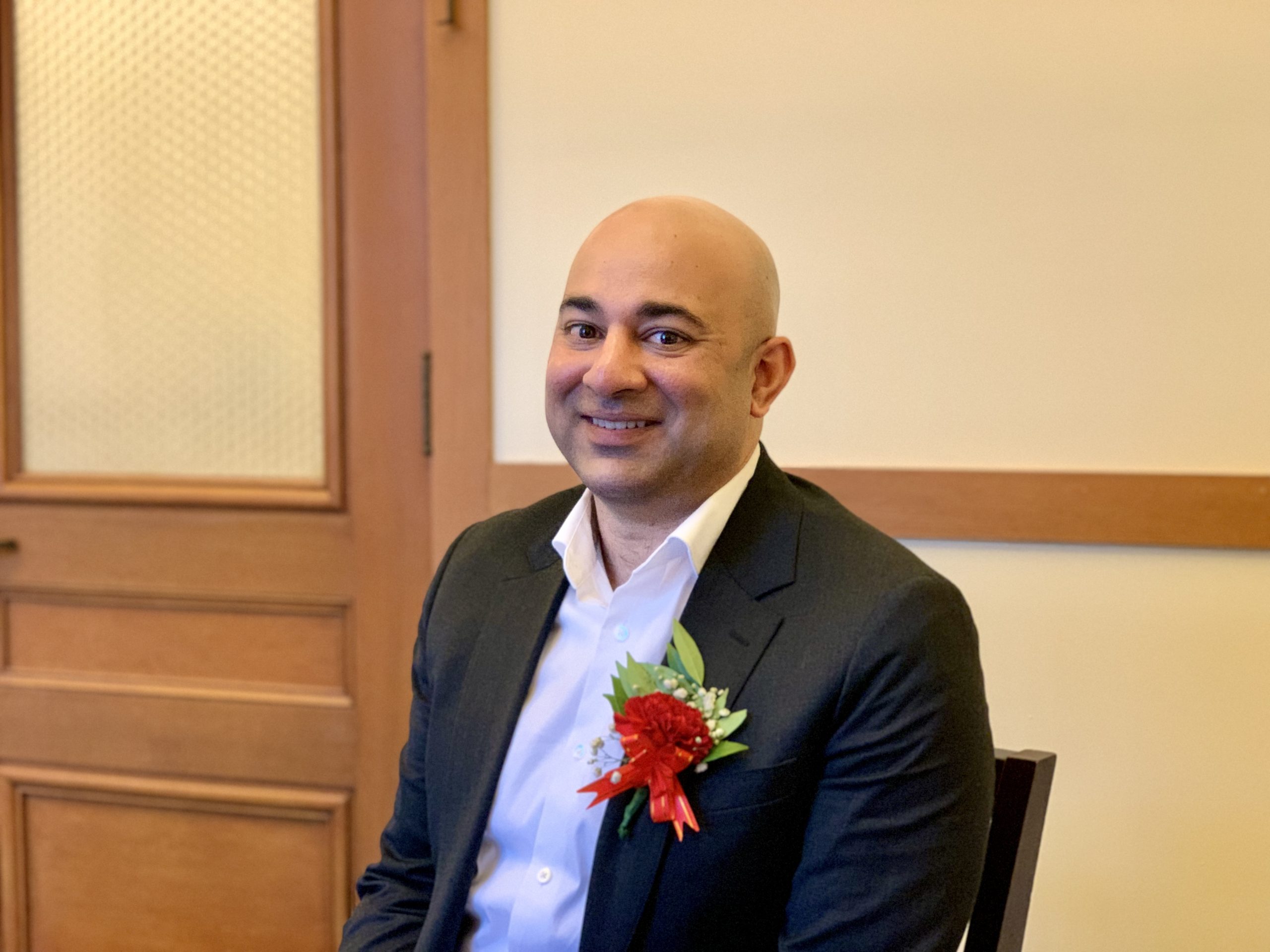
Bilal Mahmood has spent the past month adjusting to his new job in politics. In November, he unseated incumbent District 5 Supervisor Dean Preston, who was targeted by a well-financed PAC. As a relative newcomer both to the district and the job of legislator, Mahmood says he is talking to many people, listening and learning.
District 5 spans from the eastern end of Golden Gate Park through Haight-Ashbury, Japantown and the Western Addition, Lower Haight and Hayes Valley, and most of the Tenderloin.
We met at his new City Hall office on a recent afternoon to discuss events over the past month and how he plans to address the district’s pressing issues, from the fentanyl crisis to immigration. Mahmood has been assigned to the Land Use and Transportation committee, and is vice-chair of the Public Safety and Neighborhood Services committee.
Note: Mahmood’s aide sat in on the interview and, at times, refreshed his memory as he responded to questions.
Eleni Balakrishnan: You’re almost a month in as supervisor. How does it feel?
Bilal Mahmood: Feels good. Right after the election results were in, or two weeks later, I started reaching out to each of the different community groups across the district and wanted to set up neighborhood meetings with as many groups as possible. Had basically meetings from Tenderloin, Japantown, Haight, Fillmore, Hayes. Had over 50 meetings with over 200 people, in one-on-one or in larger group settings, to learn what were the priority issues they had in respective different neighborhoods, and what were the prior things that they wanted to have continued.
[The meetings] helped us get into the granular details of what we need to do in each neighborhood.
We’ve moved really fast on some of the main priorities that we want in collaboration with the mayor’s office. That’s something in this district we’ve heard consistently, even after we got elected, it’s like, “It’s nice to have a mayor and a supervisor who can work together.” Everywhere from the Fillmore to the TL, they’ve commented on that the most. And that collaboration has resulted in this emergency package*. And it looks like it might even pass; Connie Chan is supporting, it as of today. What a lot of people comment is, they haven’t seen that level of collaboration in a long time.
*[The ordinance will allow the mayor and some city departments to approve some contracts without Board approval or a competitive bidding process.]
EB: I do want to talk about that, but first tell me about your big takeaways from these meetings you’ve been having. Anything new or surprising?
BM: At a high level, our focus on the fentanyl crisis was the most concrete. But it was interesting how every neighborhood wanted it addressed for different reasons. In every neighborhood that we talked to, someone had lost someone to a fentanyl overdose.
One thing that we realized we should really emphasize more is workforce development, especially for youth. The drug trade that’s happening, [families] feel is being exposed to teenagers and children, and they’re getting involved. And so for them, workforce development is a preventative measure from people entering into the drug trade.
We ran on a strategy, which we plan on introducing in the coming months, the Drug Market Intervention strategy. A critical component of that is preventive modalities like workforce development. We were focusing predominantly on adults who were coming out of prison, or the ones who are already there as a preventive measure. But something that we adapted and heard more about from the community was the need for workforce development for youth. So that was one big learning we had, as well.
EB: So you said the 50 meetings were before you came into office. What has your first month looked like? How did you choose your staff? What’s a day in the life like?
BM: It’s been different every other day. Based on understanding the needs of the district, we knew, for instance, housing and transportation especially were going to be a huge issue. So we hired Raynell Cooper, who had been five to six years at MTA. Especially with some of the ensuring that we are ensuring transportation access for everyone across the district in a tight budget cycle, but also with major projects and initiatives that people want throughout the city, like Car-Free Hayes, we wanted someone who had the expertise in MTA and transportation that could lead those efforts, but also someone who had expertise in politics and housing, as well. He majored in housing and urban development at the University of Maryland. He’s been a strong YIMBY advocate for many years. He was also on the redistricting task force before, you’ve written about him, probably.
EB: My colleague did.
BM: Yeah, so you know his unique history there. But we felt that he had a really balanced perspective on understanding the complexities of our housing situation, transportation; to lead on those things will be really important in this district. He also lives in the district as well.
Sam [Logan] we hired, as she worked for Catherine Stefani and then, before that, for Jackie Speier. And she’s going to be leading a lot on public safety and also homelessness. Those are the two major issues that happen that are prevalent in our district. She had experience working with then-Supervisor Stefani’s office. She has really good relationships with all the police captains, the police department, victims’ rights; we just had a meeting this morning with the Office of Victims Rights. Taking a holistic approach to this problem from both the prevention and first responder basis, that was really important to us.
Will [Macfie] was our campaign manager — amazing — and they’re leading constituent services. If people were to know in the district, they’re like, ‘Who is the blond person who is on every door?’ So they already have a direct relationship with so many people in the neighborhood, in the district. Sometimes [residents] knew them on a first-name basis as much as they knew me. So it was really helpful to have them on the staff.
Jessica [Gutierrez Garcia] obviously was our political director, and now chief of staff and leading overall strategy. The most brilliant person in San Francisco politics right now, and brings a holistic perspective to strategy, policy, communications.
The reason Sam joined us is because of the issues in the district, and she wanted to dive right in and focus on public safety and the fentanyl crisis. That’s where her experience was leaning, in terms of what she’d done in terms of a policy perspective in Stefani’s office, but this is the district where you actually need to solve it holistically.
Then for Will, for instance, for them, it was really important around trans rights and the Transgender District.
EB: What are your first priorities? I know for the Fillmore Safeway store closure, you called for a hearing. I know you co-sponsored the mayor’s emergency plan. We’ll talk about those, but are they the only two?
BM: That’s one part of it. There’s often a lot of things that happen behind the scenes that aren’t even legislation that we’ve been working on, especially in collaboration with the mayor’s office. That speaks to, again, why collaboration is so important. Like, the mayor has a lot more power to implement things. So it’s, a lot of times, like collaborating with them and asking, like, ‘Hey, can we do this instead?’
So our three priorities for the district for this year, in terms of our overarching priorities are: One, the fentanyl crisis; Two, the housing crisis (not in any order of priority); and Three, broadly, good governance.
The specific issues we’ve hit the ground running on are the two major emergencies in the district right now: The fentanyl crisis, which overlaps with our districtwide priorities as well. The second is the Safeway in the Fillmore. Those are the two most emergent crises that we’ve had from day one. On the fentanyl crisis, we partnered with the mayor’s office to support his legislation, but we informed components of it, and stuff that’s outside of it as well.
For instance, one of my major goals was to ensure that the Drug Market Agency Coordination Center remained, and was also expanded. So we collaborated with the mayor’s office to get that commitment.
I knew that by living in the TL, and every community benefit organization that’s there has had a really positive experience with that organization, with that department. The issue with it is, it’s always asking for more funding. It was never fully funded. Currently, it operates three nights a week for the DPW component of it, where they’re handling the open-air vending. If we can increase those operations to five days a week, in turn, you’d be able to better shut down some of the illegal vending that’s happening. That requires more funding. So it’s part of that holistic component.
EB: Are we going to see the operation expand?
BM: [Lurie] is committed to expanding nighttime operations. They’re still formulating what that means in practice, but one thing you could possibly see is DPW out — instead of three nights a week — four to five nights a week. That requires increasing their funding and increasing the amount of people who are out at night with DPW.
[The Drug Market Agency Coordination Center] is a department that people didn’t really know that much about in the public. It spoke to the actual solution of how to solve this as an inter-agency task force that’s not just police, it’s DPW working with police, working with Department of Public Health, working with the DA’s office, working with the sheriff’s office. These are both kind of progressive and more moderate components of how you’re tackling this crisis, it’s a three-pronged problem of drug users, drug dealers and illegal vendors.
EB: What is the Coordination Center’s focus? How does the operation work?
BM: There’s kind of a triangle: There’s the dealers, the users and the vendors. Police are involved with all three in some capacity, but the lead is often one or the other. The dealers: It’s police or the sheriffs and the DA’s office and the U.S. Attorney’s office as well, all collaborating in sync for the first time over the last two years to actually arrest the dealers.
On the users: It’s public health in partnership with SFPD, so it’s basically routing them to services and that’s when public health gets involved.
With vendors: It’s DPW alongside SFPD, so SFPD is not allowed to arrest people for vending; it’s DPW’s responsibility, but DPW is not trained to go into open-air vending, the vending is often intermixed with the dealing. So the police officers are collaborating with DPW to go out together to protect the workers.
This didn’t happen until two years ago, when they had this inter-agency collaboration. They meet once a week, if not more regularly. The important thing here, though, was that they also held community stakeholder meetings every week with people in the TL. That helped to engender trust and actually kind of bring a partnership with the Tenderloin community. That’s what made it so successful, and why I was advocating for it.
I collaborated with the mayor’s office to let them know that we need to preserve this [coordination center]. We need to invest in it. It’s one of the only functioning solutions to address the fentanyl crisis, because it’s kind of in that Portugal model of creating an inter-agency task force to actually address these critical issues. He listened, and then he pushed it forward, and he’s committed to expanding nighttime operations as well.
EB: Let’s talk more about Safeway. So there’s going to be a hearing. What does that hearing entail, and what can we expect to come from that?
BM: There’s a lot of lack of context and transparency from the sense of the community about ‘How did we get to this point? What was attempted to move things forward? And what are the solutions that the city is thinking about going forward?’ So the goal of the hearing is, first and foremost, to acknowledge the critical situation that we’re in and how it’s affecting people. Second, to provide transparency. Like, who owns the land? There’s a lot of misunderstanding right now on who actually owns the land, for instance. Safeway actually still owns the land. They haven’t actually sold anything. So it’s like the context of the land use, the history of it, and there’s a long history for redevelopment. What has the city done, and what does the city plan to do in the coming months, if not year, to find both temporary, medium and long-term solutions? So that’s the goal of the hearing, is to have people from [Human Rights Commission] present on what’s been done, what is being done, what they’re planning to do over time.
EB: Will we hear from Safeway or the developer?
BM: It’s all city departments that are presenting. So they’re going to present on conversations they’ve had, and what they’ve learned, and what’s going to be happening going forward.
EB: Coming up, what can residents expect to see from your office, just in terms of the big topics you discussed during the campaign around speeding up housing, or cutting bureaucracy and red tape? The mayor’s fentanyl emergency plan is already starting to do a bit of that.
BM: We’ll take the broad buckets of the work we’re going to do: One is on permitting and housing. The biggest issue remaining in the permitting process is post-entitlement. There’s over a thousand pages of building codes. With some of the laws that [Assembly members] Scott Wiener and Matt Haney have passed and some of the progress we’ve already made up to entitlement, we’ve already streamlined a lot of things.
The remaining part of what makes it difficult to build — uniquely in San Francisco — is the post-entitlement process. Interest rates are a problem. Obviously, labor is a broader conversation as well. But you have cities like Piedmont building much faster than us* and meeting their housing element goals. We are still the slowest city in all of the Bay Area to build, despite the same interest rates, despite the same labor conditions. There’s something uniquely wrong about San Francisco.
We weren’t just having conversations with the community over the last several months. We were having conversations with department heads, from Planning to [Office of Economic and Workforce Development] to the City Attorney’s office. The post-entitlement component is the biggest remaining blocker that the Board of Supervisors actually has influence over to actually make a difference. That’s where we’re going to be focusing on.
We’re going to do more research diligence with every department that’s involved, from [Department of Building Inspection] to Planning to OEWD to find which of those respective high leverage points that we can either eliminate or expedite to ensure that people can build faster in San Francisco, whether you’re whether you are trying to remodel your home or build a large affordable housing development as well.
*[It is not clear what Mahmood is implying by stating that Piedmont, a city of nearly 11,000, is “building much faster” than San Francisco. Within the Sept. 9, 2024 Chronicle article he is referencing, it notes that Piedmont had added 89 units between 2021 and 2023. Between January and the end of November 2024, San Francisco had completed 1,220 units. In that same time period, San Francisco permitted 994 shovel-ready units.]
EB: So, just in layman’s terms, what might that look like? A piece of legislation?
BM: It would be an ordinance or legislation that would cut the number of permits that are required to build homes, and affordable housing development as well.
EB: Do you have any specific permits in mind?
BM: No, not yet. There’s 1,000 pages of building codes that we need to go through. One thing we also found is the city has passed a lot of laws, and people are still waiting for something to accelerate, in terms of housing development. They’ve gone into effect, but they haven’t necessarily done anything.
Sometimes the laws were not often written in partnership with the departments. Because the law is a law, but it has to then be executed by a civil servant or a department. We want to make sure as we’re writing laws to streamline things, that the departments ultimately responsible for implementing those laws have a seat at the table, so the laws we’re writing are actually implementable.
EB: Would you say these permitting changes go hand-in-hand with getting the ball rolling on housing projects? Or do you have some separate plans for improving housing development?
BM: Every project will be different. We’ve been getting briefings from OEWD and Planning on the respective projects, including the Safeway. Freedom West is a big one that we’re looking into, Plaza East, a lot in the Western Addition/Fillmore, there’s a lot of opportunities. Freedom West, it’s going to be built in multiple phases, it’s thousands of units: The co-ops, affordable housing, market rate, I think some hotels, potentially, as well. So it’s going to be a long-phased development, but they’re supposed to potentially break ground this year on the senior homes component of it first, so we are working in partnership.
EB: During the campaign, you shared a lot of views with Dean Preston. There are also a lot of ways that you emphasized that you’re very different. Can you talk about how you’re planning to distinguish yourself, and what residents can expect to see in terms of immediate changes in District 5?
BM: You’ll see pretty much no daylight between me and Dean on transportation, or tenant protections. The difference you’ll predominantly see is on the things that we’ve already taken action on, especially with the fentanyl response. We have focused on a policy and a framework.
Part of the emergency ordinance, for instance, gives flexibility to departments, including SFPD, to cut red tape. That makes it easier for them to hire. It’s just a couple lines in the ordinance but, to me, it’s one of the most important things, because theoretically, what you could do is reallocate one job position that’s vacant to a different job position that they don’t have headcount for.
That’s an example of how this ordinance cuts the red tape that otherwise would be bottled in, like, months or years of review or something to actually get a new position approved. They can take that vacant position and reallocate it to a different position that they think is a higher priority and increase the headcount.
For the TL, actually tackling the fentanyl crisis as a priority, from a legislative and from a public advocacy perspective, has been, and will be, our focus as well. And on public safety, there’s going to be a difference there.
With regards to the fentanyl crisis, will residents see some immediate impacts in District 5?
The fentanyl emergency ordinance really just gives us the tools to then do the next step. It’s replicating the powers that we had during the Covid state of emergency. To have the toolkit, we need to cut the red tape that will make it possible to build more shelters, make it possible to hire more police. So it’s really about a toolkit to solve the problem. And then you have to solve the problem.
We’re working in partnership with the mayor’s office on things like a Drug Market Intervention strategy, which is a holistic revamp of finding more ways to cut red tape to make it easier to arrest drug dealers, but also the preventive measures that we’re talking about, like workforce development, to help people not go back into the trade or exit the trade much earlier.
That will be a holistic iteration of how we’re tackling the drug crisis from a prevention perspective as well. Supervisor [Matt] Dorsey [from District 6] is on board, and he’s talked about that publicly many times. That’s also what’s different now in this downtown area, you have [Supervisor] Danny Sauter [from District 3] and myself and Matt Dorsey covering this Market corridor, all in alignment about how we’re going to focus on downtown revitalization and how we’re going to focus on the drug crisis. That hasn’t happened in a long time.
EB: How has the partnership been? How have supervisors been working together?
BM: We immediately all co-sponsored this fentanyl emergency ordinance and made this a priority. This is stuff that could have been done before, but you did not have a Board as aligned on this as a priority, or a mayor that could work with those respective supervisors — or the supervisors who could work with the mayor. It’s a two-way street. That’s why we’re seeing a lot happening, and why we’re moving so fast, is we’re all collaborating well the first time.
I’m giving credit to the mayor; he’s been on the second floor [of City Hall] multiple times visiting the supervisors’ office, but also to talk to the aides. Several of the aides have said, we don’t know the last time a mayor has come into these offices and met the aides one-on-one and talked to them.
People ask, ‘What does collaboration mean?’ The mayor talks a lot about how we’re in a new collaborative mode. That’s what it means at the grassroots level.
EB: That’s great to hear. We ended up talking about the emergency ordinance quite a bit, but I want to ask about the part creating more shelter beds. What will you push for, in terms of how that plays out? I know the Tenderloin has more than its fair share of services, shelters, etc.
BM: One of the listening circles we held in the Tenderloin was about how we distribute services, and then what do we do, going forward? One thing the community said loud and clear to us is, “Look, we are compassionate. We’ve been very compassionate on this issue for a long time.” What they’re asking for is safety and cleanliness. That’s something we will advocate for: No matter where a shelter is built, that there is adequate cleaning and safety ensured, whether it’s here or somewhere else.
But something else we’re looking into as well is, basically, just making sure that every district does its fair share. There has to be more equity, and that’s something we’ll be looking into as well.
EB: So will you push, for example, for those shelter beds to not end up in the Tenderloin?
BM: We will push for every district to start doing its fair share. And that might result in other districts having some of the next ones.
EB: That will be interesting.
BM: It’ll be interesting, that’s something I think we’ll see with this new Board going forward. I expect I’ll get a lot of alignment with supervisors that people might not expect. If you look at where a lot of services are concentrated right now, it’s in a lot of “progressive” supervisors’ districts. A lot of the people in the “moderate” districts understand that reality, too: Supervisor Dorsey has a lot of concentration of services. In many areas going forward, we’re going to find collaboration on issues that people didn’t think you’d find consensus on between people. It’s because of just the makeup of the Board.
We’ve had a unanimous approval of Sanctuary City policy. We’re hopefully getting to a very clear majority on this fentanyl emergency ordinance. There’s been no disagreement so far in the first month, on issues that are very progressive and are issues that are very “moderate.”
This is speaking to people wanting to work together, but also people understanding that there are hard basics that we need to get right. And the basics are ensuring we have safe and clean streets. And kids don’t have to walk past drug dealers. But the basics are also ensuring that immigrant and refugee communities don’t have to be afraid of their government and to access services. We’re in a moment that’s really bringing a lot of people together.
EB: That’s a good transition. So there was the Sanctuary City status issue, is there anything that you have planned? I know District 5, and the Tenderloin specifically, is home to many, many immigrants. Is there anything more that your office can do?
BM: We’re looking into it. We’re having a lot of conversations with community groups, nonprofits, different departments to see what is more that we can do. We’re looking at a lot of avenues. I’m particularly interested in potentially things around data protection. We’ve passed a resolution unanimously. My goal is now: What do we do from an ordinance perspective? I want to work in collaboration with Supervisor [Jackie] Fielder’s office to make sure that we’re doing things that, either preemptively or proactively — or in response to whatever Trump throws at us next — that we’re working on things. Because, like you said, it directly affects the Tenderloin and the Muslim community. The Muslim community has been through this before, during the Muslim ban, and the last time, the city did take proactive and first-in-the-nation ordinances to actually lead on this. I want to make sure that we’re doing that again because, like you mentioned, in the Tenderloin, we’re the hub for Yemeni, Palestinian, Pakistani, Indian immigrants and refugees, and they deserve to know that they can count on their government to support them in this crisis.
It was great to see that, from the DA to the police chief to all of our supervisors, we are committed to upholding our Sanctuary City policy, because we recognize that the real way you address public safety is by ensuring the community trusts you.
EB: And you oppose deportations across the board? There was talk during the District 5 election of deporting people who committed certain crimes.
BM: It was the other guy who was really into that. I oppose it categorically.
EB: What about encampment sweeps? I know you’ve been opposed to sweeps, have those been happening?
BM: It’s actually more trash now, and we think it’s a result of the past when there maybe were sweeps. People now just loiter more, we’ve heard reports from the Community Benefit District that trash has increased at measurable levels. So we’re going to look into that.
The emergency ordinance is super important, because it’s going to streamline to enable us to build as many shelters as possible, that’s a lot of where our model and our framework is, which is to ensure that people have a place to go. I still don’t believe in arresting people who are just sleeping on the streets. We have to make sure that we are routing them to at least the shelter, and a permanent supportive housing path going forward.
EB: But those arrests are supposedly happening, right?
BM: We haven’t gotten briefed yet on the arrests happening for encampment sweeps, but most of what we have been seeing is that we have heard of encampments still persisting. For instance, Rosa Parks Elementary was telling us about an encampment that’s persistently next to the school. It’s caused a fire once. Some of the people harassed the kids. So, that’s one of the things we’re looking into; our priority right now is focusing on the areas that are affecting kids.
So, that’s something else we’re looking at as well, which is, “Where are these? How are the street conditions around schools, after-school areas?” That’s a lot of where we heard complaints and issues raised from neighborhoods from the TL all the way to Western Addition. This concept of having kid-safe zones is something that we heard also in community meetings.
EB: Do you have any ideas on what that type of change will look like in practice?
BM: Within the TL, what we often see work really well are community ambassadors. Code Tenderloin and GLIDE provide ambassadors that actually work from an empathetic model of talking to the people on the streets and then routing them to services or routing them to shelter. Code Tenderloin has four night ambassadors out in the TL every night. Those are the only four night ambassadors out after 11. Urban Alchemy goes home between 7 and 9 at night.
If you go on walks or volunteer with them, you’ll see how they help people get food. They’ll help move them from one street to another area that’s not close to children. They’ll partner with the Safe Passage program, or they will help them find the services that they need. So, one of the things I’m looking at, holistically, is our ambassador program, to help expand what we’ve seen benefit in the Tenderloin to other parts of the district as well; the Fillmore/Western Addition, for instance, does not have this type of ambassador program in sufficient detail.
That’s what I’ve seen work really well for cleaning up street conditions. It’s not a sweep. It’s literally a one-on-one communication between the ambassador and the unhoused to help them get to where they need, to get services. And that’s worked. It’s something that gets lost in the story of why the Tenderloin has gotten a little bit cleaner over the last several years, is this heavy emphasis on the ambassador programs that the previous mayor, to her credit, did a lot of and invested in. That’s what I want to see expand throughout the rest of the district.
EB: Is there anything else you’re excited about on the horizon?
BM: A broader, more generic, nerdy thing is good governance. One thing that we’re really interested to take a look into is potentially contract reform. A majority of money that’s spent in City Hall comes out through delivering contracts to [Community–Based Organizations] and nonprofits.
A really surprising fact that came up is that a lot of those contracts are actually under $250,000 and, a majority of those contracts, only 0 to 1 people bid on them. Either no one’s bidding on it, or the same people keep bidding on it, and that does not lend itself to a competitive bidding process. It’s really difficult to apply for these things; there’s a lot of strenuous requirements and protocols and things you have to go through. That’s something we want to look into as well: How do we make it easier to apply for some of those micro-grants, to make it more accessible for other organizations to apply and compete for them? Then, also, to even get anyone to do them, because some of them have zero bids.
So much of our government services are actually implemented through these types of mechanisms. Yet people have this question of, “What is government doing? Why is there all this money?” Or “why is it not being spent?” It’s a lot of red tape holding it up. And so now that we understand the problem in some detail, we’re gonna have to understand in more sufficient detail to know what the solution is.
Cmon now Bilal…….give credit where credit is due: in the last budget cycle for 2024, Breed looked to gut the neighborhood ambassadors program while your predecessor Dean Preston advocated for and saved it. The Fillmore Safeway land grab is some nasty, back room skull duggery that has 100% excluded any engagement or participation by local residents of the Fillmore, Japantown, Western Addition and the Tenderloin who’ve shopped there for decades. By all accounts Safeway has been an awful absent partner to local community after they were gifted the site for next to nothing. In 2015, private venture capital firm Cerberus bought the Safeway chain and has benignly neglected local stores across the city ever since. Vulture capitalists only care about land values and real estate sales, not seniors, working families with kids or communities. Wake up.
I have a friend who worked at a Safeway pharmacy for 20+ years, mostly as manager. Her job became untenable in the years following the Cerberus acquisition. The district/regional manager made her life hell. She quit.
I wouldn’t be surprised if Safeway put a deed restriction forbidding a new grocery in that location. Has anyone ever checked on that? Cerberus is ruthless:
https://www.nytimes.com/interactive/2019/05/01/magazine/remington-guns-jobs-huntsville.html
“The Fillmore Safeway . . 100% excluded any engagement or participation by local residents”
Greeny, if I run a business then it is nobody’s business but mine whether or not I choose to continue to operate it. The local residents get no input into that decision. But if they want a store there enough, then they could offer to buy the location.
And within walking from there is a Target, a TJs, a wholefoods and a Lucky’s, plus a Japanese food supermarket in Japantown and any number of corner stores.
Tempest in a teacup.
Maybe to you Tom. But not to the +5000 low income seniors living local to the Safeway site who will be impacted by this hairbrained and greedy thinking. Not a done deal at all.
1. Supervisor Mahmood: Fentanyl is not an “emergent crisis.” It’s been here for a decade. That’s why the mayor can’t declare a state of emergency. But it is nice that you now realize that TL families have been concerned about the policing strategy that will affect their kids for whom the city has not provided alternatives. It sounds like you’ve (finally) glanced at the Planning Department’s “TL Youth Gap Analysis” that was made public almost a year ago.
2. Regarding Safeway: “Like, who owns the land? There’s a lot of misunderstanding right now on who actually owns the land, for instance. Safeway actually still owns the land, they haven’t actually sold anything.”
Safeway only owns the land because they were given a huge subsidy/hand out from the Redevelopment Agency. The deal offered was, Bring a full-service grocery store to the neighborhood and we’ll give you a too-good-to-be-true deal on the property. Now that Safeway feels like walking away from the neighborhood, the city (including the District Supervisor) needs to take possession of the property through eminent domain and priced according to the steep discount Safeway got 40 years ago.
3. “But you have cities like Piedmont building much faster than us* and meeting their housing element goals.” Piedmont is a city of approximately 12,000 people and is one of the wealthiest (=exclusive) cities in the state. Adding ADU’s, in-law units and guest homes for Airbnb/VRBO, family visits or the 24/7 maid on lots that range from a half acre to a couple or more acres is easy – especially when the “developers” (=owners) are wealthy. The incremental increase in public services (i.e., roads, water and sewer, public transportation) will be of an entirely different order than what is necessary (and expected) in San Francisco or other large cities. Piedmont is profoundly protective of their well-funded public schools, so building a room for the maid or grandma and grandpa or vacationers won’t be an issue for education.
EB: So will you push, for example, for those shelter beds to not end up in the Tenderloin?
BM: We will push for every district to start doing their fair share. And that might result in other districts having some of the next ones.
So, Supervisor Mahmood, fair share equals maybe? Maybe translates to no …
4. Your campaign had the financial backing of some of the exact same fascists who are loving (and directing) many of the reactionary, racist, anti-trans executive orders that Trump has been vomiting up from day one. And it’s no surprise, either: Trump ran on promises to do exactly what he’s doing. Why did you not try to postulate a united front against fascism last year? Why have you still not said the billionaires who supported your campaign need to be eliminated?
The problem I see with shelter beds in outlying (residential) neighborhoods is that there are relatively few necessary services there to cooperatively benefit the situations of those stuck there. Further the “shelter beds” are only available after a waiting list, and then they have to give up all their worldly possessions beyond what is both allowed and fits in a single bag, (and their beloved pet companions), and even then… it’s LITERALLY ONLY FOR A FEW DAYS. Then they’re timed out and have to go… what, exactly? Where? It’s a major flaw in the concept and execution of getting people off the streets in the first place, and keeping them off. ALL of that is exacerbated by drugs, the mental illness epidemic in America, homeless from other regions emigrating here, all while rents become even less affordable, fewer cops actually patrol, and now a ~Billion dollar deficit takes hold. So the idea that by spreading around the issues of downtown into other neighborhoods that aren’t really at all prepared to handle them, that they’ll miraculously work themselves out as a result? It’s a political wedge issue being abused by the “urbanist” yuppies who work for non-profits with 6-digit salaries and the more blue-to-white collar residents of neighborhoods that live there for generations specifically because it’s NOT downtown et al. While it may evoke slogans of “equality” to spread the issue to the perceived “affluent” of these residential neighborhoods, it’s not useful, practical, funded or planned for whatsoever. It’s using the homeless issue for politics – Gavin Newsom didn’t invent the tactic, though he certainly managed to effectively wield it, and his replacements followed in that wake more than not – and with Billionaire “moderate” technocrats trying to literally BUY the local governments outright with their illegally coordinated and dark-monied disinformation campaigns, I have little faith that we’ll see anything beyond the gamesmanship that got us into this mess in the first place. Lurie could buck the trend, but here he is reinstalling the old guard more or less. It’s a cynical box we’ve sealed ourselves in. But rather than spread the problems around for political perceptions of benefit, actually solving them tangibly by addressing the systemic flaws and waste in our current programs is really, really difficult and will take the years to decades as they took to get this bad. Billionaire finger-point City is not a place anyone wants to live, but they think that’s what the constituency will respond to most favorably of the options. More of the same will result interspersed with the same PR sweeps and photo-ops that we’ve all come to loathe and ignore. Meanwhile the drivers of the problems remain unabated and increasing nationally. More fodder for the Billionaires and their dancing marionettes, more money in their coffers, more misleading ads in our mailboxes, more fingers pointing. In the end it’s a fraction of their wealth and whatever we the little people suffer through, they still win the long game on the big issues. Billionaires get what they pay for and there is nothing left that’s not for sale here, so a hearty thanks to Brown, Newsom, Lee and Breed for the “leadership” so far.
Safeway is not a government agency.
I do not understand why people think the Fillmore Safeway should stay open when the city refuses to do anything about shoplifting.
grifter, what a joke.
Recall Supervisor Balil Mahmood D5!
The Safeways thing is done and dusted. And it is not a decision for the city anyway. If I were advising Bilal on how to further differentiate himself from his ill-fated predecessor then I’d tell Bilal to let that poor sad thing die already.
It is actually a decision for the city, it’s called urban planning and it decides how urban spaces are used to benefit the city. That’s why Safeway got a sweetheart deal on the location in the first place, maybe you don’t realize that? This neighborhood in particular has had good and bad public planning shaping it since the 50’s, and Safeway’s decision to vacate leaves a neighborhood need unfulfilled. I think Bilal can get better advisors who know more about the history involved here and want to take a more proactive approach to neighborhood needs than just laissez-faire capitalism as you seem to worship it.
City Planning cannot force anyone to run a non-viable food supermarket in a high-crime neighborhood.
Mr. Mahmood looks like a deer in the headlights in the accompanying photo. His nearly complete agreement with Mr. Preston during the campaign and his mostly wish-washy answers in the interview (not to mention corrections from his aide/handler) reinforce that perception.
I hope he quickly gets up to speed and does a good job representing and helping his constituents and the city, but he exudes newbie energy, not confidence. I’m reminded of the old Robert Redford movie “The Candidate” when the candidate, floored with shock and disbelief at winning, asks in a near panic, “what do we do now?”
Mahmood seems utter uninformed and unprepared for the job, but I’m sure his billionaire backers via his handlers will choreograph his every move, which he will execute as gracefully as the titular character of “Weekend at Bernie’s.”
Bilal is a better choice then Dean.
Safeway is gone . They left because of the theft. All the Walgreens are gone . On Polk ,and Van ness all business is gone.
The vandalism and druggies have destroyed any chance of business reopening.
Clean the nrighborhood up and business and people will return .
The zombies need to move on. They are so selfish and have destroyed this city.
Lower Polk never had Ambassadors . It is a ghetto and dumping ground .
Fentanyl is a supply and demand issue .
Stop the selling and distribution . Arrest the dealers asap.
The addicts are impaired. They should be removed from the sidewalks , arrested , put in “spin dry” for 30 days and required to take methadone . If they use again then jail.
The babysitting is getting old . Accoutability and responsibility.
Billionaire backed candidates and new electeds use robotic Sinclair-like talking points:
1) vibrant
2) streamline
3) red tape
4) clean, safe
5) results
6)fentanyl state of emergency