For the last two weeks before the election, Mission Local’s campaign dispatches are switching daily between the major candidates. Today: Mark Farrell. Read earlier dispatches here.
The prospects of winning Room 200 have certainly looked better for mayoral candidate Mark Farrell.
In the last few weeks, Farrell’s opponent Daniel Lurie and his backers have poured millions from a $15 million war chest into mailers and online ads attacking Farrell. A slew of news articles over the course of his campaign have alleged ethical lapses on Farrell’s behalf, such as failing to disclose a $675,000 loan, commingling funds between his campaign and ballot measure committees, and misusing the city’s official seal. On top of that, several recent polls show his favorability declining.
“I think his campaign is fading fast. Most of the polling has seen him slipping into fourth place,” said Jim Ross, a veteran San Francisco political consultant. “If you’re not in the top three at this point, you don’t have a great path to being elected.”
A TogetherSF poll published this week indicated that while Farrell, Mayor London Breed and Lurie are in a virtual tie for first-choice votes, Lurie had almost twice as many second-choice votes as Farrell. The San Francisco Chronicle also released a poll this week that showed Farrell’s support dropped more than any candidate, compared to its August poll. In that poll, he tumbled from gaining 20 percent of the first-choice votes in August to only 14 percent in October.
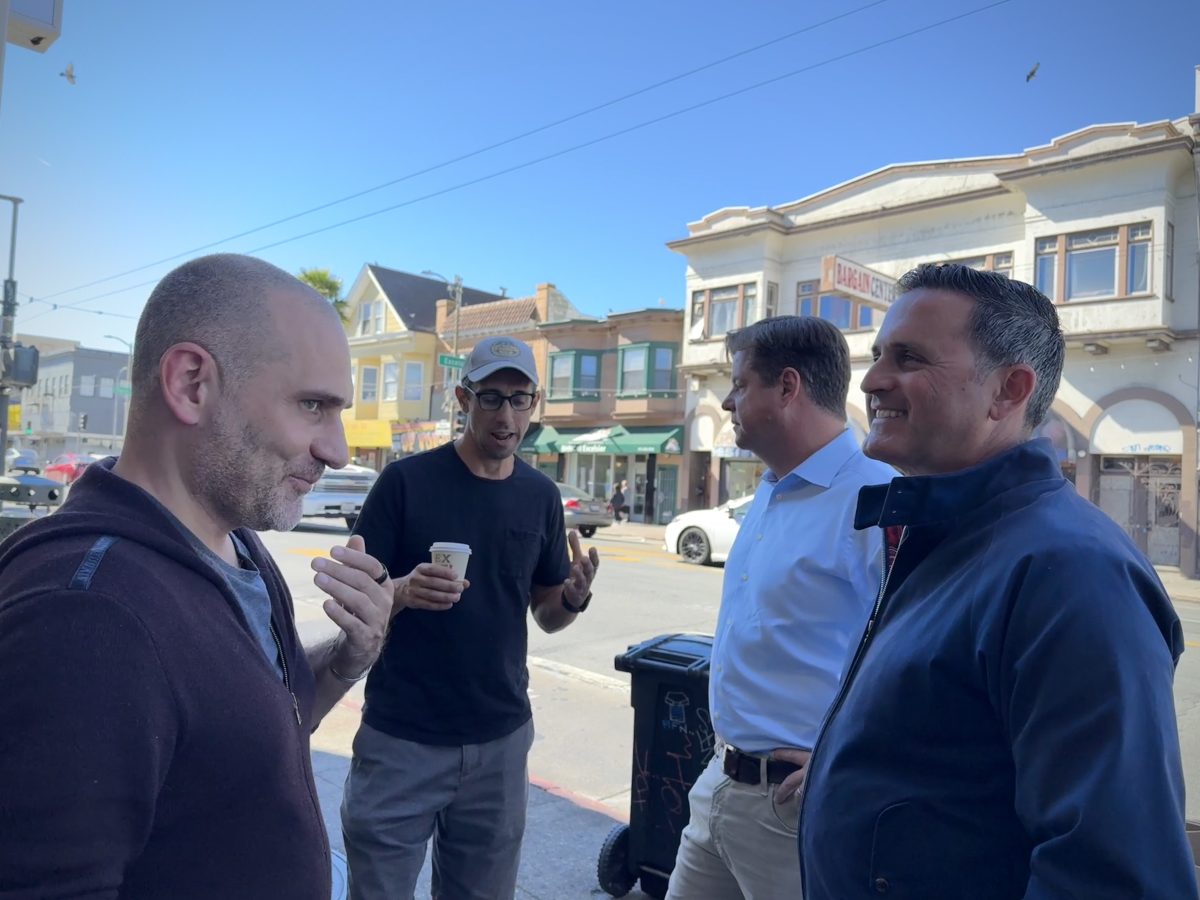
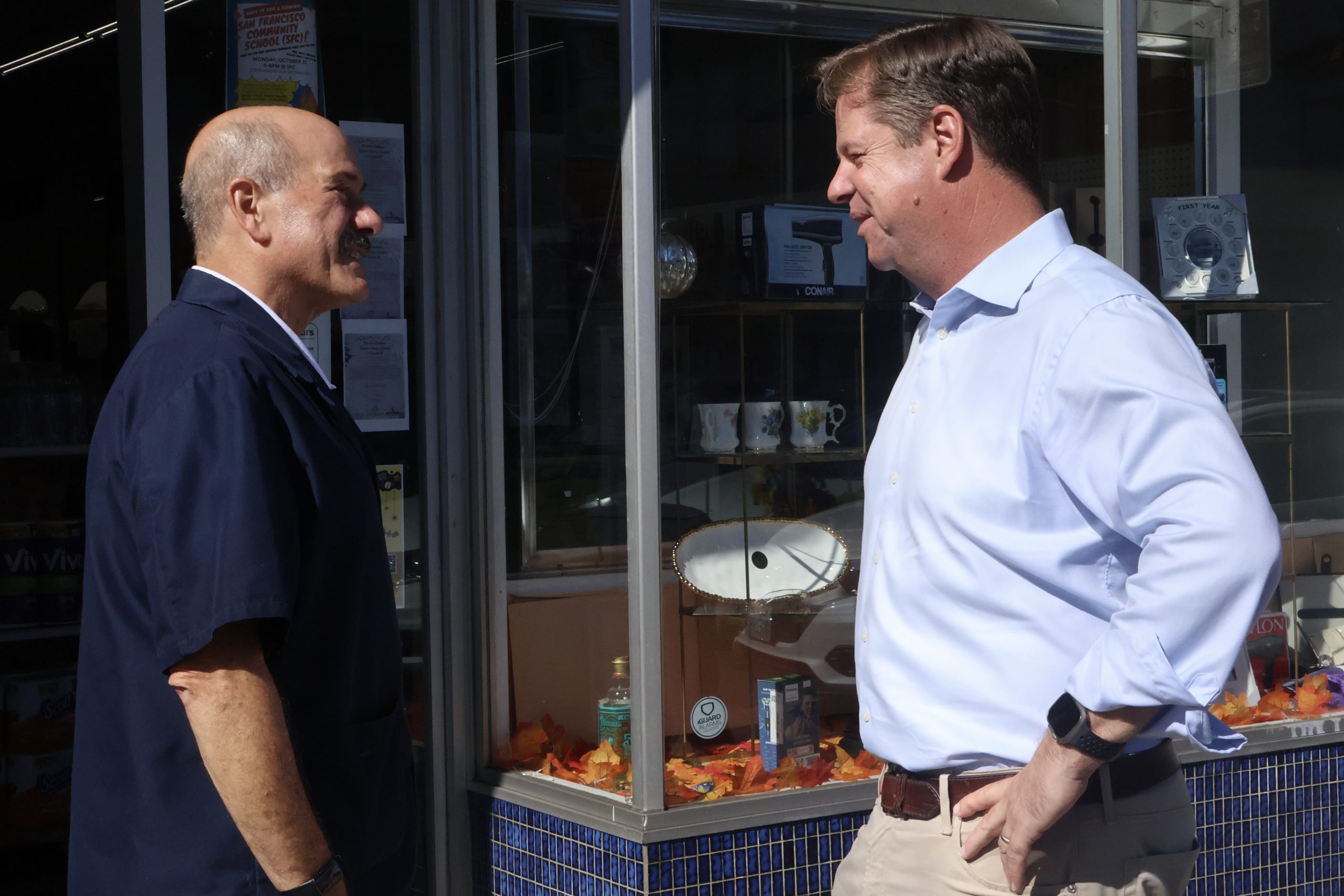
Despite this apparent drop in the rankings, Farrell seems to remain confident in his campaign. “We knew it was going to be tight until the end,” he said during a merchant walk in the Excelsior on Thursday afternoon. “At this point in time, we feel very confident and excited about where we sit.”
But if the polls are a correct indication, and Farrell is in third or fourth place, getting into the top two and standing a chance at unseating Breed will be difficult.
“His path to victory is to be able to effectively diminish Lurie’s vote. That’s his only path to victory,” said Jim Stearns, Aaron Peskin’s campaign consultant.
The main problem for Farrell? Daniel Lurie. Lurie is the candidate with the most overlap in Farrell’s voter base, the most money of any candidate (quite possibly ever in San Francisco political history), and the candidate who appears to be drawing in the most second- and third-choice votes — the votes that will propel the winning candidate across the finish line.
And if Farrell has been late to detect Lurie’s threat, Lurie has worked on diminishing Farrell’s share of the vote from the get-go. He has thrown huge sums of his money into attacking Farrell.
“Lurie saw that he needed to get ahead of Farrell,” said Stearns. While Farrell has long been focused on attacking Breed, only more recently has he (and his supporters) begun calling out Lurie.
Lurie’s broader appeal — and sunnier disposition — have won him endorsements from a wider variety of groups across the political spectrum, including the San Francisco GOP and the San Francisco Chronicle.
For Farrell, Lurie’s attacks have created a distraction from the real election issues. “The only reason he is doing that,” says Farrell, “is because when you talk about the core issues that matter to residents in San Francisco, the real issues on the ground that the mayor is focused on, whether it be safety the streets or our economy — he’s losing that dialogue.”
Since the start of his campaign in February, Farrell has stuck to the same pitch, which includes focusing on public safety, clearing tent encampments and pushing an abstinence-based approach to the drug crisis.
While those address the concerns of many in San Francisco, they aren’t the city’s only concerns. Moreover, Lurie, Farrell and Breed are not so far apart in their approaches on any of them. If anything distinguishes Farrell, it’s that he is the toughest-on-crime candidate around. He has placed more of an emphasis on public safety than his rival candidates, promised to protect the police budget from any cuts, and vowed to fire police chief Bill Scott and bring in the National Guard to address the fentanyl crisis.
“His problem is, he went so far right,” said Ross of Farrell. “That really narrowed the number of votes that were available to him.”
Just this week, William Oberndorf, a longtime Republican mega-donor (he is presently registered as having no party preference), gave $500,000 to a PAC supporting Farrell. Some of that money has already gone toward billboards attacking Lurie: “San Francisco Republicans recommend two billionaires: Donald Trump and Daniel Lurie.”
Lurie’s campaign was quick to dismiss it as a campaign strategy that won’t work. “Right wing billionaires are desperately attacking Daniel because he can’t be bought and they won’t be able to control him,” said Tyler Law, Lurie’s campaign consultant. “They fear the change he’s going to bring.”
David Ho, a longtime political consultant, said that when Lurie started attacking Farrell, many expected that it would hurt both him and Farrell. “How do you attack one another without alienating each other’s base?” asked Ho.
But evidently, that strategy appears to be working in Lurie’s favor. “It sounds like Lurie has been able to do that,” said Ho. “If the polls are correct, he’s getting everyone’s second and thirds.”