

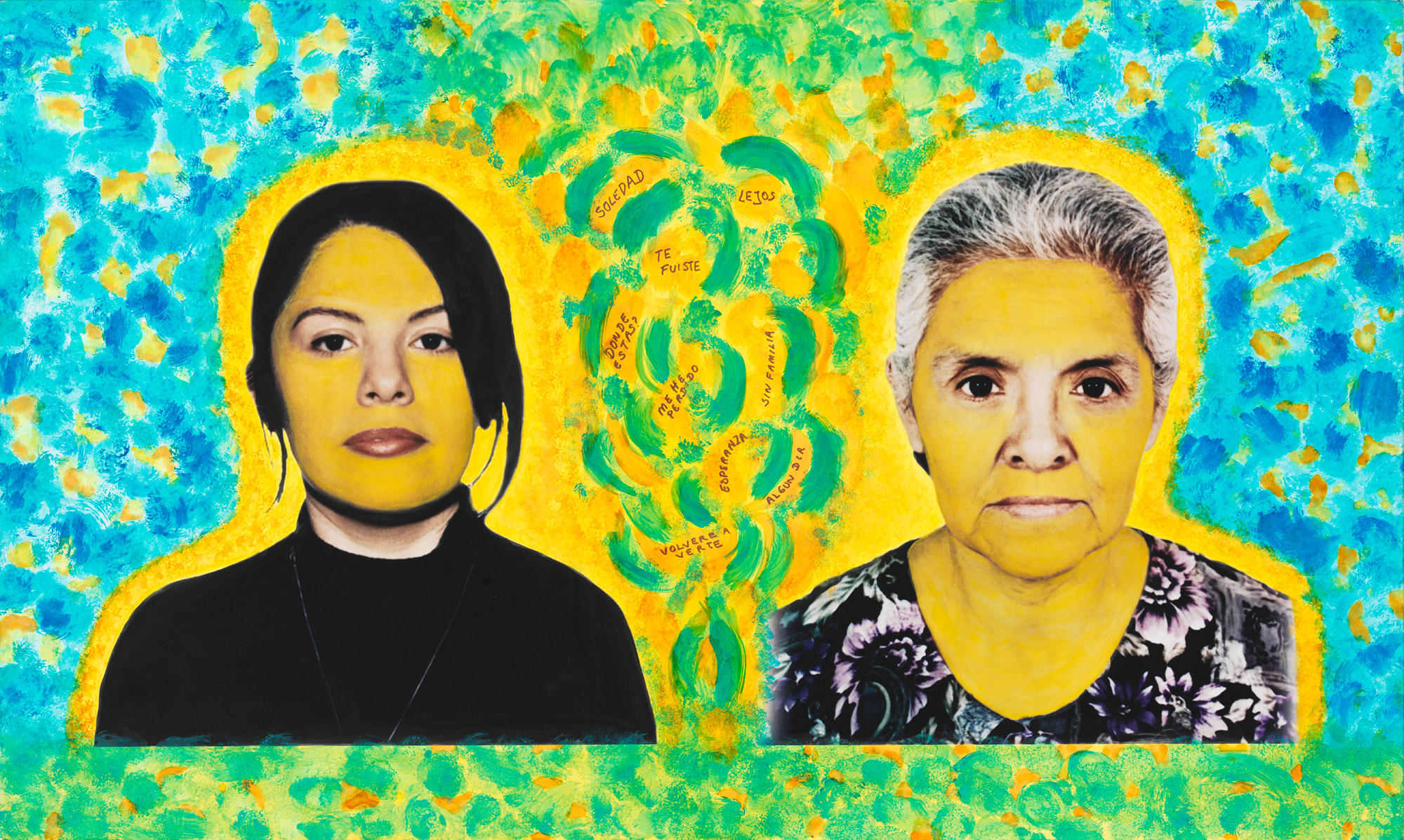
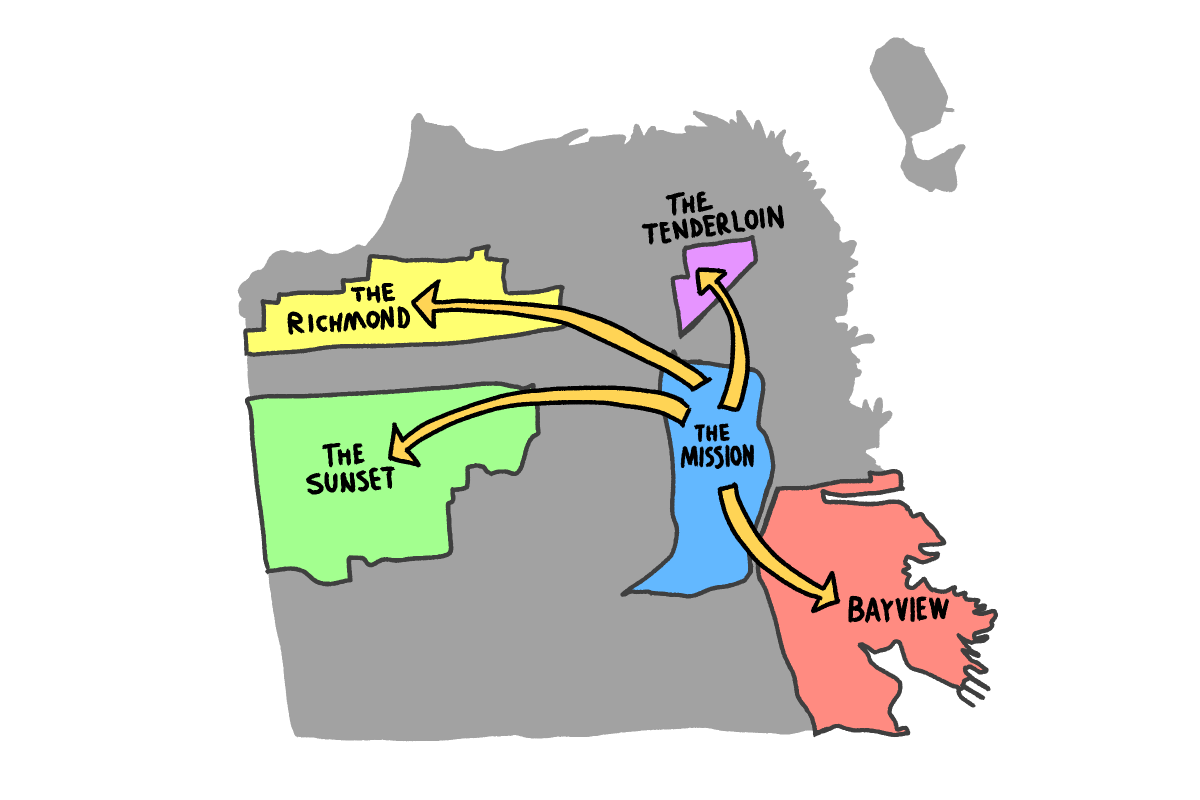
When Mabel Valdiviezo first emigrated to San Francisco from Peru in 1993, she had no idea if she’d ever return.
At 25, she had left her childhood home for reasons both personal and political. She’d grown up one of seven children in a working-class neighborhood on the outskirts of Lima, feeling neglected and not always safe at home. As a young adult, she found her place in art, punk and Lima’s cultural underground, but as Peru came under the dictatorial power of the Fujimori regime, her activist friends were increasingly targeted, interrogated and kidnapped. She felt misunderstood by her family, and had grown used to being made fun of for her appearance; more than once, strangers threw rocks at her on the street.
“Mostly, I realized, ‘I cannot develop myself here as a human being, especially if I want to be an artist,’” says Valdiviezo, more than 30 years later.
Three decades after she landed in the Mission District with no plan beyond a one-year tourist visa, the artist’s journey will take center stage at Cine+Mas SF, the San Francisco Latino Film Festival. “Prodigal Daughter,” Valdiviezo’s documentary about her life in the city as an undocumented immigrant — and her subsequent reunion with her family in Peru after 16 long years of estrangement — premieres Friday, Oct. 11 at the Roxie Theater, kicking off the 16th edition of the annual festival.
This year’s festival runs through Nov. 3, with virtual events and in-person screenings and panels at the Mission Cultural Center, Yerba Buena Center for the Arts, and KQED headquarters in addition to the Roxie Theater. And films made by local talent are hardly in short supply: “The Muralists’ Beautiful Pain” follows seven Latinx mural artists from the Bay Area as they face challenges as artists of color; “Mouth of a Shark” is a documentary short about the Bay Area dancer and choreographer Ramón Ramos Alayo; and the San Francisco-set “Parole” sees local filmmaker Lázaro J. González, a queer Cuban refugee, grappling with the distance between himself and his mother back home.
For Valdiviezo, “Prodigal Daughter’s” opening-night screening — which will be followed by a Q&A — represents a level of creative fulfillment and support she never could have imagined during her first few years in the city.
Forging her own path
With no financial safety net, little English and (after her visa expired) her undocumented status, options for work were slim.
“I didn’t want to work in the factories,” she recalls. “I was trying to be an artist, and I was rebellious, I wanted to be on my own path. So I had to look for other ways.” She tried being an artist’s model, to no avail, and also attempted to get started in journalism. Eventually, she says, she found work dancing in the clubs of North Beach, where she made enough to pay rent and fund the artistic career she dreamed of — but was also introduced to people and habits that soon derailed her ambitions.
“It started out good, making money, and it felt like there were all these possibilities,” she says. “But because it’s that particular kind of world … you have a really limited amount of control. I know, in feminism, some might say ‘Oh, it’s empowering,’ but I think it depends. If you’re undocumented, brown, Latina, it’s kind of a different story.” She struggled with addiction, disconnected from her family, and felt lost for several years. Still, she never stopped making art.
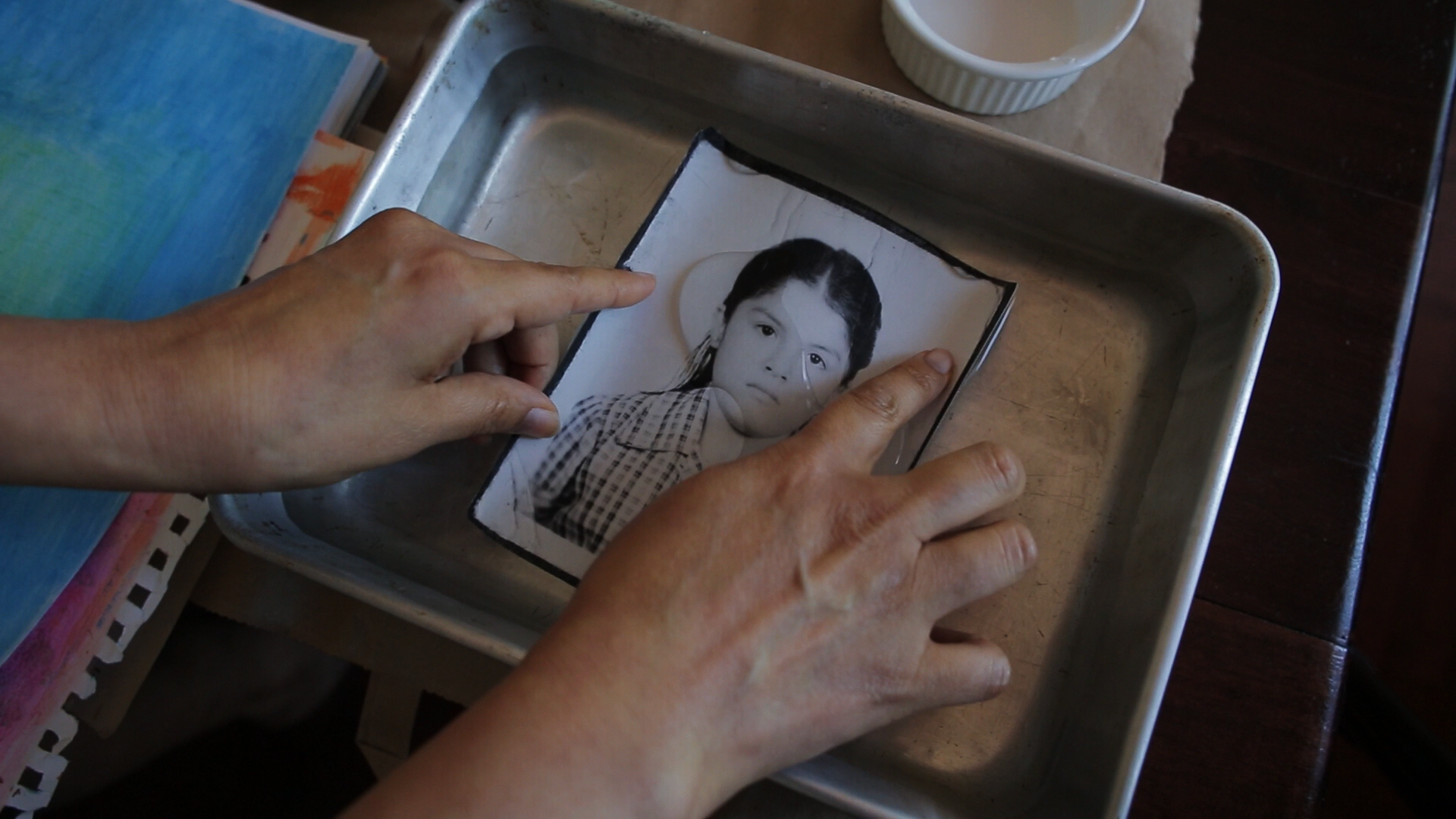
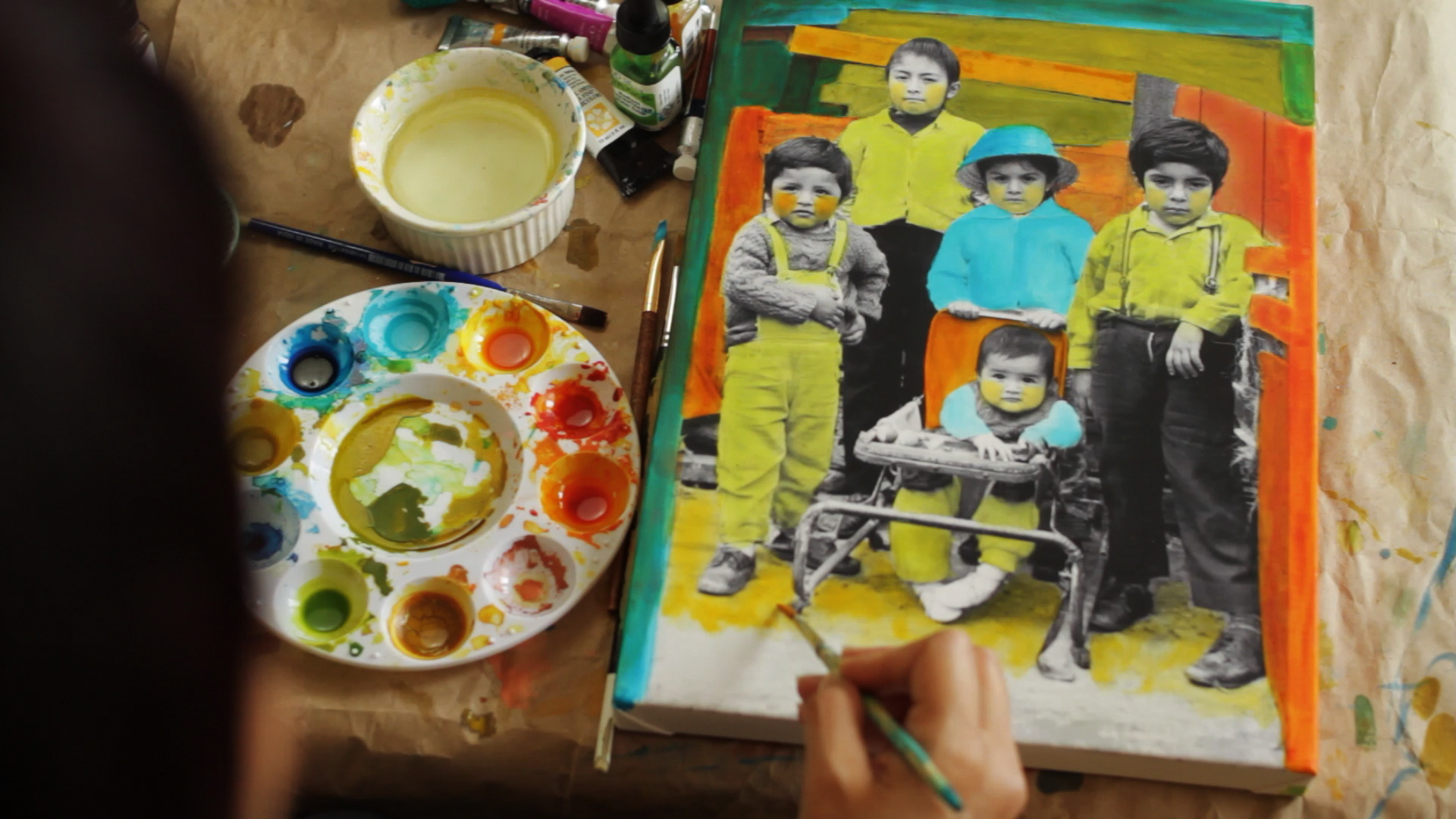
The parallel stories of how she forged a successful art career and made her way back to her family in Peru, over the course of multiple visits beginning in 2009, provide the film’s emotional core. Poignant footage from Valdiviezo’s trips home — travel made possible after she got married and became a U.S. citizen — is punctuated with archival video, photos, and Valdiviezo’s own art, including autobiographical comics and the artist’s signature “photo-paintings.”
While the specifics of the artist’s journey are her own, the emotion captured during Valdiviezo’s reunion with her parents and siblings — the scene where she shares what she’s been through with her mother is particularly heart-rending — will resonate with many audiences. On visits over the course of seven years, Valdiviezo lets the viewer in on conversations that will hit home for anyone who has ever grappled with the weight of familial expectations, or tried to understand their parents better, or opened up old wounds in the hopes of healing.
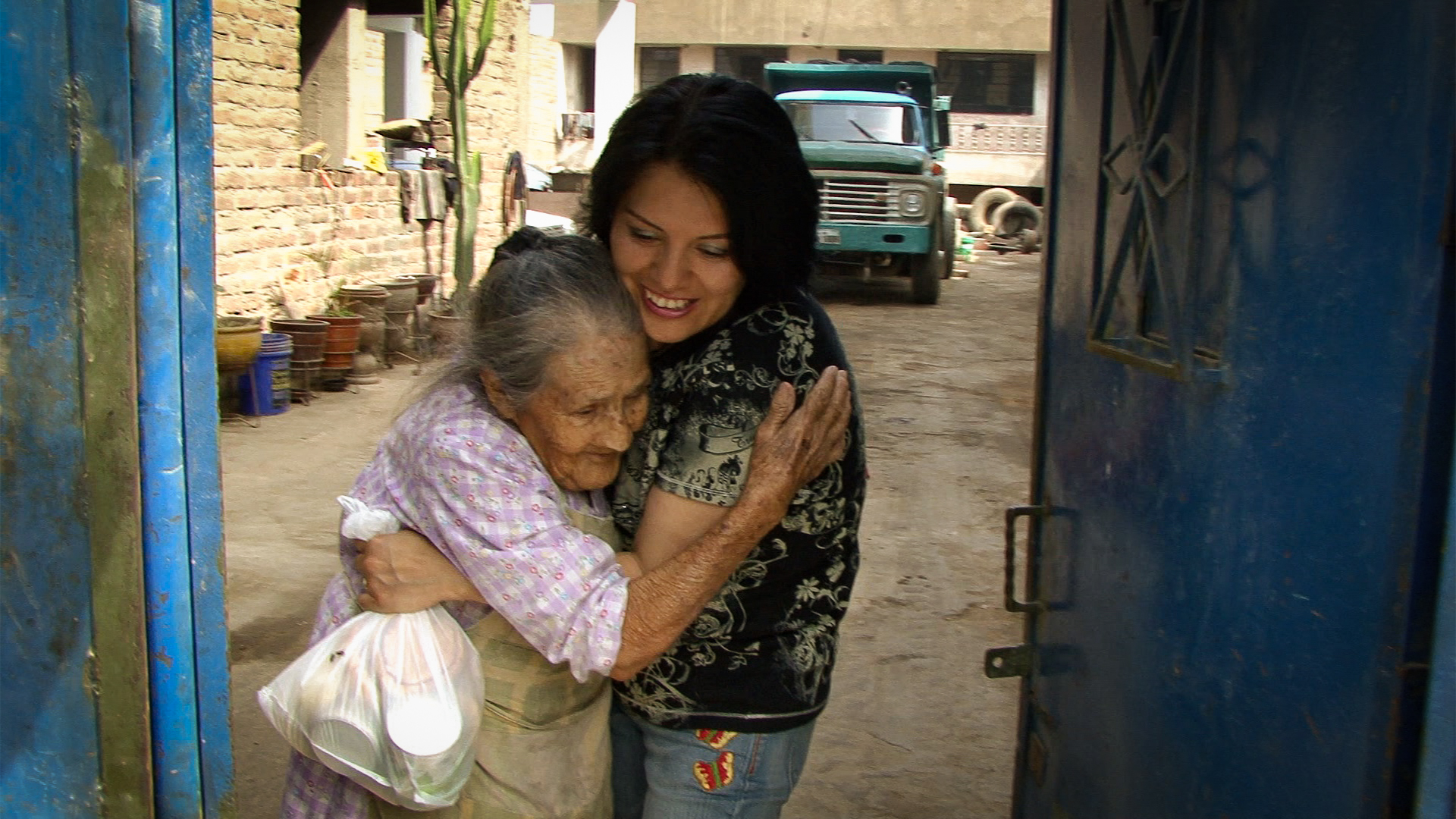
Valdiviezo also aims for the documentary to subvert popular tropes about immigrant women, she says; binary stories that often cast them as either victims or heroes. And as she travels with the film, presenting it as a resource for nonprofits, Latinx community and mental health organizations, she ultimately hopes her experience might help other young immigrants who feel trapped by their circumstances.
In doing so, her work becomes part of a support system she never had.
“I needed to go through this journey of healing, and it’s also become a way that I’ve really connected with San Francisco’s Latino community” after years of feeling unsure of her place in it, she says. Having the film selected for an opening night premiere at Cine+Mas SF, in that sense, feels like a homecoming of another kind.
“It’s very meaningful,” she says. “It’s a very full-circle moment.”
***
‘Prodigal Daughter’ premieres at 6:30 p.m. on Friday, Oct. 11 at the Roxie Theater (3117 16th St., San Francisco). A Q&A and reception will follow the film. A second screening is planned for Saturday, Nov. 2 at the Yerba Buena Center for the Arts. For tickets and more info, visit www.cinemassf.org.