

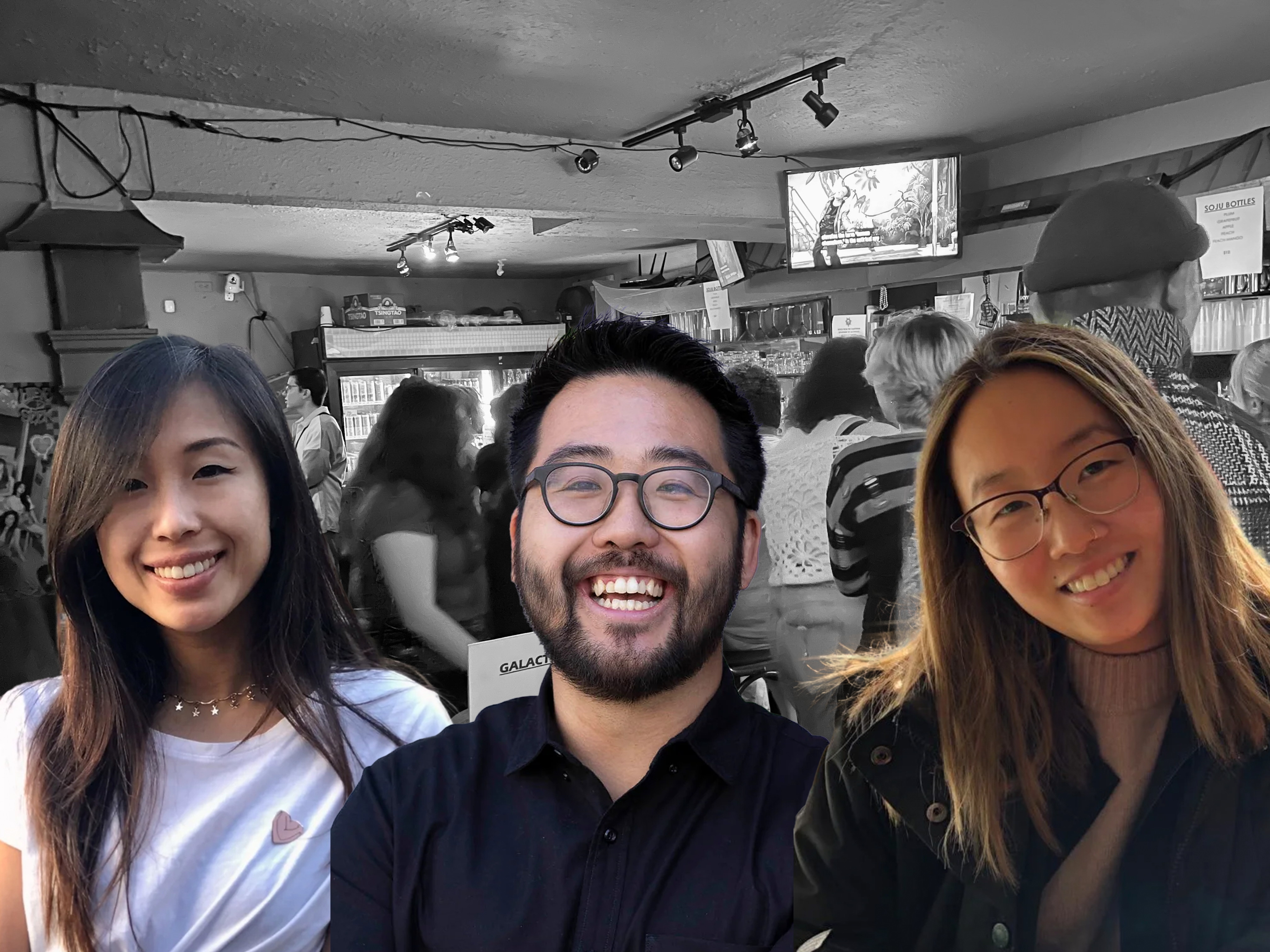
They found one another during the worst of the pandemic, pitching in to support elders and businesses in Chinatown as that community was assailed for the spread of Covid-19. New to activism, the trio — Jade Tu, Forrest Liu, and Amy Lee — started safety patrols in the neighborhood, and organized dinners at restaurants struggling to survive.
Now, the three have parlayed their Stop Asian Hate activist identity and pandemic-era community work into a particular brand of politics. All of them work for political candidates, and two of the three were on the payroll of big-money groups that have become a burgeoning presence in San Francisco politics.
Tu, 28, is the campaign manager of mayoral hopeful Mark Farrell. Lee, 32, is the campaign manager for Danny Sauter, one of the leading candidates in District 3, and Liu, 30, a controversial figure (see “Forest Liu gets angry”) who was, until recently, a paid consultant to District 1 candidate Marjan Philhour, who is trying to unseat incumbent Supervisor Connie Chan.
In addition to their day jobs, they are the founders of Dear Community, an organization with a somewhat ill-defined mission — Stop Asian Hate but also big on K-Pop, dim sum and matcha — that gets mixed reviews from longtime observers of the Asian community. At its best, it wins praise for holding feel-good events that unite younger Asians. At worst, its founders have been described as “opportunistic.”
“I like what they are trying to do,” said Brian Quan, former president of the Chinese American Democratic Club and one of the early participants in Dear Community’s events. “There aren’t a whole lot of nonprofits that want to directly help struggling businesses and restaurants.”
Jennifer Li, a Chinese-American community activist, felt the group had little to show for its high profile. “They started off with good intentions,” she said. “But they maybe have not done the self-reflection or have the self-awareness to admit to themselves that they gained a lot of recognition for relatively little to no work for the actual community.”
“If you want to get involved with them, just really think about if this is really for the community or to boost somebody’s image or ego,” she added.
Toshio Meronek, host of Sad San Francisco, a podcast on Bay Area politics, calls Dear Community, “a social club with a purpose” — and that purpose is politics. He calls them “PR agents for political elite, or the people who are attempting to move San Francisco to the right, using the auspices of … Stop Asian Hate.”
While outsiders might disagree about their purpose, one thing is clear: The leaders of the group tasked with uplifting the Asian community have tapped into interests aligned with the monied segment of the city’s political class.
While the three founders were intent on protecting the Asian community, that goal meshed well with the goals of patrons and politicians who are focused on supporting more police and less civilian oversight of the department. The latter also have a stricter view on how to treat drug users and what to do with the homeless.
Liu, Tu and Lee declined repeated interview attempts, so this story relies on accounts from more than 20 sources familiar with the Asian community in San Francisco, some of whom asked for anonymity.
Covid and anti-Asian hate crimes
The Stop Asian Hate movement that propelled Liu, Lee and Tu to become active gained traction after multiple violent incidents during the pandemic. A defining moment came in January 2021, when 84-year-old Vicha Ratanapakdee, an immigrant from Thailand, died after being pushed to the ground.
The following month, Lee and Liu co-founded Revive SF Chinatown, Dear Community’s predecessor, to support safety and businesses in Chinatown; Tu joined later.
“When you have all those people and energy” at the peak of the Stop Asian Hate movement, said Michael Nguyen, chair of the AAPI Caucus of the Harvey Milk LGBTQ Democratic Club, “it’s just natural that people will flow to certain organizations and groups where they feel like they belong.”
The group was rebranded as Dear Community in early 2022 to expand its focus to other parts of the city. It receives donations through its fiscal sponsor, ASIAN, Inc. Both are prohibited from supporting political candidates.
Lee became the group’s community-relations director, while Tu and Liu became secretary and vice president, respectively.
The three turned their regular hangouts after safety patrols into a flagship program, Chinatown Fridays, where they organized dinners in Chinatown restaurants to support small businesses. Such events also take place in the Sunset, the Richmond and other Asian neighborhoods. To date, Dear Community estimates it has generated over $250,000 in revenue for Asian small businesses through over 350 events.
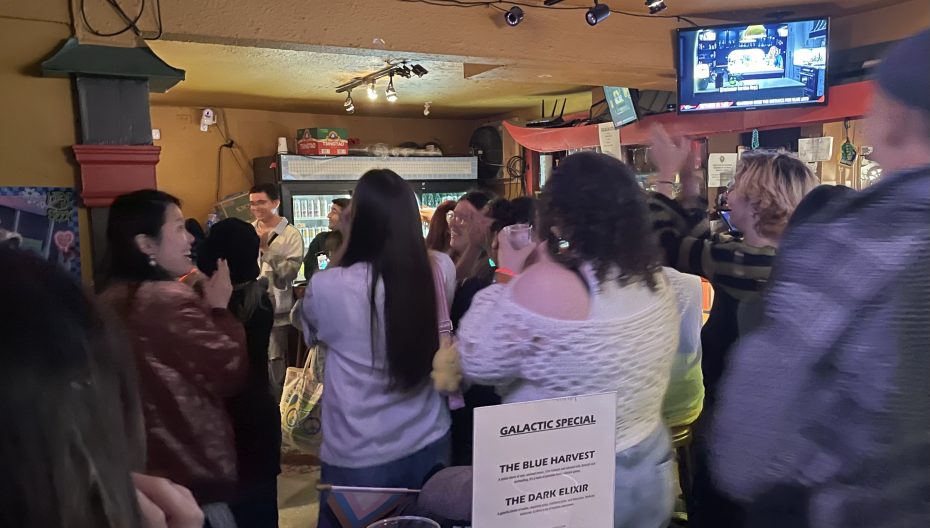
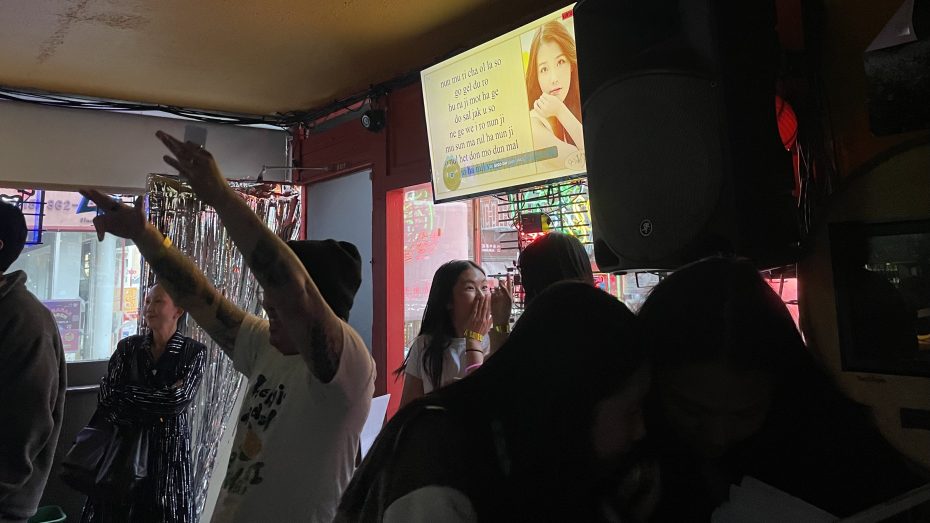
At a typical Dear Community event on a recent Saturday night, dozens of people in baggy T-shirts, most of them in their 20s and about half of them Asian, crammed into Red’s Place, the oldest bar in Chinatown. Over the next few hours, they competed for the best K-Pop karaoke singer of the night, singing off-key and with abandon.
“It’s safe to say we’ve left our mark” in Chinatown, Dear Community said in an Instagram post.
To broaden its reach, the group also has H(API) hours, which brings together young Asian professionals in the city, and positive Cre(Asians), a mental health program.
Other events highlight small businesses affected by property crimes. In August, they brought supporters to patronize Richmond Vietnamese restaurant An Chi, which had been broken into multiple times. In July, they connected Chino Yang, a rapper whose Alamo Square restaurant has been broken into nine times in four years — and who released a rap “diss track” slamming Mayor Breed — to a catering opportunity at an event at the University of California, San Francisco. In January, they were featured by CBS News Bay Area for their event to help Sweet Mango, a Richmond District cafe that experienced vandalism and robbery.
A fast track to political leadership
Dear Community specifically says “inspire new leaders” is part of its mission. While 501(c)(3) nonprofits are forbidden from working for political candidates, that same prohibition does not extend to nonprofit staff, and Dear Community’s founders make ample use of that allowance.
Its founders’ ascent in San Francisco’s political world has occurred with uncommon speed. In comparison, political players rising from traditional nonprofits usually spend years, if not decades, paying their dues by providing services to the community.
“Dear Community just happened to be at the right place at the right time,” said Quan of the Chinese American Democratic Club.
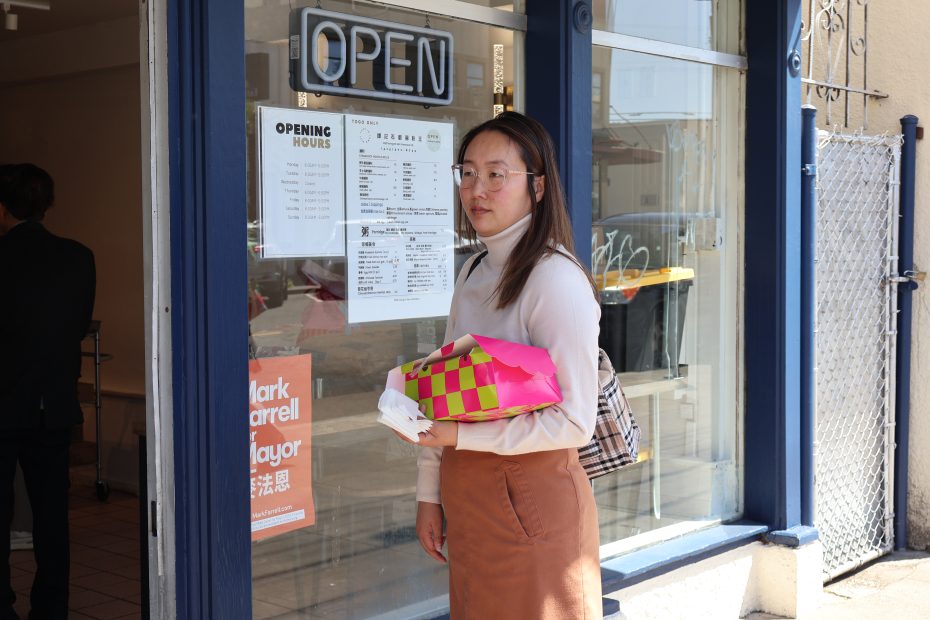
As a group and individually, the three sophisticated, bilingual, young Chinese organizers managed to show campaigns they could help with Asian voters — especially Chinese voters — making them key in a race when all the major candidates are vying for Chinese voters, who represent 15 percent of the electorate.
An early connection to a political leader
For them, a major talent scout is Mary Jung, a longtime political operative, a former chair of the San Francisco Democratic Party and the top lobbyist at the San Francisco Association of Realtors. In 2020, Jung co-founded Neighbors for a Better San Francisco, now a billionaire-backed pressure group heavily involved in city politics.
Today Jung serves on the Dear Community advisory board. The group described her as “a mentor to the younger generation,” a pioneer for “API leaders by connecting them in the community,” and “a queen” for San Francisco’s moderates.
Tu, who was working the front desk at a dentistry office in 2021, crossed paths with Jung in October of that year when she began as a program manager at the San Francisco Association of Realtors, according to her LinkedIn profile.
“I met her at a [Revive SF Chinatown] event. They were doing a movie night in [Chinatown] … she was interested in nonprofit community work in the Asian community,” Jung wrote in text messages to Mission Local. Soon after, Jung hired Tu to work on the association’s Welcome Home Project, an initiative that serves low-income communities. “She did make it interesting. We had a teenage female [person of color] interning with us that summer and Jade took it upon herself to help her learn to read and spell better. It was really sweet watching those two.”
On Election Day, June 7, 2022, Tu went viral with a social media post about volunteering on a get-out-the-vote effort to recall then-District Attorney Chesa Boudin. “I care about my community and they are suffering because of policies. He needs to go,” she told a San Francisco Chronicle reporter.
Tu next became Brooke Jenkins’ campaign manager in her successful race for DA, then jumped to the job of chief of staff at TogetherSF, the well-heeled political group backed by $17 million from venture capitalist Michael Moritz, who is supporting Mark Farrell for mayor and aims to recast San Francisco in his vision. The latter includes reforming the city’s nonprofit contracting and introducing at-large supervisorial elections.
Tu left TogetherSF in late 2023, shortly before she ran for — and won — a seat on the San Francisco chapter of the Democratic Party, on a slate of candidates aimed at ousting progressives from the Democratic County Central Committee, which makes local endorsements.
Similarly, Liu, who arrived at San Francisco Chinatown in early 2021 after working on Andrew Yang’s presidential campaign, ascended quickly. In 2023, Jung’s Neighbors for a Better San Francisco paid him $109,252 for consulting services, making Liu Neighbors’ fourth highest paid contractor in 2023, according to financial filings. Along the way, he became one of the most visible faces of the Stop Asian Hate movement. Of all the activists, he is the one most often featured in national media, appearing on Mother Jones and CNN and in the Wall Street Journal.
Soon after making a name for himself, however, Liu embarked on a pattern of behavior that was aggressive, or worse.
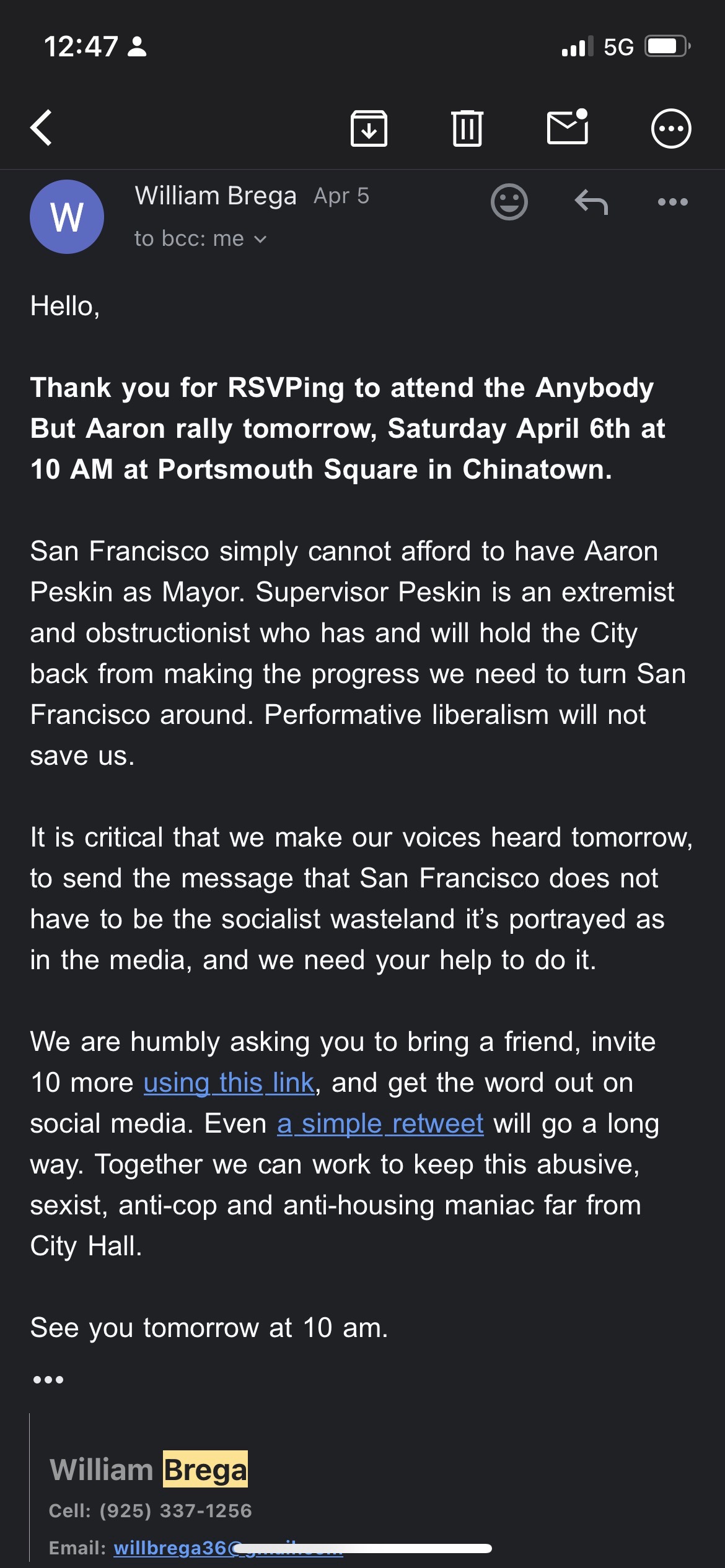
In April, for example, at a Chinatown campaign event for mayoral candidate Aaron Peskin, Liu and Tu led an “Anyone but Peskin rally.” Liu shouted into a megaphone that “If you are here and you are not white, bow down to your master, Aaron Peskin” and, subsequently, in Mandarin: “Chinese people, Chinese people, kneel down, please, kneel down, please.”
read more

But his Dear Community co-founders have stood behind him, and Liu appears to have tight control over Dear Community. Despite being widely known as Amy Lee’s brainchild, Dear Community lists Liu as its agent on California Secretary of State filings. Liu’s residential address is listed as the organization’s principal address. The organization’s homepage also prominently features Liu.
Liu also became involved with TogetherSF as early as 2021 and, by the end of 2022, the political group had hired him as a community program manager.
Philhour, who is one of the two leading candidates for District 1 supervisor, has ostensibly cut her ties with Liu. Nevertheless, multiple sources saw Liu going in and out of Philhour’s campaign headquarters and accompanying her to events as late as September. Liu only appeared in the Philhour campaign’s financial filing from Feb. 18 to June 30 of this year as a paid consultant; he received nominal payment for his work.
Lee’s trajectory in San Francisco politics has been more traditional. She was a paid staffer on Bilal Mahmood’s unsuccessful campaign for the California Assembly in 2022. Now she serves as Sauter’s campaign manager. Lee grew up in Chinatown and speaks perfect Cantonese, which could provide a boost to Sauter’s candidacy. Of the six candidates running, he is somewhere in the middle politically but also makes clear that he is an alternative to Aaron Peskin, a progressive who has termed out.
Of the three founding members of Dear Community, “Amy is the one who definitely has her heart in the work of building the community,” said Nguyen, who met the trio in 2021 during the Stop Asian Hate movement.
The group’s current president William Brega, 23, also came from TogetherSF, where he acted as an associate program manager between April 2022 to June 2023, according to his LinkedIn profile. On several occasions this year, Brega co-organized events with District 11 candidate Michael Lai, who’s endorsed by Jung, TogetherSF Action, Grow SF, YIMBY Action and former presidential candidate Yang.
Brega was the organizer of the April “Anyone but Peskin rally,” according to an email obtained by Mission Local.
Brega credited his rapid ascent to Jung. “She knows the game,” Brega said in an interview with the San Francisco Examiner. “She knows who you need if you want to win, if you want to succeed in San Francisco. She knows you need to reach out to seek approval from.”
In response to Mission Local’s inquiry, Jung wrote in text messages that Dear Community was formed at a time when Chinatown “was like a ghost town. The streets were empty and many stores were boarded up. [Dear Community] had a mission of revitalizing [Chinatown]. … They spent those first two years hosting events in [Chinatown] to bring in new business and involve a younger generation that didn’t make [Chinatown] part of their regular activities.”
Jung is so key that some see Dear Community as Jung’s “succession plan.” Jung is “just the conduit for all the money because she gives it legitimacy,” said Henry Der, former director of Chinese for Affirmative Action, a civil rights non-profit based in San Francisco Chinatown.
It’s unclear, however, if they will endure. Once this election is over, said political consultant David Ho, “a lot of them are not going to be around just like they weren’t around three years ago.”
Events and expansion
People close to Dear Community speak highly of its events, which generally gather young community-minded Asians to patronize Asian small businesses or simply provide a refuge for folks to build bonds with one another over boba tea, karaoke or matcha. The group has tapped into a young, growing and well-educated Asian population. According to a statement from Dear Community, it has built a “following” of thousands of San Franciscans, predominantly Asian between 25 and 40 “who are seeking a space to be proud to be Asian and stand up for their community.”
Lamar Heystek, president of Dear Community’s fiscal sponsor ASIAN, Inc., said, “ASIAN, Inc. saw a group doing good work with Asian American small business owners in Asian American neighborhoods and across the city, and we felt it was worthy of supporting.”
Dear Community is “trying to find how people of their generation want to be involved in” politics, said Quan. “We have a lot of transplants that don’t know how to connect with their neighborhood and their community.”
For years, the Asian population in San Francisco has seen a slow but steady growth, from 28 percent in 1990 to 34 percent in 2020.
To attract new affiliates, Dear Community is a lot more flexible than traditional nonprofits. It’s “like a startup,” said Quan, “and just go where [people] are consuming media and getting that outreach [at the places] where a lot of other people haven’t tapped yet.”
Some, however, see the group as exploitative. But the work has also offered an answer to the reality of businesses that suffered property crimes. It just so happens that it is also compatible with the tough-on-crime candidates that Dear Community’s founders are backing.
“They’re putting themselves out to be concerned about the community, which I’m sure they are,” said Der, former director of Chinese for Affirmative Action. But “they’re just taking advantage of that vulnerability, that fear within the Chinese Asian community and running with it.”
“They’re grabbing the moment; it’s exploitative,” Der added.
Regardless, it appears to be working.
For young people who are interested in civic engagement, Dear Community “serves as a welcoming kind of getting people involved, kind of an entry point,” said Nguyen. “Of course I love karaoke. Of course I love hanging out with young twenty, thirty-somethings … What happens then is you get pushed into sort of the TogetherSF lane or the Neighbors or all those more moderate folks.”
It’s the nature of politics to use one’s lived experience to relate to people, but “it’s another thing to be, like, ‘the only way to have public safety is to be tough on crime because of my lived experience,’” he said.
Similarly, it’s the nature of politics — which is “a battle for talent,” Nguyen added. “It’s up to progressives to also be competing for the same pool of people.”

Odd that Forrest Liu is claiming to be a champion and protector of Asian people and community while menacing and threatening (on a number of occasions) the current D1 Supervisor Connie Chan who is a petite 5 feet 4 inches and slightly built. While un nerving that Liu has done so at public meetings for all to see and witness, his disturbing behavior in the Public Square is well documented.Also puzzling that the self proclaimed champion and advocate for the Asian community worked as a paid campaign consultant of many months for candidate Marjan Philhour.
Jade Tu, Mark Farrell’s campaign manager was there also. She was sharing the megaphone with Forrest Liu. She also was so worked up (unhinged?) that she was shrieking and spitting. She and and William Brega (GROWSF,TOGETHERSF and frequently quoted in the SFSTANDARD, Michael Moritz’s questionable online publication) had organized a small mob of counter protestors who shouted, spit and whacked fly swatters while chanting.
When i say there, I mean Aaron Peskin’s kickoff campaign rally @ Portsmouth Square in April 2024. Jade Tu, Forrest Liu and William Brega (all with a new Astroturf group called WE SF organized a protest of Peskin. A handful of rabid individuals chanted and smacked fly swatters while Jade and Forrest shrieked incendiary comments into a bullhorn. We are lucky no one was harmed.
Yujie Zhou with a stiff left followed by a devastating right. The pen is mightier than the sword.
Have these fresh-faced, rising political celebrities indeed “parlayed their identities and community work into a particular brand of politics?”
Or have they been simply absorbed (as have so many others) by a sophisticated process that knows exactly how to control and exploit their ambitious youth and idealism– to trap them within a well-worn, predictable brand of politics?
Judging by the way this “incubator” bends these young people into making strange and lucrative alliances, I would guess the latter.