

Mission Local is publishing campaign dispatches for each of the major contenders in the mayor’s race, alternating among candidates weekly until November. This week: London Breed. Read earlier dispatches here.
Tuesday was the 41st National Night Out: The annual police community-building event that equips officers with stickers and raffle prizes to bond with neighborhood families. In San Francisco, the meet-and-greets took place in several parks and saw hundreds of people come out on a hot summer night, and Mayor London Breed was making the rounds.
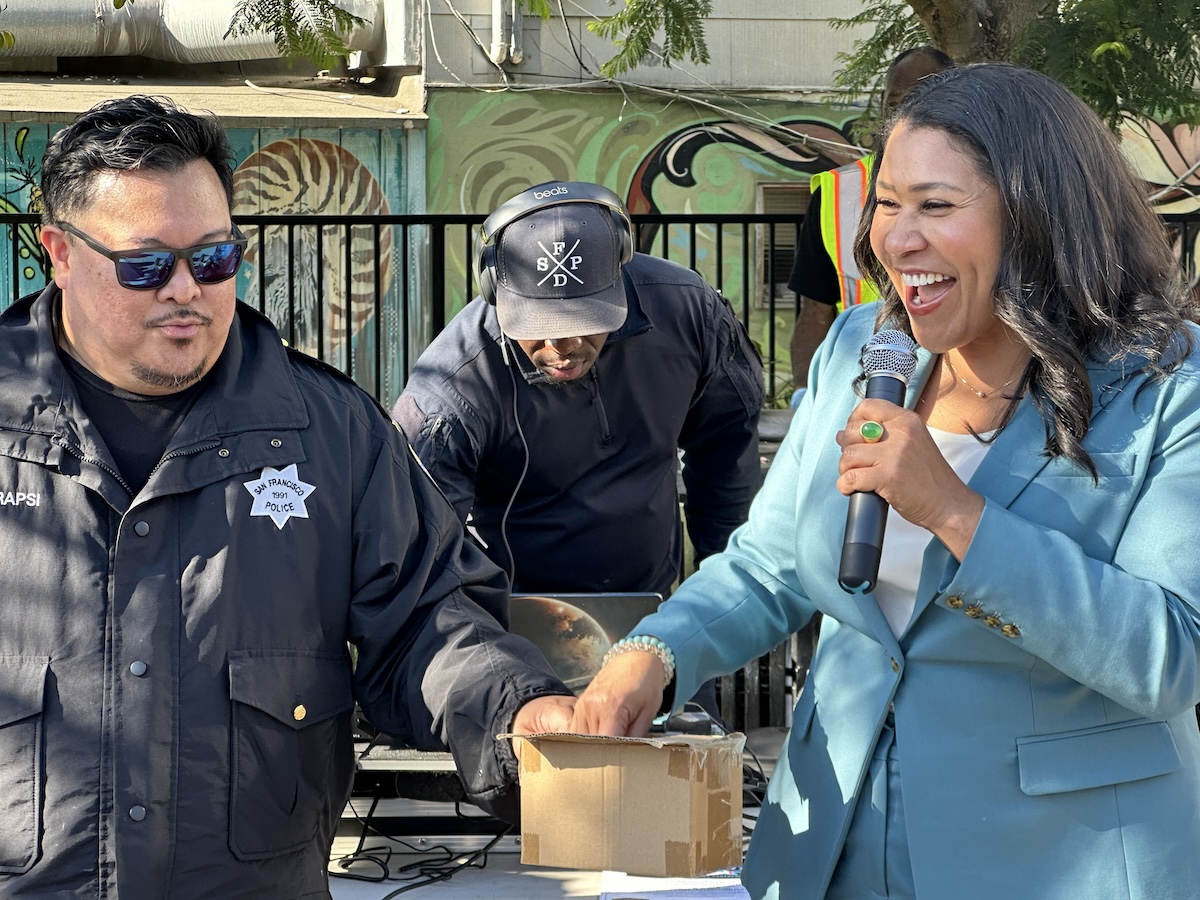
She started in the Tenderloin at Boeddeker Park, where she gave a brief speech, in part thanking the U.S. Attorney’s office for federal help in blitzes to arrest drug dealers and users in the neighborhood. At the Mission Playground at 19th and Valencia streets, the mayor posed for photos with children and parole officers alike, and took the mic to preside over a laptop giveaway.
“All right, so, you got your tickets ready? Folks, raise your tickets in the air,” she said, taking a blue coupon and reading off a number: “Three six zero, zero five, eight eight. That’s you? I predicted it!” she said, as a young boy named Santi waved his ticket and excitedly approached Breed. The two had apparently spoken earlier, and Breed foresaw his win.
Face-painted kids wearing silver “SFPD Junior Officer” stickers ran around, jumping and flinging water in the splash pad, and climbing playground equipment. Cops drank Starbucks coffee, parents ate pizza, and a DJ blasted hip-hop slightly too loudly: “Turn My Swag On,” “Lean Wit It, Rock Wit It,” and a remix of “Turn Down for What.”
The DJ’s selection may have been better suited for the youth of 2014 than 2024, but the effort spoke to a distinctively modern approach: The San Francisco Police Department is not what it was in the 1980s, as Breed knows well.
“When I was a kid, we didn’t talk to the police. I mean, we just didn’t,” Breed said later, speaking to this reporter in Golden Gate Park during her third National Night Out event of the evening. “And there was a really intense relationship between the police and our community.”
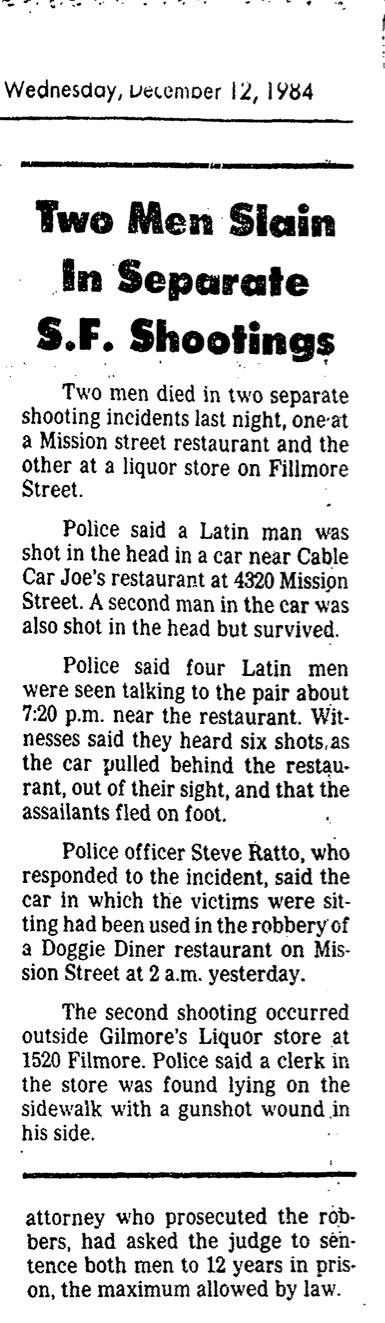
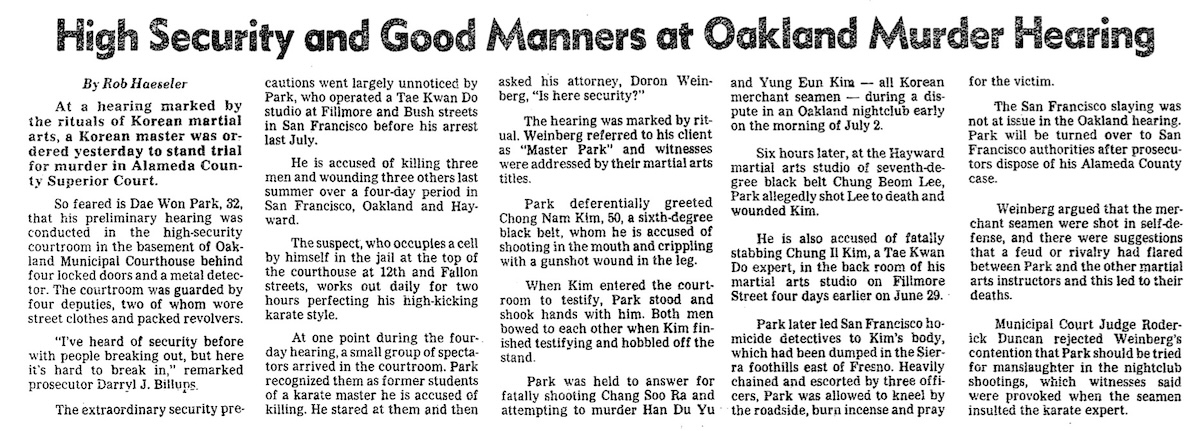
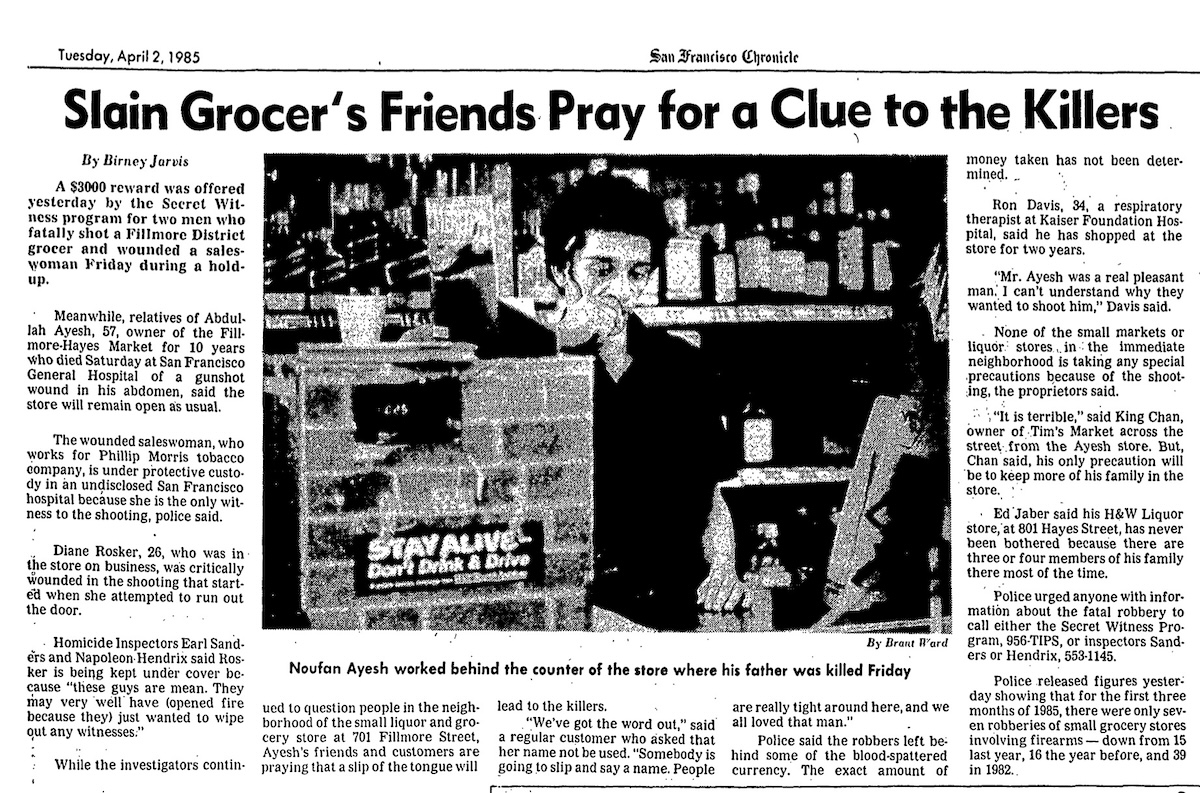
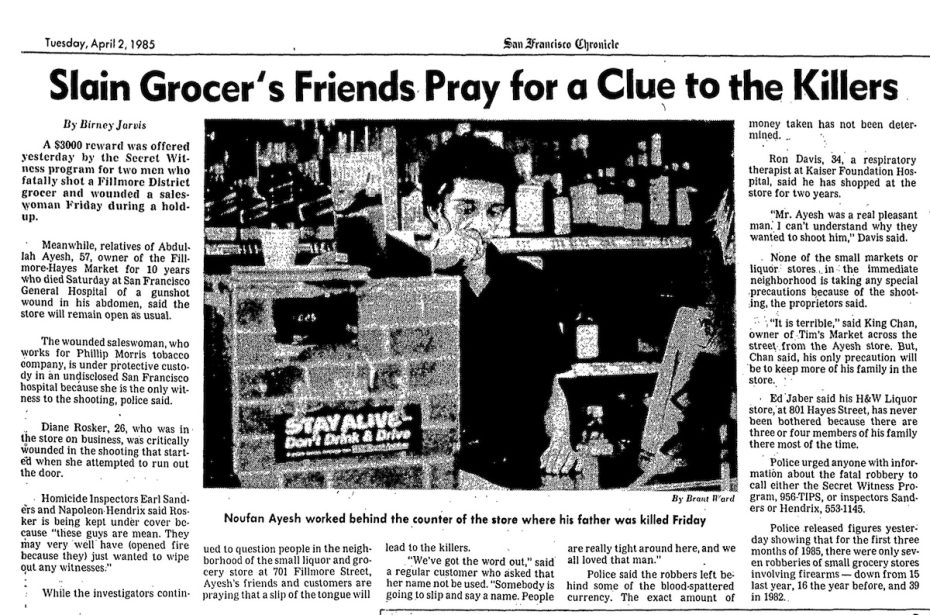
In 1984, when National Night Out started in Philadelphia, Breed was 9 years old and living in the Fillmore. San Francisco Chronicle stories from the time tell a story: “Two Men Slain In Separate S.F. Shootings” reads a Dec. 12, 1984, headline about two same-night murders that included the killing of a clerk at Gilmore’s liquor store on Fillmore Street. “High Security and Good Manners at Oakland Murder Hearing” reads another that year, this one about a tae kwon do expert killed in his studio on Fillmore. “Slain Grocer’s Friends Pray for a Clue to the Killers,” was from 1985, about another murdered Fillmore corner-store clerk.
The city’s homicide rate then — using a tally of murders compiled by the late San Francisco historian and former SFPD deputy chief Kevin Mullen — was high: Some 10.6 killed per 100,000 residents, which matched years-long highs nationally. (The 2023 rate was 6.4 homicides per 100,000 residents, a 40-percent reduction from the bad old days).
As Breed grew up and left town to attend the University of California, Davis, in the mid-1990s, San Francisco was still a violent place.
“We got to a point in our neighborhood where violent crime was, you know, escalating, and people were dying. We wanted to be protected, and we wanted to feel safe. And we wanted these crimes to be investigated and dealt with appropriately to get murderers off the streets of San Francisco,” she said. “It was personally devastating, because I was in college, and there were a lot of people who were being killed who I grew up with, and I was just coming home too often for funerals … It was scary. It was a scary, scary, scary time. And it just required us to be open-minded about building a better bridge with the police, because we needed help.”
Breed did not yet have any official city role, but she said she mentored young people at the time while generally “working in the community” and, alongside others, began working hand-in-hand with the police department to improve resident relations. The decorated captain of Northern Station was Alex Fagan at the time, one of the first officers with whom Breed and others worked, and someone who was “like no other officer we’ve ever worked with … he was very involved in the community.”
“He showed up, he communicated, and initially, people didn’t know how to take that,” she continued. “And after he kept showing up, eventually — like, not eventually meaning months, like maybe a year or so after the fact — it started to really change.”
(Fagan was deputy chief during the infamous 2002 “Fajitagate” scandal, in which several off-duty cops, including Fagan’s son, badly battered two men after allegedly demanding they hand over a box of fajitas. The elder Fagan was initially indicted by a grand jury for covering up the incident, but later cleared of wrongdoing and then promoted to acting chief by then-Mayor Willie Brown in 2003; he died in 2010.)
To many, the department and the city’s law enforcement writ large is still in need of drastic reform — perhaps not what it was like in the 1980s, but far from a paragon of virtue.
Police brass moved slowly to adopt the U.S. Department of Justice’s 272 recommendations for reform following a spate of police shootings in the mid-2010s. The city’s latest run with a progressive district attorney ended in just two years’ time at the hands of a pressure group funded, in large part, by hedge-fund manager and Republican donor Bill Oberndorf — and the culture in the DA’s office has changed markedly.
And the recent passage of Proposition E in March, alongside allowing more surveillance technology and loosening rules on car chases, will stymy civilian oversight of the department that critics say has made it hard for police to do their jobs.
Breed has taken pains during the election to say police reform — and, by extension, San Francisco’s liberal bona fides — is not dead in 2024. She has often uttered a version of “San Francisco remains a compassionate city, but … ” and then gone on to explain how the city is increasing accountability/punishment for homeless people, drug users and criminals, and how officers are strictly enforcing the law.
She did the same on Tuesday.
“Everybody’s on this campaign trail talking about more police, more police. And yeah, we want and need more police. That’s not even an issue,” she said. “But the other side of it,” Breed continued, is recognizing police should not do everything: Certain calls, responding to mentally ill people for example, should be taken off their plate, “so that they can focus on the important work of policing.”
National Night Out, to Breed’s mind, is a part of an overall strategy to leave the 1980s behind.
“When we first started doing [National Night Out], there was not this,” Breed said standing on JFK Drive, near the Sixth Avenue Skate Park, and gesturing to the officers and tables set up for the day. “And when I say not this, like the community was here,” she said, pointing to one side of the street, “and the police were here,” she continued, pointing to the other side.
“And there was no talking and it just — it just was different. And it’s evolved.”
Life goes on in the present. Past events give us clues for what to anticipate, but can’t tell us the best moves now. We must choose.
What is exactly is “policing” work? I’ve seen their “reports”, poorly researched and unfounded conclusions. Blaming crime on trees and streetlights. The issue with that is it just moves crime around, it doesn’t actually solve the root issues. Inequality is much harder to solve so people would rather to have a quick fix. Nobody actually knows what a police officer is supposed to do or help with and so you get folks calling the cops for problems that actually no one can solve for you. Like worms in trees.
The Democratic Burton-Pelosi Machine has been at the forefront of the
Defund the Police Movement, among whose more visible participants has
been and is Kamala Harris. Forty years ago, San Francisco had a no nonsense
Mayor, Dianne Feinstein, who was an outsider to the Burton-Pelosi Regime.
Breed is no Dianne Feinstein. Neither is Harris.