



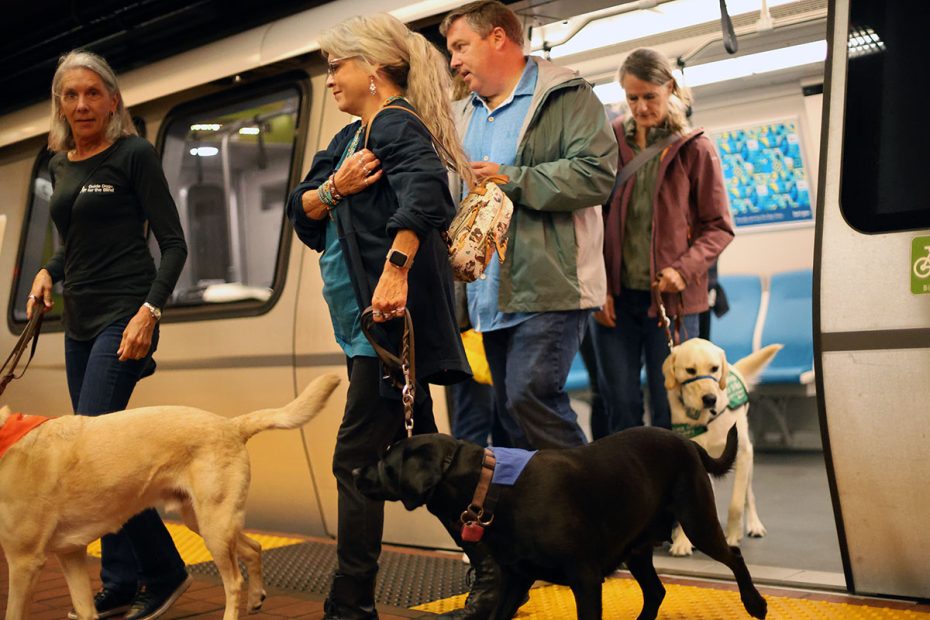
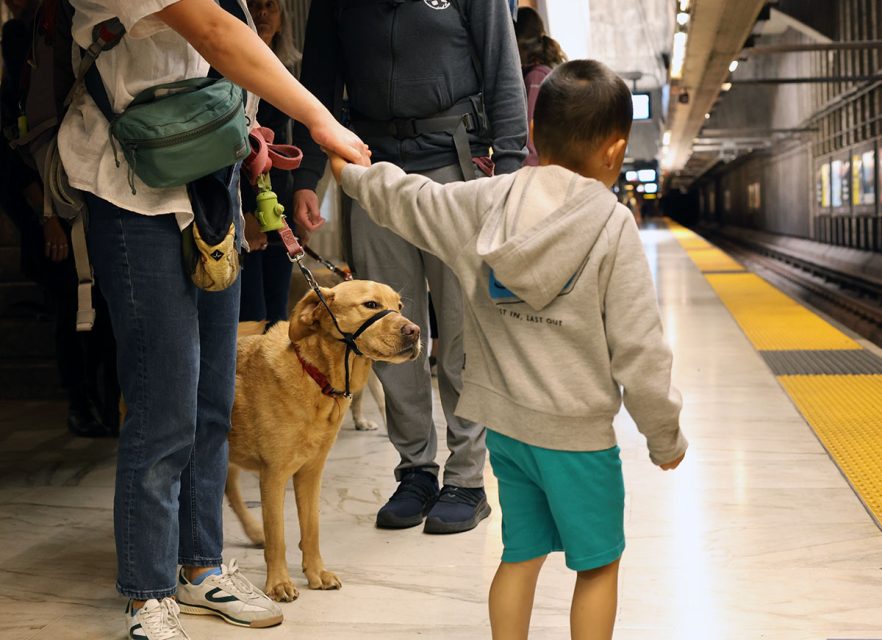
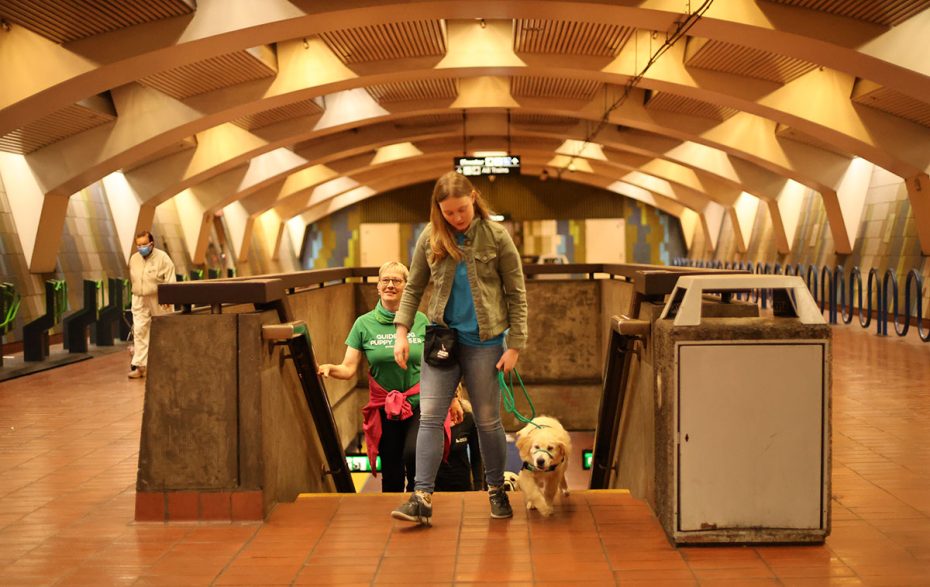
BART passengers finally had something to smile about last weekend, when a dozen Labrador and golden retriever puppies disembarked from the 16th Street station and ascended onto the plaza.
The dogs were training to become guides for the visually impaired, which includes socialization outings that expose them to the sights, sounds and smells of San Francisco. On Aug. 3, they were accompanied by puppy raisers and volunteers from Guide Dogs for the Blind, a nonprofit based in San Rafael.
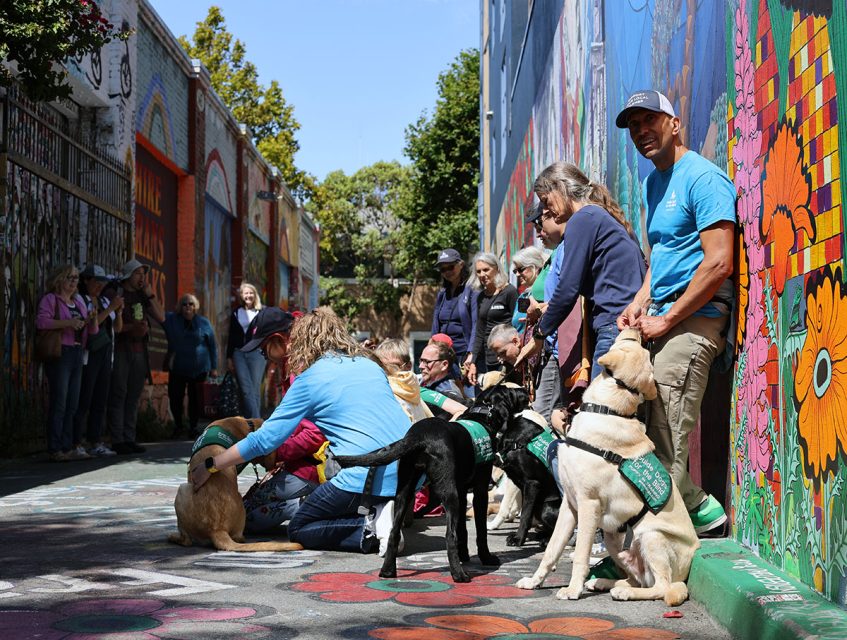
Puppy raisers typically care for their guide-dogs-in-training until they are 16 months old. Generally the dogs are Labradors or golden retrievers bred to have an appropriate temperament. Afterward, the puppies go to a Guide Dogs for the Blind campus in either San Rafael or Oregon to work with professional trainers. If they graduate, they can be placed with visually impaired people across the country.
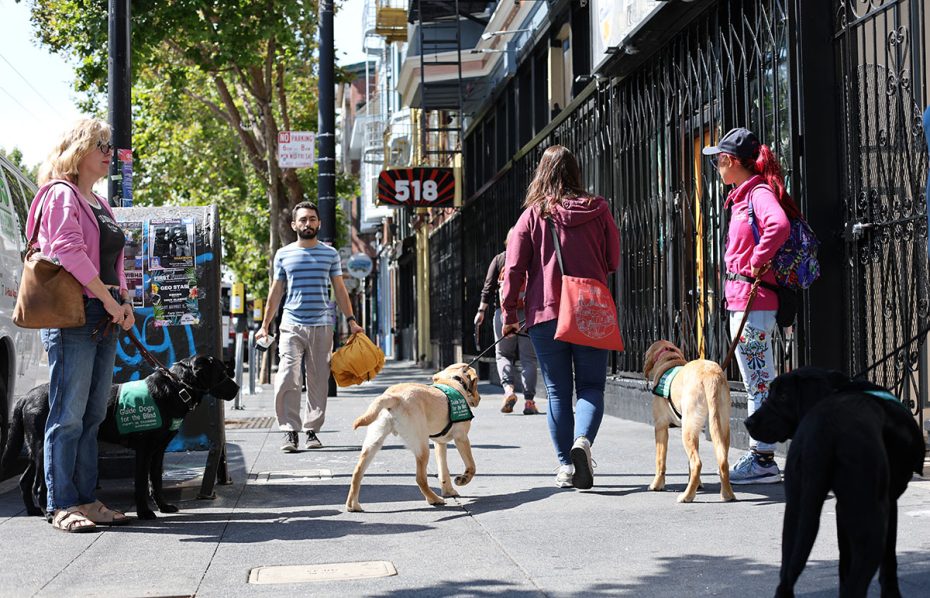
The Mission can be a bit of a Homeric odyssey for a young, curious puppy. As the dogs were led in a pack through the streets, they were rewarded for staying calm, quiet, and focused as they encountered tempting sidewalk snacks, other dogs, and cooing pedestrians eager to pet them.
“The Mission has a lot of interesting sights and sounds and people and noises and, as puppy raisers, our role is to socialize them to all of those things,” said group co-leader Jennelle Crothers, who has raised 16 dogs. Her trainee, Blevins, named after the director of puppy raising, laid at her feet.
The dogs began their day by riding BART from Glen Park to the 16th Street station, flopping down as the train rattled, or nestling themselves between their raiser’s legs.
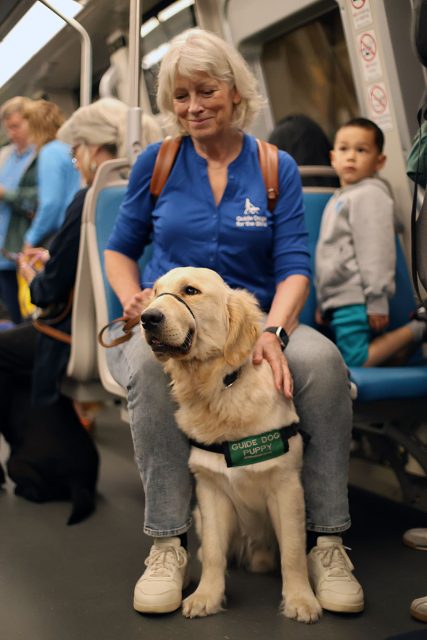
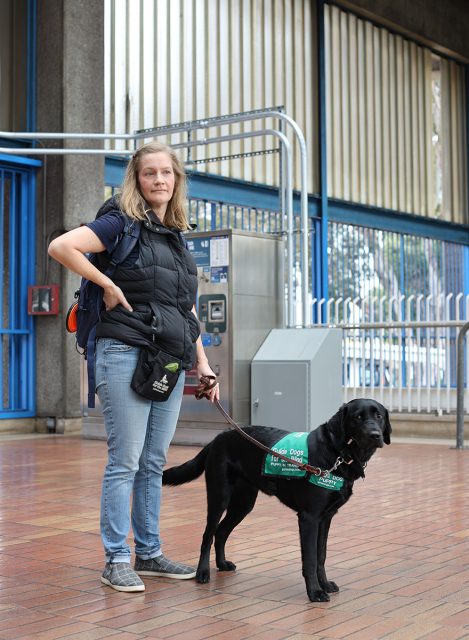
“I’ve never met a sweeter, better dog,” first-time raiser Sara Bausch said of Turnip, who often brings Bausch’s other dog, an 11-year-old Boston Terrier named Olive, her favorite toys.
The dogs paraded off the train as onlookers snapped photos. A pet Chihuahua on the platform yapped wildly as the caravan of guide-dog hopefuls glided past the turnstiles and loped up the station’s steep flight of stairs towards the sunlight.
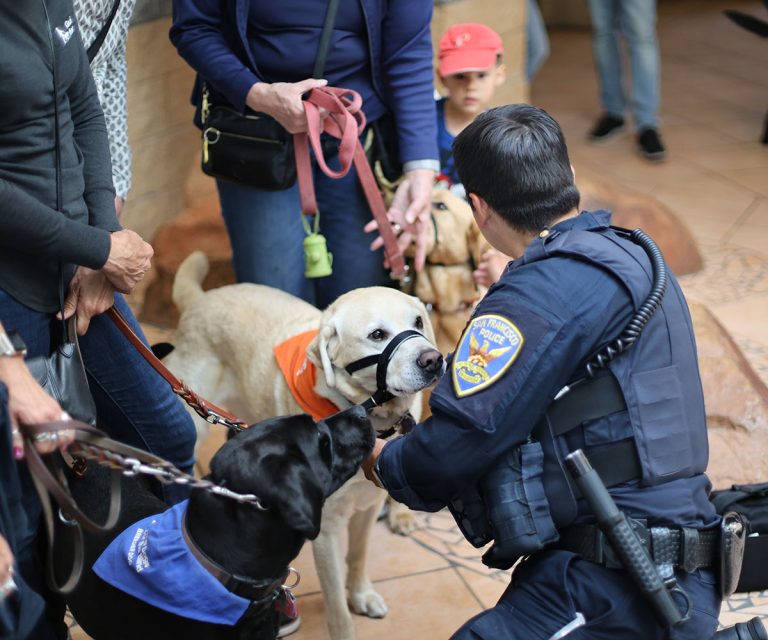
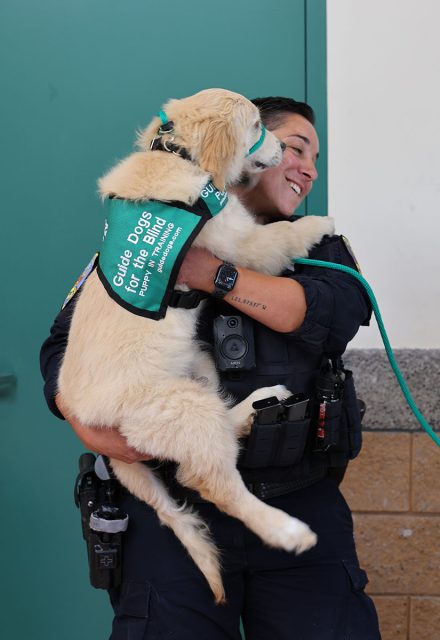
Inside the Mission police station, the puppies circled up to await belly rubs from an officer, an exercise meant to help them learn not to fear people in uniform. It also made for a pretty great day of work for officer Avila.
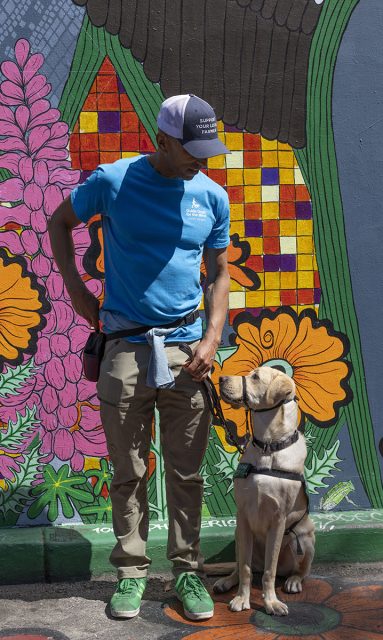
Naturally, a photo-op in front of the Clarion Alley Murals was also required. After raising 15 dogs in 15 years, Greg Walter and Peter Farmer, with Wingman, are often asked how they can bear to give the puppies up. Farmer says it’s like seeing your kids go off to college. It’s bittersweet to see them leave, but gratifying to know how much good they will do for someone else.
Lily Hanson, who was walking Spindrift, has raised seven dogs in seven years. “You could just tell those dogs mean the world to who they go to,” Hanson said, recalling her last dog’s graduation.
Dogs who don’t graduate, about one in five, are “career-changed.” They become other types of working dogs, breeders, pets, or program ambassadors. Many factors can disqualify a puppy from being a guide dog: They are too energetic, they aren’t able to regulate their bladders, they have allergies. One of the biggest challenges is teaching the dogs to relieve themselves before their walk, rather than during it, several puppy raisers said.
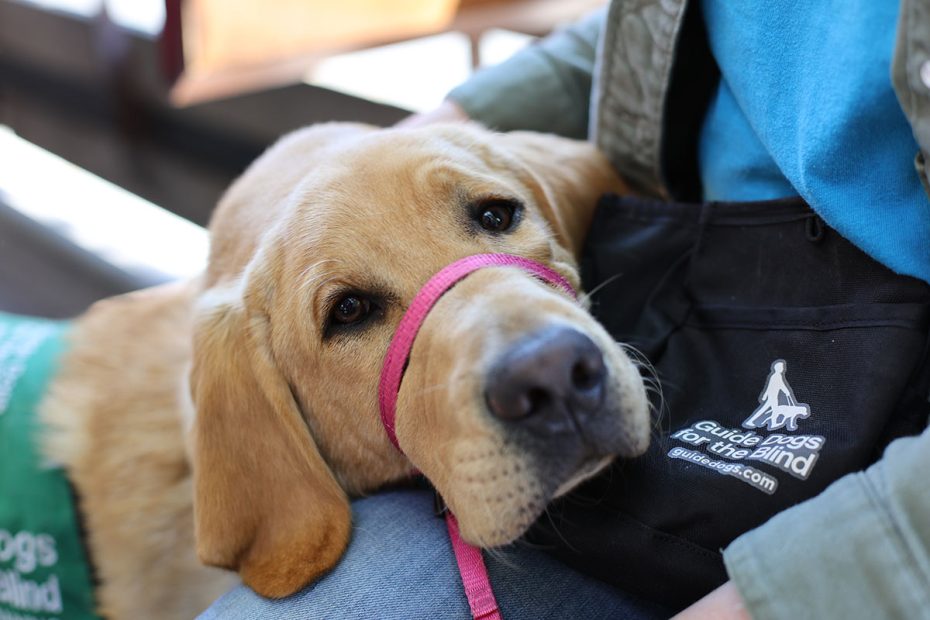
Finally, the puppies waited patiently outside the Dandelion Chocolate shop at 740 Valencia St. as their owners sipped frozen hot chocolate, and pet dogs walked past, straining at their leashes for a sniff. The working dogs didn’t bark once.
Nice story. Nice dogs.
My grand father was blind from his early 50s. He was given the opportunity to receive a guide dog while in his 60s. It changed his life. He did go through a couple since he lived well into his 80s but it was wonderful to see him get his life back.
so stinking cute!
Amazing photos… and names of the dogs!! ❤️❤️
Ms VanNeely here captured so many kind, valuable experiences that occur with pets, people and peace makers to make routine day-to-day upbeat
What does “frozen hot chocolate” in the last paragraph mean? I mean it’s a bit confusing. Hot chocolate is a drink, right? It gets frozen and boom: Marin county voters sip from it?!!
OR the “hot” in hot chocolate is about the process of producing chocolate, which may involve temperature variations?
Please help! 😭