

Nearly three months after Sen. Scott Wiener and Mayor London Breed announced the introduction of a California state bill that would have given police authority to ticket and even arrest people selling stolen goods, the legislation quietly died in the State Assembly.
SB 925’s path in Sacramento was cut short on Aug. 15 when it was held under submission, a term used when members of a committee want further discussion. Wiener said, however, that in plain words this means his bill is dead.
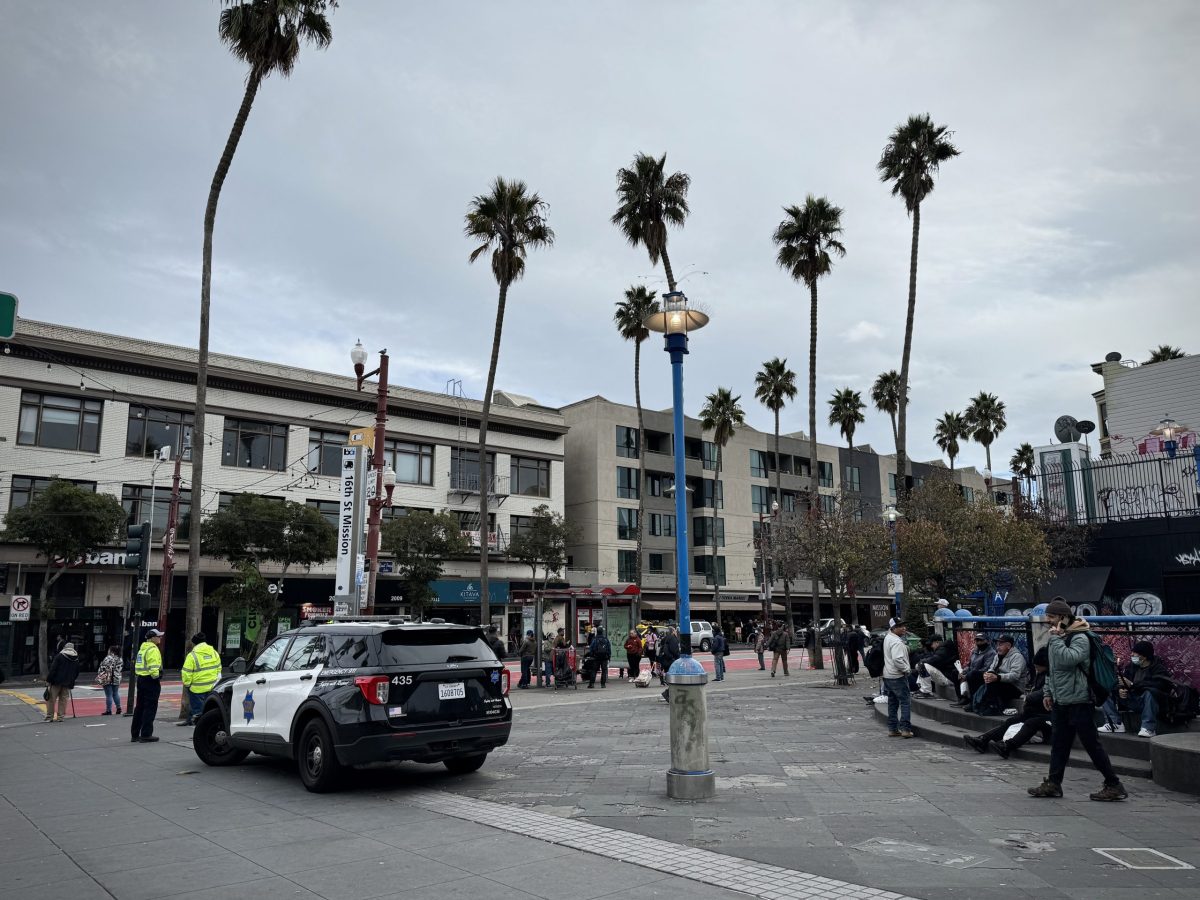
The very next day, on Aug. 16, San Francisco took action by extending the Mission Street vending ban for another six months. The moratorium on street vending, which has been in place since Nov. 27, had been already extended early this year for six months and was set to end on Aug. 27.
“I was very disappointed. It’s a high-priority bill, and it’s a bill that is important for public safety in the Mission and other parts of San Francisco,” said Wiener. “It’s a bill that had extremely broad community support in the Mission and the Tenderloin. I’m committed to the issue, and very open to pursuing the legislation again.”
Mission District supervisor Hillary Ronen had supported the bill. “We were hoping that we could lift the moratorium once that law passed,” she said. “Now that it hasn’t passed, we’re going to have to keep the moratorium going.”
Ronen said, however, that it was important for the city to keep its support for the vendors who have followed the rules.
Unlicensed street vendors in the Mission District have proliferated since the pandemic. Often clogging the two BART plazas, they became a major issue for City Hall, which responded at first by requiring vendors to obtain permits before selling on the sidewalks.
When that failed to curb the sale of stolen goods, the city then banned street sales completely. It opened up two city-owned sites, called La Placita and El Tiangue, for permitted vendors to move inside and hawk their wares, but those led to cratering sales.
Most recently, on June 21, the city began a trial program allowing permitted vendors back onto the street. Already, 10 are allowed to set up shop between 23rd and 24th streets on Mission. On Aug. 26, the city moved ahead with phase two of the program to permit another 10 between 24th and 25th streets, and one more between 23rd and 24th streets.
Manuel Soltero, the vice president of the Mission Street Vendors Association, is one of the vendors who has moved back onto Mission Street. His stall is located on the west side of the corridor between 24th and 25th streets and offers jerseys, perfumes and jewelry.
“It’s better, and I’m really happy,” Soltero said about the chance to be back on the street. “I’ve already made $80 today. Most days at La Placita, I would make between $0 and $20.”
Ronen, for her part, said it was Assembly Speaker Robert Rivas, the representative for the Salinas, Watsonville, Hollister and Gilroy area, who killed the bill. Rivas did not respond for comment before the publishing of this story.
Under SB 925, the Board of Supervisors would have created a list of items often obtained through retail theft. Any street vendor in possession of goods on the list would have needed a permit proving those items had been obtained lawfully. The bill would have also allowed police officers to directly interact with vendors without the presence of a Public Works employee, as is currently required following the passage of SB 946 in 2018, which decriminalized street vending.
The bill would have not applied to food vendors, or vendors not selling items on the list.
Vendors in violation would have received an infraction after their first two offenses, and an infraction or misdemeanor plus up to six months in jail for the third.
Ronen called the actions taken in Sacramento “disappointing,” and said the legislation would have given the city the proper tools to address unpermitted vending, especially for those suspected of selling stolen goods.
“It was a huge blow to us, because we were depending on that [bill] to enforce the laws better,” said Ronen. In particular, she said, the bill would have bolstered enforcement after hours, between 8 p.m. and 9 a.m., when Public Works staff are off the job and the sidewalks become crowded with street vendors once again.
“We know that if there’s no presence out there of enforcers, then the street immediately becomes a massive fencing operation again,” said Ronen. “At night, SFPD could enforce our permitting vendor laws, and that would make it a lot easier to ensure that Mission Street is free of fencing operations. Unfortunately, the bill died.”
Could someone help me understand, why aren’t the police allowed to approach the vendors? Street vending may be legal, but selling stolen goods has never been legal. If someone is out there selling a lot of, for example, detergent, at below-market rates on the street, that seems like enough probable cause to ask for proof of ownership (I am not a lawyer so there’s a solid chance I’m way off on this one – I guess this is the crux of my question). For someone who obtained the goods legally and is doing this as a commercial operation, it should be trivial to prove.
Secondly, impeding the flow of pedestrians on sidewalks and around bus stops is also disallowed. Why are they unable to at least compel the vendors to move enough to maintain the flow?
Because equity, or something…
It’s pretty hard to call this a ban when all you need to do is walk a half-block away to encounter a series of vendors completely blocking the sidewalk with their stolen goods for sale.
Yes the actual effort has been appalling
Would love to hear Roberto Rivas’ reason for blocking an issue that is such a major problem in districts other than his own.
Mr. Rivas has better things to do than pass more legislation targeting brown and black people for prisons just so kids from Yonkers can walk to the Bart and not see Barrio conditions. Whatever his reasons, he showed common sense.
Oh yes, here’s the inevitable DSA stan retorting with nonsensical, ‘property is theft,’ bigotry-of-low-expectations garbage. As it turns out, there are many, many legitimate businesses in SF that Black and brown residents own and work in. This is straight up illegal activity that obstructs public spaces and hurts businesses. It shouldn’t be tolerated by anyone with common sense. As it turns out, rule following really does help the working class get a leg up in society.
You are just as bad as the rabid MAGA types who want to see it all burn. In fact, you can go right ahead and count yourself among the ranks of Trump’s Useful Idiots.
> kids from Yonkers
For those not steeped in the history of Yoko Ono, Sarah Lawrence College in Yonkers NY, 30 miles north of NYC, is one of the most expensive colleges to attend in the US, with a graduating class of 400 people.
It is possible a Sarah Lawrence alum lives in the mission.
While it’s great that the BART plazas at 16th and 24th are sometimes cleared of vendors selling stolen goods, why can’t the cops (constables on patrol) actually patrol a bit. You don’t need to be Sherlock Holmes to find people selling stolen stuff. On Saturdays you can hardly walk down entire blocks on west side of Mission because of all the people selling stolen goods…including wine and liquor!
Hillary Ronen has no intention of challenging the status quo in the Mission regardless of what laws are on the books. We don’t need new ordinances to prohibit stolen goods sales, prostitution, public drug dealing and use, and the growing van encampments. She simply does not care and is vocal about hating her job. She should resign.
” In particular, she said, the bill would have bolstered enforcement after hours, between 8 p.m. and 9 a.m., when Public Works staff are off the job and the sidewalks become crowded with street vendors once again.”
Can’t DPW negotiate with the unions to allow workers to provide illegal vending patrol coverage up until 10 PM when foot traffic ceases and after 6AM when it begins?
One way to put eyes on the street is for the city to regulate and permit street food vendors like we see at the Ferry Building farmer’s market.