
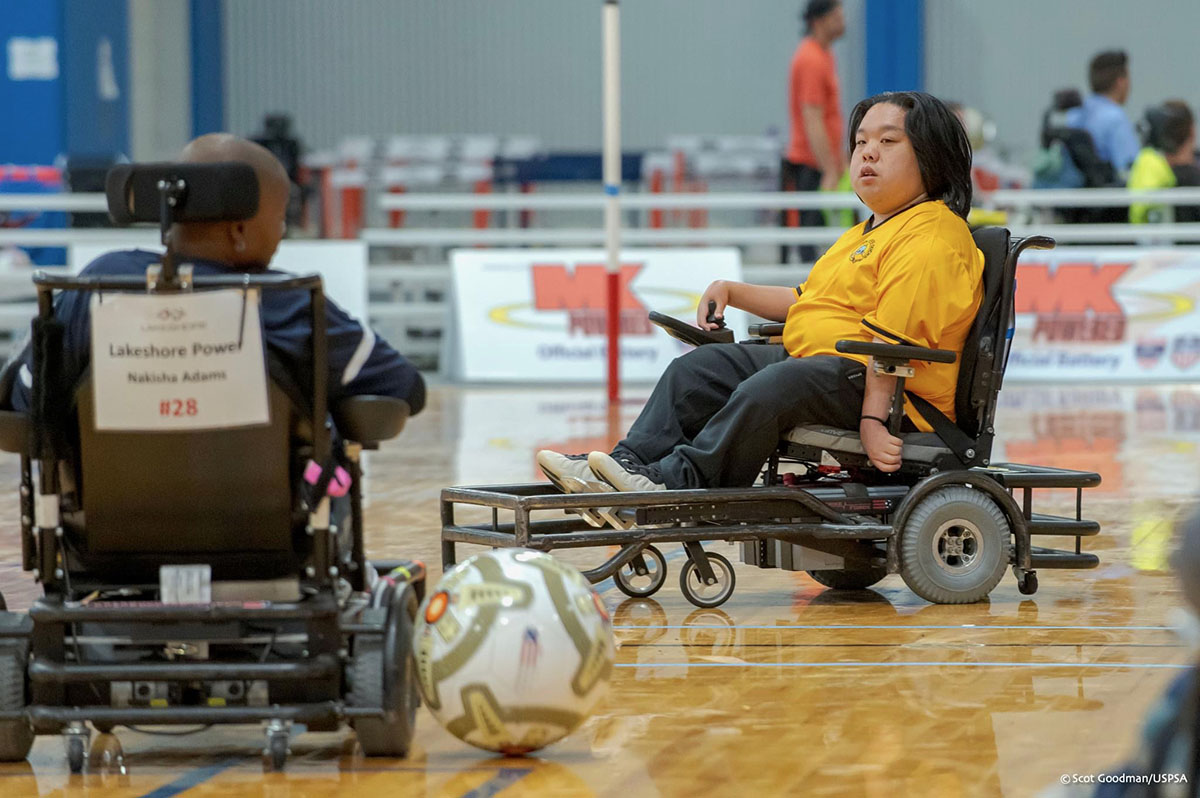

Imagine a mix of bumper cars and pinball, and you’ve got a quick sense of what power soccer is, the manager of San Francisco’s team jokes. In reality, it’s harder than it looks.
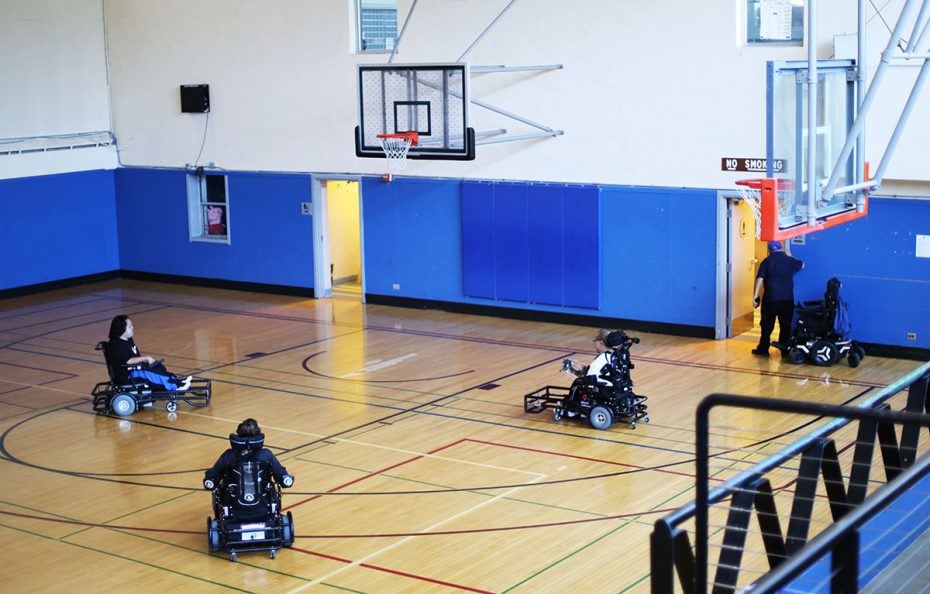
The Eureka Valley Rec Center gym echoed with the whir of specialized power wheelchairs, the squeak of skidding wheels, and the thump of oversized soccer balls on an otherwise lazy recent Saturday in the Castro. It’s summer break, but three members of the Golden State Ducks, San Francisco’s power soccer team, were still there to practice, fresh off a successful 2024 season.
One, Stanely Kuang, who has been playing for more than a decade, attended a Team USA power soccer camp in Eagen, Minnesota this week, an “unofficial trial” for the national power soccer team that competes internationally.
Power soccer generally follows the same rules as traditional soccer, but it’s played indoors on a basketball court with specialized wheelchairs. Four players per team take the field at any given time.
A year ago, Kuang, 30, received a call from the president of the U.S. Power Soccer Association, telling him to be prepared to get called up to training camp, where he’d have a chance to play alongside top recruits from across the country. He’s been practicing for this moment ever since: “That really lit a fire in me to get motivated and play at the highest level.”
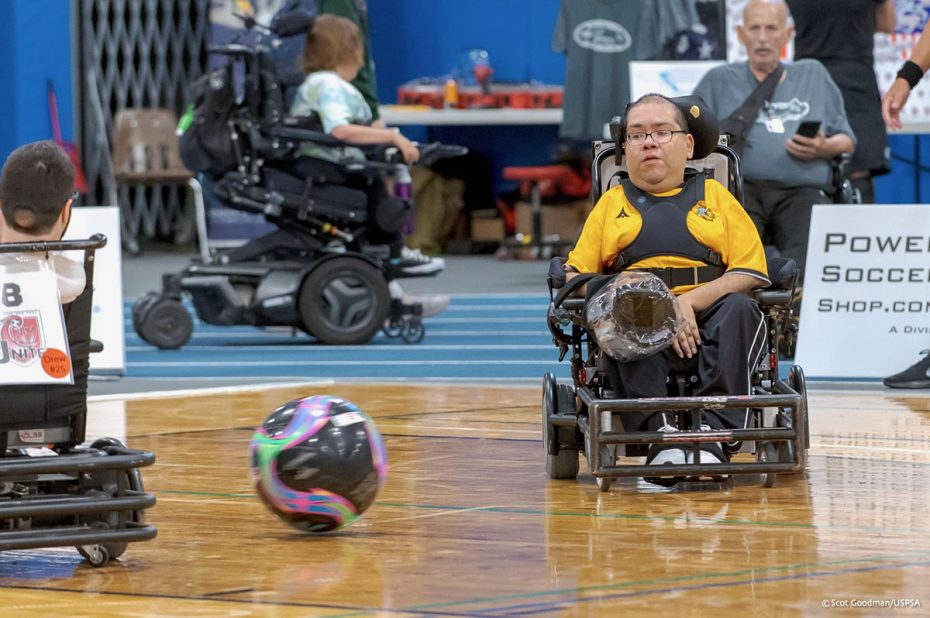
“We’re treated like real athletes,” Kuang said about the camp that is supported by the U.S. Soccer Federation. “And it feels pretty nice.”
While details about the official national team roster have not yet been made public, Kuang thinks he has a decent chance of being flown out for a tournament. The next international competition will be the power soccer Copa América Cup in Uruguay in 2025, he said.
Kuang wouldn’t be the first Golden State Duck to have a shot at the power soccer World Cup. In 2007, brothers Jairo and Omar Solorio helped take home a victory for Team USA in the inaugural Power Soccer World Cup in Japan. Omar repeated the achievement in 2011.
Kuang was first introduced to power soccer by the head coach of Berkeley’s team, organized by the Bay Area Outreach and Recreation Program, in 2012. “Ever since then, I’ve been looking for an outlet to show my competitive side,” he said.
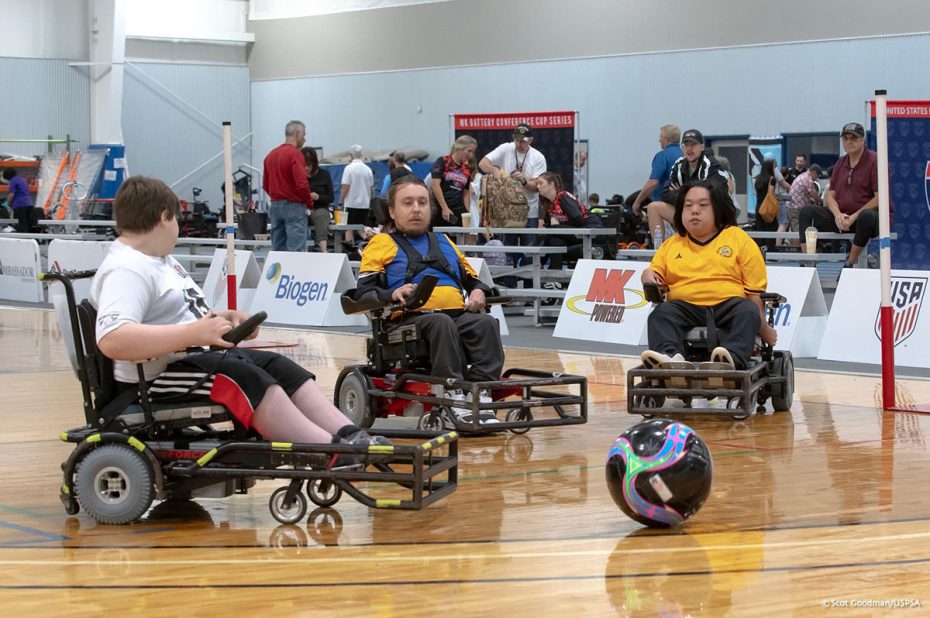
Co-founder Bart Stawicki pitched the Golden State Ducks to Kuang a couple years ago as an opportunity to join a player-run team with an “aggressive style of play.” Most of the country’s other 40 competitive teams are run by organizations or families.
The sport has changed a lot since Stawicki and his co-founder, team manager Max Brown, first played together in high school in New Jersey. Back then, they used borrowed, unspecialized wheelchairs with plastic bumpers instead of metal ones. These days, new teams are cropping up across the country, offering a community to more and more people with disabilities, Brown said.
The Golden State Ducks are supported by the San Francisco Recreation and Parks Department’s Therapeutic Recreation and Inclusion Services division, which provides gym space and some practice equipment. A couple of the eight team members, who range from ages 21 to 50, live in the city; the rest travel from around the bay.
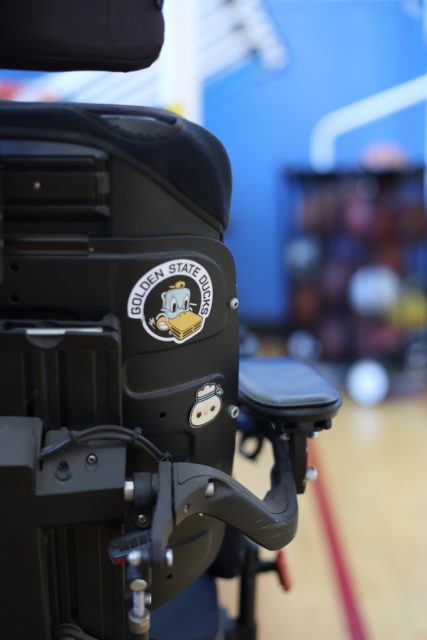
This coming season, they will compete in the league’s top division at the national championship in Indiana for the first time. Until then, they’re focused on expanding and taking their game to the next level.
For seasoned players, operating the power wheelchairs is second nature. They seem equally comfortable driving backwards and forwards in “highly sensitive” chairs that an unfamiliar user would jerk around in.
Non-disabled people usually don’t put too much thought into controlling their bodies, Kuang said. Power soccer players, on the other hand, are often playing “two games at the same time,” mastering both chair control and game knowledge.
“It’s like the chair becomes an extension of our body,” Kuang said. He can tell just by the feel of the ball on his chair how it will be deflected. Spinning around to whack the ball at just the right angle no longer makes him dizzy.
Recruitment to the Ducks mostly happens by word of mouth. Team members often leave their business cards in medical clinics and other spaces they think people with disabilities may be gathering, Stawicki said.
“Whenever we see a disabled person on the street, we just give them a card,” players at the July 20 practice laughed. Not many people are aware of the sport, they added, but once they try it out, “it’s hard to stop.”
For more information on the league, you can contact goldenstateducks@gmail.com