


Between now and the November election, Mission Local is asking each District 3 candidate one question per week, and candidates will get 100 words to respond. We will compile all responses to the 40-odd questions on a “Meet the Candidates” page, so that voters can get a full picture of their stances.
Because Supervisor Aaron Peskin terms out next January, six candidates have filed to run for the seat to lead District 3, which includes North Beach, Chinatown, Union Square, the Financial District, Russian Hill and Nob Hill.
Meet me on Wednesday, May 8 at 10 a.m. at The Coffee Movement (1030 Washington St). yujie@missionlocal.com
By 2031, San Francisco is required to plan for some 82,000 homes, of which 46,000 are affordable. Question this week: How can District 3 help the city hit its housing goals?

Eduard Navarro
- Job: Tech startup founder
- Age: 44
- Residency: Tenant in District 3 since December 2021
- Transportation: Walking, public transportation
- Education: CFA Institute: Chartered Financial Analyst, passed level 1. Master’s degree from Columbia University, architecture, concentration in urban design. Master’s degree from Columbia University, real estate development, concentrating in finance. Ecole d’Architecture de La Villette. Bachelor’s degree in architecture from Georgia Institute of Technology.
- Languages: Spanish, French, German, English, Valèncian (Catalan)
I know how to integrate 82,000 homes into our city without them even being noticeable. This ranges from planning street layouts to optimizing IRR to make market rate and affordable housing attractive for investment.
In District 3, we can deliver our share based on either our population (9%) or our land area (4%), which may be more equitable.
Paris, not known for tall buildings, but denser and with less land than SF, remains vibrant and livable for all income levels. We can enhance our city’s density, charm, affordability, and economic returns without building blunders. I am uniquely qualified and … read more here

JConr B. Ortega
- Job: Self-described formerly homeless, leatherman, boxer
District 3 currently has so many commercial units that are for sale and risk becoming another District 6, where we have more units that are available. What we can do as a District is to work with our fellow districts to ensure we spread out housing availability equally. For too long, District 6 and my District 3 have been the only ones building while others have not. We need to get housing built, but not in an already tightly packed neighborhood that will only be dangerous for the residents in the future to come.

Danny Sauter
- Job: Executive Director, Neighborhood Centers Together
- Age: 35
- Residency: Tenant in District 3 since 2014
- Transportation: Public transportation
- Education: Bachelor’s degree from Miami University
- Languages: English, Cantonese
I’m committed to building more homes in District 3 by:
- Creating a special-use district for family & senior housing: This will create badly needed senior or family housing units in return for additional density. This program can also fund the critical Senior Operating Subsidy to place seniors on social security in deeply affordable housing.
- Prioritizing housing in vacant retail & offices: District 3’s downtown and Fisherman’s Wharf areas have enormous empty spaces that need to be reimagined with more housing.
As a 10-year renter in North Beach, I’m dedicated to building more housing and strengthening protections for tenants and existing residents.
Endorsed by: Nor Cal Carpenters Union, Senator Scott Wiener, Sheriff Paul Miyamoto, Operating Engineers Local 3 … read more here

Matthew Susk
- Job: Former lead with Divvy Homes
- Age: 32
- Residency: TIC owner, first moved to District 3 in 2007. 2007-2009 while in high school, 2014-2016 after college, 2023-present with his wife.
- Transportation: Walking
- Education: Bachelor’s degree from St. Lawrence University, master’s in business from Georgetown University
- Languages: English
District 3 can support the city’s housing goals by strategically increasing housing units without overwhelming residential neighborhoods with new skyscrapers. By developing underutilized spaces around Fisherman’s Wharf and converting some offices to residential units downtown, D3 can add much-needed housing.
This approach will help revitalize Fisherman’s Wharf, which has seen a 25% reduction in sales-tax revenue since pre-Covid-19, and breathe life into Downtown, which has seen foot traffic decline more than 50% since 2019. This balanced development approach will enhance our communities while also contributing to the housing goals.

Moe Jamil
- Job: Deputy city attorney, San Francisco City Attorney’s Office
- Age: 46
- Residency: Owner-occupied condo owner, living in District 3 since May 2014
- Transportation: Walking
- Education: University of California, Berkeley, and law school at Santa Clara University, K-12 public school
- Languages: English, Cantonese
Each district has a responsibility to contribute to meeting the City’s housing goals while incorporating community input. As District 3 Supervisor, I’ll prioritize protection and preservation of existing housing for tenants and homeowners while ensuring the City stays on track with production by:
1. Partnering with the SF Building Trades to prioritize financial incentives to unstick projects committed to skilled and trained and prevailing wage requirements
2. Utilize financing and tax incentives to bring more housing to Downtown and Central SOMA
3. Develop an aggressive affordable housing land banking program
4. Invest in the acquisition and rehabilitation of existing multi-unit buildings … read more here
Endorsed by: San Francisco Tenants Union, Teamsters Joint Council 7, Retired Assistant Police Chief Garrett Tom, Board President Aaron Peskin … read more here

Sharon Lai
- Job: Economic recovery leader at the World Economic Forum, former board member at the San Francisco Municipal Transportation Agency
- Age: 41
- Residency: Tenant and owner, living in District 3 since 2023, first moved to SF in 2005
- Transportation: Walk and Muni when solo, drive when with kids
- Education: Bachelor’s degree from University of California, Berkeley, development studies and city and regional planning; master’s degree in public administration, Harvard Kennedy School
- Languages: English, Mandarin, Cantonese
District 3 and the east side of the city have the majority of the housing density. We need to accommodate more housing, particularly affordable housing. Growth needs to be thoughtfully managed without damaging neighborhood vibrancy and causing gentrification.
D3 should:
- Support thoughtful projects reflecting community needs, like the proposed 100% affordable senior housing project in Chinatown
- Leverage public land for affordable housing
- Preserve affordable and rent controlled housing through rehabs and acquisitions, including 659 Union St.
- Expand support for co-ops, community land trusts, small-site acquisitions
- Ensure funding by supporting measures like Prop. A and the regional housing bond
Endorsed by: Community Tenants Association, Teamsters Joint Council 7, 7 of the current Board of Supervisors … read more here
Money raised and spent in the District 3 supervisor race
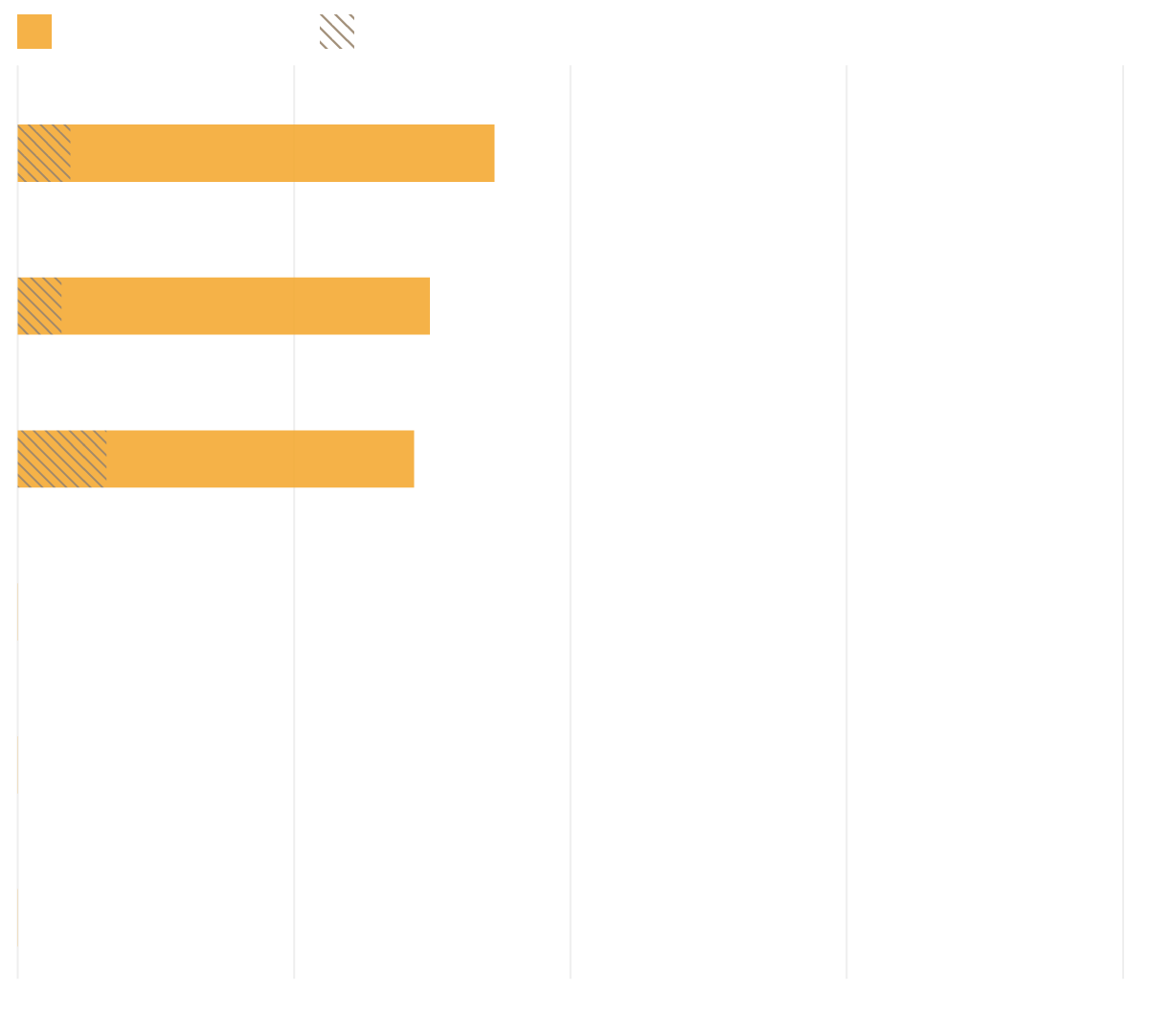
Money spent
Money raised
Sharon Lai
$9,493
$86,241
Danny Sauter
$7,904
$74,566
Moe Jamil
$16,015
$71,672
JConr B. Ortega
$0
Matthew Susk
$0
Eduard Navarro
$0
$0
$50,000
$100,000
$150,000
$200,000
Money raised
Money spent
Sharon Lai
$9,493
$86,241
Danny Sauter
$7,904
$74,566
Moe Jamil
$16,015
$71,672
JConr B. Ortega
$0
Matthew Susk
$0
Eduard Navarro
$0
$0
$50K
$100K
$150K
$200K
Source: San Francisco Ethics Commission, as of April 3, 2024. Chart by Junyao Yang.
Answers may be lightly edited for formatting, spelling, and grammar. If you have questions for the candidates, please let us know at yujie@missionlocal.com.
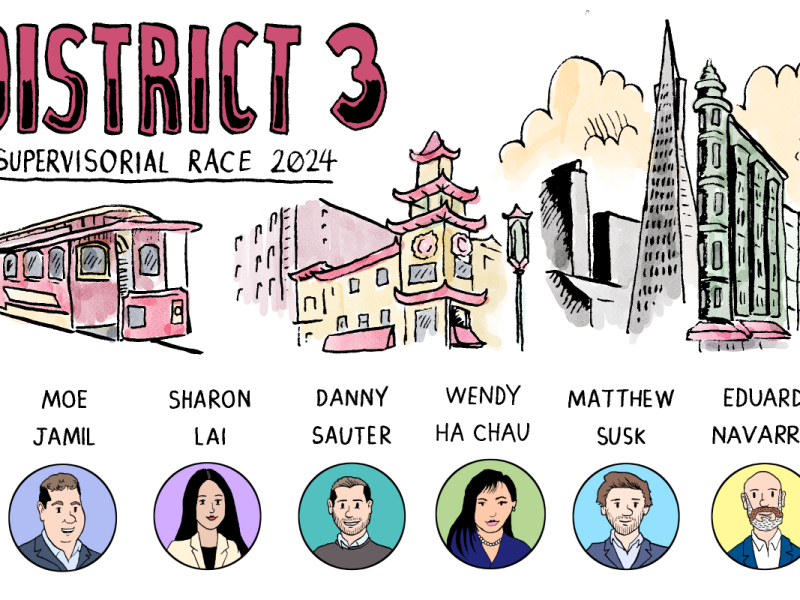
Illustrations for the series by Neil Ballard.
You can register to vote via the sf.gov website.
At first glance there’s not much distinction between the candidates on this issue. However, I appreciated and respected that Sauter clearly has a plan and knows what he’s talking about. He is the only one who comes across as truly pro-housing and wanting to make that a top priority. I’ve attended multiple of the debates, and he also comes across as the most reasonable. A really polite young man–and I think we could use more of that in our city’s politics.
I appreciate Eduard Navarro’s data-driven approach. Divide 82,000 by 11 districts and we get a figure that also falls between D3’s density and area. I agree that Paris height housing (80′ tall) would be more compatible with most D3 neighborhoods, can be styled to fit in (Tenderloin architecture not Mission Bay), provide lots of new units if built everywhere, and not cost as much to build as high rises. I also agree with Sharon Lai and appreciate her mentioning co-housing as a type that must be considered in order to reduce the cost of new construction. Chinatown already has lots of co-housing (along with the Tenderloin) that provided an option for all renters during the boom. Even though Paris height limits and co-housing can save on construction cost D3’s main problem is having SF’s most expensive real estate that is mainly due to its existing high density. Can San Francisco’s leaders negotiate with the State? We need more housing but suppose it’s, say, 33000 (3000 per district) instead of 82000? Why? Because the State’s calculation places a burden on an already dense county. Could the State recalculate with the aim of increasing density in counties where it is low? Wouldn’t county seats that have declined economically (Fresno, Bakersfield, Stockton–otherwise very attractive places) benefit from an additional 82000 units (with Paris height limits–not SFR subdivisions) in their CBDs? Just wondering.
While I agree with Eduard Navarro that denser doesn’t always mean taller, but he shows us that he is detached from reality when he says that “Paris, not known for tall buildings but denser and with less land than SF, remains vibrant and livable for all income levels.” Paris is unaffordable for many and a quick web search will confirm that.