


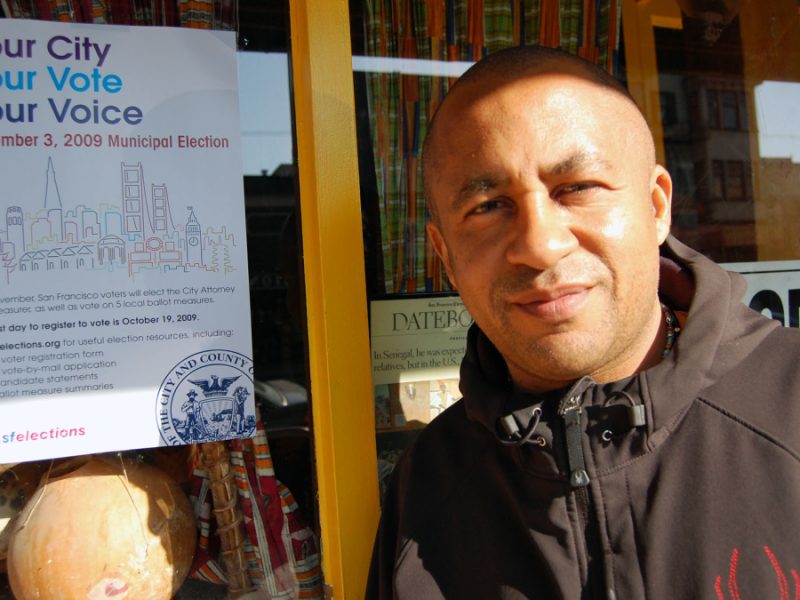
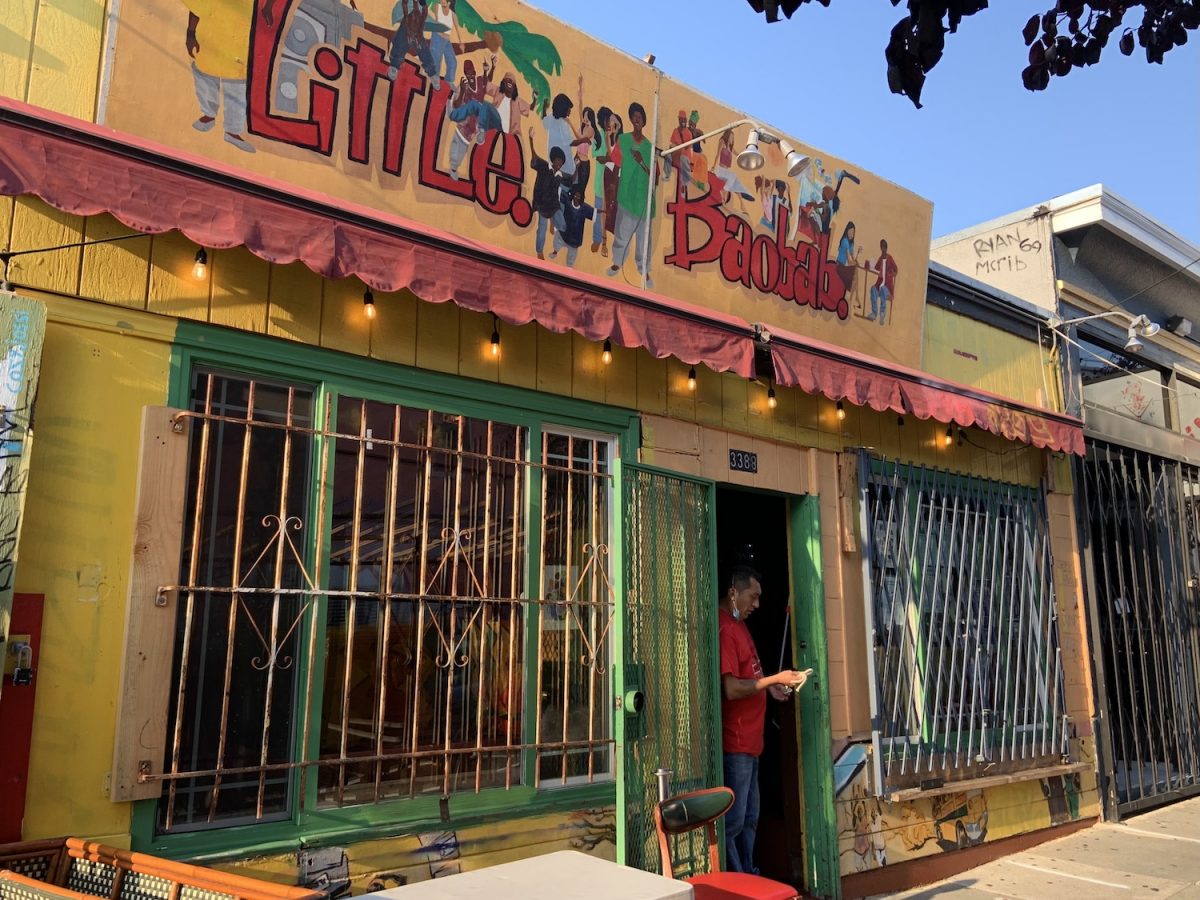
A year after moving into a much larger Mission Street space, and after months of struggling with neighbors and permitting processes, Bissap Baobab owner Marco Senghor received his liquor license Wednesday for the beloved local dancehall.
“We’re still alive,” Senghor said, “That shows how Baobab has been in the hearts of people — they’ve been supporting us without any liquor.”
Senghor has faced battle after battle since he decided to move his longtime business. His plans to take over the old Lupulandia venue at 2243 Mission St. were challenged by neighbors worried about noise, before and after he moved in last summer.
Though he secured his entertainment license in July 2022, the neighbors regularly filed noise complaints, and sent inspectors to his business. Senghor complied with the Entertainment Commission’s rules — even spending his OEWD business grant on $80,000 of soundproofing — but only just secured his beer and wine license this summer after a months-long appeals process, complicated by neighbors’ complaints.
The license awarded on Wednesday allows him to serve hard liquor.
“We’re lucky, because Baobab has a name, but somebody else that’s beginning would be gone,” Senghor said. “It’s time to change some policies.”
The San Francisco Chronicle was first to report on Senghor’s acquisition of the license.
Senghor said that he was on the verge of handing the keys back to his landlord, who was patient and understanding, but could only give him breaks on rent for so long.
“After one year, I’d started not believing anymore,” Senghor said. He lost managers and employees, and often struggled to bring in enough customers, who could find stronger drinks elsewhere.

Baobab, which is known for its dance performances, Senegalese food, and international music and clientele, is “a combination of cocktails, celebration, and food,” Senghor said. “If you remove one of the main elements that keeps everything together … at some point people want, need, to have that to celebrate.”
And now, not only does he have a license to serve the vodka and rum and whiskey in his signature cocktails instead of low-ABV substitutes, Senghor also plans to distill his own rum.
When he first came to the U.S., Senghor started making and bottling his own ginger juice, and eventually distributed it to dozens of stores across the Bay Area. He worked out of the small catering kitchen on 19th Street, which eventually became Bissap Baobab’s home in the 1990s.
“That was the beginning of Baobab, without knowing it,” he chuckles. Today, all that remains of that first business venture is the fresh juice he still serves at his restaurant, but that could change soon. “Twenty-seven years went by, and it’s time to do it again … a different way, with rum, with liquor.”
He has several flavors of rum in mind, and is teaching himself to make them and hopes, eventually, to bottle them. He is also planning to expand the food menu and offer new desserts.
Well drinks are already available at Bissap Baobab today, and tomorrow Senghor expects to have his top-shelf liquor come in. He expects to host a couple reopening celebration parties in September.


Happy to hear this! Congratulations, Marco!