

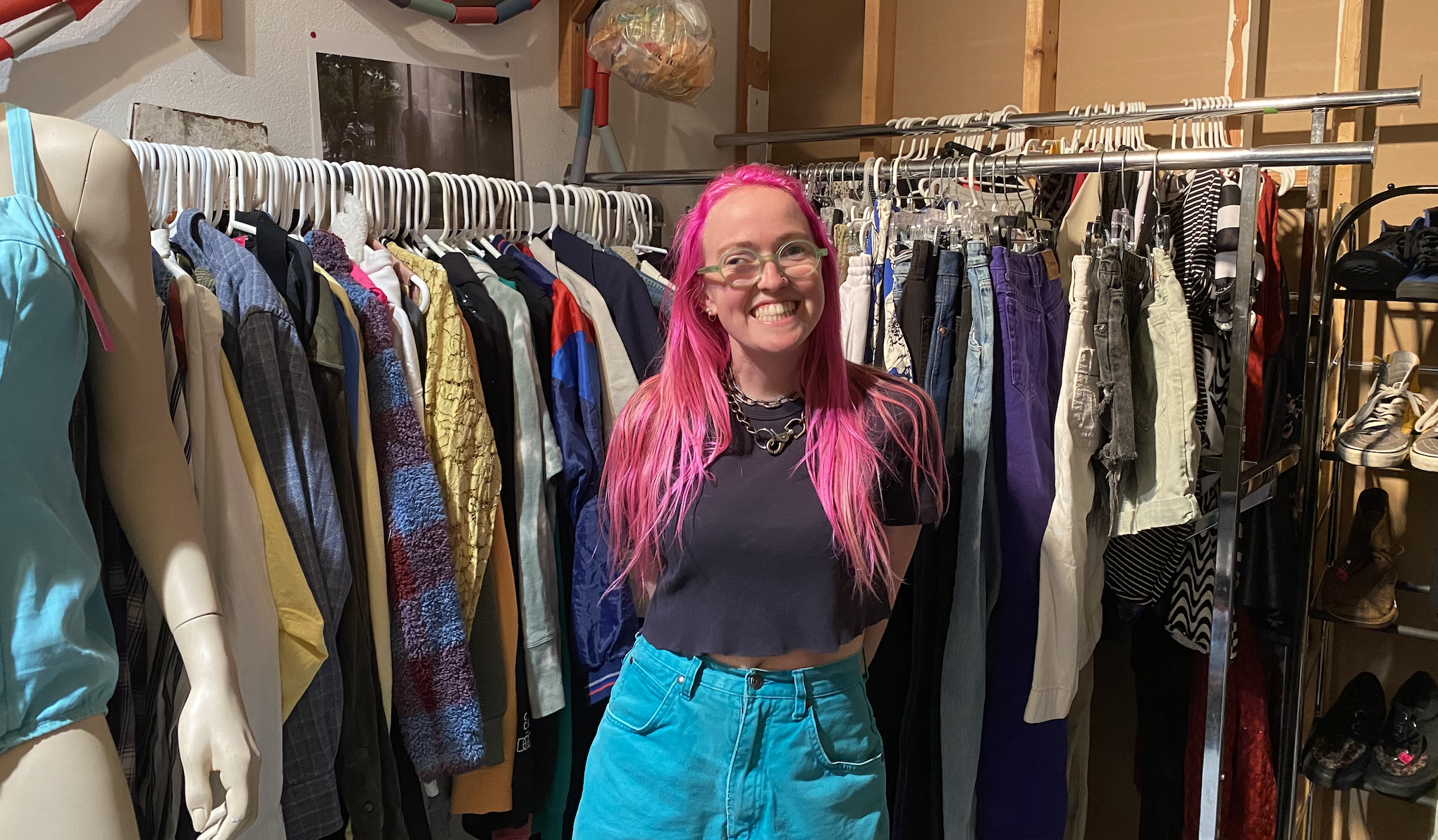

Sorting through piles of clothes, scrubbing out stains and fiddling with broken zippers is a typical day for Emily LaRoche, owner of Double Vision Thrift in the Mission.
“At first, I was just, like, finding things on the ground and washing them, because there’s so many clothes, if you keep an eye on them,” said LaRoche, who founded Double Vision in 2020; the pandemic, she added, allowed time to “let ideas fester.”
The idea was born in her college years: LaRoche focused on environmental studies and photography, which sparked her curiosity in sustainability.
“Environmental studies really made me conscious of waste, and I would just find clothes on the street and wash them and donate them,” said LaRoche. “Then I started thinking, oh, well, maybe I can make a business out of this.”
Double Vision exists entirely via pop-ups in the Mission every few months. Walking by 455A Valencia St. on the day of a Double Vision Thrift pop-up, you might see a chalk drawn “THRIFT POP-UP SALE” with an arrow pointing to the mysteriously open door.
The store sells clothes, bags, belts and shoes. Occasionally, LaRoche will craft clothes from miscellaneous materials. At the most recent pop-up, a jacket for sale was sewn by LaRoche out of green plastic bags.
On July 15, Double Vision celebrated its third anniversary with another pop-up shop, selling cowboy boots, band shirts, pullover fleeces, swimsuits and more.
Along with hosting thrift-style pop-ups for profit, Double Vision also hosts free events with Food Not Bombs, which regularly hands out free food at the 16th Street BART Plaza.
After moving to the East Bay when she was 5, LaRoche remembers “coming to the Mission and Valencia Street in high school, and going to all of the vintage [stores].” When she finished college, there was no question where LaRoche was going to move. “I’ve always loved it in the Mission in particular, because it’s just the perfect, like, the little desert with nice weather and barely any clouds.”
As to the lack of recycling clothes, LaRoche blames the unsustainable nature of fast fashion. “All of the mass production and mass disposal is unethical, from getting the resources to its production,” said LaRoche.
“It’s important for people to see that [these items] are still clothing. I wish people saw them with more value,” she said. “A lot of the clothes you see [in bins or on the street] are perfectly fine.”
She also works at Community Thrift. I always wonder whether the good stuff I donate there gets cherry-picked by staff and never gets to the floor. This kinda adds to that curiosity.
Have you ever worked at a thrift store Stephen? Thrift workers are often elbows deep in filthy, dangerous, and disgusting items. Putting their health and their safety at risk sorting things that could potentially have had contact with scabies, bedbugs, MRSA, black mold, tetanus; breathing other people’s old dust and mildew. Defending their fellow workers from customers with mental health and aggression issues. Being the only person that shut-in regular has talked to in 3 days. Baby sitting customers kids so they can have a moment of peace to buy a second hand nicety; all for minimum wage or a couple coins over. There is usually a system as to when and how an employee can buy off the floor. But even if theres not, bet and believe that these staff EARNED your cast off so called “good stuff” and if you actually knew what they went through you would know that. I ran the out of the closet on 20th and mission for years. It is not easy, and it is only getting harder. Let people have nice things.
As mentioned in the article double vision thrift started (and continues) finding a majority of their clothes on the streets, diverting them from the landfill.