

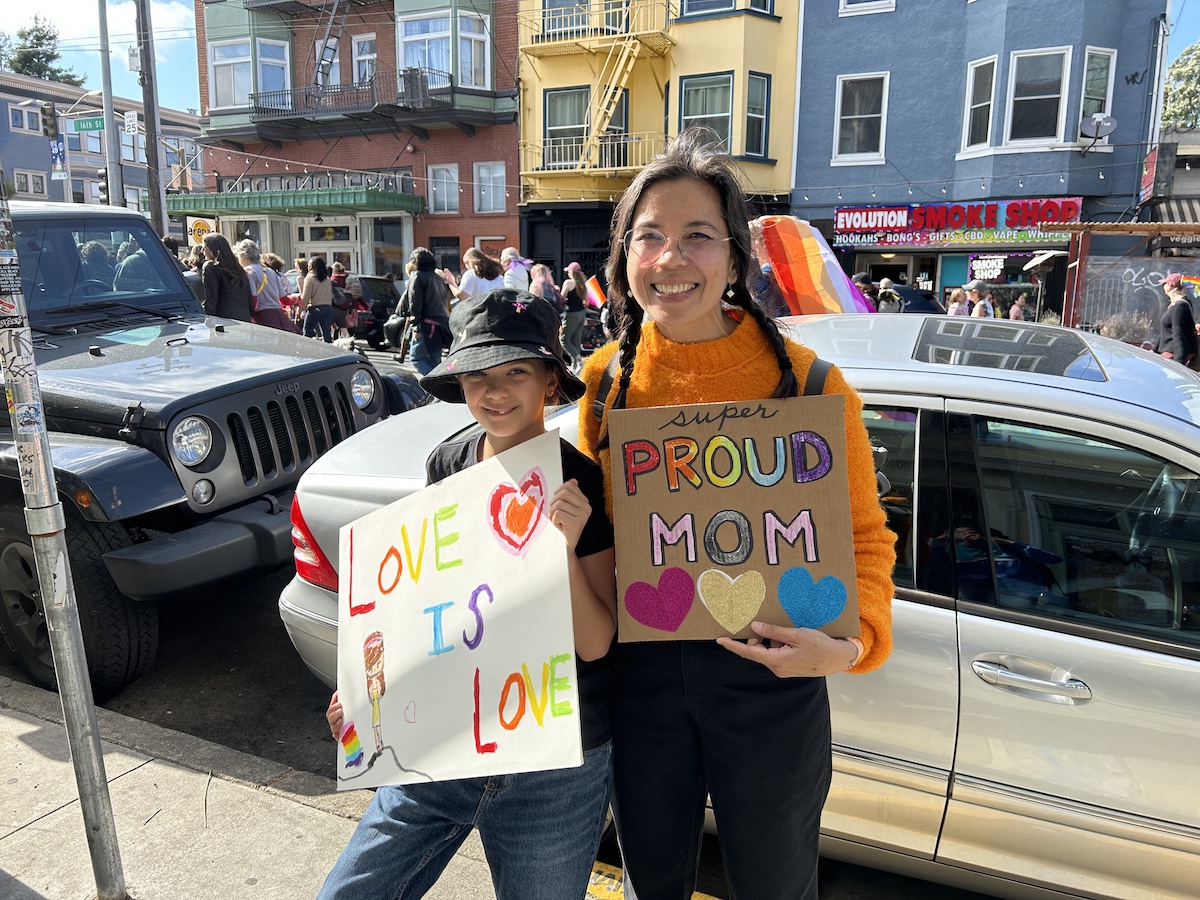

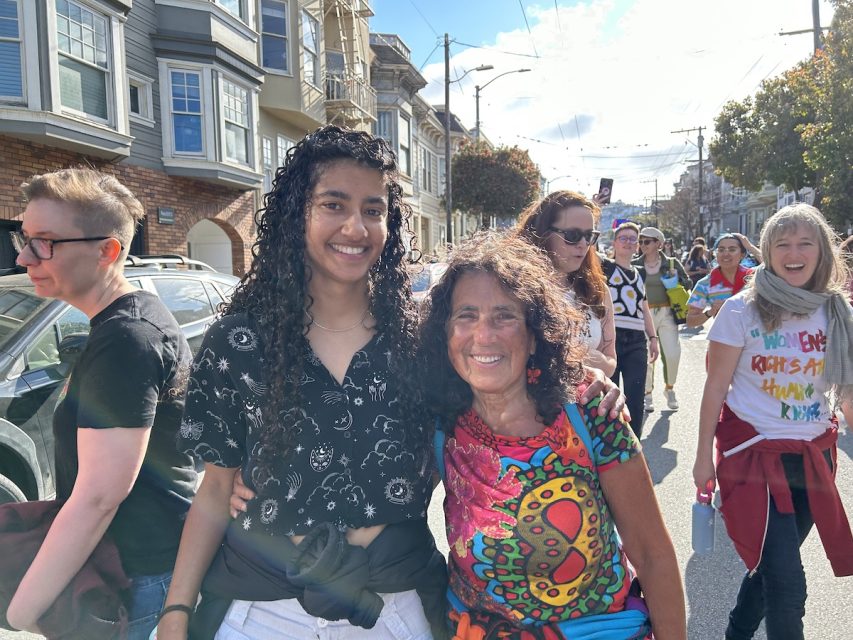
While it was not the first Dyke March for most of the hundreds of queer women parading around the Castro Saturday evening, it was for Miranda.
For that reason, she was happy to celebrate the milestone with her mom. “It feels nice,” she said, shyly smiling from beneath her mushroom-themed bucket hat.
Her mother Elizabeth, who identifies as queer, marched beside her daughter and wielded a sign that clearly communicated the feeling was mutual. “Super proud mom,” it read, adorned with three giant hearts.
“I felt like this year was the year to come to the Dyke March now that she is becoming more clear about who she is, who she wants to be, and the kind of relationships she wants to form,” Elizabeth said of her daughter. “I wanted to do a sign specifically for her.”
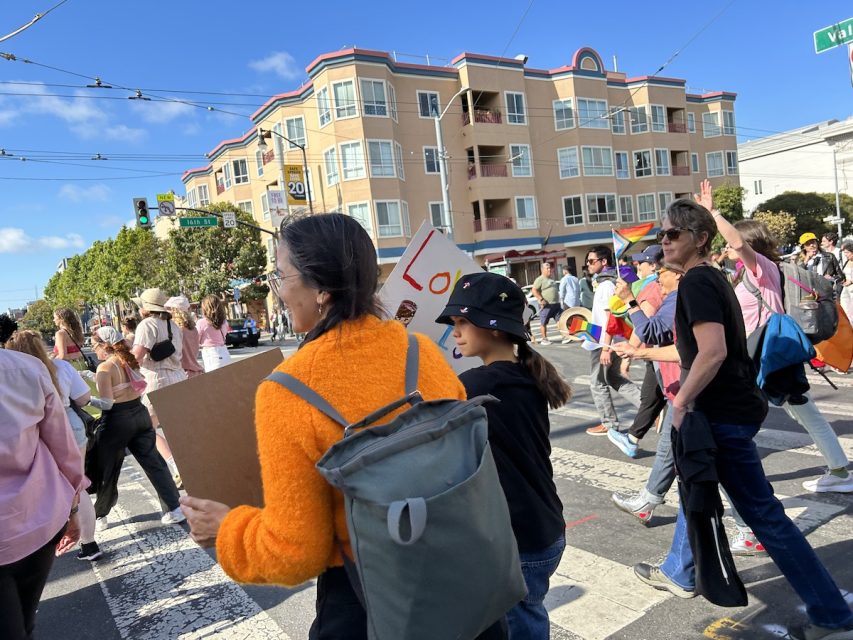
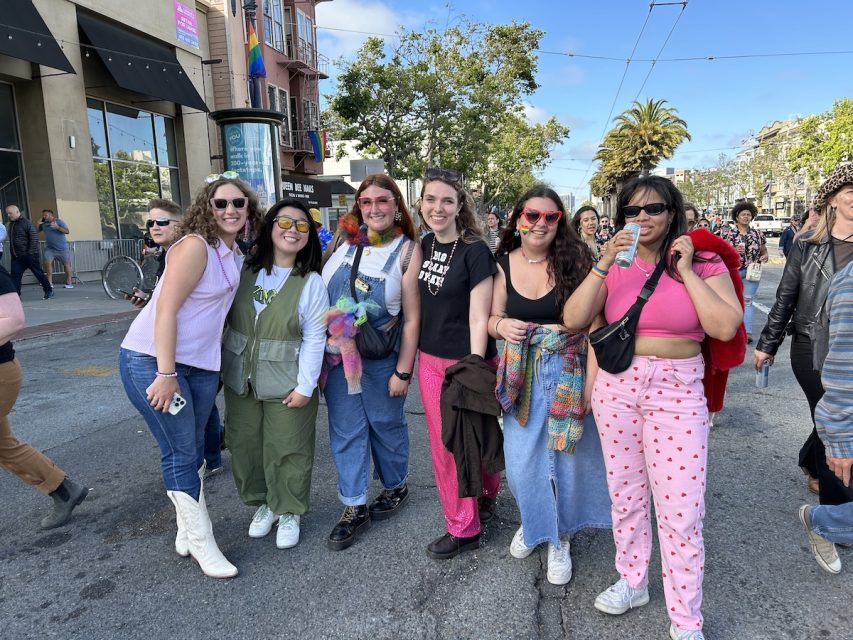
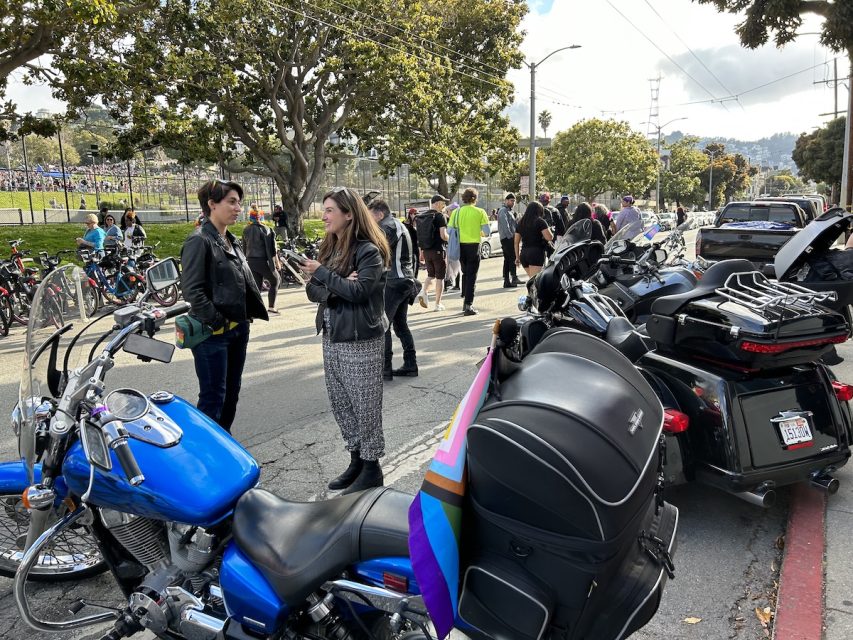
Saturday evening kicked off yet another Dyke March, and hundreds of participants — butch, femme or in between — sang the praises of lesbians and gay women. Some flew in from out of town, others reveled in it as new San Franciscans. Others, like the young Travelslight, came for the first time, while many, including the Dykes on Bikes, joined for what felt like the umpteenth time.
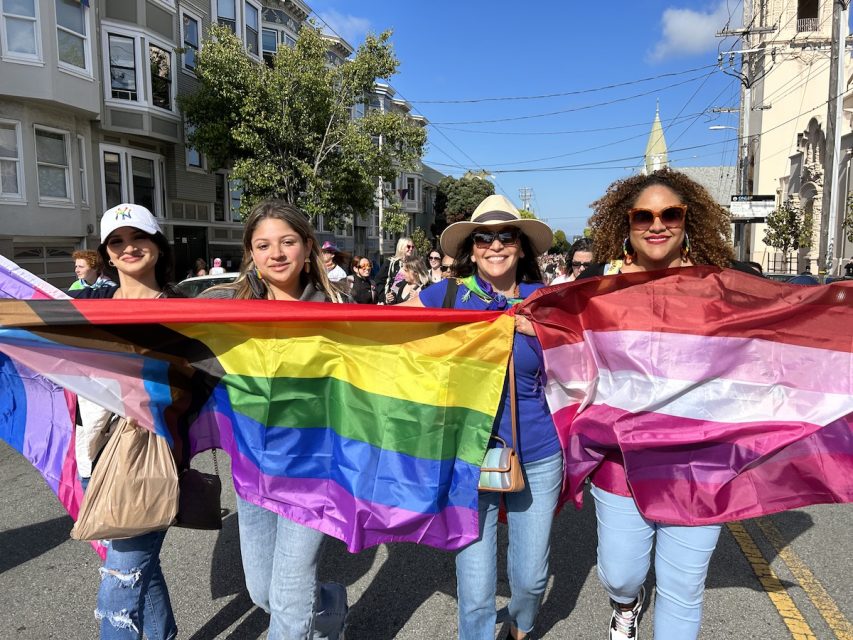
Among the regulars were Gilda Estevez, who is a “bisexual in theory, and lesbian by practice.” Estevez has been married to her wife, Teresa Heredia, for seven years. “But we’ve been together 14!” Heredia chimed in.
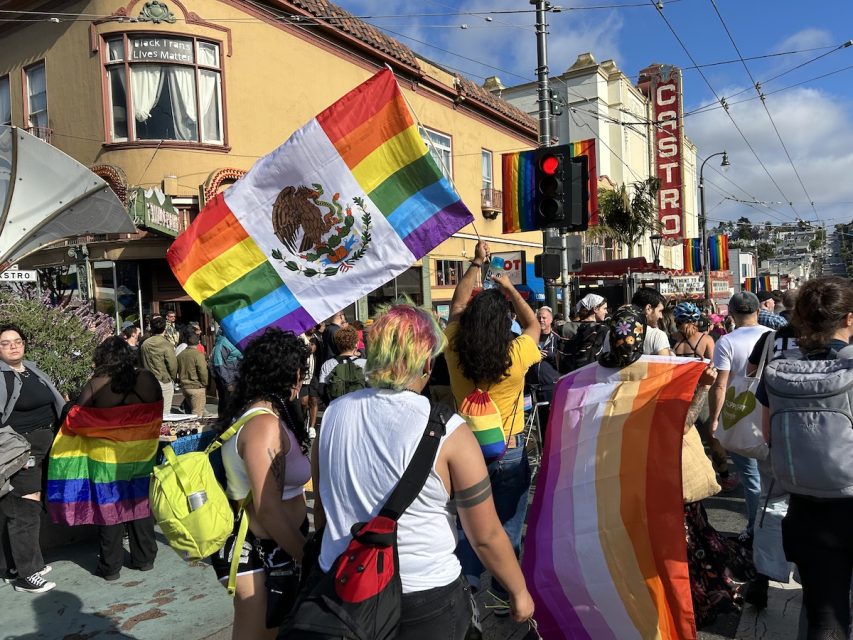
The couple marched along with their niece, Camila Cardenas, and her friend Gloria Jamies, each of whom stretched variations of queer flags.
“We’re generally here every year,” Estevez said. “We marched because it’s important to be out here and show people that they can hate all they want, but we’re still going to be us and we’re still going to love each other and our community.”
One cannot destroy a love like theirs — fated, they said. Heredia had flown to New York “by chance,” where Estevez lived at the time, to fill in for a sick coworker. The pair met at Cubbyhole, one of the only lesbian gay bars around then. They dated bicoastally for three years, until Estevez “decided to move out here.”
“We were bridesmaids at their very gay wedding,” Cardenas said.
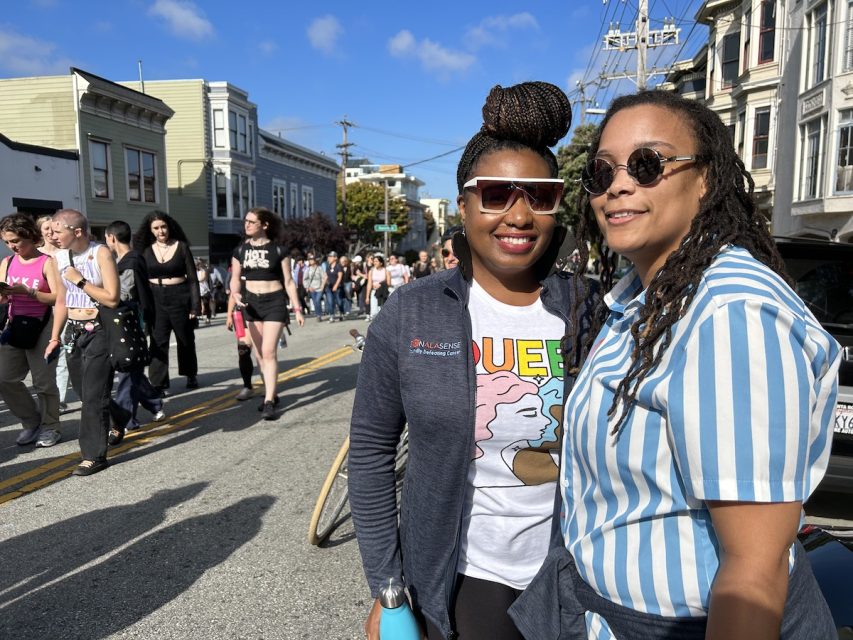
April and Chasity Freeman were other lovebirds who this year relocated to San Francisco. “I don’t know what we expected, but I think it has exceeded our expectations,” April said of the march.
The couple, both in biotech, met on the job. “When I first met her, I heard her before I saw her,” Chasity said nostalgically. “She was telling someone like, ‘You got this. The world is your oyster.’ And I turned around and I was like, ‘Wow, who? Who’s saying that?’”
What was April’s favorite characteristics about her lover? “Her smile. Her patience. The way she loves me. And, she’s fine, too.”
Further up along in yellow shades and a full-on camouflage outfit was Kidd Huang, another Dyke March first-timer. Huang came via her friends Morgan, Jordan, Bella, Ellie and V. It was Morgan who brought Huang to her first Pride Parade last year. (That Pride would be hard to beat; the group scored access to the mayor’s Pride party last year.)
For Huang, a lesbian who is originally from Hong Kong, Pride — and specifically the Dyke March — has been awesome. “Back at home, we don’t do things like this,” Huang said. “Before knowing Morgan, I only had one queer friend. It’s good to know some more like queer people. I guess it’s just a community, right?”
That’s how Moonie Riva feels. “I found out more about who I really was inside. The lesbian community is where I really got that heart,” she said. As an older lesbian — she moved here in 1969 and started hanging with lesbians in 1971 — she has “a lot of that history inside of me,” she said. Moonie Riva is thrilled to share some of that knowledge with younger queers, who may not be as knowledgeable.
Indeed, she was accompanied by a semi-emotional Martine, who saw the sea of lesbians start for the march and shed a few tears. The diversity of women and the love — it was the picture of a kind of world Martine wants to live in.
“And, at this point in my life, I felt very comfortable in my queer identity. But for most of my life, it wasn’t,” said Martine. “And so, to be in a space with magical queer people just … all assembled, like all celebrating this aspect of ourselves is just like super, super special. It fills me with joy and life.”
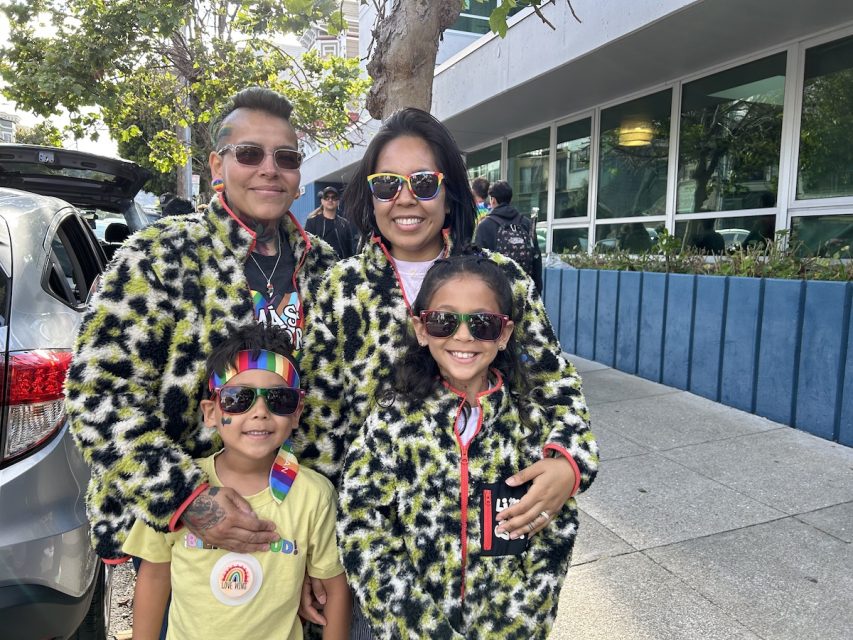
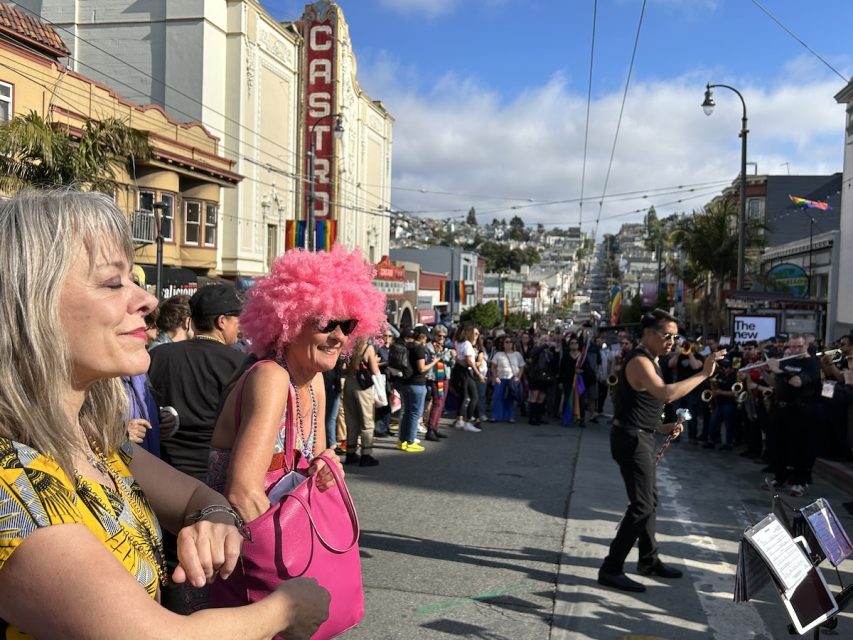
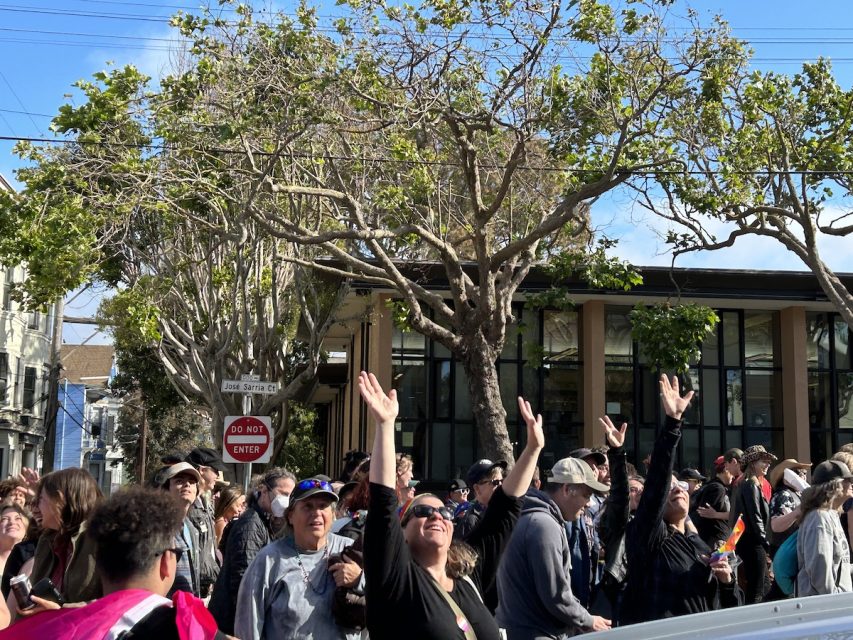
As the parade wound down, participants screamed “pussy!” and carried donut balloons. Spectators tossed beaded necklaces from the windows of Victorians to expectant hands below. Annie and Nancy hugged their kids Lincoln and Coraline off to the side, watching it all. The family came from Missouri. What brought them all the way here?
“Pride,” the couple answered simultaneously. “We wanted to do it big” for the children, Annie explained. (To wit, the kids were having a blast, based on their optimistic outbursts.) Coraline wants to see a drag show.
Annie and Nancy wanted their children not only to go to Pride, but “to see different types of people,” Nancy added. Instead of “the same” type of people they see in Missouri, she hinted.
The parents, together four years now, are in awe of the Dyke March and what it represents. “I think it’s sometimes usually mostly about gay men. And that’s not a problem, but more stuff are catered towards gay men than lesbian women,” Nancy said. “So I mean a whole group of them celebrating who they are. It’s nice.”
“We thought they were old enough to kind of appreciate it,” Annie said. “And understand what love is. Love is love.”
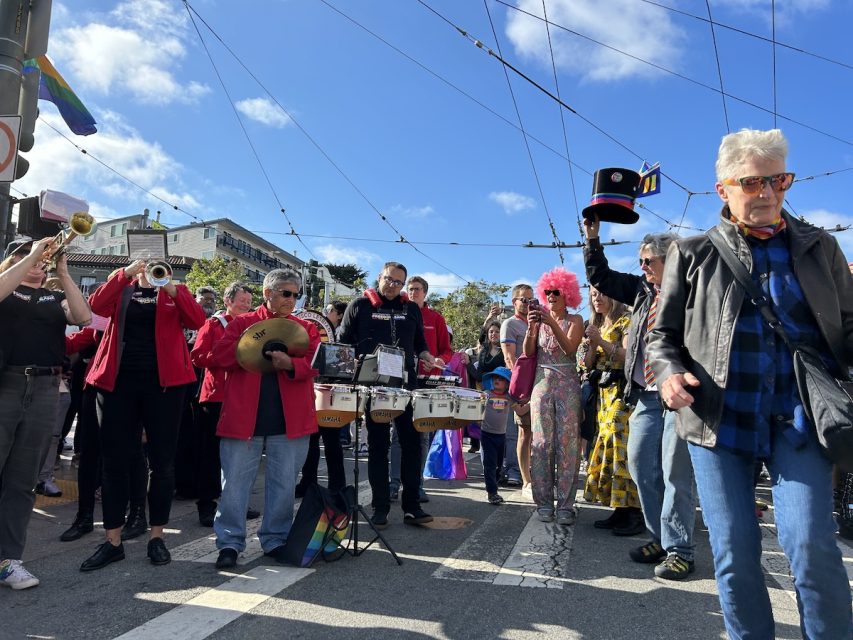
I remember when the Dyke March was an actual march. Now it’s the “Dyke’s and Friends hang out in Dolores Park”. Not that there is anything wrong with that, just that the march part started 5 mins early and lasted about 8 minutes total. Most people never left the park. Oh, and to no surprise, the park and surrounding neighborhood is completely trashed, more vomit this year than most as well.