

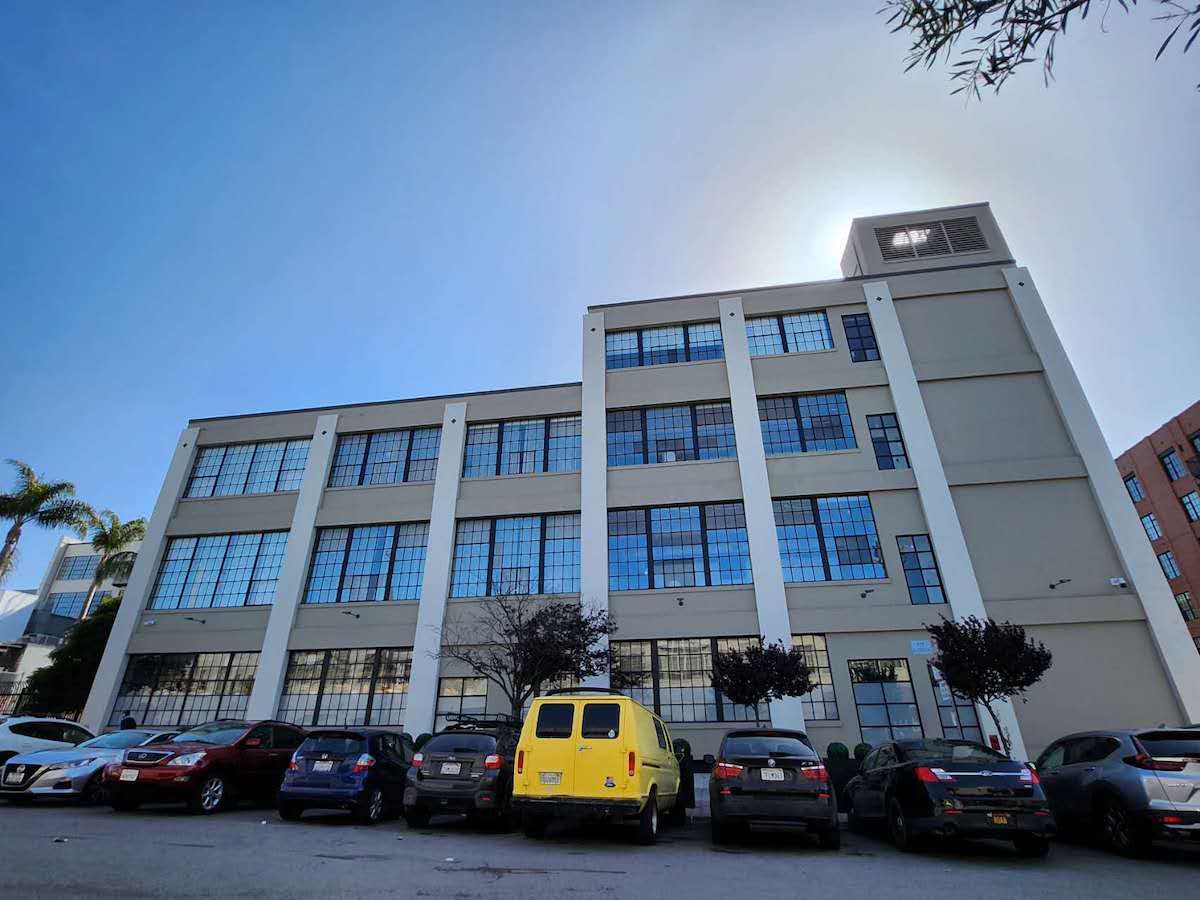
In sharp contrast to downtown San Francisco, office buildings in the Mission, buoyed by small businesses and larger tech companies, have fared far better than the rest of the city in remaining occupied. Data shows that Mission office space is as full as it was before the pandemic.
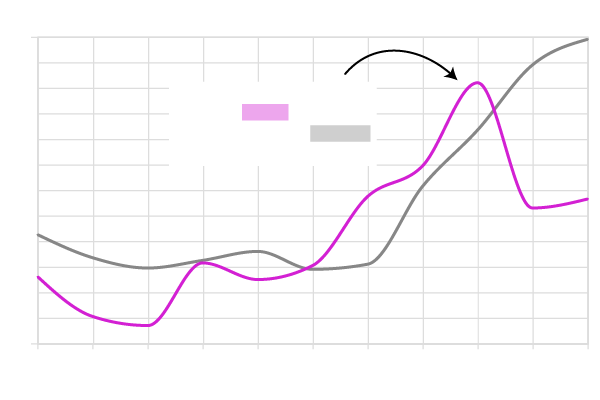
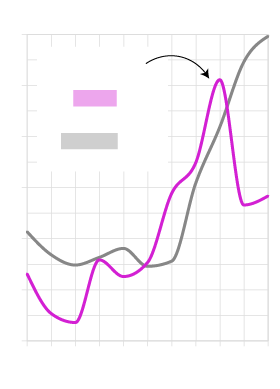
“The Mission is doing pretty well,” said Nigel Hughes, senior director in market analytics for CoStar, a company that tracks commercial real estate information, which provided an analysis of Mission District office space. Its analysis shows the office vacancy rate in the Mission at only 11.3 percent year-to-date, almost exactly equal to the 11.5 percent vacancy rate at the end of 2019.
That is the second lowest in San Francisco: Civic Center, where many office buildings are occupied by local, state, and federal government agencies, is sitting at 6 percent vacancy. The Financial District, SoMa and Showplace Square each have about a 25 percent vacancy rate.
% vacant office space
24
20
After a pandemic spike, vacancy
rates in the Mission are back to
2019 levels. Across the whole city,
vacancy rates are still elevated.
16
12
8
4
0
’13
’14
’15
’16
’17
’18
’19
’20
’21
’22
’23*
Year
*Year to date
% vacant office space
24
After a pandemic
spike, vacancy rates
in the Mission are back
to 2019 levels. Across
the whole city, vacancy
rates remain elevated.
20
16
12
8
4
0
’13
’14
’15
’16
’17
’18
’19
’20
’21
’22
’23
Year
Chart by Will Jarrett. Data from CoStar. The citywide trend is largely driven by vacancies in downtown San Francisco.
While the Mission’s office vacancy rate has recovered to pre-Covid levels, downtown San Francisco has experienced a big swing: From 5.8 percent vacancy before the pandemic in 2019, to the current 22.2 percent vacancy year-to-date. And that downtown vacancy rate keeps growing.
Even for the Mission, the rosy picture may not last: Ted Egan, the city’s chief economist, has been counting new leasing data in the neighborhood and noted a precipitous drop from 2019 to 2022: 24 new office leases in 2019, 17 in 2020, 11 in 2021, and just six in 2022. By the end of the first quarter this year, just one lease had been signed, for 11,500 square feet.
Fewer office leases can portend future vacancies, since office space that goes unleased today will sit empty for at least a period of time, increasing the vacancy rate and meaning fewer people working, walking, and shopping in the Mission.
“The impact on the Mission is the microcosm of the city as a whole; less travel to offices, so less economic activity to supporting businesses in the area, less transit ridership, etc.,” Egan said. “In time, the market will need to adjust to remote work, so there will be lower rents, and likely new tenants and/or new uses for some of these spaces.”
Hughes, from CoStar, acknowledged the connection between new leases and vacancy rates. “It might not always be immediate, particularly in smaller markets where there’s only a few new leases every quarter, but if you see the number of new leases dropping, vacancy will likely increase at some stage.”
Louis Cornejo, a commercial realtor who has been based in the Mission for 30 years, said the data bore out what he was seeing day-to-day.
While he wasn’t sure if the Mission office market had returned to pre-Covid days, he said offices were definitely being filled. “It’s far from being empty.”
Variety of tenants, and OpenAI, keep Mission offices afloat
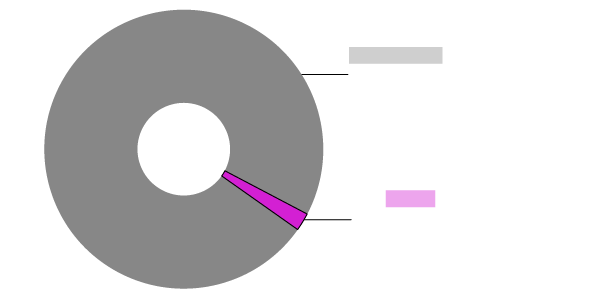
The Mission is a much smaller submarket than the Financial District. The neighborhood has a little over 2 million square feet of office space, compared to 60 million square feet in the Financial District; San Francisco as a whole has some 113 million square feet of office space.
San Francisco has roughly
113 million square feet
of office space.
The Mission makes up only a
fraction of that – some 2.4 million
square feet, or 2.1 percent.
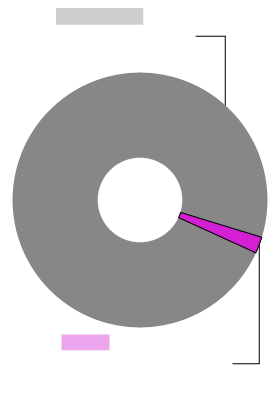
San Francisco has roughly
113 million square feet
of office space.
The Mission makes up only a
fraction of that – some 2.4 million
square feet, or 2.1 percent.
Chart by Will Jarrett. Data from CoStar.
It is such a small office market that it is not even tracked by CBRE, a real estate brokerage firm that recently reported a 29.4 percent office vacancy rate in San Francisco.
“The Mission District falls outside of our statistical set,, due to the overall size and mixed-use nature of most of the office inventory,” said Konrad Knutsen, associate director of field research at CBRE.
CoStar, which does track the Mission’s commercial and office space, shows the Mission doing significantly better than nearby neighborhoods because of its variety.
Office tenants in the neighborhood are often in sectors like education, government agencies, non-profits, and local businesses. “There’s a different sort of tenant group than you would get in downtown San Francisco,” Hughes said, adding that the diversified sectors populating Mission office buildings are “not as volatile as the tech industry,” and have downsized less, reducing the vacancy rate.
And tech, in the Mission at least, has actually kept office occupancy afloat: In 2020, the artificial intelligence company OpenAI, the creator of the now-famous ChatGPT, signed a new lease for about 100,000 square feet at 575 Florida St., which it occupied in 2022. That one lease played a large role in reducing the overall Mission vacancy rate last year, Hughes said.
An incubator submarket for tech
Louis Thibault, a San Francisco-based senior analyst with the commercial real estate firm Avison Young, said the Mission attracts a certain kind of office tenant: Businesses that are new and growing, but do not yet have capital for a downtown move. “They’ll usually take a spot in the Mission and then, once they get enough funding, they will probably go somewhere else where they have a nicer building.”
The Mission’s office stock is also different from the Financial District’s: Smaller, shorter, older, and more scattered buildings where offices sit atop retail storefronts.
Tech is drawn to the neighborhood because the Mission is “a lot cheaper” than other parts of San Francisco and has easy transit access, said Thibault.
“It’s an incubator submarket,” said Dina Gouveia, regional lead for Northern California at Avison Young. The Mission is a more “livable, walkable neighborhood.” And, while the vibrancy of the Financial District is heavily reliant on the daytime office workers, “you don’t see that necessarily in the Mission, because it’s closer to where people are living.”
Using submarket data provided by CoStar and from its own database, Avison Young released an analysis this month tracking 17 buildings in the Mission with more than 20,000 square feet of office space each, totaling about 900,000 square feet between them.
According to Gouveia, 62.7 percent of the space in those larger buildings is hosting new, large tech firms like OpenAI or Notion, the $10 billion firm that signed a lease on about 50,000 square feet at 2300 Harrison St. in 2021. Education-related firms took up 14 percent, while businesses in PR, telecommunications, and other media took up 9.7 percent.
Map of 17 large office buildings in the Mission by Will Jarrett. Basemap from Mapbox. Data from Avison Young.
That report also showed a higher office vacancy rate in the Mission’s larger buildings (26.9 percent) than in the neighborhood as a whole. Those larger buildings, however, count for less than half the total office space in the neighborhood, and high vacancies there do not necessarily mean a poor market.
“The vacancy rate does not dictate the health of this market,” said Gouveia. She added that for a small office inventory like the Mission’s, any changes in lease and availability may cause the percentage figure to “move dramatically one way or the other.”
Still, Gouveia notes that this means the neighborhood’s office space market can recover more quickly than other areas.
“It has less of a race to run,” she said, “whereas the Financial District has a marathon.”
An interesting question about vacancy, is how many of those leased properties are filled with workers?
Our family and close friends all go into their offices maybe once or twice a month, less if they can avoid it, but their offices remain “leased” for now. Many offices are going reduce a lot of square footage in the coming years.
It is long time to rethink how communities are organized. It might be that financial districts, empty of humans from 5pm-9am, are a thing of the past.
If it were only more feasible to convert some buildings downtown into housing. Big corps say it is too hard, but I would love to hear from someone who is an outside expert.
This shows that people working in close proximity to where they live is good for the urban ecosystem. This area is lively, filled with people just living life. I love it. And if I’m not mistaken, there is a few very large 100% affordable housing complexes built and in the works. This mission won’t be able to solve the homeless problem but we are doing a lot more than some other districts to address the housing shortage.
lots of these office buildings in the mission incl the one depicted above were actually supposed to serve light industry and manufacturing. they were converted to a large extent during the .com rush of the 1990’s and again in the last 10 years at an accelerated pace.
and here is a problem, there are still lots of companies and people looking for light industrial space here in the City but cannot find any at reasonable rent. lots of contractors and suppliers have left the city for that reason.
when you look at the CL listings for commercial space in the pics you see those older brick and open truss ceiling building, loft buildings, etc., originally intended for industrial use but now offered as “creative flex space”.
You make good points.
If I were going to open up an office for my business, the absolute last place I would choose would be the Mission, Soma, or downtown, because of all the homeless encampments, drug addicts, and criminals.
this part of the Mission has a few tents but is totally fine – ridiculous statement