

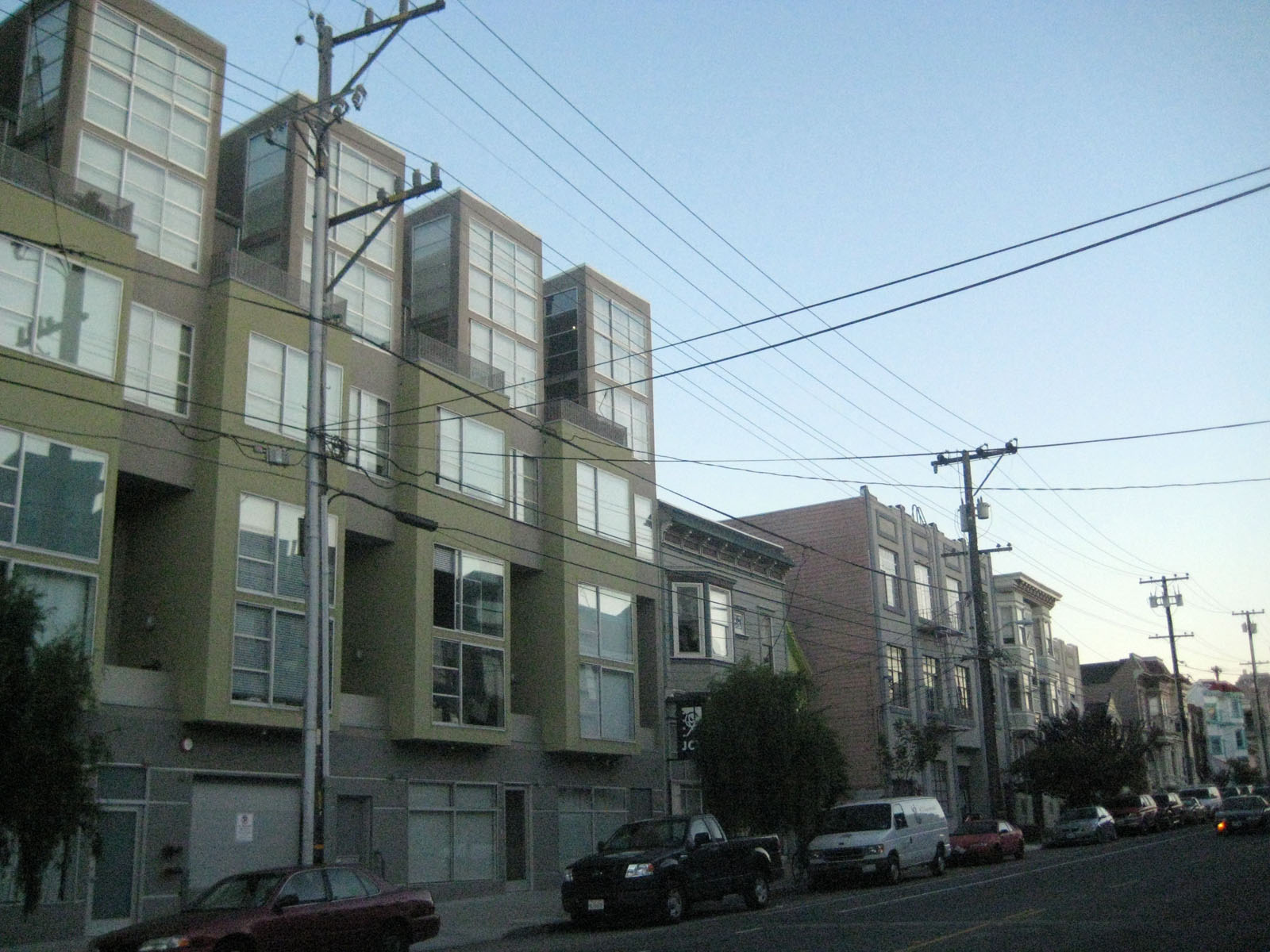

Developments in Development is a “weekly” column recapping real estate, business, planning, zoning and construction news.
How should we treat housing? As a commodity like bread or gas? As an investment? As a human right?
Writing about development and housing a good deal, my observation has been that these three attitudes toward housing seem to more or less distinguish three schools of land-use thought.
The thing is, to co-opt some of the comments from this week’s Planning Commission meeting about the Mission Action Plan 2020, that adherents to all three of these schools probably have more in common than our bitter local housing wars might indicate.
Some thought-provoking articles I was directed toward this week:
The Guardian has this profile of the UN Special Rapporteur on the right to housing for the UN Human Rights Council and her recent report positing that housing should be seen a human right. And the New York Times has this column exploring how regulation has throttled housing supply and made it impossible to move to cities like San Francisco.
Both of these, by the way, are worth taking the time to read fully, but here is what struck me about reading them side by side: Both point the finger at the Housing As An Investment philosophy.
“Housing is particularly prone to bubbles because, in contrast with other products, we seem to want it more when it is expensive and less when it is cheap,” writes Conor Dougherty in the Times Piece.
And from the Guardian’s Patrick Butler, regarding the housing rapporteur Leilani Farha: “The middle class, she notes, have so far been generally complicit, benefiting from rising house prices.”
They take aim at two different concerns. Dougherty’s concern is the regulation of land use, which drives up the value of land to an untenable point. Farha’s is the problem of housing bought by wealthy Dogecoin investors, often foreigners who do not go on to live in their investment, which drives up costs but doesn’t add the residents that keep neighborhoods thriving. But for both, the attitude toward housing as an investment, not a basic good, is a problem.
Having read that, it might be worth revisiting this, admittedly now somewhat dated, report by 48Hills that found almost half of newly built condos in the city sit empty.
One twist on the housing-as-investment mentality that’s being tried out around the world is crowdfunding major real estate developments, as detailed in this longread by Curbed. The idea there is to make investing in skyscrapers no longer a pastime open only to the wealthy elite, but to open it up to much smaller sums in contributions – that still come with returns on investment.
That potential for community investment in housing is not lost on the locals. While we’re not seeing people pass the hat for office towers, the so-called Neighbor-to-Neighbor fund is what fronted the money for the Precita Eyes building purchased as affordable housing by MEDA last year. And I have heard from one of the investors that that money has been fully repaid.
In the meantime, the city continues to grapple with its regulations (to the chagrin of the reader who sent me the New York Times piece) on housing. Currently at hand is a discussion about how much housing should be built for which income brackets.
That of course is a relevant and important conversation in a city where teachers qualify for and desperately need low-income housing, but it has no control over what happens on the open market. Which is where we get commodities like this local gem: A three-bed two-bath apartment inside V20 for rent for $6,500 a month
Wasn’t I just complaining last week about how single rooms are now impossible to get for more than $1,300? Yes I was, and citing a real estate site that arrived at price-per-room costs by dividing the monthly cost of rentals on the market by the number of rooms. And by that measure, the three-bed above fits right into the mix, at $2,100 a month.
And yet Socketsite reports that the per-room cost of apartments has actually dropped since 2015. Their calculation considers living rooms in that definition – “as have plenty of roommates over the past couple of years,” which is a fair point.
Even $2,100 a month for a room is still better, though, than $90 a night for a Airbnb (tinder)box in the Sunset. Apparently the city thought so too, having now cited the owner of that Airbnb for code violations, which they will consider abated if he reduces the occupancy of the home to 14 people in five bedrooms. Which makes me wonder…how many of these pods were there!?
Before I let that one go, I have to just mention that the minimum stay at that location on Airbnb is now listed as 30 days, which would have brought these boxes up to $2,700 a month. I would say building a box nexus in your house to bring in that kind of dough is taking Housing As An Investment to truly absurd lengths.
As I’m sure Airbnb would remind me, this extreme case doesn’t illustrate what most middle-class folks who invested in their home as an asset do with short term rentals. Which of course I understand. But then there’s this other problem that Inside Airbnb is pointing to, as told by The Real Deal:
“Whites make up 13.9 percent of the overall population in [predominantly black] neighborhoods, but disproportionately account for 74 percent of the Airbnb host population, according to the summary. When it came to earnings, white hosts in these neighborhoods pocketed …73.7 percent of the income earned in these neighborhoods.”
Depending on whether or not you believe facial recognition software applied to profile photos is a viable way of distinguishing someone’s race, that appears to confirm local fears about rental housing in formerly low-income neighborhoods accelerating gentrification.
Locally, a working group meant to be convened to figure out how to best regulate Airbnb has yet to materialize, delayed while San Francisco mediates a lawsuit filed against it by two homesharing giants.
“Whites make up 13.9 percent of the overall population in [predominantly black] neighborhoods, but disproportionately account for 74 percent of the Airbnb host population, according to the summary. When it came to earnings, white hosts in these neighborhoods pocketed …73.7 percent of the income earned in these neighborhoods.”
Looks like Airbnb needs to advertise more to the minority population hosts. White people aren’t making more money per location in this area if 74 percent of host population is generating 73.7% of the income. It’s equal pay. If more minority hosts would start renting, this would boost the minority populations income.
There is a big opportunity for minorities to generate more income if they CHOOSE to. There is money on the table if they WANT it.