

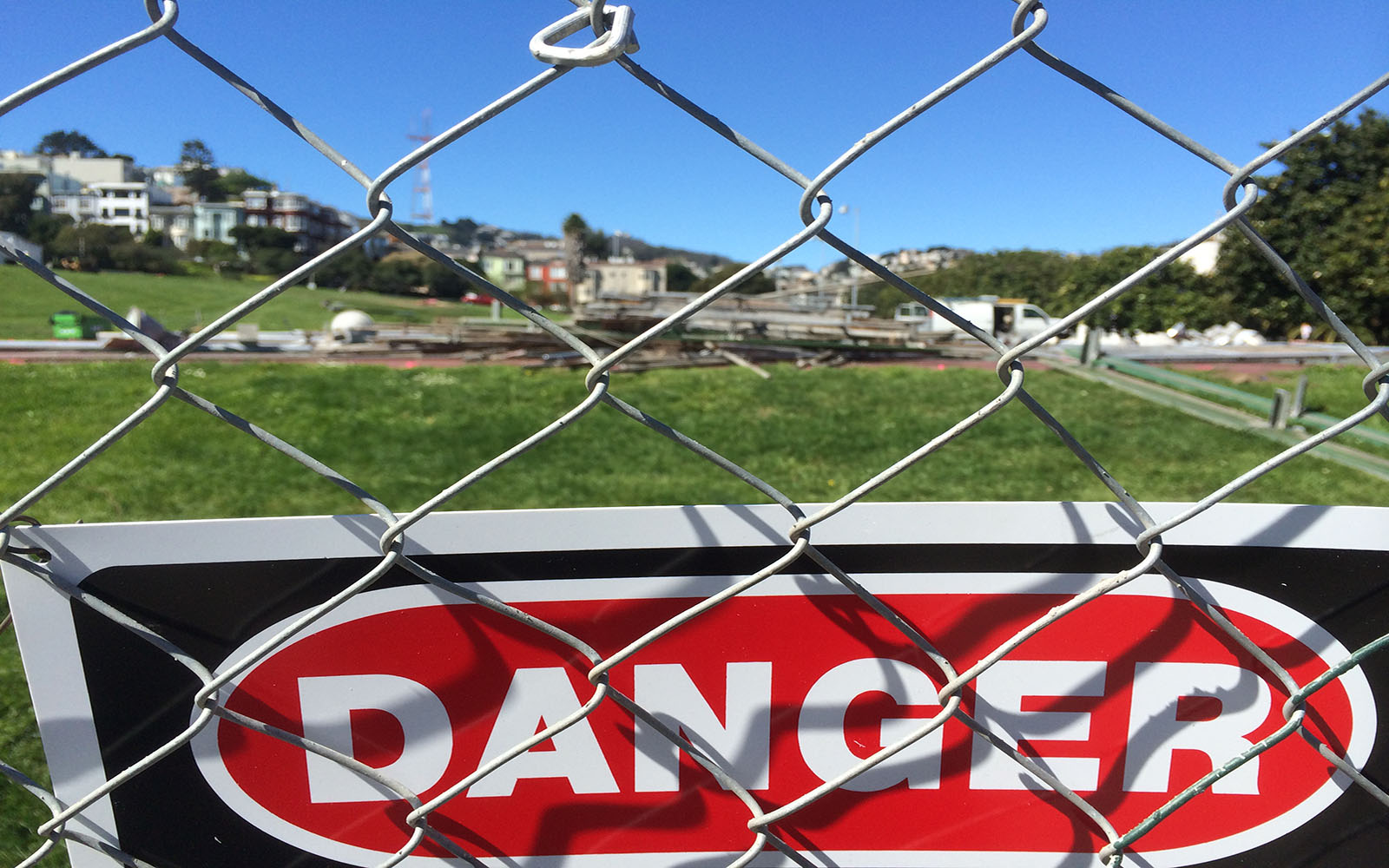

San Franciscans, I think, have long had a sense that somehow homelessness here is worse than elsewhere – while theories about why that might be vary, to say the least, there seems to be some proof that the concentration of homeless individuals here is higher than in other cities.
Here’s one stat to back that up: Curbed reports that San Francisco is home to a full percent (almost two percent depending on how you count people) of the entire nation’s unhoused population.
That estimate is based on a federal Housing and Urban Development department report on homelessness around the nation finding that there are about 550,000 homeless individuals in the U.S. Depending on which estimate you use, San Francisco has between 6,700 and a whopping 10,000 homeless people.
Speaking of HUD – You might have heard that Ben Carson, our nation’s Sleepy Surgeon Supreme who actually did not want to be the Surgeon General despite his profession, might end up being the top housing official of the country. Like everything else about this election, this could have fallout locally.
In fact, one indication of what kind of thinking might guide housing policy and how that could have effects in San Francisco is reading this conserva-tastic laundry list (ready for a little bubble-bursting?) of which HUD initiatives to ensure diversity need to be tossed. Basically, get undocumented immigrants out of public housing, though, surprisingly, the writer indicates that formerly incarcerated folks are fine. Oh, and put a time limit on government-assisted housing so people on welfare get back to work, because public housing is just so cushy.
Rant aside, it is unclear whether Carson would actually espouse these policies or if he would favor the current policies “forcing diversification.”
Back at home, the Board of Supes now officially has a moderate majority. What does that mean for housing? At the very end of that story you can see that it may mean overturning the voter-approved requirement that 25 percent of new developments be rented or sold at below market rate prices, more than twice its previous level of 12 percent.
A provision in the measure that helped get it on the ballot was that this level would be taken out of the city’s charter (where it was essentially set in stone) and instead be put in the hands of, you guessed it, the Board of Supervisors. With a moderate majority, there’s a good chance this 25 percent requirement will come up, and subsequently be brought down, next year.
While we’re speculating about the future, I should also mention that rumor (or rather, the Examiner) has it that the very person who proposed this doubling of affordability requirements, Jane Kim, may be throwing her hat in the ring for mayor in 2019, which would make her arguably one of the most progressive possible candidates for the position, which could push the board, and its housing policies, further to the left.
Finally, a nasty finish that has only a tangential relation to development and housing: The office of the assessor-recorder was hit with a bizarrely literal dirt dump last week, and nobody yet knows whodunit.
Why do we assume that more BMR housing will have any effect on homelessness? We need subsidized housing for the homeless, not BMR housing. The guys in tents on my sidewalk are not going to pay over $1000 a month for a STUDIO. That’s what BMR listings are running in this city. It’s a joke. I don’t see how it even helps families to have the opportunity to pay $1,200 for a 2 BR apartment IF your income is below $3,000 a month. We need subsidized housing for both the homeless and for families — or a totally new definition of BMR that doesn’t mean paying over $1,000 for a studio.
“the voter-approved requirement that 25 percent of new developments be rented or sold at below market rate prices”
Keep in mind voters approved that only with a footnote: A feasibility study would be done to determine whether the market could sustain a 25% requirement without slowing housing production, and if not, the requirement would be lowered to the maximum that would keep housing production going.
The city did that study and found the optimal numbers: 18% for apartments, 20% for condos. But Jane Kim refused to keep her promise and honor the study. As a result, the 25% requirement remains in force, even though it’s led to LESS affordable housing production: http://sfbamo.com/news/over-three-months-prop-c-has-reduced-production-of-affordable-housing/
So yes – I hope the moderate majority WILL keep the city’s promise to voters, and lower the requirement to 18% for apartments, 20% for condos. If they do, that’s not some sneaky giveaway to developers, as you imply. That’s what we voted for. And it will give us the most total affordable homes, which is what people actually want.
Laura,
people life you are why Trump got elected. He just decided people and brings out the work. Please please do not use the word “illegal immigrant”. even if your just quoting someone. we are all humans and nothing illegal about people like me. being a human you should be ashamed of yourself for helping him get I to office. Hiliary wasn’t perfect but good example for young women to see anything is possible. Please please do not use illegal immigrant unless you want trump for 8 years. I beg you. your writing reminds me of fox news and the 94110 is better then that. BERNIE BERNIE IN 4 .
Changed to “undocumented.” Thanks for the note.
This is a tough one. San Francisco is too politically and too regulated for anyone to want to build below market rate housing without being forced into it as an exchange for luxury housing and, even then, not enough is being built. Given our limited housing supply, I would rather see homeless vets and other homeless in general in the BMR and low-income housing BEFORE undocumented people are given those spaces. Ideally, there’d be enough room for everyone, but there isn’t so San Franciscans should come first, then other Californians, then other US citizens and only then the undocumented.
Everything in this article sounds fair. Sorry. (except Jane Kim – she lost for a reason).