


By MARSHA POLOVETS
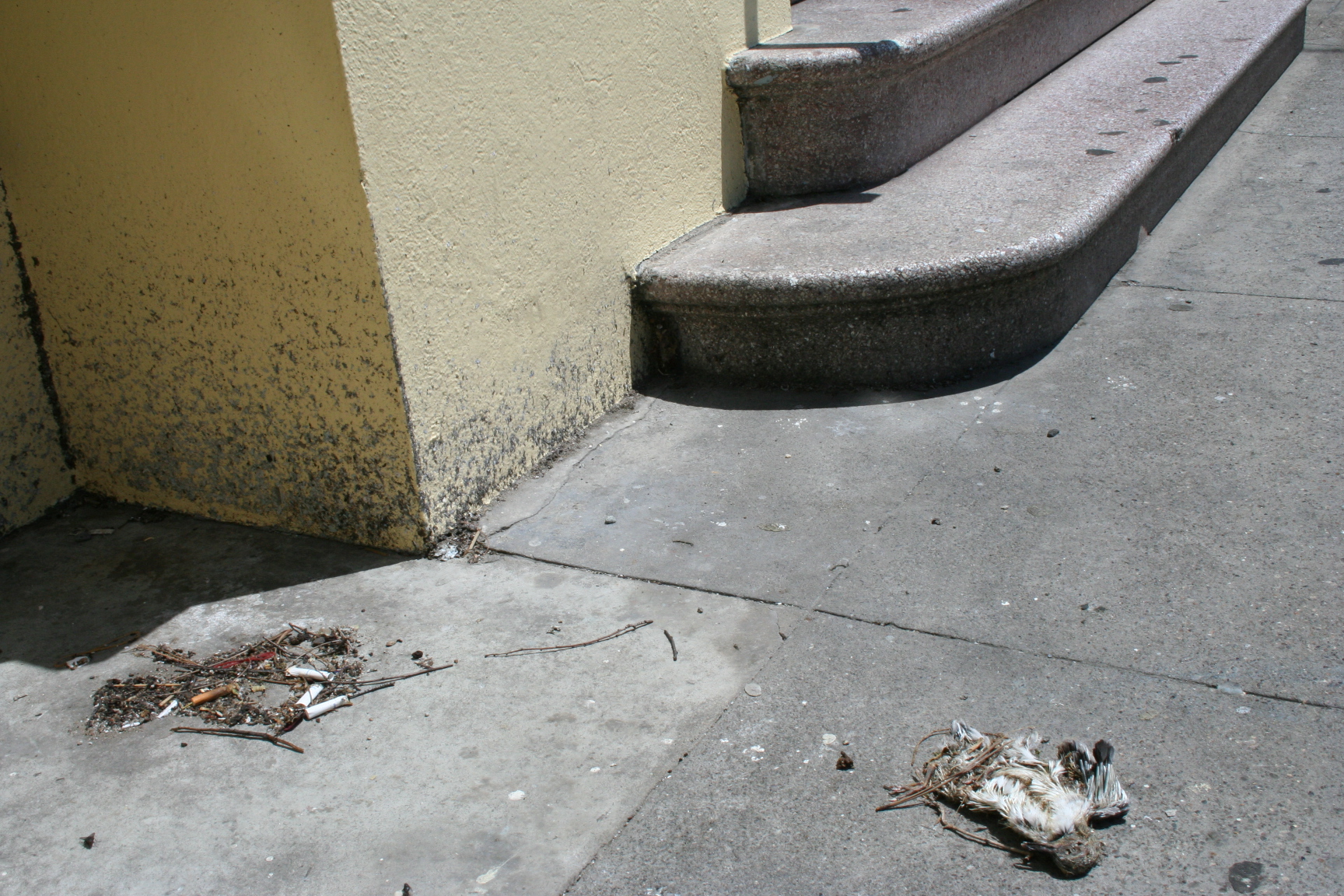
Plastic bags and advertisements floated in the traffic, eventually settling down in nooks and corners of 16th St. Piles of cardboard boxes and newspapers on the sidewalk paralleled the rows of cars, and the smell of urine mixed with the gasoline polluted air.

It was, in short, another typical day in the Mission, a place, according to a city report, where the streets failed a cleanliness inspection and the sidewalks only eked out a passing score.
The district’s streets failed primarily because of a rise in graffiti on private property, with an increase of “10 instances per block” in the Mission and three other districts.
The scores come from the City Services Auditor and the Department of Public Works report released earlier this month, Street and Sidewalk Maintenance Annual Report for Fiscal Year 2007-2008.

Trailing the inspectors on the commercial pathway, from Guerrero to Capp along the 16th street corridor this week, Mission Loc@l too found grime and graffiti.
The official report included five categories: street litter, sidewalk litter, graffiti on public and private property, trash receptacles, and trees and landscaping. One, the A of cleanliness, meant inspectors counted “less than five pieces of litter per 100 curb feet.” To pass, the area had to receive an average score of less than two. The inspectors ranked the sidewalks on the same scale except any graffiti, “illegal dumping,” and “feces, needles, broken glass or condoms” insured failure. Overflowing receptacles” with more than five pieces of litter surrounding them did too.
Out on the street, Sam, who slouched by his street sale of audio cassettes, used sandals and faded clothes, said he has frequently “seen kids tagging.”
“People don’t use the garbage cans like they should,” said Sam, who did not give his last name. His eyes glistened as he reflected, there “ain’t nothing you can do about it.”
Susan Ford, who rested by a pile of junk she was selling sale, disagreed. “Make affordable housing,” she suggested.
“I pay $1,200 for a motel room. It’s not cheap.”
Noor Ali who works at the Smoke & Gift Shop across from the 16th St. BART station said that she has to sweep the area by the storefront “every 10 to 20 minutes” because the wind carries with it the garbage from the neighboring Super Mercado. According to Ali, the Super Mercado “throws vegetables” into the street, and the “owner puts garbage outside.”
Elisa Liu, laughed behind the cash register of the Super Mercado when asked who is responsible for the trash. She is unsure, she said, if the employees clean the storefront daily.
Jason Lou from Stagi Liquors said that the city is responsible for cleaning the storefronts. Unlike Ali, who battles with vegetable debris, his storefront is home to “mostly cigarette buds.”
Carlos Campos at Panchita’s said the city’s sweeping machine has not passed the restaurant for seven months. However, he said, city workers pick up the garbage daily.
“We clean the sidewalk every morning,” said Carlos who also did not give his full name.

The residential pathway along San Jose Ave. was less smelly.
“This area is better,” said Clara Ramos who has lived on San Jose for 34 years. There is “no graffiti, she said.
However, an occasional anarchist message breaks the report’s zero graffiti tolerance. The taggers get creative, with proclamations such as “Vegans for McCain.”
Residents said the street’s biggest problem comes from advertisers who leave flyers by doorsteps that eventually rest on flowerbeds or under car tires.
Along San Jose Ave. between 22nd and 23rd streets, the problems got worse.
“I see people urinating and defecating,” said Chris Dale, as he struggled with fixing his baby’s stroller. “It’s just kind of a disappointment.”
That in a sense is what the city’s report concluded. Compared to other districts, the Mission’s commercial area scored on the lower end, with average scores of 2.2 for street cleanliness. San Jose, part of District 11 scored the lowest in both street and sidewalk ratings, with an average score of 2.19. The districts that received the highest marks were the Marina/Pacific Heights, Sunset, Lakeview/Ocean, and Eureka/Castro areas.
The report’s suggestion to “expand public outreach and education,” appeared to be on point, according to residents. As Dale pointed out, “there’s just a lot of garbage that’s left out.”