
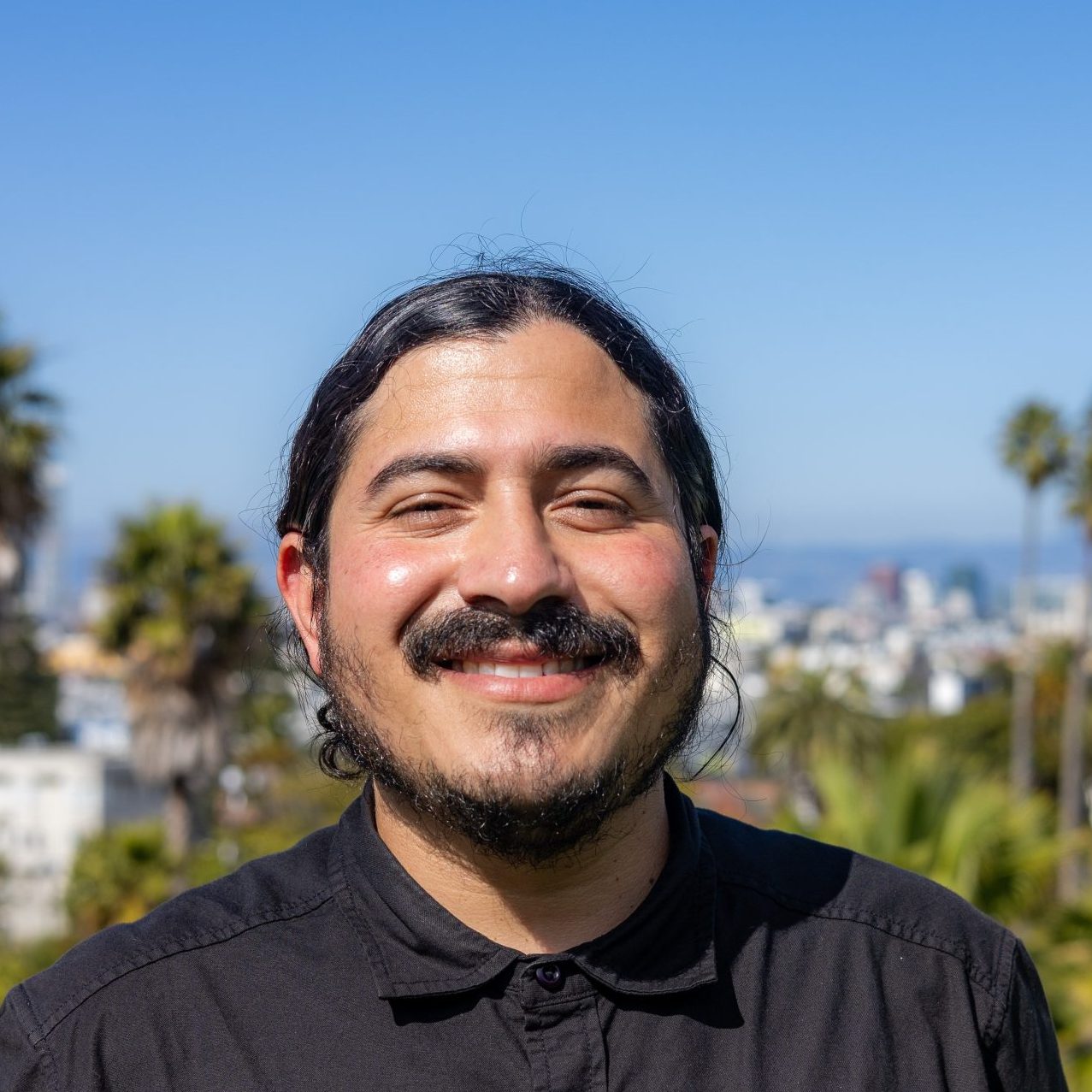

Ariel was hoping for a fresh start when he arrived in San Francisco nearly nine years ago.
Ariel grew up in Tekax, a small town in the Mexican state of Yucatán. His lifestyle — drugs, parties and long nights — didn’t keep him from working or hiding his addictions from his parents. By 27, he was already the director of Tekax’s water program. But his habits did begin to weigh on him.
“My life started to derail. I thought that by changing my life completely — the friends, the city, even the language and the country — I could leave those habits behind,” Ariel said in Spanish about his decision to leave Tekax.
“But my reality was going to be very different.”
Ariel arrived in San Francisco in 2017. He stayed with his cousin in the Tenderloin and started working in the restaurant industry, hoping to become a chef. He quickly fell in love with San Francisco.
After a promising start, Ariel’s life in the Bay Area took a turn one night when he asked his cousin’s friend to get him some weed.
“Under one condition. You take a line with me, just one,” the man told him. After a few minutes, it became clear that Ariel hadn’t snorted pure cocaine.
“I gave you crack,” Ariel recalled the man telling him when he asked what the drug was.
Ariel was hooked.
After being kicked out of his cousin’s apartment for his drug use, he spent three years jumping from single room occupancy hotels to co-workers’ couches and friends’ apartments. During this time, he missed rent payments, stole food, and did sex work to keep up his habit. He lost nearly a dozen jobs during the same period of time.
Ariel remembers spending about $120 on drugs every two to three days. Whenever he didn’t have money, he’d get desperate.
“I felt tired, anxious, lazy. I’d fight with my co-workers and I just couldn’t get the work done,” he said.
Ariel would cry seemingly out of nowhere. He’d move too fast, make mistakes, and act easily irritated at work.
Eventually, addiction led Ariel to homelessness. For two years, he slept in the area around 16th and Mission streets.
At some point, Ariel started having sex with a man who had a tent on Wiese Street in exchange for shelter and drugs. After weeks of the same routine, the two men reached a new agreement: Ariel would pick up bottles and cans as a form of rent payment.
He had sex with the man daily, consumed drugs daily, drank daily. He learned where to shower for free, where to eat for free, and where to get clean drug paraphernalia.
“When you’re an addict, you’re not thinking straight. You don’t have the ability to rationalize and tell yourself ‘Ok. I’m ruining myself,’” said Ariel. “All you think about, all you desire and care about is getting high again.”
From then on, Wiese and Caledonia streets became the hallways of his home, while the BART plazas served as the living room. The tent was simply the bedroom.
Ariel lost sense of time, the ability to smell his own odor. He started talking to himself. He started hearing voices and seeing spirits get into random cars, and he started smashing windows. He wasn’t ashamed of being called “homeless,” and felt as if he belonged to a group that people discriminated against.
In September 2022, Ariel saw a spirit that had “betrayed him” get into a car parked at the Mission National Bank at 16th Street and Julian Avenue. So he lit the tires on fire, he said. He was arrested a few days later at the BART plaza.
In March of 2023, Ariel was diverted from criminal to drug court — an alternative court for people with substance abuse facing nonviolent felonies. He was released from jail five months later, on the condition that he graduate from the drug court program.

Ariel completed a program at Casa Quetzal, a sober living facility run by the Latino Commission. He then moved to Casa Ollin, a transitional housing facility run by the same organization, where he still lives.
In January 2024, about three years after he first arrived in the area, Ariel returned to 16th and Mission to attend Alcoholic Anonymous, a group that has been in operation at 2010 Mission St. next to the southwestern BART plaza since 1974.
“They’ve welcomed me with open arms. They’re giving me the opportunity to work on getting my self-esteem back, slowly but surely,” said Ariel.
“I’ve made a community and found a space that can be a refuge. I don’t feel so alone anymore.”
While walking around the area, Ariel said he recognized faces, barely, but not many recognized him.
“It was an emotional shock,” he said,of his decision to come back to 16th and Mission. “ I didn’t wanna do it at the beginning, but I told myself, ‘I can’t continue running away from my reality. I have to come face to face sooner or later.’”
Ariel is now about three years sober and working at a senior center, cleaning and cooking — though he still dreams of becoming a chef. He’s talking to his parents again; he’s seeing a nutritionist and he’s working on fixing his teeth. He graduated from drug court in February 2024.
“All the emotional and physical damage I did to myself, I’m fixing, little by little.”

Thank you Mission Local. I love these success stories.
Good for him. I don’t know a single person who benefited from drugs and alcohol. Makes you wonder about the epidemic we have on our streets……I wish Scott Weiner would listen to stories like this while he tries to spearhead legislation to legalize all drugs and promotes these “entertainment zones” that in reality, promote alcohol.
Crack is illegal, yet that didn’t prevent Ariel’s addiction. Let’s be really honest… really really honest: the war on drugs is a failure, and it’s time to for reform.
Ariel’s life was saved by progressive programs like drug courts and sober housing. We should fund systems that actually reduce drug use and save lives instead of doubling down on punitive measures that clearly aren’t working.
Word.