

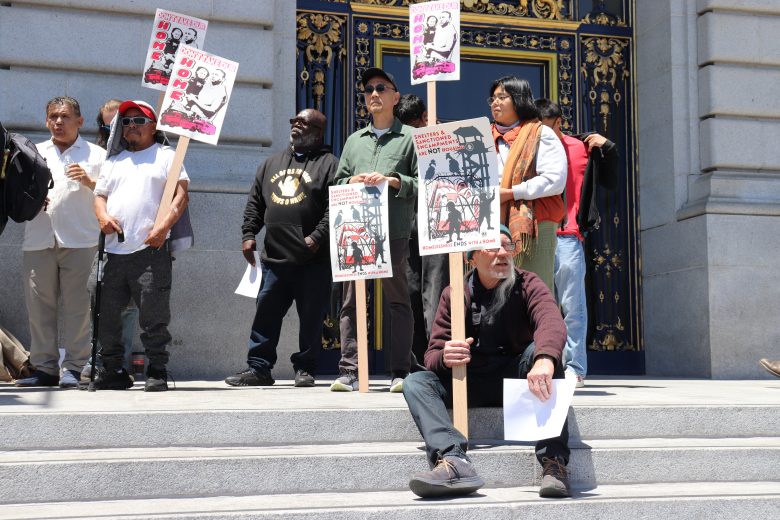

All but one member of the San Francisco Municipal Transportation Agency’s Board of Directors tonight voted to advance Mayor Daniel Lurie’s plan to remove RVs from city streets by, counterintuitively, standing up a permitting program allowing RV parking.
Vice Chair Stephanie Cajina was the lone no vote for the “refuge parking permit program,” which the city would enact if San Francisco’s ban on RV parking goes into effect this fall. That ban, being advanced by Lurie to the Board of Supervisors, would outlaw RV parking for more than two hours.
Under the SFMTA’s program, a select few would qualify for a parking permit and be exempt from this restriction.
To qualify for a permit, individuals must have lived in their vehicle as of May 31, 2025, and be “actively engaged in services,” on a waitlist for housing, and have signed a “good neighbor policy,” which Marion Sanders of the Department of Homelessness and Supportive Housing admitted has not yet been developed for those who are living in vehicles.
Like the policy enacted for businesses with an entertainment license, noise would have to be kept to a minimum.
The parking permit would have an expiration date of six months. After that, RV dwellers could apply for a six-month extension. Then, they are expected to find housing.
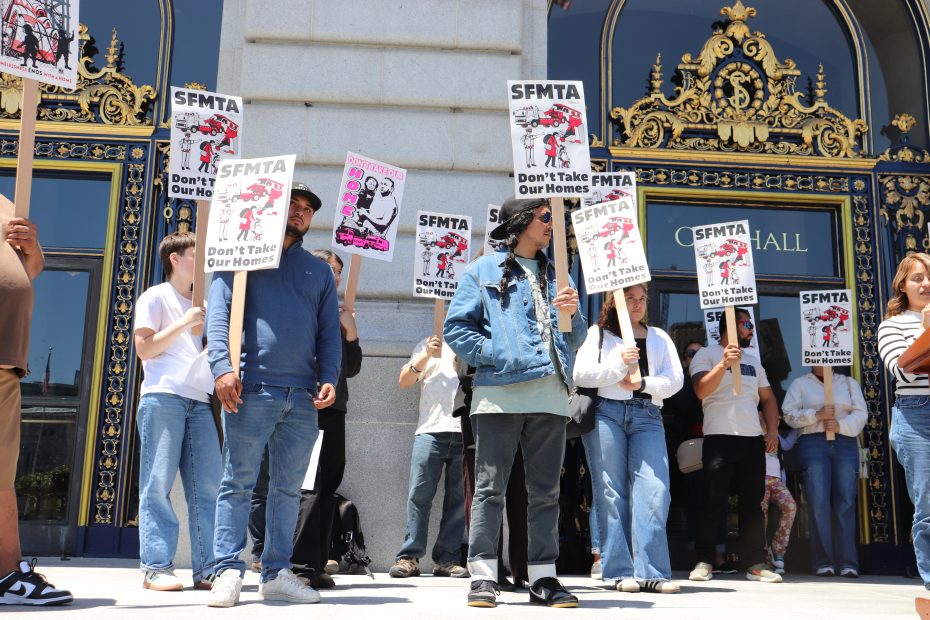
The program is part of Lurie’s overall proposal, which balances carrot and stick approaches to dealing with RV street parking. Advocates and RV dwellers have for months fought various city proposals to outlaw RVs, saying they push people around who have a stable source of cheap homes.
Lurie’s office is offering 115 housing subsidies and 130 hotel vouchers to RV dwellers. There are an estimated over 400 residents who live in vehicles in San Francisco, leaving over 150 without a plan for housing. The mayor’s office said on Tuesday it is working to procure more housing vouchers.
Advocates argue that it could take much longer than six months to find permanent housing, however, even with another six-month extension.
“When someone’s home could be towed, a permit is extremely high-stakes. We are asking for thought and care in this policy,” said Eleana Binder, the policy director for GLIDE’s Center for Social Justice. “There are not enough housing resources available for everyone, and finding units that take subsidies takes time.”
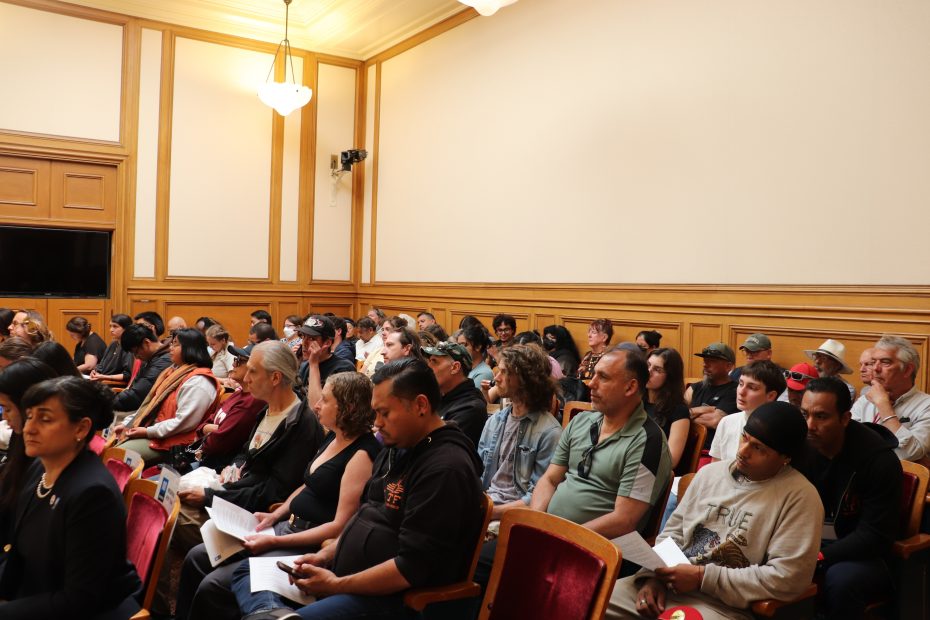
About 50 RV dwellers and advocates lined up for public comment during the four-hour meeting, each one expressing strong disapproval of the permit program and the RV ban.
The parking restriction will likely be voted on by the Board of Supervisors in September. If approved, it will go into effect in the fall.
This comes just six months after former Mayor London Breed’s ban on overnight RV parking was approved in October, but then overturned by the Board of Supervisors in December.
Samuel Ventura, who appeared alongside his wife and young daughter on Tuesday for public comment, said through a Spanish translator that their RV, where they live, does not have a motor, so they would be unable to move it every two hours. Ventura says he lives in fear every night that they will lose their home.
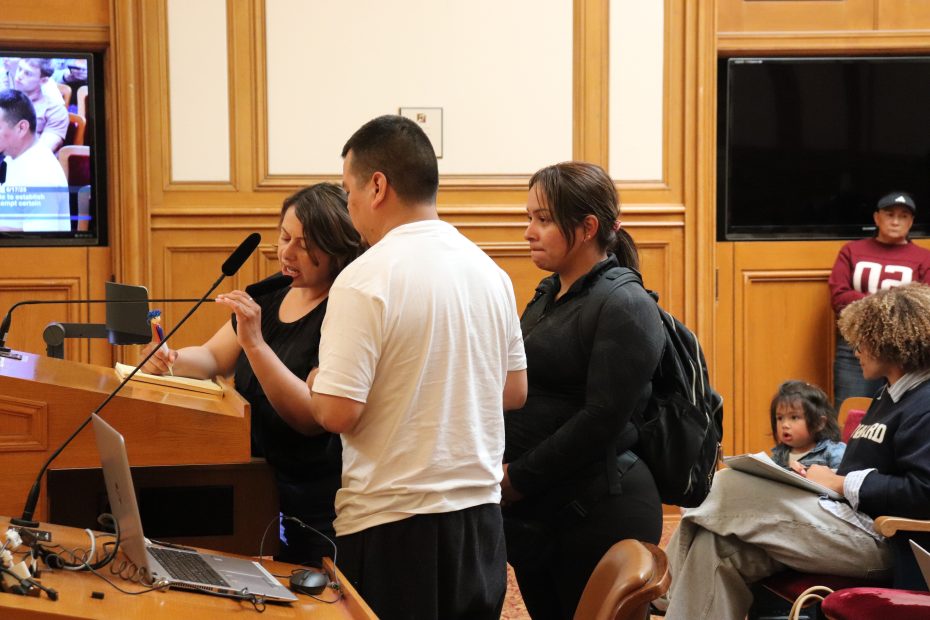
“I don’t have steady work right now, and this is the only way I can provide a roof over my daughter’s head,” said Ventura, as his toddler ran around the packed hearing room. “I don’t want my daughter to realize the fear of not having a roof over her head.”
Many RV owners and renters are immigrants with varying degrees of documentation, and losing their home makes them more vulnerable to being targeted by Immigration and Customs Enforcement, supporters say.
ICE arrests have increased across San Francisco in the past four months, and are a constant source of fear for new immigrants.
About 100 supporters had filed through the SFMTA board room at City Hall following a rally against the proposed parking ban on the City Hall steps. As the hours-long meeting drew to a close, a dwindling room of supporters left disappointed. Some left early, upset by emotional testimonies of many who live in their cars and are faced with the possibility of losing their home.
“It’s far from compassionate, I’ll tell you that much,” said Armando Bravo Martinez, who has lived in his RV for the past two years, and has struggled on and off with homelessness in San Francisco. “They don’t want to see us. They want to make us disappear.”
Thanks for reporting
City streets , parking spaces and sidewalks are for all to use and enjoy. Public property.
Not for people to live on and occupy .
RV need to be removed from the city
Find a field in the country . Rent them a parking space .
Move to a camp ground .
Persons with rvs should not be entitled to park whereever they want and live there.
Hey two beers, Mr Ventura doesn’t seem to be able to find a job fluffing any pillows. Just hanging out with his wife and kids in a motor less RV. Maybe he’s not interested in making Boba tea but waiting for the free housing that’s coming his way any day. Why is San Francisco in the homeless warehousing business? I have an idea. How about all the RVS move out to the site of old Candlestick Park. Plenty of room out there for the homeless advocates to provide services and the dog walking potential is tremendous.
It seems like anyone with an RV can come to San Francisco, remove their tires or destroy their engine and just hang out, They can litter, take up parking and take advantage of our city’s resources financed by taxpayers. Their presence is a welcome greeting to others who want to do the same thing. The cycle needs to end please. Thank you Mayor Lurie.
RV’s are not meant for constant habitation and are no place to raise children. They are filled with toxins and a blight to the communities they inhabit. The people in the RV’s are 4 types, immigrants with children, elderly, mentally unstable or drug addicted.
Their situation is not healthy and the few families and elderly that need help should receive it, but be helped to eventually be self sufficient. The drug addicted and mentally ill should be institutionalized because they will not seek out help on their own and are at constant risk of death or accidents. There have been numerous fires and accidents. Many of the RV’s on the street are rented to people by slumlords that are really taking advantage of the system. It is unfair to the rest of the community that work and live in the city. The RV’s are often broken down and cause blight, surrounded by debris and have animals living in front of them that make it unsafe or impossible to use the sidewalk. They use portable generators that run at all hours and the exhaust is not healthy for the neighboring houses or businesses to breathe. In my community they often vandalize fencing and have set multiple fires causing damage to our buildings and landscaping.
We have to find a solution that treats people with dignity but preserves communities rights to a safe and clean environment.
I’m ashamed to live in a city that treats poor people so badly.
Glad the City is finally taking action. Everyone pays rent. If you want to live in a super expensive city then you have to be ready to pay to live there. If you want to live for free and be left alone, go somewhere else in California – there is plenty of space in central CA. You can’t just live on the street in an RV and trash somebody’s neighborhood and expect to be left alone. The area near Stonestown needs relief from this and I’m glad action is being taken.
“The area near Stonestown needs relief from this”
Then Chinatown needs “relief” from crap SRO’s too right?
Or are those crappy stacks of trash OK because they charge rent?
Class warrior for the .01%: Good luck finding minimum wage workers to make your boba, foam your latte, walk your dog, fluff your pillow, dust your game console, clean your toilet…
A full time minimum wage worker in San Francisco is already about median income for the entire country. And most people in San Francisco would rather have less money for hired labor than deal with public squalor as evidenced by their choice to live in an expensive city and not Tijuana.
Move to Tijuana anytime, then tell us how viable that is.
SFMTA is the enemy of the people of SF