

MyMission is a series of interviews with a diverse group of people, each with their own experience of the Mission. We did this series last summer and excerpted parts of it into a pocket-sized zine of resource, memory and cultural maps that you can buy at stores like Dog Eared Books and Modern Times. This summer, we thought we’d revive the series.
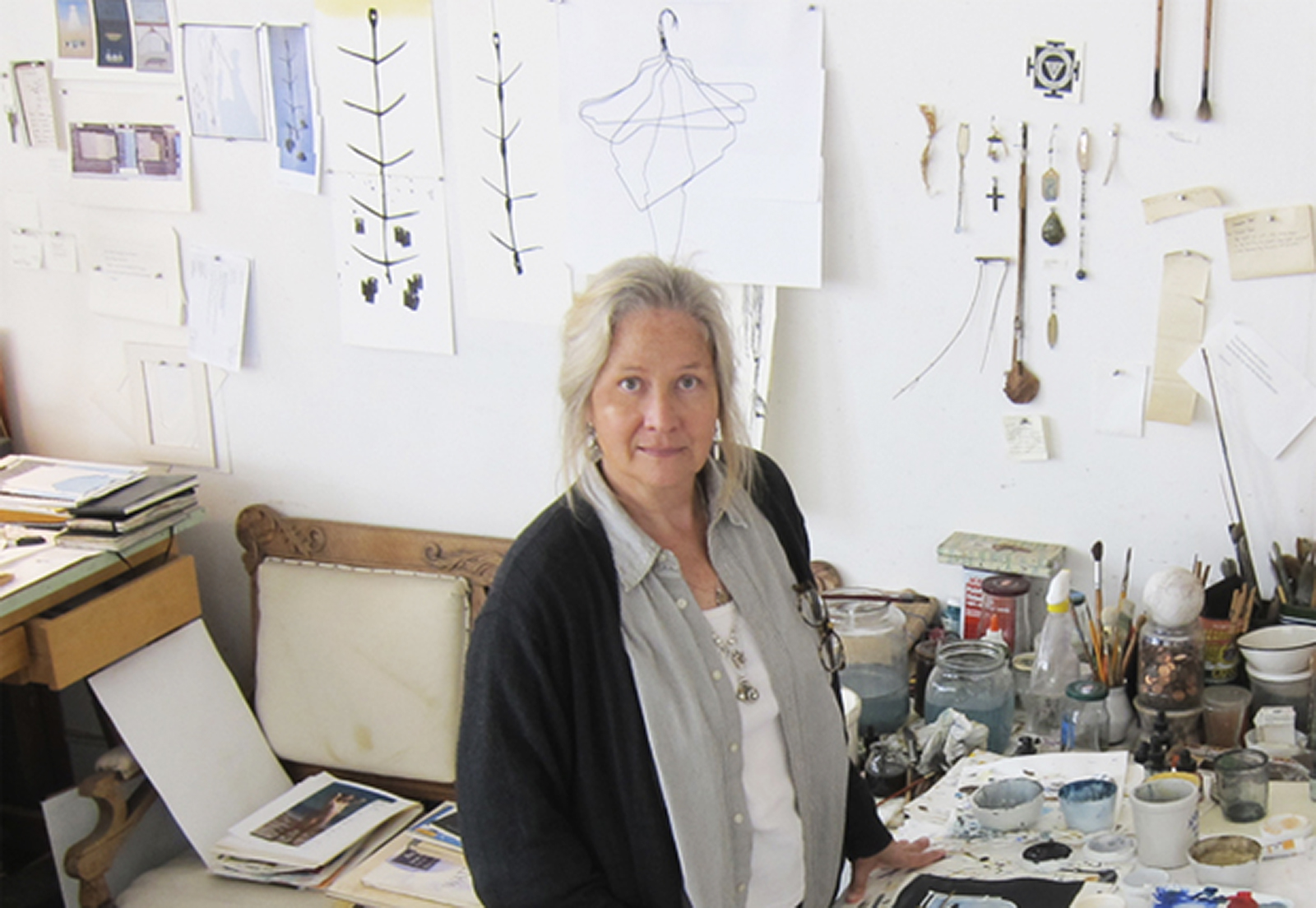
In the 1980s, Laurie Anderson left Berkeley and moved into a vacant machine shop owned by the American Can Company. She’s been there ever since. That machine shop, Project Artaud, went on to create Theater Artaud and Southern Exposure, among other things. Today, about 70 artists live there.
Mission Loc@l: What was the neighborhood like when you moved here?
It was Ghost Town, U.S.A. There were workingman lunch places that would open at 6 a.m. and close at 3. The Slow Club used to be one. It was where the Muni drivers would go to get their breakfast.
And so a lot of us learned to cook because of that. And there was always stuff on Mission. It’s still amazing to me that today I can walk out the door and get a cup of coffee.
How did you move to the Mission?
I got a studio at Artaud in 1981 and moved in four years later. I handed off my sweet little rent-controlled apartment in Berkeley to a friend. There were kids, and a divorce. She needed it more than I did.
ML: Was the building legal for you to live in?
LA: I missed the craziest of the raging youth here. The stories of how the building was financed. The person who generously added the money they were saving up for their sex change to the down payment. This is all Artaud myth at this point.
This building used to be one enormous space. By the time I moved in they had put in the walls that divided the studios. The building got legal after the fact, when the city said, “Woah! What are you doing?”
The way it became legal was piecemeal — electrical, walls, fire doors. Each little box is different, which is part of what makes this place interesting. You never know what’s behind each door. My studio is unusual because I never did much to it.
ML: I’ve heard that this place has an odd financial setup. It’s not condos…..
LA: This isn’t real estate, because you can’t sell at market rate. You have the right to use it. You can make improvements. It has to be up to code. But if you have 500 grand, you should invest it somewhere else.
The costs of the improvements that you make to your space can be passed on to the next person, but there aren’t many fancy kitchens here.
ML: Not like these live/work lofts today, huh?
LA: It was so bogus — the live/work thing was ostensibly to house artists, but I don’t think there are many artists in any of these live/work buildings around us.
ML: How do you figure out the value of the improvements?
LA: We have an architect who comes in and evaluates it. “Oh. I see you have track lights. Oh. I see you used sheetrock to build that wall.” I still don’t have a sink in my studio. It’s up to me to do that.
ML: And how do people join today?
LA: There are seven different wings to the building; each decides from the people who apply. The process has become slightly more formalized. People come and do a whole dog and pony show. They show portfolios. They show films. There are personal interviews. Several personal interviews.
ML: What about galleries? Didn’t SOEX used to be here?
LA: SOEX and Artaud were both started by people in the building. But it became clear that the way thing got funded was to become a nonprofit and write grants. There needed to be an external board. Community involvement.
Southern Exposure had to move because the building it was in needed a seismic retrofit. But it remains an amazing community asset. And Z Space now has Theater Artaud. We just keep on cranking up these projects and handing them off.
ML: When you first moved here, where else did you go in the neighborhood? Did you ever go out for drinks?
LA: I don’t really go out to bars. I go out for walks. I go up on the roof. I walk up to the pedestrian overpass on Utah between Mariposa and 18th. It’s creepy and wonderful to walk across 101. The community garden at McKinley Square had really good swings with really long chains — you could get some height there. I think they’ve taken them out and replaced them with something safer.
ML: When do you go on walks?
LA: Either when nothing is going right, or when I’m feeling tremendously successful. When I’m doing laps in my own little box and need to get out. When you live in the Mission, you really live down in it. It’s good to go somewhere where you get some perspective.
I like the little garden aspect of the Mission. It’s a nice place to walk around. People don’t have much space, but they’ll make a native plant garden or grow some roses. There are interesting things happening on the funkier streets and corners. l like the cemetery at the Mission Dolores. It used to be a total freebie — you could just walk in.
ML: What was it like living here in the ’80s?
LA: I have a son who is now 23, and when he was a kid he thought that we lived in the best neighborhood in the world because we lived between a towing company, a Muni yard and a concrete plant. That terracotta building across from us — that used to be a concrete plant. That building with the smokestacks, that’s still an old-school, low-tech commercial laundry.
Those condos where the Bike Kitchen has space, that used to be a Penske truck yard.
The gray building where Coffee Bar is now, that used to be a mayonnaise factory. It was owned by Best Foods. Trains full of mayonnaise ingredients used to ride down those train tracks on Florida Street to that building.
ML: Was it loud?
LA: At Theater Artaud, we would schedule our shows around the trains.
The interesting thing about this neighborhood is that people come and go. These places like Circolo, El Rincon, Whisper — they’re kind of like sites for hire. DJs come and take them for a night. And then, often, come the suburban youth who like to come to the city and cut loose. And they don’t realize that people actually live here. It’s the peril of the mixed-use neighborhood. You never know what use is coming into the mix.
But the Sundays are amazing here. So quiet.
ML: What was it like raising a kid here?
LA: It was great. We just got together with other parents, shared childcare. There were quite a few kids in this building, and still are. We put in spaces like Jackhammer Park — people just jackhammered out that space and planted a few fruit trees. Kids play there. That space changes according to what projects we are doing there.
ML: How did living here affect the kind of art that you make?
LA: I work a lot from found objects. Things that fall off the truck. Things that get run over. Things that people drop. Like battered hangers from the laundry down the street. Flattened tin cans. Or a rabbit foot that got attacked by moths that ate all the flesh off. I used to find school papers all the time — those are always interesting.
Now I go out to Mendocino a lot, and so what I find is different — bones and gourds. But there’s still a lot of good street material here.
What?! Oh, wait… wrong Laurie Anderson.