
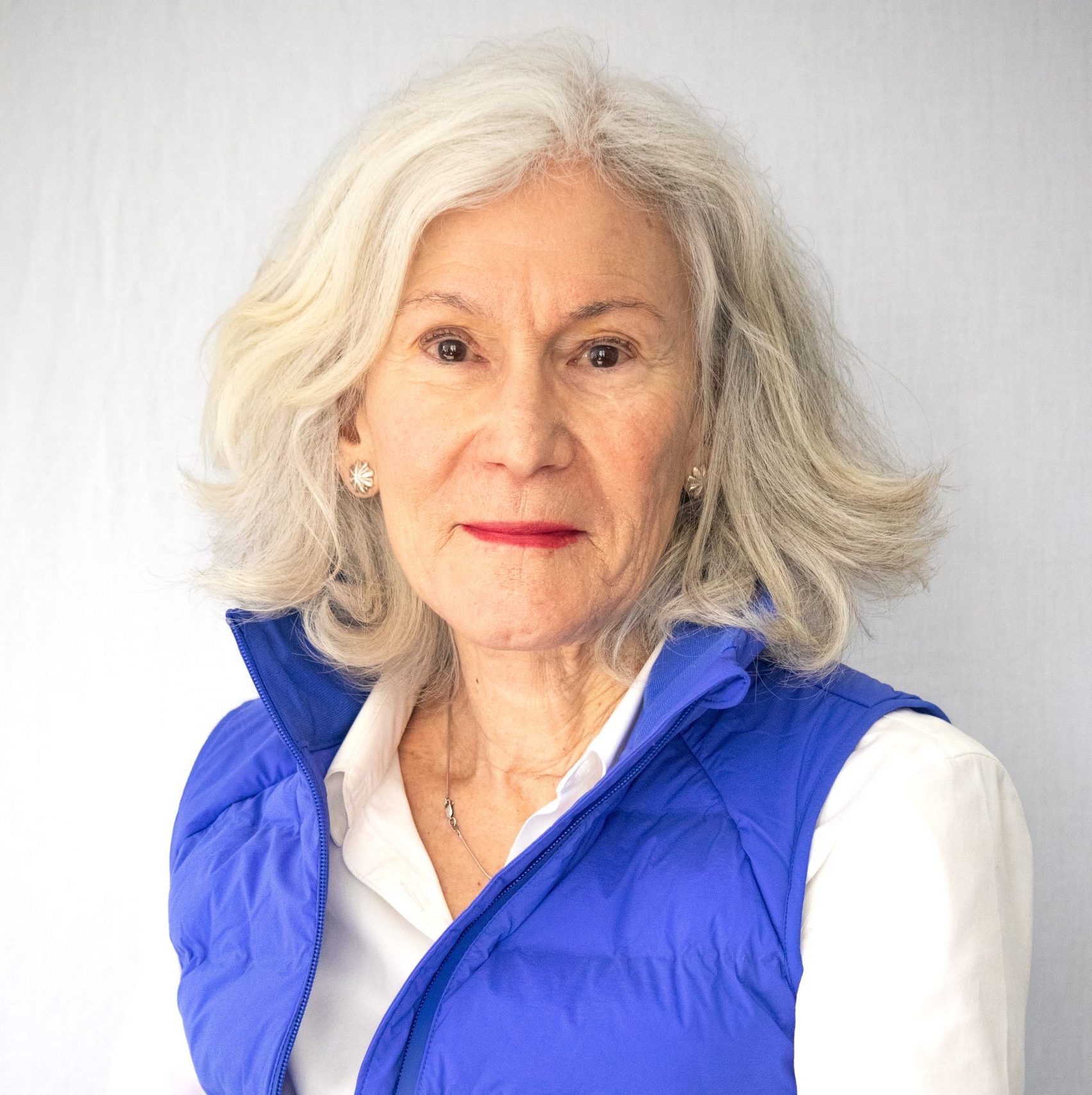
Susan Kelk Cervantes doesn’t do clinics. She doesn’t go to doctors. In fact, in her 65 years she has always been healthy. “How would I know about Healthy San Francisco?” asked the muralist and founder of Precita Eyes Mural Arts.
She found out about the health program because of the surcharge on her favorite veggie sandwich at Boogaloos. She’s okay with the tax but she said residents should know they have the “privilege to use this public health plan.”
While Cervantes was accurate about Healthy San Francisco’s lack of advertising, she pointed to another challenge for the city’s health program and one President Barack Obama underscored in his speech Wednesday: the healthy often go uninsured, especially the young and healthy.
Robert Menezes, the director of marketing & communications for Healthy SF, called the 19 to 32 year olds who qualify but don’t apply for the city’s program, the “immortals.”
“They’re very hard to get unless they have a chronic care condition,” Menezes said.
The problem this represents for San Francisco is twofold: it’s missing out on the fees the young and healthy contribute to a system and when they do need a doctor, the uninsured tend to use the system’s most expensive care—emergency rooms.
“That’s why under my plan,” Obama said in his speech Wednesday. “individuals will be required to carry basic health insurance – just as most states require you to carry auto insurance.”
Healthy SF has no such mandate. Nevertheless, it has enrolled nearly two-thirds of the city’s estimated 60,000 uninsured, city officials said.
However, 73 percent of the 43,225 residents who carry Healthy SF cards come from the city’s clinic system. A Kaiser Family Foundation report released last month said they “represent a population with substantial health care needs. Compared to the general population, they are sicker and older and report somewhat greater utilization of health care services.”
It’s likely that the 28 percent yet to enroll–are younger and healthier. So far there’s been no special outreach to this group. At least some would probably pay higher fees. A single person that makes $2,709 to $3,610 a month would pay $300 a quarter or $1,200 a year. At the top range, an individual making $3,611 to $4,515 a month would pay $450 a quarter or $1,800 a year.
Menezes said they are still enrolling some 1,500 members a month so they don’t feel the need to advertise. And, 30 percent of the programs members pay some fee. Officials estimate that per participant costs will be $298 for the 2008/2009 fiscal year and per person revenue will be $86.
Tangerine Brigham, director of the city’s health program, was unconcerned about reaching out to the young and healthy and said people find out about the program by dialing the city’s 3-1-1 helpline.
But no one interviewed up and down Valencia Street had called 311 and one shop clerk and owner after another—all uninsured—had no idea that Health SF existed.
Then there was 31-year-old Gloria Parra of Música Café. She had recently found out about the program from a friend, but hadn’t been able to enroll. “I guess you need an appointment. Every time I call it’s busy, busy, busy.”
However, when a Mission Loc@l editor made calls to random clinics, the lines worked fine, but at least one clinic—the Mission Neighborhood Health Center—had no appointments available until November 1.
The bigger problem for enrolling the young and healthy appeared to be ignorance about the program and the lack of urgency to find out about it.
Mission Creek Café’s Jonathan Hoyt, 23, enrolled in Healthy San Francisco through his old employer, B. Daltons Bookseller. Now, working at a smaller café, he’ll have to enroll himself. “I just haven’t gotten around to it yet.”
Steven Lemay, the owner of Retro Fit Vintage on Valencia, isn’t sure he qualifies. “I haven’t signed up for it yet. I don’t know if there is a monthly fee. I don’t know.”
In the meantime, his plan is to do what he’s always done: use the clinic’s sliding scale. When he does need to see a doctor, he’ll discover that the sliding scale program has been replaced with Healthy San Francisco.
Dick Hodgson, vice president of policy and planning for the San Francisco Community Clinic Consortium, said that when the program started two years ago, the city worried about two things: one, “no one would come; and two, there would be too many people.”
Hodgson said advertising has been discouraged. “One of our clinics wanted to do some advertising but the program said, ‘no,’ for fear that there would be a stampede of enrollees.”
In terms of finding the healthy uninsured, other clinic officials said it would happen.
“It’s a very cutting edge program. But it’s these new things that still need to be defined,” says deputy director Fernando Gomez-Benitez, of the Mission Neighborhood Health Center.
In the meantime, the poor who used public clinics in the past are getting better care, officials said.
Of the San Francisco Community Clinic Consortium’s ten clinics and 72,000 patients, 20,000 enrolled in Healthy SF. They use the same clinic, but the difference
The difference for the Healthy SF member, Hodgson said, is substantial.
Take a patient with diabetes who needs an annual, retinal exam, a capability the clinic doesn’t have because it has no ophthalmology department. Getting specialist referrals before Healthy SF was “catch as catch can,” Hodgson said.
Nowadays, going to San Francisco General for such an exam is in the range of services offered to Healthy SF members. “There’s a lot better coordination,” he said.

Please, Stefan. I bet a lot of my neighbors don’t know there’s an actual Healthy SF card and that the sliding scale has been replaced. This article is a needed contribution toward transparency and brings up some good points, e.g., insurance premiums from young residents.
Stefan – not true, the level is way, way above the federal poverty line.
The poverty line for a single person is $10,830
The maximum qualifying salary for a single person in Healthy SF is $54,180.
Wow – have people been living under rocks? Healthy SF was front page news around the country a couple years back – and many current public discussions of existing health care models reference Healthy SF. Spanish language media were covering it too, because unlike most other models, it doesn’t discriminate based on immigration status – all you need is some evidence you reside in SF.
Also, without going into the specifics of Susan Cervantes’ health, how does a 65 year old woman know she’s really healthy without any kind of medical care? Hypertension, high cholesterol, cervical and breast cancer, and many other diseases that one can be regularly screened for are silent killers. I’m psyched for any 65 year old who doesn’t feel the need to see a health care provider – may we all be so lucky – but in countries that have healthier populations and spend less on health care one of the ways they do that is regular, accessible screenings for diseases you may have and still have “always been healthy”.
The article also didn’t mention that Healthy SF has only recently begun raising the eligibility criteria much above the federal poverty line – so many people who now qualify actually wouldn’t have a few months ago.