
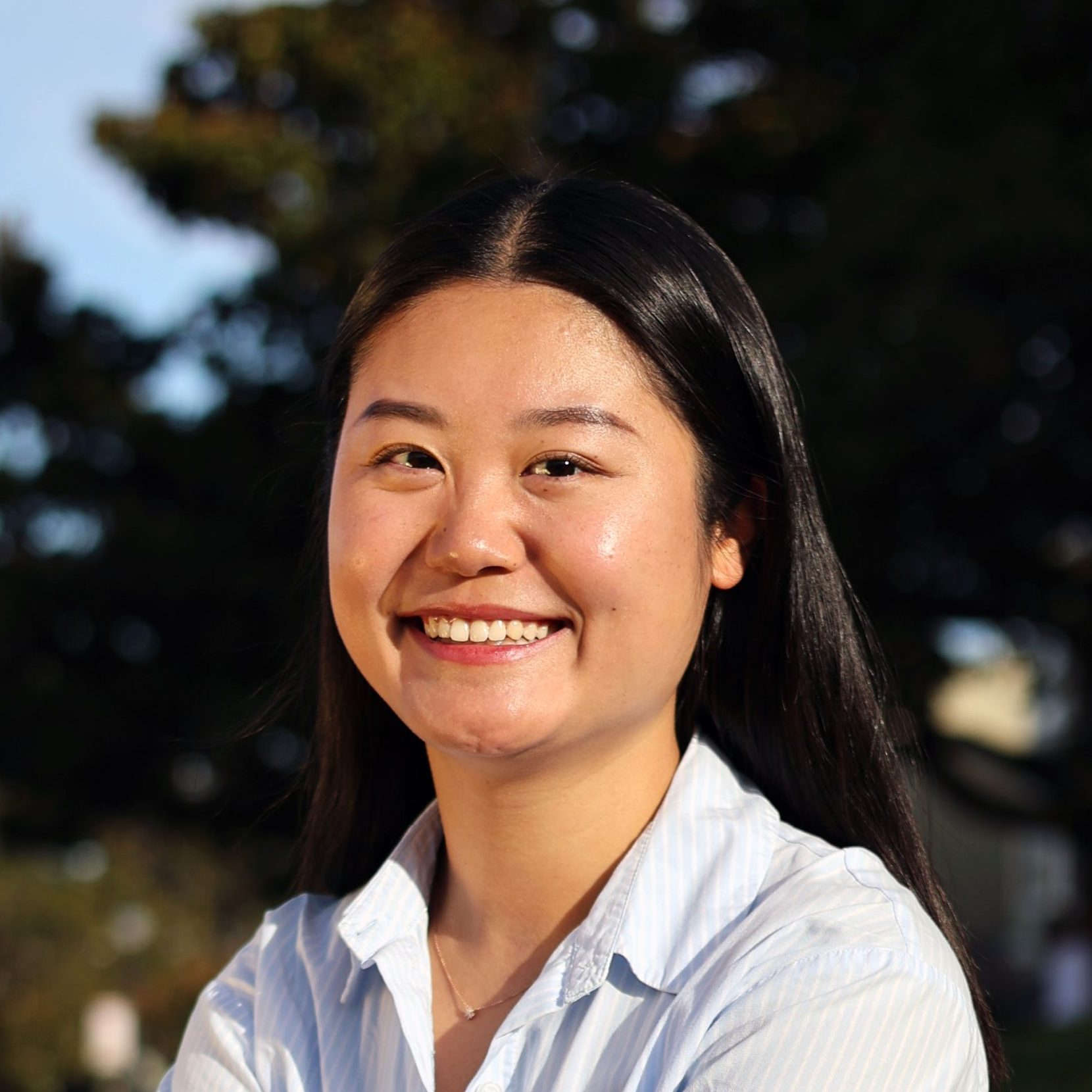

Jeff Murray has been taking photos on his film camera since 2012, but he still can’t fully predict what he’ll get. To him, that’s the point — film photography is not about just the aesthetics, but the anticipation.
“If it is a really good shot, it feels more rewarding,” Murray said.
Murray shoots almost exclusively on film. His favorite rolls? Kodak Portra 400, which he describes as versatile, sharp and professional-looking. He also stockpiles rolls of Fujifilm Provia in his refrigerator whenever he can find them.
At times, such delayed gratification comes with a price. Film is expensive, the supply can be inconsistent and the outcome is never guaranteed. But for his current documentary photo project about San Francisco’s Excelsior District, Murray considers the decision to shoot on film non-negotiable.
That project, called “Ever Upward,” which is the translation of the Latin word Excelsior, is the centerpiece of his work at the City College of San Francisco, where he enrolled in a photography program in fall 2024.
When a documentary news photography class required him to choose a topic for his capstone, he turned to a project he started back in 2018 when he first moved to the Excelsior.

Murray, a 33-year-old San Francisco native who moved around the city growing up, has a soft spot for the neighborhood. Coming up near Civic Center and other parts of the city, Murray would take the bus south to the Excelsior with friends to enjoy taquerias and parks when he was a teenager.
What draws him more now is how the neighborhood has preserved its original texture through a time of great change in the city. That doesn’t necessarily mean that the neighborhood is stagnant, Murray said.
“The neighborhood, for the most part, has kept a lot of its original culture, history and architecture,” Murray said. “It has a more working-class feel.”
The houses, for example, are not as polished as the Victorian-style ones in Pacific Heights and Alamo Square. They feel like “a lot of the older Bay Area homes.”
So far, his series has already produced several strong portraits. One came together after Thanksgiving 2025, when Murray noticed a red car he had first photographed in the neighborhood back in 2018. He was shooting it again when teenagers from across the street approached and asked what he was doing.
The car, it turned out, had been sold to their parents by a neighbor. Murray asked if they wanted to be in photos. They hesitated, but eventually agreed. Their photos, to his dismay, didn’t come out, due to a light leak in the roll.
But one frame did make it. The boys’ sister had come outside and, unprompted, posed in front of the car.
“I was like, oh, sick, this is what I need!” Murray recalled. And that was the one snap to make it.

Another portrait came from an encounter at the Excelsior Playground Park, at Madrid Street and Russia Avenue, with a man named John, who was playing basketball near a mural and offered to step aside when he noticed Murray taking a photo.
Murray redirected him: he wanted a portrait of John in front of the mural, not an unobstructed shot of the wall art. The photo turned out quite natural.
One of his favorite portraits, Murray said, is a wrestler resting by the ring at a street fair in the Excelsior last year. In the image, he seems stern and calm at the same time.
Murray draws inspiration from Daido Moriyama, a Japanese photographer known for grainy, high-contrast street photography, and Merrick Morton, who documented the gang and Chicano culture in Los Angeles during the 1980s and 1990s.

These days, as he takes more and more photos for his series, he ponders over the ethics of his work; how to be direct without being intrusive.
If it’s a portrait, he said he will try to get the subject’s contact information and show them the photo. If someone is in his frame, he tries to make eye contact.
“I try not to come off as a voyeur,” he said. “I want to humanize the subject as much as I can.”
In the future, he said, it would be cool to photograph more of the motorcycle culture in the Excelsior — younger kids of color riding their motorcycles through the streets.
“You just have to catch them at the right time,” Murray said.
For now, he has a shot of a parked motorcycle outside the legendary Amazon Barber Shop on Geneva. It’s one of the closing shots in his portfolio.