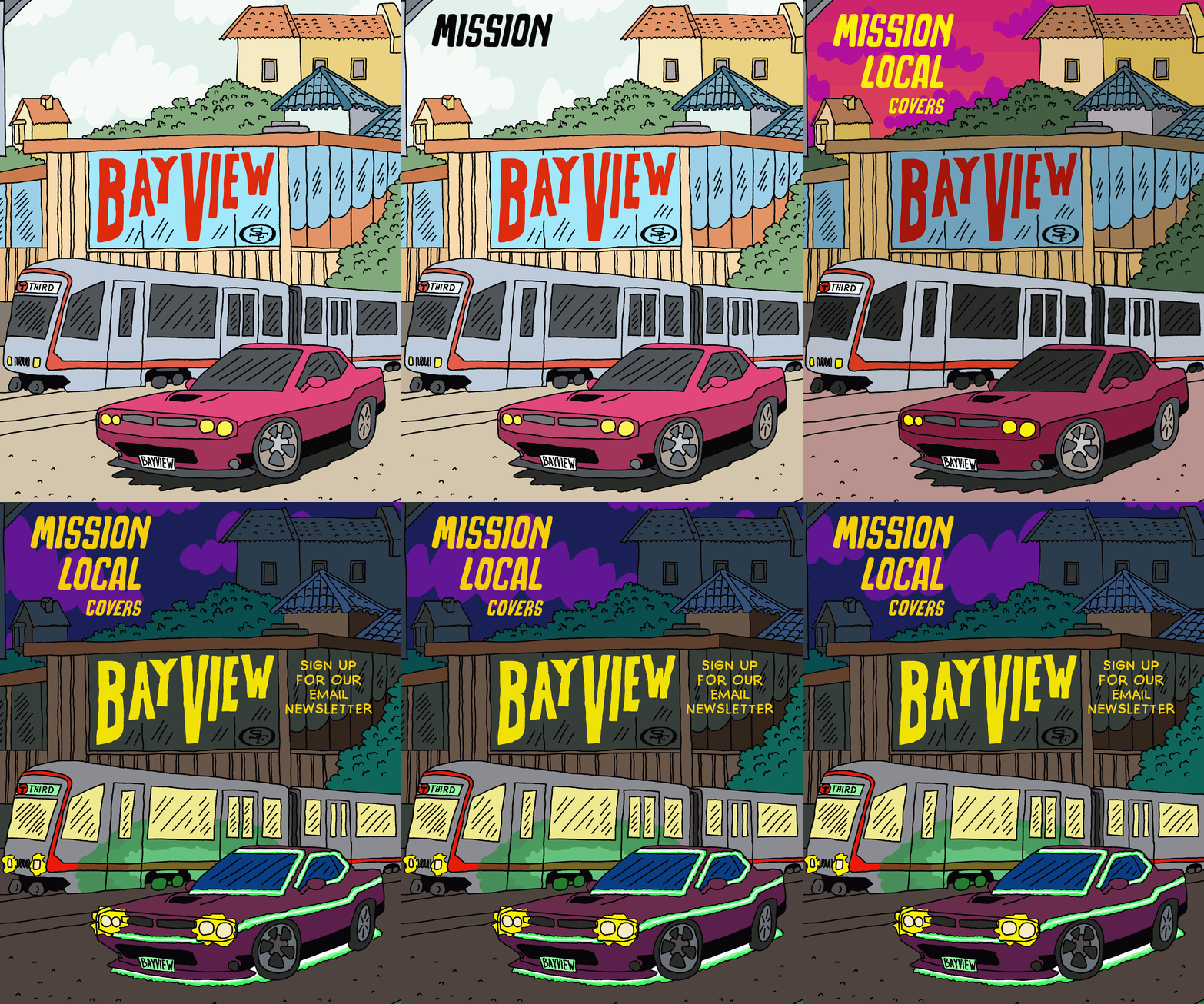
San Francisco’s historic Bayview district, tucked between a freeway and the bay, is a sprawling commercial, residential, and light-industrial corridor on the city’s southeastern edge.
It is the least photographed neighborhood in one of the world’s most photogenic cities. It contains a toxic cleanup site at the Hunters Point Shipyard. Tour buses don’t stop here except to refuel overnight.
For these reasons and many more, the Bayview continues to bear the consequences of its thankless role as the city’s boiler room. The area, once considered on the outskirts of town, is home to many of the industrial facilities and services integral to our on-demand urban lifestyle.
Nobody set this as a public policy, but cities often marginalize their industrial areas, and, by extension, the businesses operating anonymously perpetuate this, too.


Aging industrial areas resist the spotlight — and, in turn, receive little public attention, investment, or acclaim. In the Bayview and other industrial areas, there are blocks and blocks of brandless, nondescript buildings that may not make much of an impression on passersby.
Industrial structures and streets are often mind-numbingly repetitive and, unlike typical commercial areas, visitors may feel unwelcome. Yet the quirky-by-day, off-putting-by-night vibes intrigued and prompted me to start an eight-month photography project documenting the state of this industrial corridor and others beyond our city.
The legacy of the Bayview-Hunters Point and the Bayshore industrial corridor dates back about 150 years. There was no master plan, but foul odors played a pivotal role in this story. Less than two decades after the “forty-niners” turned San Francisco into a Gold Rush boomtown, city leaders banished slaughterhouses from downtown to the sparse Bayview district, creating “Butchertown.”


Tanneries and train tracks soon followed, along with wider roads and dry docks on the bay shore, beginning an industrial occupation that permanently altered the former Ohlone tribal hunting grounds.
During World War II, the Hunters Point Naval Shipyard became one of the busiest ship-repair facilities on the Pacific coast, drawing tens of thousands of workers, many of them Black Southerners recruited under wartime labor programs.
But after the war, the expanding industrial and residential area also became one of the most contaminated stretches of California shoreline, according to CalEnviroScreen. The city acknowledges that the problem remains unremedied and that climate change, including rising sea levels, will complicate the cleanup.
In the early morning, before traffic builds on the Bayshore freeway and the first trucks pull onto a street once called Army and, for now, Cesar Chavez, there is a stillness in these blocks that evokes hope rather than alienation.


These mostly anonymous tilt-up concrete and corrugated steel buildings won’t last forever, and many have outlived their purpose. What comes next is genuinely uncertain. That uncertainty is part of what makes this industrial landscape worth photographing before it either reinvents itself or disappears entirely from our view.

Rusty Weston is a photographer in San Francisco. A former journalist, Weston’s work explores the stresses that impinge on urban life and the natural world. His award-winning photography has appeared all over the world. His latest project, called “Bayshore,” debuted in March.
These eight photographs from that series and highlight the industrial parts of San Francisco’s Bayview District in 2025 and 2026.