
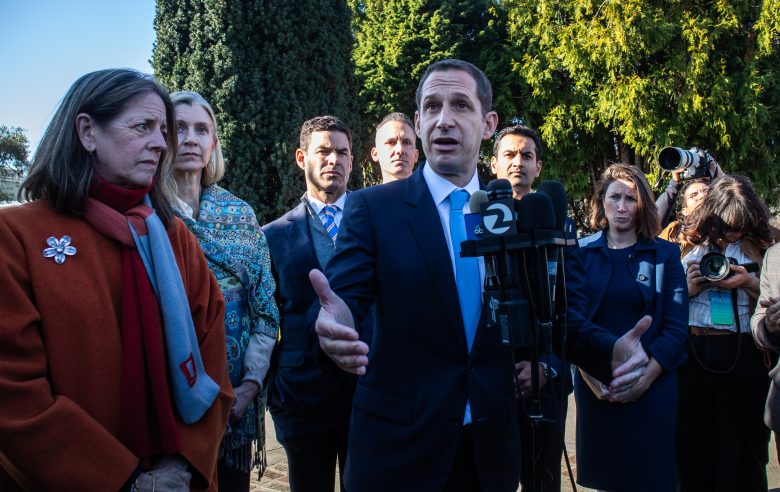

The San Francisco Ethics Commission will take up the question of whether Mayor Daniel Lurie violated city and state law by refusing to disclose records associated with his October call with President Donald Trump.
At issue is Lurie’s Oct. 22 conversation with the president, in which Trump rescinded his planned deployment of federal agents to the Bay Area..
Lurie’s office has said some of the records related to the call are privileged. The Sunshine Ordinance Task Force disagreed
The task force, the body that investigates violations of public-records law and urged Lurie to release more records in January, voted 8-1 Wednesday that Lurie violated the law, and sent the matter to the city’s Ethics Commission.
Lurie’s office says the entire matter is a misunderstanding — there are no more records, like transcripts or notes, having to do with the call. The only related records have to do with legal — and confidential — advice given to the mayor’s office related to an executive order that Lurie signed to deal with the expected Trump deployment.
“We’re at the point now where it’s simply, ‘Documents are believed to exist, so they must exist,’ but that is not the case,” said Dexter Darmali, the mayor’s legislative and ethics secretary. “The Sunshine Ordinance does not require the city to produce documents if they do not exist.”
The consequences of the Ethics Commission referral are unclear. The commission has little punitive power for these kinds of violations, and can only issue cease and desist letters, publicize the violation and issue warning letters, according to a 2014 city memo.
Some in San Francisco worry Lurie made a deal to ward off federal agents, promising cooperation with the White House, for example. In November, the San Francisco Standard reported that a police official said late-night drug busts in the city were a “show of force” that was “keeping President Trump from deploying the National Guard and ICE,” citing minutes from a police union meeting.
Fears became more acute when Homeland Security secretary Kristi Noem said in March, minutes after she was sacked, that Lurie speaks “quite often” with her and has been “cooperative.”
The mayor’s office declined to comment on Noem’s remarks. A City Hall source said they were baseless, and that Lurie hadn’t spoken with Noem since October.
The Lurie-Trump call ethics case started when Hazel Williams, an organizer and frequent filer of public records requests, in October asked for any phone logs, transcripts, texts, or other records related to the call.
The mayor’s office first said it could disclose none, citing attorney-client privilege. It then released a calendar event for the call, and some text messages staff sent to supervisors inviting them to a press conference during which Lurie announced he had spoken to Trump and won a reprieve.
But the Sunshine task force members, for their part, said on Wednesday they believe there are still records being inappropriately withheld.
One said, for example, that “unless the mayor has a special phone, there is a call log in the phone” that has not been turned over. Others speculated Lurie may have deleted any call logs, bringing up former mayor London Breed’s practice of deleting official text messages. At one point, commissioners suggested they could send the matter to the California attorney general’s office.
Williams said there is one easy way to dispel worries about Lurie making a deal with Trump: Release the records.
“Maybe it’s true, maybe it’s not. There’s only one way to know, and we’re being blocked from knowing,” Williams said at Wednesday’s hearing. “The public should have access to that information. It doesn’t.”
The ethics commission will now take up the matter, though it is unclear when.