


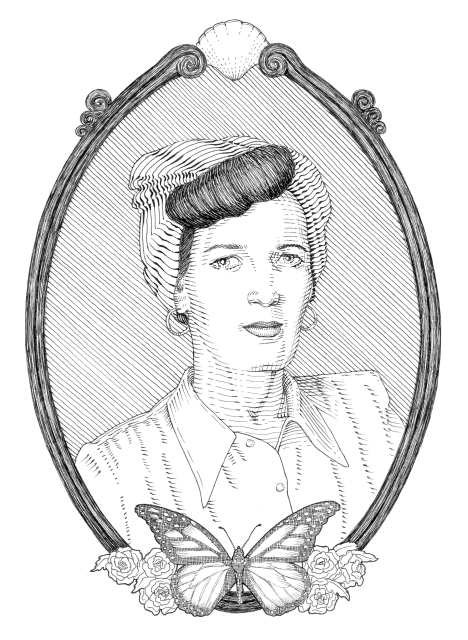
Before local transgender activists Sylvia Rivera and Miss Major Griffin-Gracy, there was Louise Lawrence.
Born in 1912, Lawrence began living as a woman in 1942 in Berkeley, California. Soon after, she moved to San Francisco, where she educated doctors at the University of California, San Francisco, about transgender people and their health. While there, she met Dr. Alfred Kinsey and helped shape his 1953 landmark study of female sexuality.
Lawrence also founded Transvestia, an independent newspaper to raise awareness of transgender issues and connect the wider trans community, in 1952.
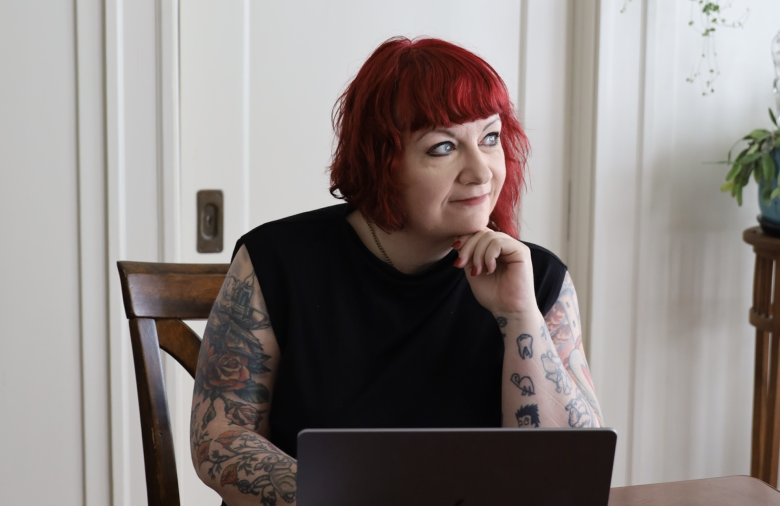
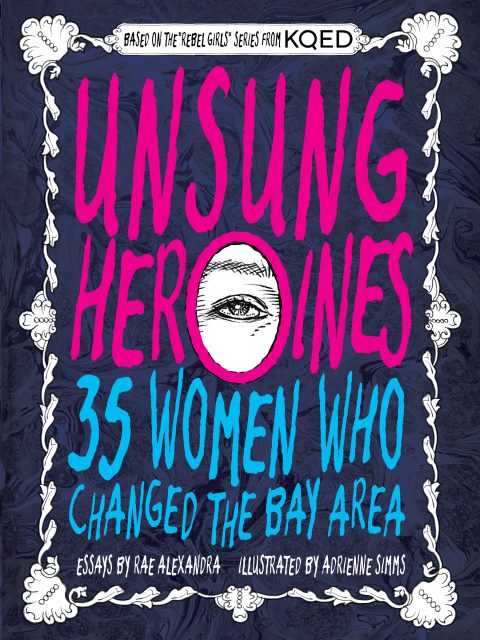
Lawrence’s story is one of the riveting biographies in “Unsung Heroes: 35 Women Who Changed the Bay Area,” a new book by KQED reporter and producer Rae Alexandra, out March 17 with City Lights Publishers. To celebrate, Alexandra is hosting two nights of her popular Rebel Girls Bingo event on March 11 and 12.
“Unsung Heroes” was born out of an idea: Alexandra would profile five women from San Francisco Bay Area’s past for Women’s History Month in 2018.
“I got really angry about the underrepresentation of women in public spaces in San Francisco,” Alexandra said. “I was complaining about it constantly, to passengers on Muni and to people in bars. And then I realized: I write for a living.”
Among those first profiles were Black Oakland Tribune journalist Delilah L. Beasley, San Jose housing and civil rights activist Sofía Mendoza, and Tsuyako “Sox” Kataoka, who fought for reparations for Japanese Americans imprisoned in California concentration camps during World War II. Alexandra dubbed them “Rebel Girls.”
Their stories are included in “Unsung Heroes,” an approachable volume that’s aimed at getting teens interested in history. After writing those first five articles, Alexandra found herself irresistibly interested, too.
She became especially “obsessive” early in the pandemic, when she began ordering obscure books on Bay Area history. She pored through their indexes to look for women she hadn’t heard of before.
“It was exciting to find a woman you really fall in love with and you can’t believe we don’t know about them,” she said.
Rebel girl in the making
One could make a case for adding Alexandra to the book. Born in Wales, she was living in London when she began traveling to San Francisco in the 1990s and fell in love with the city.
“I thought it was Nirvana,” she said. “It was full of punks and excellent vegan food and progressive politics.”
After graduating from university in Wales, Alexandra worked for Kerrang! magazine in London, writing about the punk scene. But she eventually burned out, partly because of the male-dominated culture at the magazine and in the scene she was writing about. When her boyfriend moved to San Francisco in the early 2000s, she went with him.
She wrote for many years for SF Weekly, then moved to KQED’s pop culture desk in the mid-2010s. Since then, she’s written about the local arts scene as well as weird history (including some of this writer’s work), Claude the albino alligator, the Zodiac killer, and the composition of coyote poop.
But the Rebel Girls project expanded in ways Alexandra didn’t expect.
She began recording brief radio spots profiling different women in history, and then launched the Rebel Girls bingo nights in March 2022. Alexandra read aloud about an historical figure chosen by contestants among nine candidates.
Players went home with zines featuring each event’s nine selections. Alexandra took any leftover zines to local bookstores and cafes. One day, she turned up at City Lights to discover that their zine shelf had been taken down. A staffer told her to put the zines on the stairs. She hesitated, but left a few.
It was a lucky decision.
“Those stairs go up to the poetry room, but also the publisher’s office. They saw the zines and called me and asked if I wanted to turn them into a book,” she said.
Making friends with history
“Unsung Heroes” is illustrated with sketches by San Francisco artist Adrienne Simms, who swims daily at the same pool as City Lights publisher Elaine Katzenberger.
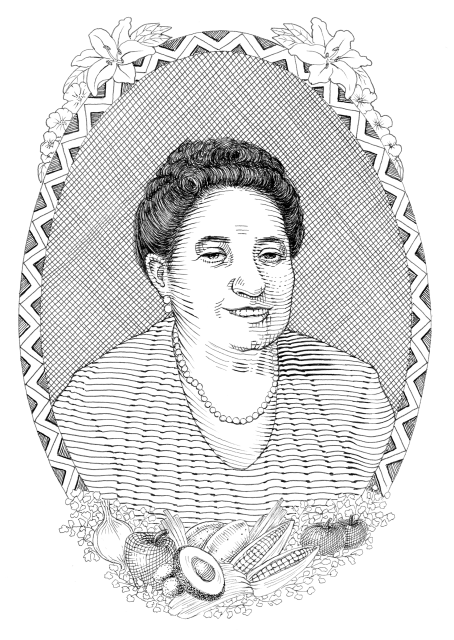
Her portraits of these women are framed with details particular to each subject, such as a compass and rope for Arctic explorer Louise Arner Boyd, and a bounty of fresh produce for famed blind Mexican chef Elena Zelayeta.
Simms’ portrait of Ruth Brinker, who headquartered Project Open Hand in the Mission District after the nonprofit feeding AIDS patients outgrew its previous home, is framed by an HIV/AIDS awareness ribbon.
Over the course of writing these essays, Alexandra said she felt like she became friends with each of the women she profiled.
“It was a rule: I didn’t start writing until I felt like I was friends with a woman. It was like, if I’m taking them to a dinner party, would I be able to tell my friends about her before she arrived?” Alexandra said.
She was surprised by certain stories, like Zelayeta’s decision to continue cooking — even on television — after she lost her vision. Or Charlotte L. Brown, who sued San Francisco’s public transportation company to end racial segregation in 1863, years before slavery officially ended.
Alexandra is also especially fond of lab technician Pat Maginnis, who opened a clinic in 1968 to support women who’d undergone illegal abortions. Maginnis was an abortion-rights activist starting in the early 1960s, and a force to be reckoned with.
“I really loved this woman, but she’s someone I would be scared to take to a dinner party,” Alexandra said. “She was a handful.”
Although Alexandra still loves San Francisco, she never found much of her native Welsh culture here, aside from Dylan’s Welsh Pub at 19th and Folsom streets, now The Homestead bar. That changed when the writer moved to Stockton a few years ago. The first time she dropped by a Home Depot in Stockton, a young employee immediately clocked her as Welsh.
“When I moved to San Francisco, I used to wear a necklace of the UK because I got tired of drawing maps on napkins for people,” she said. In Stockton, “Everyone’s friendly and chatty. It’s very Welsh, to me.”
Rebel Girls Bingo takes place Wednesday, March 11, and Thursday, March 12, at 7 p.m. at KQED Headquarters, 2601 Mariposa St., San Francisco. Purchase tickets for March 11 here and for March 12 here.
In addition, City Lights will host a book launch for “Unsung Heroines” on Thursday, March 5 at 7 p.m., in person and on Zoom. Details and registration here.