

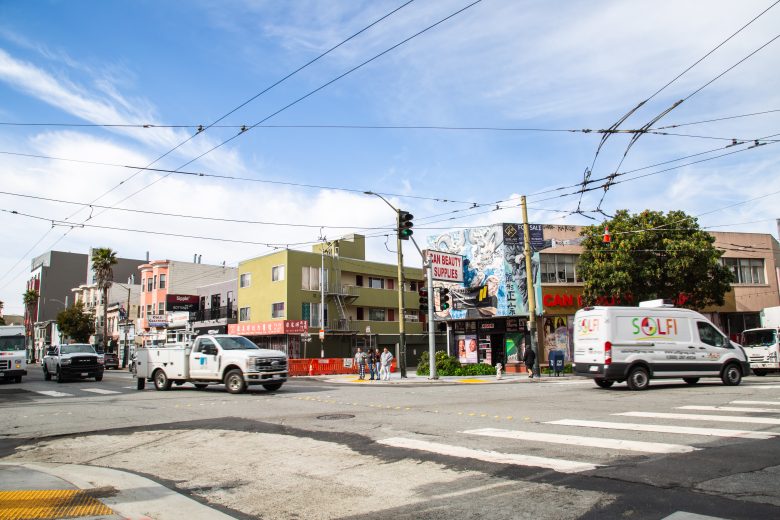

When the COVID-19 pandemic hit San Francisco in early 2020, it hit everywhere at once. Sales tax receipts collapsed across the city’s commercial corridors, from Valencia Street in the Mission to Third Street in the Bayview. The Excelsior District was no exception.
But what happened next set the Excelsior, the often “forgotten” neighborhood at the southeastern end of the city, apart — not because of how dramatically it bounced back, but because of how steadily it held on.
Sales tax data from the San Francisco city’s controller’s office for 2019 to 2025, which Mission Local adjusted for inflation, shows the Excelsior’s quiet persistence. In the first quarter of 2020, sales receipts on business corridors on Mission Street and Geneva Avenue fell by nearly half — from roughly $163,000 to $87,000.
By mid-2021, revenue had clawed back close to the pre-pandemic levels. But unlike some other neighborhoods, there was no dramatic surge.
Instead, the Excelsior settled into a pattern of modest, relatively stable receipts, fluctuating between $130,000 to $165,000 from 2022 to 2025.
While it is not the perfect comeback story, it is promising compared to the whiplash experienced elsewhere in the city.
“I’m encouraged by the sales data,” said Ben Bleiman, co-interim executive director of the Excelsior Action Group, a nonprofit that has been working the neighborhood’s commercial corridors for 20 years. “But we have a long way to go.”
The Excelsior’s business corridors are different from parts of the city that draw in visitors from out-of-town, or even other neighborhoods. It is a place of family-owned legacy businesses and longtime residents, of nail salons, taquerias, produce stands, and dollar stores.
The area’s relatively low commercial rent and loyal, local customer base helped balance out the extremes that devastated areas that were more dependent on out-of-towners making impulse purchases. One example, said Bleiman, was a citywide phenomenon called “false spring” — the time in 2022 when vaccines were rolling out and people, tired of staying inside, began to go out and spend money.
During the “false spring” sales boomed in many neighborhoods, and optimism surged. The city felt like it was turning a corner, until the ground shifted again. Breakthrough infections put a chill on the jubilation. The relentless doom loop narratives began, conventions pulled out, and residents continued to move away. The spring turned cold: business peaked and then began to slide.
But the Excelsior never experienced that sudden surge, or the drop that followed.
That steady middle- and lower-income clientele is both a limitation and, as data suggests, an anchor.

“A cocktail bar can do a million dollars just on those $16, $17 cocktails,” Bleiman said. Shops aren’t the most glamorous in the Excelsior, but they are durable and resilient and don’t depend on a population of people with cash to burn.
The Excelsior, Bleiman said, does not need a $17 cocktail bar. “I don’t think it would fit with the neighborhood.”
The Excelsior’s main commercial corridor on Mission Street, running 10 blocks from Silver Avenue to Geneva Avenue, has long been home to shops that serve everyday needs. Those everyday needs didn’t disappear when the city’s tech workers did.
Still, the data only tells part of the story, Bleiman said. “There’s the feeling on the street, right? Which doesn’t always match the data.”
Vacancies remain. Landlords, who have owned the same storefronts for generations, feel little financial pressure to make repairs. New businesses struggle with permits and complain about the lack of foot traffic.
But that is improving. At the pandemic’s peak, there were 60 empty storefronts on the corridor. As of early 2026, the number declined to about 29, according to the city’s office of economic and workforce development.
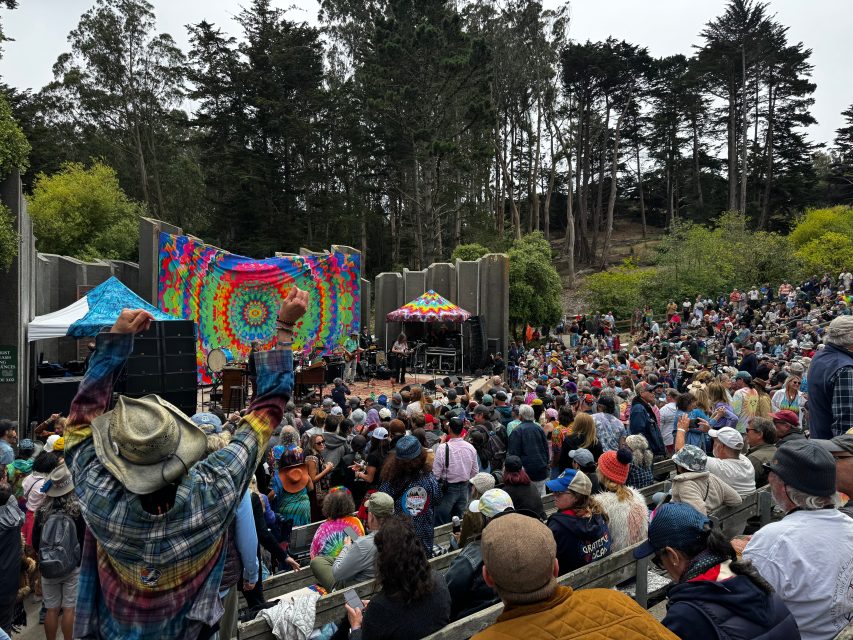
The night market is one of the things that helped, said Bleiman. “From the E,” launched in the summer of 2025 by the Excelsior Action Group with the support from the Civic Joy Fund, brought live music, local vendors, and lucha libre wrestling to the Excelsior’s streets monthly in the latter half of 2025.
Bleiman called From the E, a “tremendous success,” at turning the energy of the corridor during its June to December run. Community events like Jerry Day, Holi festival, and Slow-Cayuga block party have also kept residents connected to the street.
Now, there is a new reason for cautious optimism. Bleiman, who spent months working with the city officials to understand why some commercial spaces sat stubbornly vacant, helped identify a central culprit: the high cost of plumbing and electrical upgrades required by city code before a new business can open.
A city grant program, launched in late January 2026, offers between $50,000 to $100,000 (and help finding a space and negotiating a lease) to certain types of businesses that fill empty storefronts in the Excelsior.
The grants are expected to be awarded later this year.
In the meantime, the Excelsior’s sales tax data continues to offer a picture that is neither triumphant nor grim. For a neighborhood that never soared during the false spring and never cratered when it ended, it is still fluctuating slightly below the pre-pandemic level.
Bleiman, who also manages the Discover Polk Community Benefit District in Polk Gulch and Nob Hill, and oversees the recovery of the whole city as president of the Entertainment Commission, is hopeful that the Excelsior will continue its slow improvement — and for the city’s overall recovery.
“I feel like the city has turned a corner,” Bleiman said. “We are experiencing a renaissance.”