

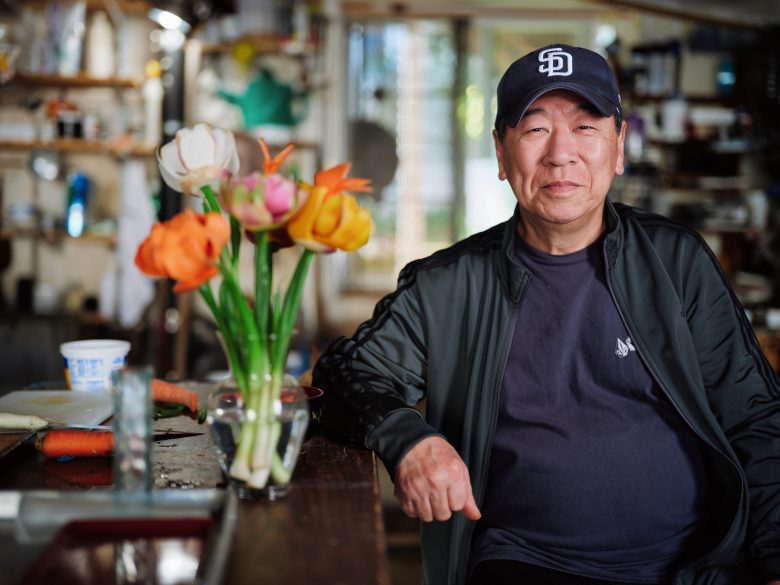

When I first meet Nory Sasaki outside Silver Cafe, at Silver Avenue and Mission Street on a recent Wednesday morning, he’s all business. “You’ll come to my house?” he asks immediately. He has something to show me.
Up a short Excelsior street Sasaki and I walk, until we stop at a pale-panelled duplex and he pops open the garage door.
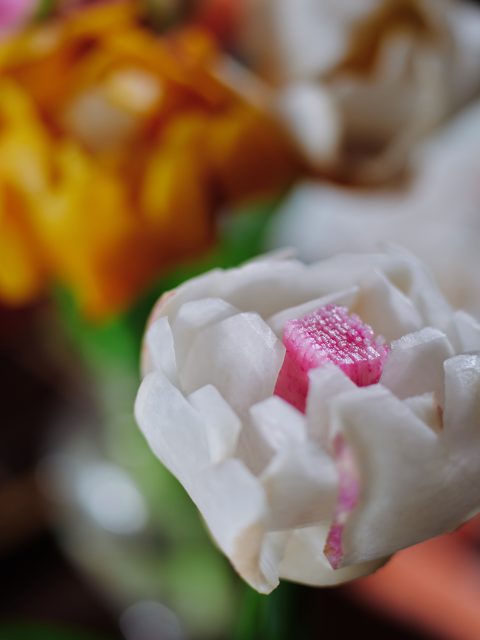
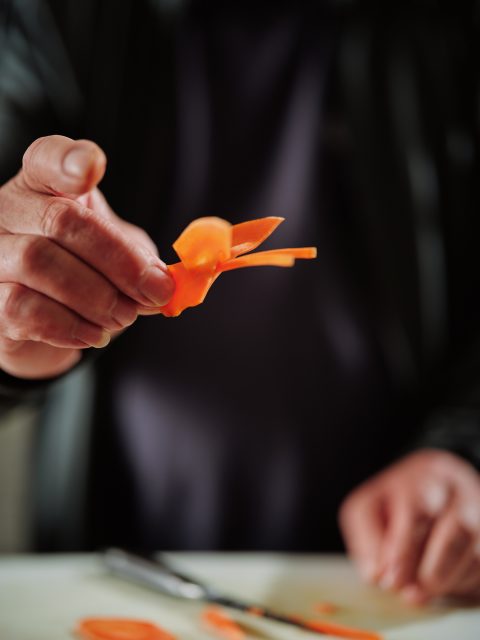
Daikon. Squash. Watermelon radishes. Carrots, chives, beets. Turnip. Long wooden spools and a sharp blade and a cutting board sit splayed out on a wooden table. This is Sasaki’s workshop, which also doubles as his garage — and effectively triples as a florist shop. In a few moments he will transform the common Asian root vegetables on the table into a bouquet using nothing more than a blade.
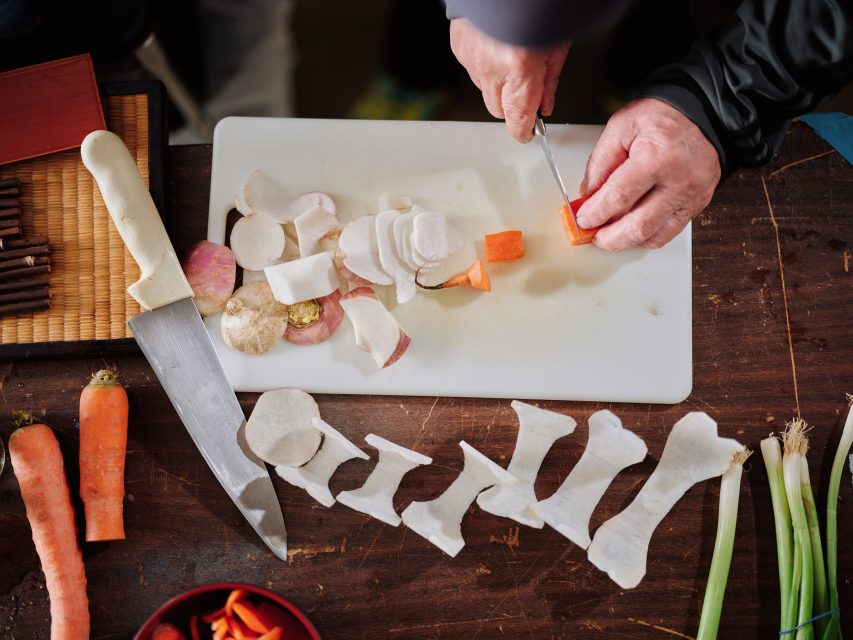
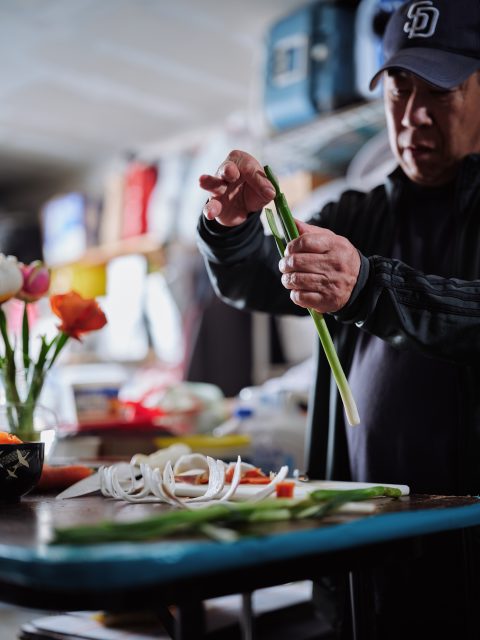
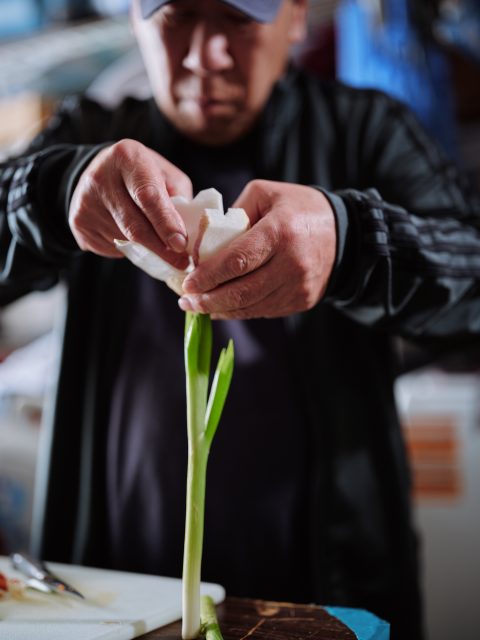
As he chops, I prod. Sasaki is sometimes vague when I ask about his life. Watching him sculpt a root into a complex polyhedron, I think: I’ve seen this before. This looks not unlike the Japanese joinery I learned about in architecture school.
How did you learn to carve like this? “A long time ago my friend told me.”
“And how did your friend learn?” I press.
“Oh. Somewhere at a party.”
Up until only a few years ago, when Sasaki retired in The Excelsior, he worked in the kitchens of some of San Francisco’s largest hotels. In fact, he still sometimes caters parties for friends and friends of friends.“Next time you throw a party. You call me. Okay?” he says. This explains Nory’s facility with a common kitchen knife. It explains his dedication to craft. But does it explain his predilection for beauty?
“Can you tell me a little about your life?”
“My life? Why? No.”
I explain the premise behind Mission Local’s “People We Meet” column: San Franciscans want to know their neighbors. Is there anything that Sasaki might want to share about his life with the people of San Francisco?
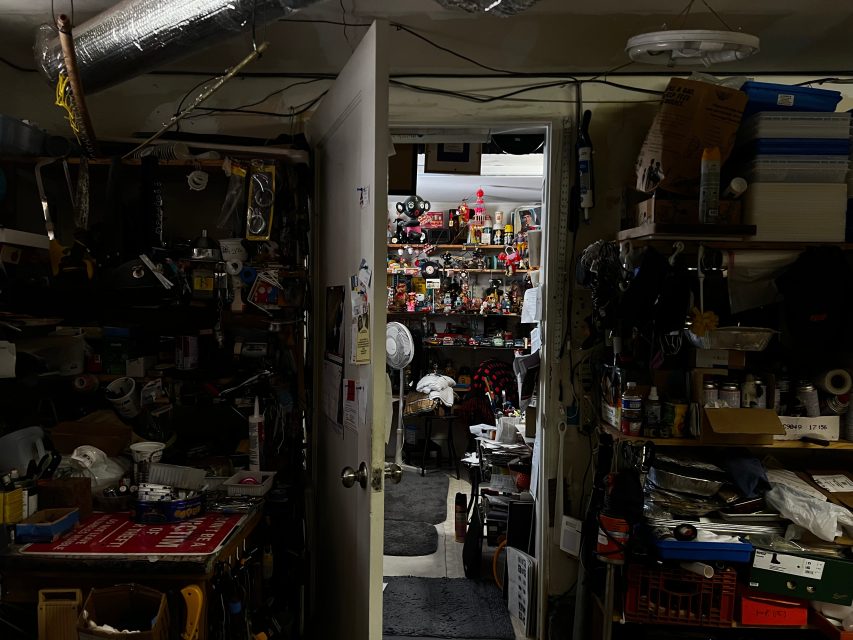
He pauses. Do his eyes flash? Yes, he says. And he walks over to a door at the corner of the garage, opens it and beckons.
In an eight by ten rectangular room sit hundreds of small toys, objects, and midcentury memorabilia of all kinds: tin UFOs models, spaceships, robots and Barbies from the 1960s. There are clowns, baby toys, a giant Pepsi sign with a thermometer on it, a grandfather clock that’s stopped working, an analog clock with hand-written 24-hour Japanese time on notebook paper affixed to its rim, two radios and several Japanese movies on VHS lined up on the wall opposite the window. Oh my God, I say.
Quickly, I find out Sasaki can be personable. And he’s funny. Sasaki picks up an old tin of popcorn: JOLLYTIME WHITE HULLESS POP CORN GUARANTEED TO POP. He taps his finger against the rim. “I think poison.” Then he picks up an old glass bottle of cola, the brown liquid still sloshing near the rim. It looks like it has to be at least from the midcentury.
“Maybe if the doctor tells me I’m dying I’ll drink it.” Then he looks up at me and grins.
Sasaki was born in Japan, in Sapporo — which the eponymous beer is named after — and came to the United States about 35 years ago. In the span of that time he found time to have a daughter, see his two grandchildren grow up, and — on a whim one day, wander into a flea market off “280 and 101” to buy his first tin toy.
“When I go to heaven I’ll bring everything with me,” he says.
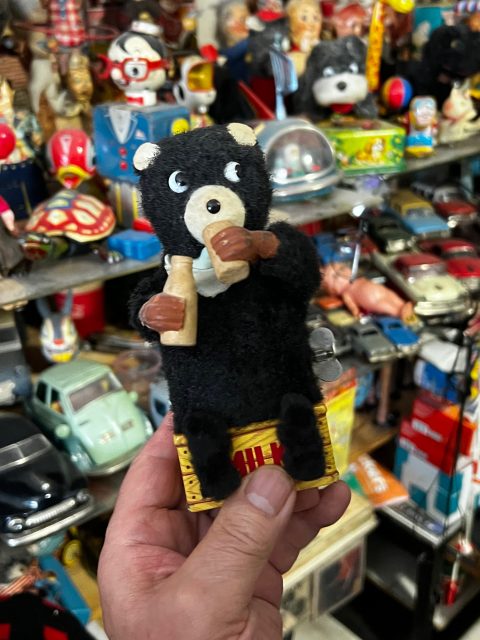
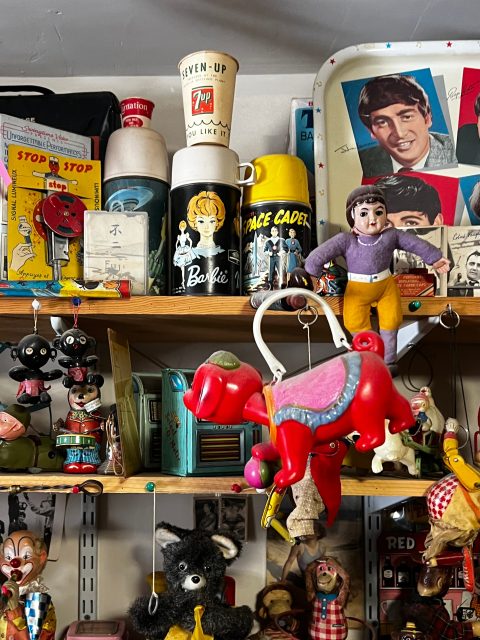
He’s collected over 380 objects from approximately the 1950s, the era in which tin toys were in their heyday. But he doesn’t collect any more toys since retiring. “No money,” he says.
I ask what his most expensive item in the room is. “Expensive?” Sasaki points to a giant pink baby doll that looks like it’s made of plastic but I later find out is actually celluloid.
“Was it more than $500?” I say, picking a value arbitrarily.
“No, no. I spent $300.” He pauses. “$300 is expensive.”
Sasaki offers me a bouquet of flowers he’s carved himself and insists on driving me to the nearest BART station, which I take back to my home in Berkeley.
A few hours later, he texts me and asks me if I got home okay: “Please enjoy the vegetable flowers. The life of a flower is short.hahaha”
For floral vegetable-carving commissions or inquiries, contact Nory Sasaki at 415 728 8044 or jet8823jp@yahoo.co.jp