
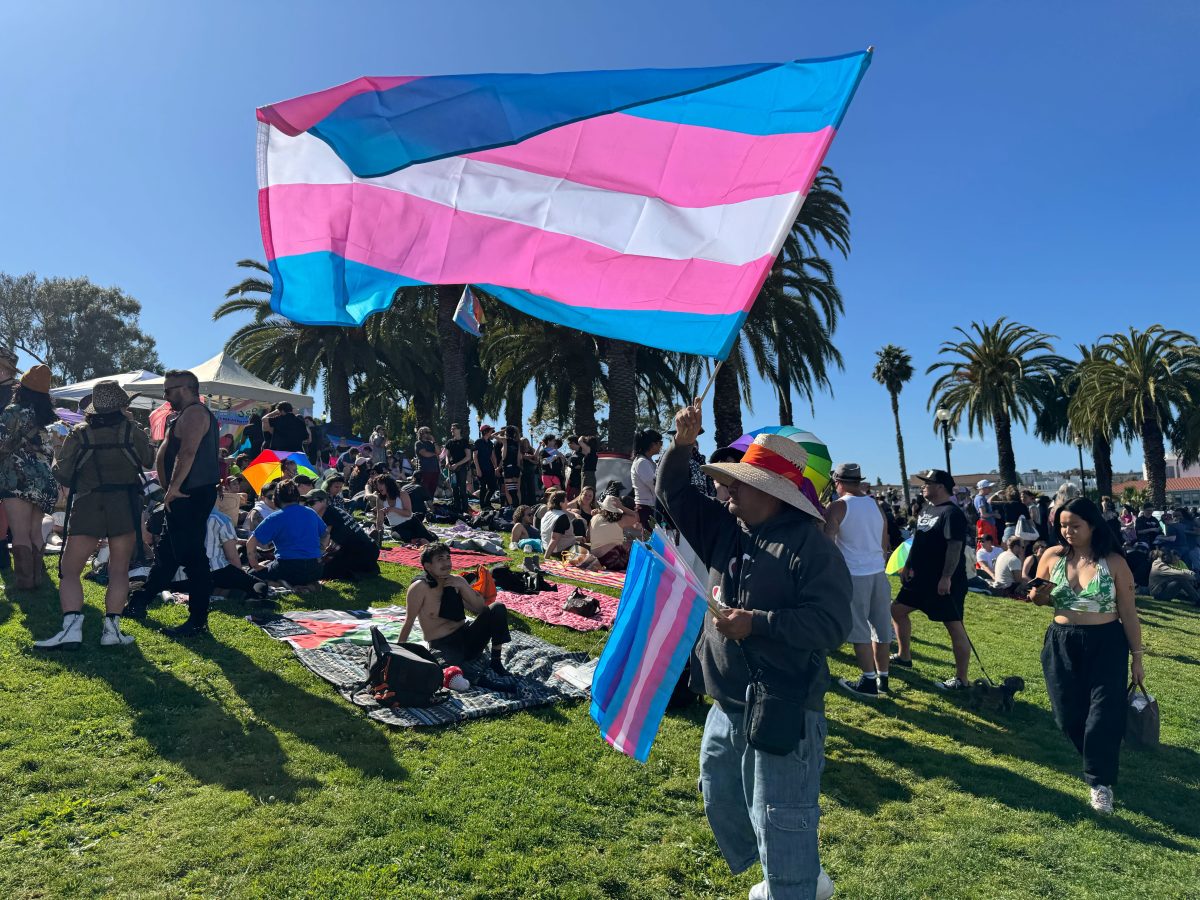

The International Transgender Day of Visibility is celebrated around the world today, highlighting the contributions made by trans people to culture and society. It began in 2009 , thanks to trans activist Rachel Crandall Crocker, and in 2021, then President Joe Biden recognized the March event. For the occasion, Mission Local met with local activists, community leaders, and artists who make trans people visible in the city and beyond.
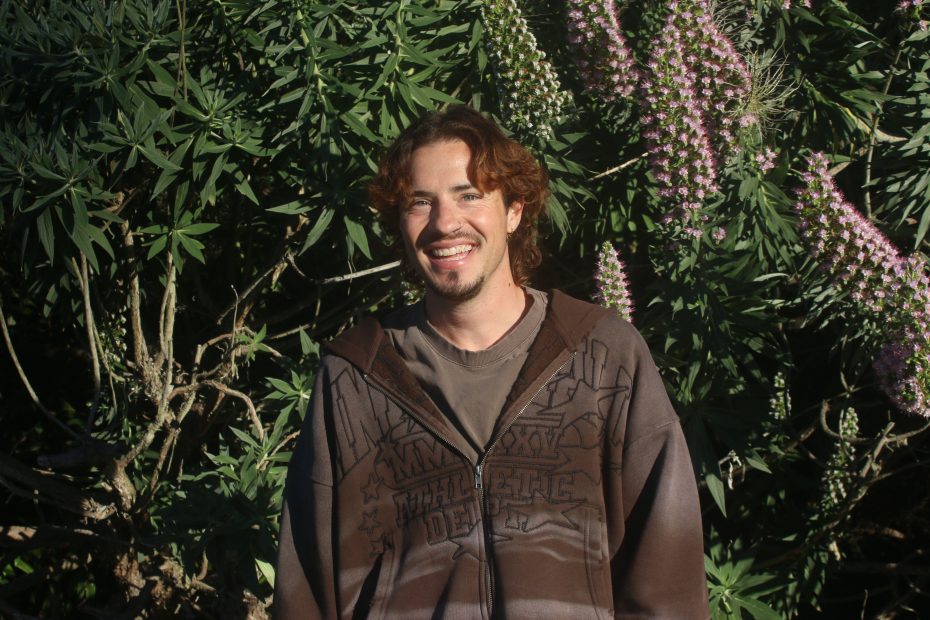
Cal Calamia
Earlier this month, San Francisco runner Cal Calamia won the non-binary division of the Los Angeles Marathon with a time of 2:49:17. It’s the second win for the S.F.-based athlete, activist, and poet, following another first-place finish in 2024. They’ve only entered the race twice.
“It’s always amazing to perform well athletically because it gives me the platform to speak up about issues that I care about, like trans rights,” Calamia said.
Calamia, who is trans and uses both they and he pronouns interchangeably (which we do here as well), has been an outspoken activist for the inclusion of non-binary and trans people in sports since 2022, when he successfully advocated for the creation of an award for non-binary runners in San Francisco’s annual “Bay to Breakers” race.
Since then, Calamia’s advocacy has helped drive the introduction of non-binary divisions at several major U.S. races, including the San Francisco Marathon and the Boston Marathon.
Meanwhile Calamia has continued to rack up podium finishes, and in 2025 became the first non-binary runner to place on the podium at all six Abbott World Marathon Majors: the Tokyo, Boston, London, Berlin, Chicago, and New York City marathons.
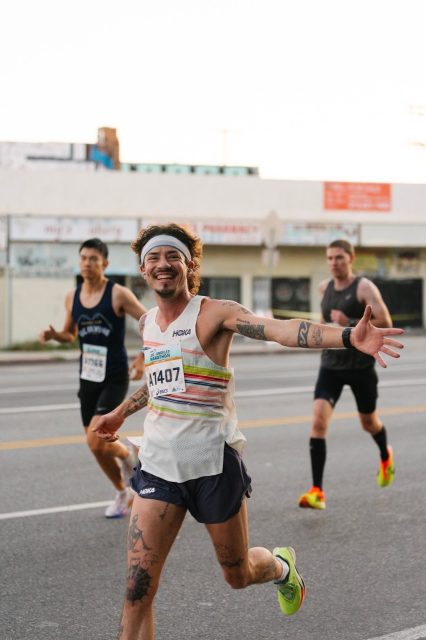
The number of athletes competing in the nonbinary divisions is still relatively low. But Calamia has made it their mission to make sure this number continues to grow.
In 2024, 38 runners in the non-binary category crossed the LA Marathon’s finish line. In 2025, there were 268—the highest number since the introduction of the category in 2021. This year, there were just over 100.
“When I first started advocating for these divisions, I was having my own athletic success,” they said. “And I was like, this is so cool, but something’s missing. Like, where is everyone? I felt like I wanted more of that community piece.”
In late 2022, Calamia created a club for trans and nonbinary runners in San Francisco. It has since grown to include 500 people on its mailing list across the country, with 150 active members in the city.
“It’s just been amazing to see more trans and non-binary people come into the sport,” he said.
Calamia, who is outspoken about their journey and advocacy with their 103,000 Instagram followers, said they receive a lot of positive feedback from young people and parents of trans kids.
“I want to change trans people’s minds if they think that they don’t belong somewhere,” he said. “I want to see that trans people are showing up to spaces they previously didn’t feel like were for them because of the work that I’m doing.”
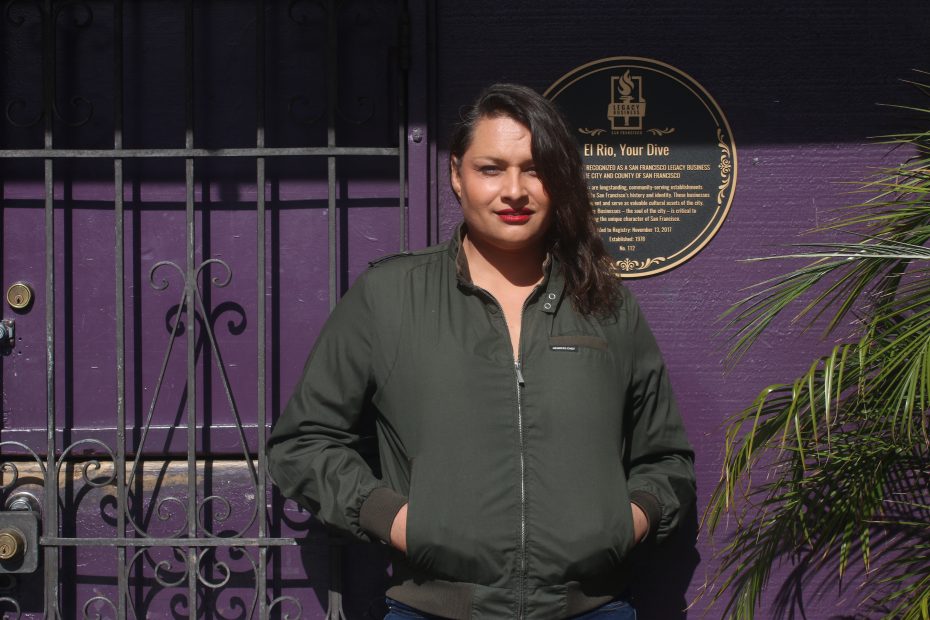
Per Sia
Per Sia remembers the first Drag Story Hour in 2015 vividly. “I was so nervous. I remember reading and shaking,” she said.
As an educator and a drag performer, she had been invited to co-lead the new program that has drag performers read stories to children in libraries, schools, and bookstores. “Up until that point, everything in my life had been separate—my life as a TA and my life as a drag performer,” she said.
That day, however, felt different. “I remember feeling the most happy, but also the most at peace ever,” she said. “Because for the first time in my life, I didn’t have to hide anything. It felt like all my worlds had merged—my love of the classroom and my love of drag were in one room.”
Per Sia first entered into the world of drag as a photographer in her hometown of Los Angeles. “I loved drag queens,” she said, “but I was never in front of the camera, because I didn’t like that.”
After she moved to San Francisco to pursue an education in photography at the San Francisco Art Institute, she decided to give it a try, “sort of as a joke”. “And then I was just hooked,” she said.
She got her first drag residency at the Latino queer bar Esta Noche in the Mission, a neighborhood institution which closed in 2014 after 35 years. Since then, she has also pursued residencies at the Fine Arts Museums of San Francisco, the Oakland Museum of California and at the bar El Rio, all while working as an after-school arts educator.
Last October, Per Sia was named as the city’s second-ever Drag Laureate. She is the first trans woman to occupy the role, which is a position the mayor’s office created in 2023. The drag laureate’s duties include acting as the city’s ambassador for drag performance, LGBTQ culture, and nightlife. She was selected by a committee that included LGBTQ community leaders, as well as Mayor Daniel Lurie.
Being the city’s Drag Laureate has given her access to a larger platform and a new audience, including performing in front of politicians. “When I’m in those spaces, I make sure that if I’m giving the microphone, I say my piece,” she said.
In her acceptance speech, Per Sia promised to highlight joy in the face of adversity. “Despite the current chaos of the world,” she said, “I promise you this: I will keep bringing my joy, my brown joy, my queer joy, all the joy.”
As a trans woman, an educator, and a daughter of Mexican immigrants, she said later in an interview, “I can’t dwell on the fact that my government doesn’t want me to exist. So I indulge in the things that I can change and the things that I can do, which is to spread my trans joy.”
One of the ways she likes to do that is to take public transportation in a ball gown in full drag whenever she goes to perform.
“I get to interact with commuters and it’s so wonderful to meet people and have conversations,” she said. “That’s my way of bringing trans visibility to the everyday.”
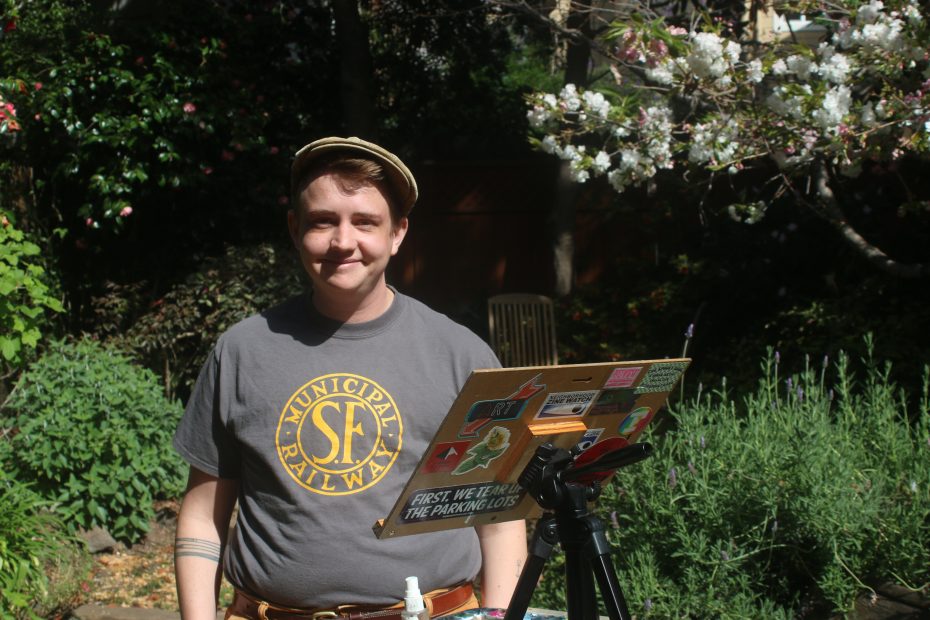
Nathaniel Bice
Nathaniel Bice has spent the past six years capturing the streets, signs, storefronts, and landmarks of San Francisco.
It all began in 2020, when the COVID-19 pandemic shuttered the city’s theaters. Bice, who worked as a set designer, began searching for a new creative outlet, and turned to painting. Drawing on his background as an Urban Sketcher, he took his work outdoors, where he began to capture scenes of the city en plein air—from neighborhood restaurants and small businesses to some of San Francisco’s most recognizable landmarks.
Bice grew up in Albuquerque, New Mexico, and studied performance production at the Cornish College of the Arts in Seattle, Washington. He moved to San Francisco in 2018 to complete a fellowship at the American Conservatory Theatre.
“I, like so many people do, fell so in love with San Francisco,” he said.
Part of that love story was discovering the city’s vibrant queer scene, and building a community that supported him through the early stages of his transition.
Bice is a founding member of Spooky Haus, a collective of trans and gender non-conforming artists in the Bay Area. On March 28, the collective celebrated Trans Day of Having a Nice Snack, an alternative to Trans Day of Visibility that generally involves offering free snacks to trans and gender-nonconforming people, while encouraging cisgender allies to donate.
Because Bice’s work usually doesn’t delve into explicitly queer themes, he said he used to worry about not fitting in the queer artistic spaces. He has since changed his perspective.
At the same time, he said, “it’s hard for me to get into regular, high level art spaces as well, just for all of the regular reasons that a young queer person would have a hard time in these spaces that are full of old rich people.” The experience, he said, has left him feeling “suspended in between those two worlds”.
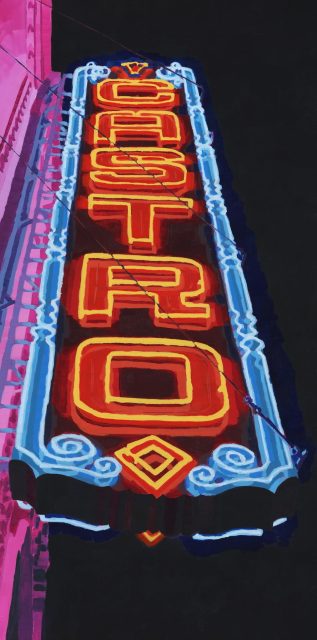
Bice just closed his first solo exhibition at Queer Arts Featured. Titled BEACONS, the exhibit was a dive into the Castro’s queer history through acrylic paintings of the neighborhood’s most iconic neons.
“I had a lot of anxiety prior to this show about the fact that my art had kind of nothing to do with my queer life and queer identity. I’m just painting San Francisco,” Bice said. “A lot of people who do queer art will do stuff that you look at it and you know that it’s queer art, like it has symbols in it or it has queer people in it. And that’s just not the work that I’m drawn to making myself.”
Ultimately, he said, “I think anything I do is queer because I’m queer.”
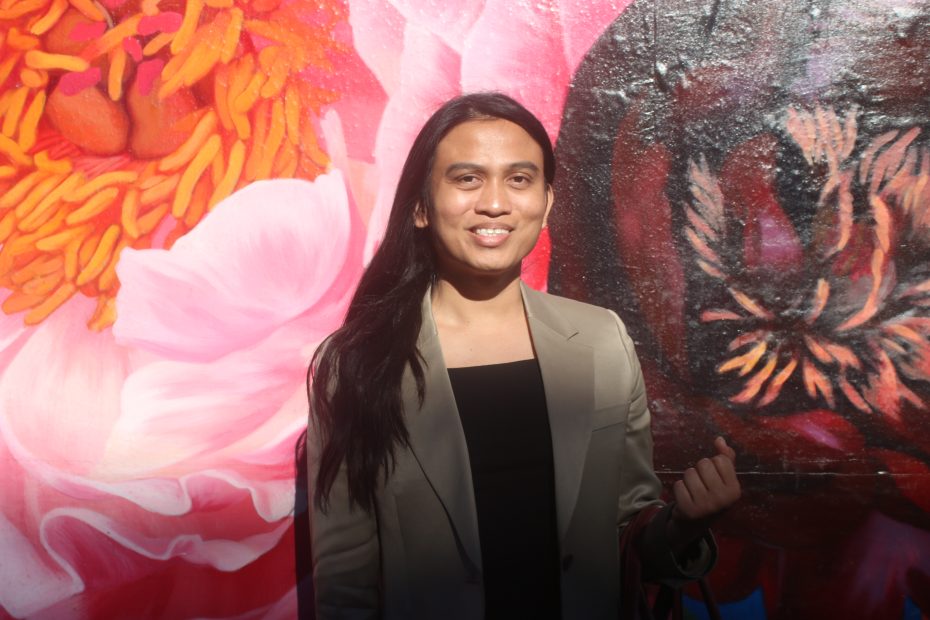
Kiki Lopez
When Kiki Lopez first arrived in San Francisco in the summer of 2022, she took off her shoes to ground herself in the soil. “The energy was very embracing, very motherly,” she said of the ritual she often does in a new place. “I might be overromanticizing it, but that’s how I felt.”
Now four years later, Lopez, who is originally from the Philippines, calls the city home. It’s where she found protection, love, community, support—and a career in the city’s drag scene.
Lopez began performing in drag in the Philippines during the COVID-19 pandemic. Her drag alter ego, Mx. Crunch, started as a “bedroom queen,” a term that describes a drag performer who only does drag in private.
She performed professionally for the first time in San Francisco in September 2022 at The Monster Show at The Edge in the Castro.
From then on, she met drag performers and producers who helped her secure other performance opportunities, launching her drag career.
Later, in 2023, Lopez won a pageant contest organized by GAPA, an organization dedicated to advocating for queer Asian and Pacific Islander. That award, she said, was life changing in the doors it opened.
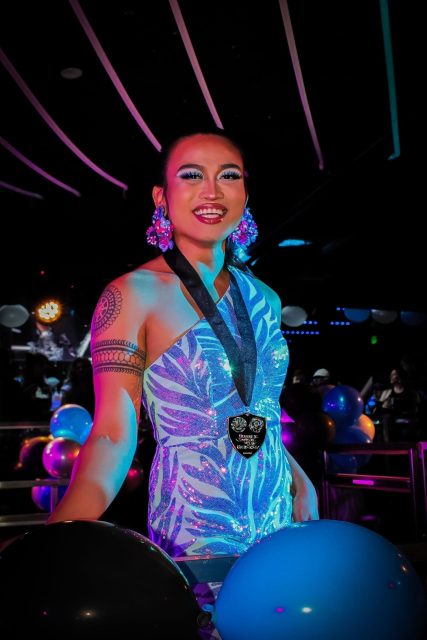
In 2024, she became the co-matriarch of the drag group “Mabuhay Bitches”, named after a Filipino greeting. The group now has 10 members in the Bay Area, all Tagalog-speaking drag performers. They perform every first Sunday of the month during brunch at Midnight Sun in the Castro.
Outside of drag, Lopez described herself as a “simple woman” who enjoys jogging, taking long walks, playing Mario Kart, and growing her Pokédex. She also works as program manager at the San Francisco Community Health Center, and is an active advocate and organizer for Queer and Transgender Asian and Pacific Islander people in the city.
“You can definitely tell when you’re speaking with Mx. Crunch or with Miss Lopez,” Lopez said. “I’m already vocal, but Mx.Crunch, she’s way feistier. I think she’s braver to some extent.”
Lopez described starting drag as a “life-saving” moment for her at a time when she was going through a severe depression. “It was through the art of drag that I realized that I just needed to express myself differently,” she said.
She said she resonates with drag’s history in the LGBTQ community as an art form dedicated to resisting any form of oppression. “Drag is resistance,” she said. “I like San Francisco so much because it reminds you every day that is what drag is all about.”
Joaquin Guerrero
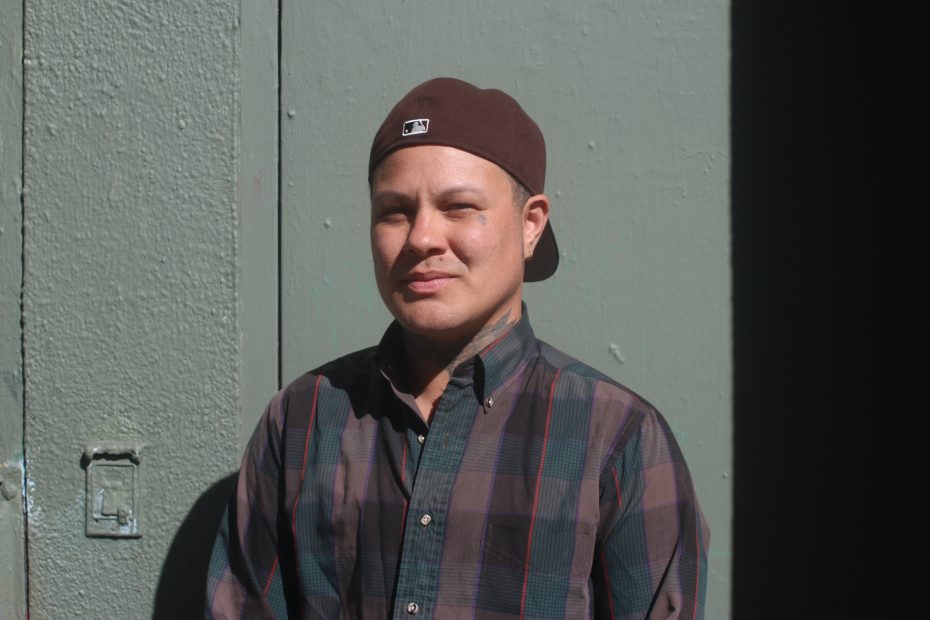
For much of his youth, Joaquin Guerrero rarely saw people who looked like him. Growing up in Mexico and Vancouver, Canada, transmasculine and queer Latino people were almost invisible, he said.
So in 2014, when Guerrero first came out as trans, he decided to move to California, where he knew he would find community and support among people who shared some of his experiences.
The first years in San Francisco were difficult. He was undocumented for a period (he is now a citizen), and for five years, he struggled to find stable housing.
Even as he was living on friends’ couches or in his car, he never sought to access homelessness services. “At the time, I didn’t think I was homeless enough,” he said.
In Vancouver, Guerrero had been involved with harm reduction efforts working with unhoused people.
In San Francisco, he found himself on the receiving end of some of the supportive services he had previously worked to provide. “It’s given me a more well-rounded perspective,” he said, “and also a lot of compassion for what other people were navigating here.”
In 2019, Guerrero joined the board of St. James Infirmary Clinic, where he had previously been a client. In 2020, he also began working in a shelter in the Bayview, where he was moved by the death of a young resident.
“This person that was gender nonconforming passed away behind closed doors because they didn’t have the level of care and the cultural competencies to survive in a general shelter,” Guerrero said. “So I was like, we need a place for our own people. And that motivated me to want to open a new shelter.”
In 2021, Guerrero became the inaugural director of Our Trans Home SF, a city-funded initiative dedicated to fighting homelessness among trans and gender non-conforming individuals. In 2022, the organization opened the Taimon Booton Navigation Center, a shelter for trans and gender non-conforming people, and named it after the young person who passed away in 2020.
After leaving the program in 2023, Guerrero briefly worked doing landlord-tenant dispute resolution for the San Francisco Bar Association, before joining the city’s Homelessness Oversight Commission, which oversees the work of the Department of Homelessness and Supportive Housing. He’s been a commissioner for three years.
“I know how big of a deal it is to be trans and be a commissioner, because we’re so underrepresented in government,” he said.
As much as Guerrero is proud to be visibly trans, he also knows that “it’s not always safe”, particularly under current federal policies targeting trans people.
“I’m not saying that trans people should go into hiding at all,” he said. “I’m going to continue to be on the commission and talk about trans issues. I’m going to continue to be trans in public in a political arena.”
“I am saying that we have to take care of each other and we can’t rely on the powers that be to do that, but we do have to keep fighting.”
Aleo Landeta
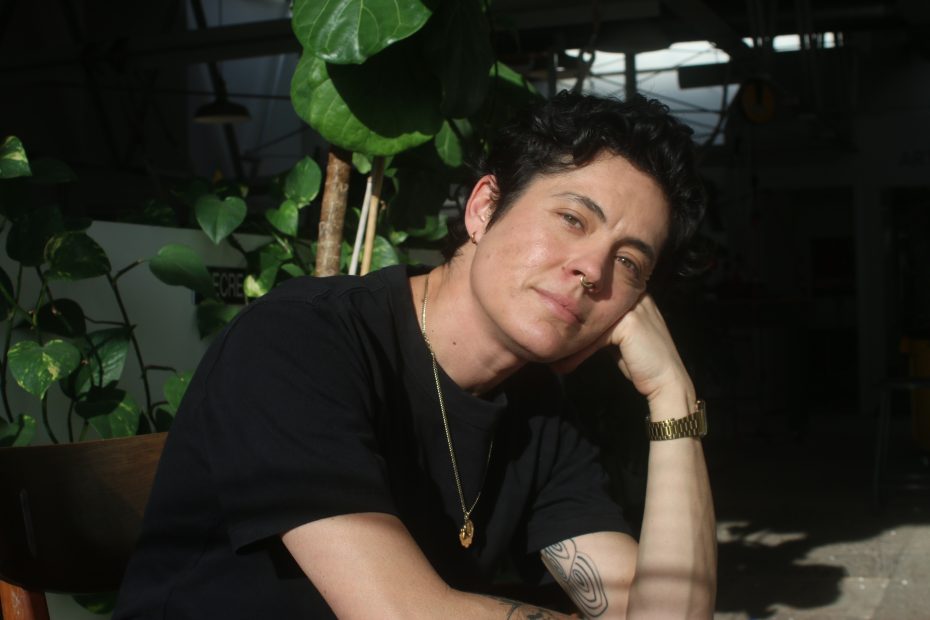
Sometime in the mid-2000s, Aleo Landeta was “reluctantly” attending community college and trying to figure out what to do with their life.
“It was sort of like, okay, the only way I’m going to finish college is if I get to do a thing that I care about,” they said.
They enrolled in a photography class, and, thanks in part to a very dedicated professor, immediately fell in love with the practice. They ended up getting a B.A. in photography at the University of South Florida in Tampa in 2009, followed in 2017 by a M.A. in Arts Education from the Maryland Institute College of Art in Baltimore.
Landeta, who grew up in Florida, relocated to the Bay Area in 2010 to pursue their art. Since then, they’ve shown work in galleries across the city and beyond, from installations to pastels, oil paintings, and cyanotypes.
Queerness and trans identity are recurring themes in their work, with joy as a central throughline.
“I think it was important for me to provide a counter-narrative,” they said.
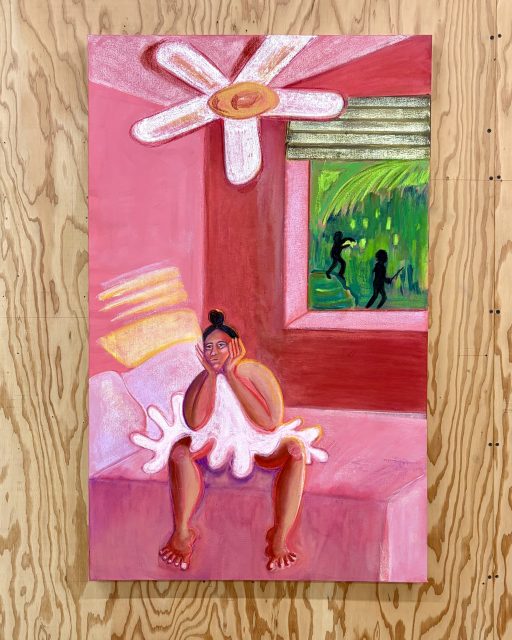
That is the vision that inspired their 2023 mural on the wall of the San Francisco LGBT Center. Titled Joy is the fuel, the piece depicts a queer dance party, celebrating the importance of dance and nightlife culture in the queer community.
In 2025, their installation Toward the Then and There, in front of the Palo Alto City Hall, includes a retrofitted payphone that allows the public to hear testimonies from LGBTQ community members.
Landeta’s latest exhibition, Soft Portals, is a collaborative show with their partner, Kit Robbins. It opens with a curatorial preview on April 2 at 120710 Gallery in Berkeley.
“The show for us is really about this idea of trans-for-trans love—two trans people being able to see and understand each other in these really deep and intimate ways,” they said.
As part of the exhibition, the couple will celebrate their wedding in a private event at the gallery on April 4.