

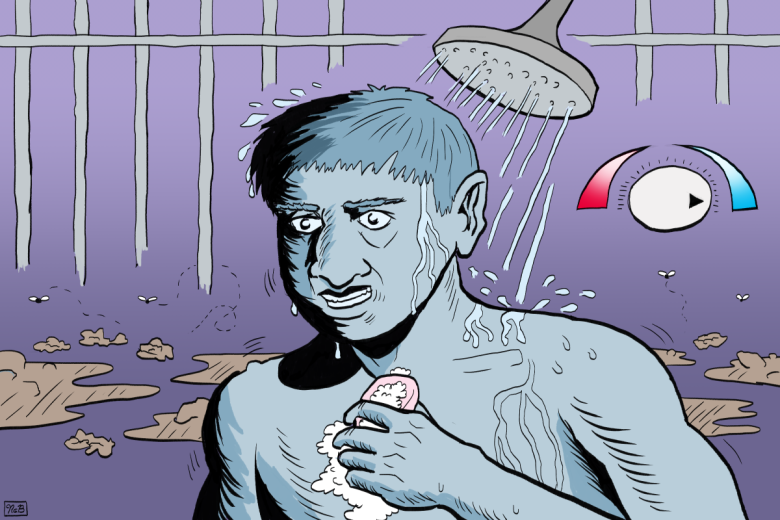

San Francisco’s County Jail No. 2, in SoMa, had extremely limited access to hot water for all of January, according to a half-dozen incarcerated people and one jail staff member.
As a result, they said, many people stopped taking showers, exacerbating a feeling of stress and filth in an understaffed county jail system that has been plagued by tumultuous conditions.
“We are aware of the concerns raised regarding hot-water access,” wrote Tara Moriarty, a spokesperson for the sheriff’s office. “We take these complaints seriously.”
California law requires that incarcerated people have access to showers with either hot and cold running water, or “tempered” water that is set to a specific temperature.
On Feb. 4, Moriarty said that current readings show the jail’s water temperatures to be “within an acceptable range.” When lower temperatures were identified, she said, the issue was “promptly addressed.”
But people on the inside said they haven’t noticed any changes, and cold showers remain the norm.
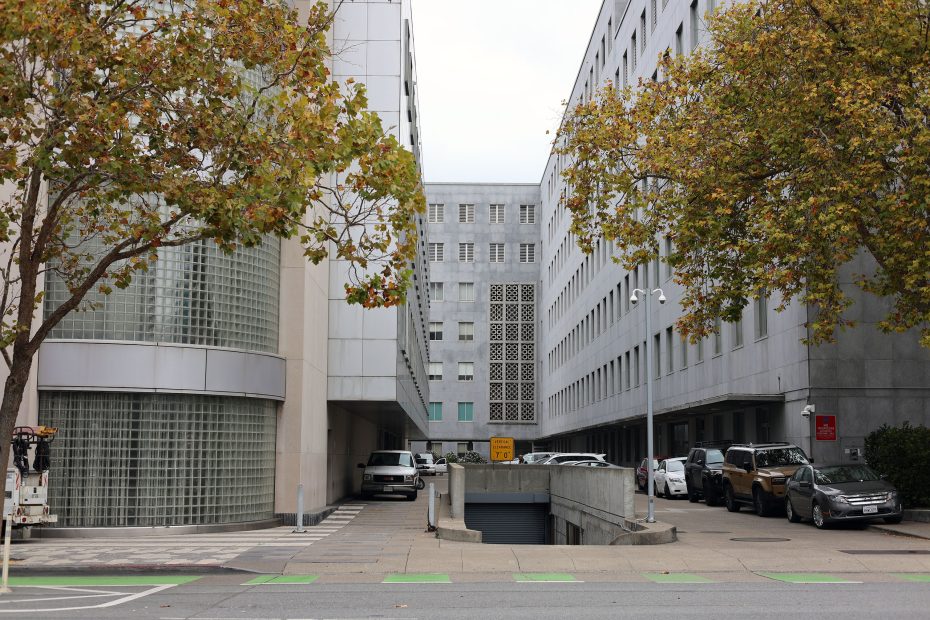
San Francisco has been incarcerating more people since 2024. County Jail No. 2, at 425 Seventh St., can house up to 392 people, and was close to capacity throughout January.
Arrests for drug crimes, in particular, are on the rise. About two-thirds of those in San Francisco’s jails have a substance-use disorder. The intake center at 425 Seventh St. is where many begin to withdraw.
“Everyone is kicking, so everyone’s throwing up in the cell and the open area,” one person being held in the jail told Mission Local.
Another man said he spent at least 24 hours in a “holding tank,” “dopesick” and surrounded by “vomit, spit and shit,” before being released. When he tried to wash his hands, he said, there was no hot water.
The jail’s intake facility is cleaned on a regular schedule, Moriarty said. Deputies and facility staff, she added, also respond to sanitation needs as they arise.
All of the city’s incarcerated women, as well as some men and people with special medical needs, are locked up in County Jail No. 2, one of two county jails. According to them, cleanliness is just one of several issues.
In October 2025, a deputy was fired after allegedly engaging in “sexual misconduct” with a transgender detainee. In November 2025, 19 women filed a claim with the city, alleging that deputies filmed them as they were strip-searched, pointing and laughing at the group.
Behind bars, it’s always “one thing after another,” said Ken, who has been in and out of the justice system and was most recently locked up for two weeks at the beginning of January.
To deal with such incidents, as well as the stress of being isolated in a cell, “you have to have a strong mind,” he added. Over time, he and others said, day-to-day issues, like not being able to clean yourself, can deteriorate that strength.
Several incarcerated people said they felt that reporting problems to the sheriff’s department would make little difference or, worse, lead to retaliation. To protect their identities, Mission Local has changed the names of people with open criminal cases quoted in this story.
One, Jamaine Sanders, asked to use his real name. Speaking out would help everyone, he said: “This should be a safe place where people can do their time and not get bullied or suffer inhumane conditions.”
There is at most 20 minutes of lukewarm water in the jail showers before it peters out, said Sanders, who has been incarcerated since the beginning of the year. This, he said, has been the case in his unit since at least Jan. 1.
About 600 people across San Francisco’s two county jails have been held for more than a month as they await trial or sentencing. Those in custody longer tend to be moved to the jail in San Bruno (where, purportedly, hot water does flow), but some have been at County Jail No. 2 for more than a year.
“Lots of people stopped taking showers,” Sanders said. He estimated that only three of the 10 men incarcerated in his section would opt to take a shower, which he said are offered every other day between roughly 6 and 10 p.m. Some, he added, resort to “bird baths,” splashing themselves with water that trickles out of the sink.
Throughout the last month, others echoed his complaints, and some said the problem went back even farther.
At least one incarcerated woman filed a request that jail staff respond to the issue. She wrote that there was no hot water in the hand-washing room or for showers.
A staff member at the jail, who also asked to remain anonymous, told Mission Local about the lack of hot water in early January. After a month, people across an entire floor of cells were still complaining about hot water, the staff member said.
A deputy public defender said she was also told by her client that people at the jail have had to take cold showers and that, when they complained, deputies told them that “cold showers were good for you.”
Sanders said he’d been told the same thing.
Deputies sometimes file work orders in response to water complaints, said Robert, who has been incarcerated since 2024. He said he’d seen maintenance workers a handful of times in the last year. After their visits, the water ran, he said, but did not stay hot.
“There have been a limited number of documented work orders related to water temperature in late December and January,” Moriarty wrote. “In response, facilities staff inspected and corrected the identified issues, and water temperatures are checked regularly during daily rounds.”
At the same time, she said the sheriff’s department is working on replacing the facility’s aging heating equipment. This work is done once a week during overnight hours, and can “temporarily affect how quickly hot water reaches upper floors as the system reheats.”
The project, she said, is expected to be completed by March.
Meanwhile, despite the sheriff’s department’s assurances that cleaning supplies are available upon request, incarcerated people said they continue to live in filth.
“It’s a mess,” Ken said, describing vomit on the floor of cells, maggots in trash bins and human feces beneath bunks. He asked a deputy for cleaning spray and a towel, he said, and it took more than a day to receive the supplies.
“I just wanted to be able to sleep in peace,” Ken recalled thinking in his bunk. “I’m not asking you to be my maid, I’m just asking you to give [supplies] to me, and I’ll do the maiding.”
The people who run the jails don’t see inmates as human beings. And unfortunately, people on the outside tend to forget two things: 1) People jailed and awaiting trial are, by definition, legally innocent; 2) Even people who have been convicted are still human beings with basic rights.
Four people downvoted this. I would like to see if any one of them can dispute the points. Who would like to argue that no, inmates are in fact not human beings? Perhaps someone could state that, no, people jailed and awaiting trial are in fact legally guilty? Or maybe they’d like to argue that even convicted people no longer have basic rights.
I’d love to hear y’all’s cogent arguments.