
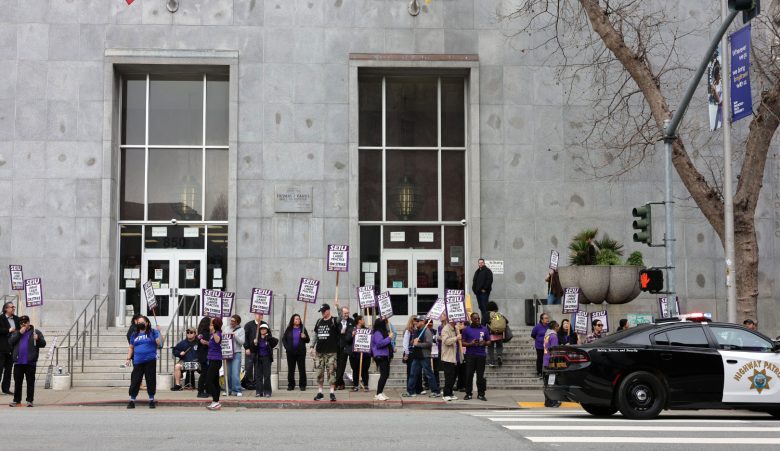

San Francisco’s court clerks went on strike Thursday morning, and legal professionals and clients inside the city’s courthouses said the impacts are immediate.
Without clerks to manage court records and process filings, several courtrooms were shut down on Thursday. Their usual traffic was redirected to a handful of judges, court management staff and probationary clerks while those represented by the union SEIU 1021 formed picket lines outside both the criminal and civil courthouses.
A Tuesday statement from the court had listed courtrooms that would remain open in the event of a strike, prioritizing hearing cases with statutory time limits, like criminal arraignments and domestic violence matters. Directions were also posted around the courthouse.
But at 9:30 a.m. on Thursday, it was “chaos” at the Hall of Justice, attorneys said.
The clerks’ union announced they’d be going on strike Wednesday afternoon after months of negotiation and a last-ditch effort at resolution earlier in the week failed. They’re demanding more staff and better training to deal with growing caseloads.
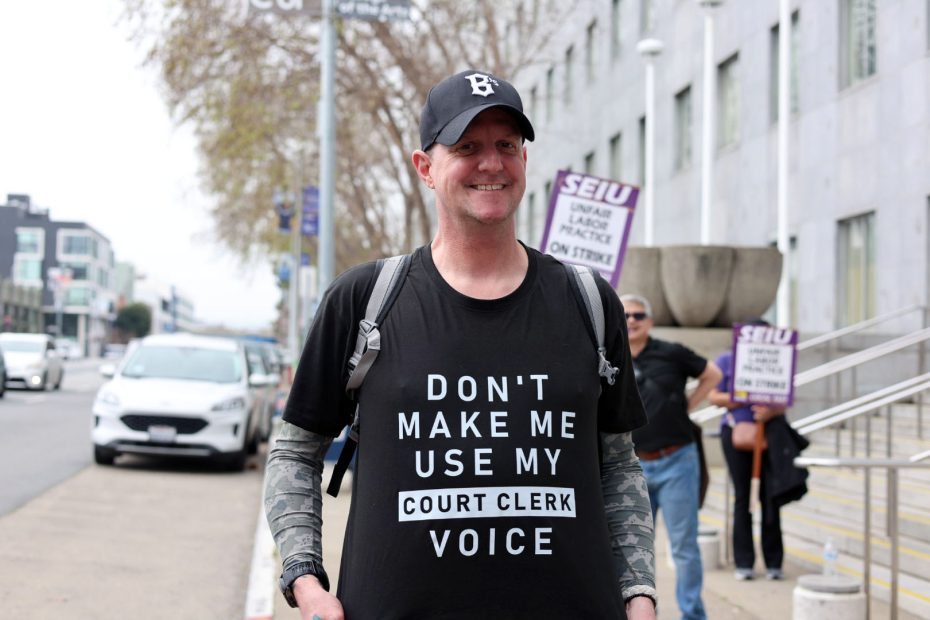
“All [management] wants to talk about is money,” said criminal courtroom clerk Ashley Herbert over the clamor of pickers on the sidewalk. “We’re drowning in work.”
In Herbert’s courtroom, there are 93 matters on the calendar scheduled for tomorrow, she said, plus any matters leftover as a result of today’s delays. “There’s no way they can release that many people or find another courtroom on short notice.”
Three of the four courtrooms on the ground floor of the criminal courthouse at 850 Bryant St. were supposed to remain open for preliminary hearings on Thursday. But when a defense attorney pulled on the doors of the first three courtrooms, each was locked.
Just one courtroom was open at the end of the hallway, and it was packed. Nearly every seat was taken, though a large part of the crowd happened to be there for one case that day. Sheriff’s deputies and confused attorneys filled the walkway. A defendant had difficulty opening the double doors without hitting someone. Judge Teresa Caffese continued to issue warrants for those who did not appear on time.
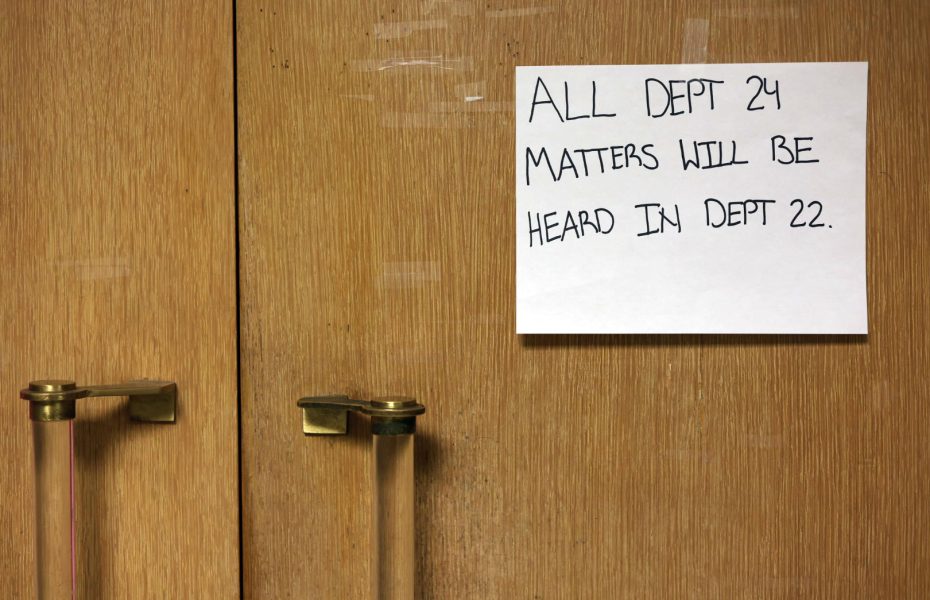
Two alternative courts that typically see heavy caseloads, drug court and behavioral health court, also remained open. But young adult court was closed, and an attorney representing a client who routinely appears for status check-ins said disruptions would be particularly impactful for those young people who benefit from the program’s structure. Another attorney said his client was supposed to start their program at young adult court today instead of getting sentenced, but could not because of the closure.
The other two floors of courtrooms at the Hall of Justice were quieter than usual. Jurors were not waiting on the hallway benches. Rather, each juror check-in kiosk was covered with a sign that read “CLOSED.” Several defense attorneys said cases had been pushed. They tried to notify clients not to come in, but said it was hard to get in touch on short notice.
Sheriff’s deputies at the entrance explained in Spanish and English that there would be case disruptions. Clients have been directed to put their paperwork in dropboxes rather than file them with clerks.
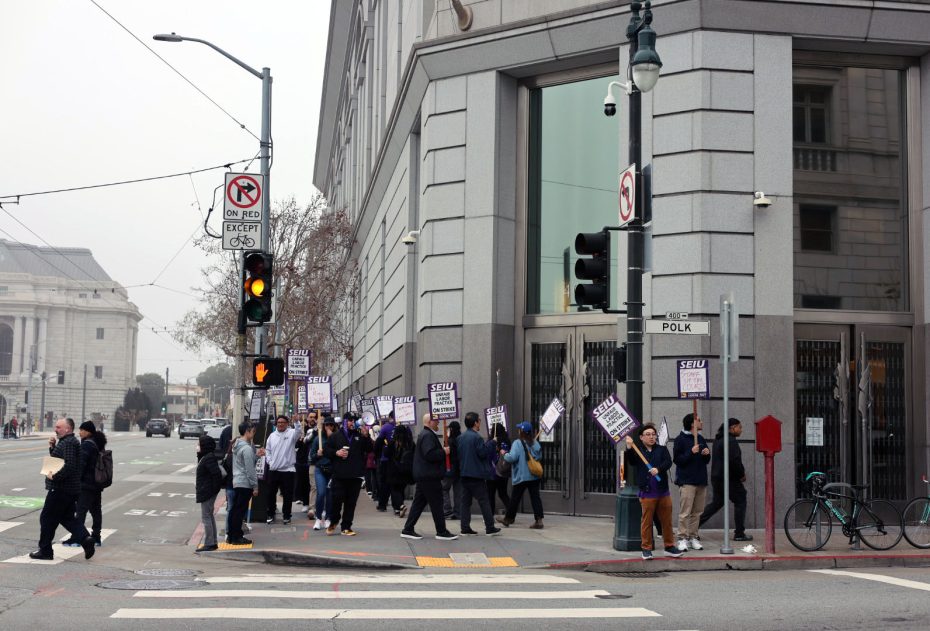
Meanwhile, the civil courthouse at 400 McAllister St. was a “ghost town,” a paralegal said. “I’ve never seen anything like it.”
Kimberly Septein, the SEIU 1021 chapter president, said the clerks don’t just want to be paid more — they feel “overworked and underutilized.” Higher caseloads have followed San Francisco police and District Attorney Brooke Jenkins focusing on low-level crime enforcement, and the court warned in October that it would begin releasing suspects who do not have access to a lawyer.
At 10 a.m., Herbert said management still hadn’t reached out. “They think they’ll be able to handle it [without us],” she said. “They literally can’t.” Septein said the clerks, who have been in negotiations since September, would strike as long as they had to.