
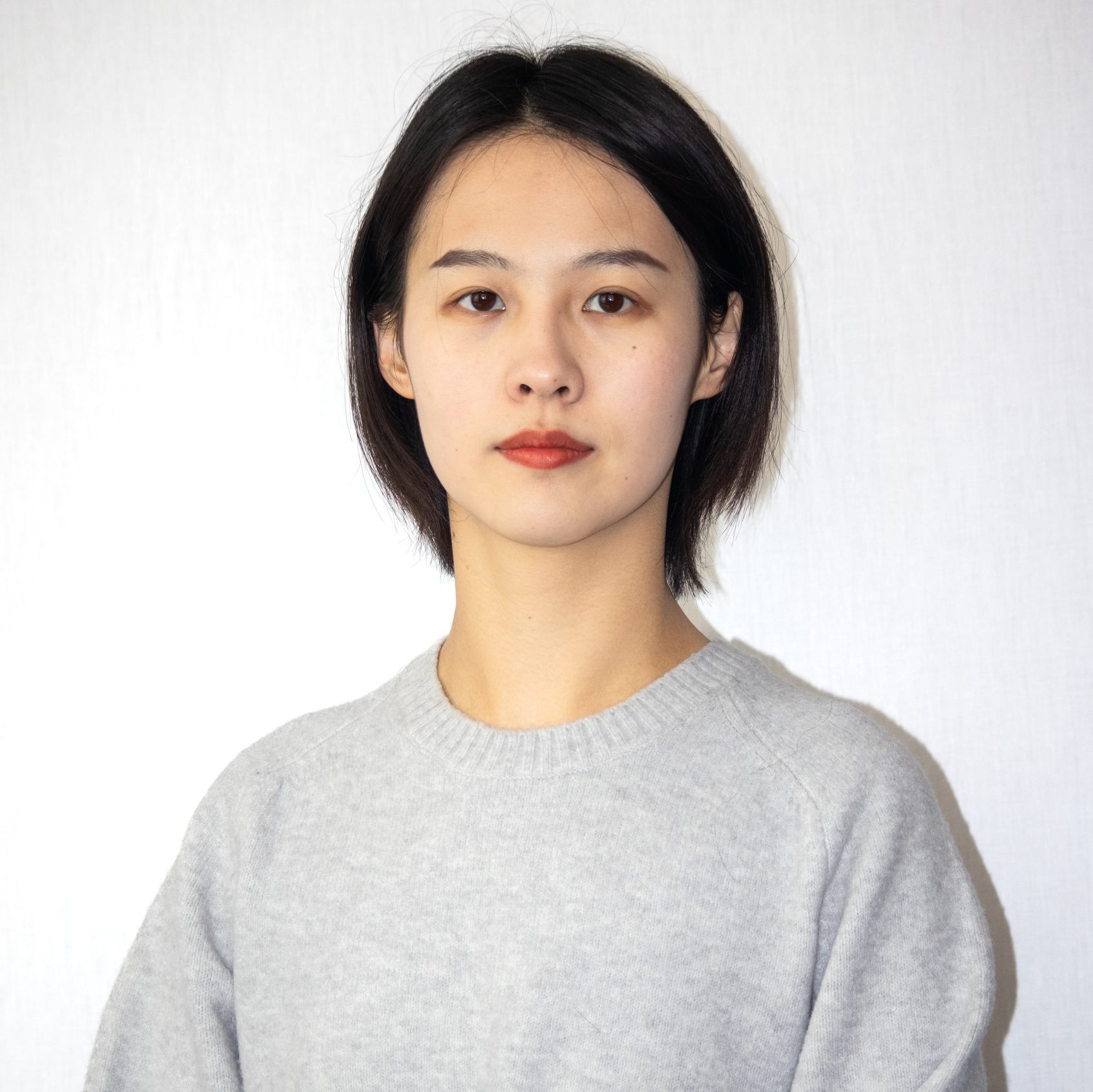


To prevail in her San Francisco congressional race, Connie Chan, the only major Chinese American candidate, must win over a good number of the 73,000 or so Chinese American voters in California’s 11th congressional district — about 16 percent of the electorate.
A major factor for them is an island nearly 7,000 miles away: Taiwan.
China-Taiwan relations are tricky for any politician, as Rep. Alexandrio Ocasio-Cortez learned this week when her answers on the issue were microscopically scrutinized around the world.
For Chan, the consequences are local. To be too supportive of an assertive U.S. policy that encourages arms sales to Taiwan would be seen by many Chinese voters here as provoking conflict.
The District 1 supervisor seems to have passed that test earlier this month when she met with three San Francisco Chinese leaders known for having a strong following in the local community: Henry Der, the former California deputy superintendent of public instruction, and retired judges Lillian Sing and Julie Tang.
The meeting allowed Der, Sing and Tang to learn the specifics of Chan’s views — and, in turn, serve as conduits for potentially thousands of local voters for whom this issue is paramount.
The local Chinese community is far from monolithic, but the majority rank maintaining peace with China around Taiwan as a top priority, said Tang.
For many, Speaker Emerita Nancy Pelosi’s 2022 visit to Taiwan looms large — and is a cautionary tale. The junket was the highest-profile U.S. visit to the island in 25 years, and greatly aggravated the mainland Chinese government. It subsequently encircled the island with unprecedented military exercises.
Der called Pelosi’s trip provocative. Many people in Taiwan “are happy with the status quo. In other words, it’s ambiguous,” said Der, who opposes authoritarian governments and doesn’t often disagree with Pelosi. Still, he and the retired judges blamed the visit for riling up China.
He, like many in the Asian community here, doesn’t want a war or poor relations with China. Many here prize travel to China and Taiwan, and believe business and commerce between the two are vital. “We don’t need these military exercises by either side,” he said.
Tang, for her part, was even more alarmed about Pelosi’s visit. “She almost provoked a Third World War,” she said.
Peace, and an internal matter
Chan, the three elders recalled after their Feb. 9 meeting, took a stance that stressed supporting the One-China Policy, which has been an official U.S. policy since the 1970s and remains the mainstream view in Congress.
The policy, which is deliberately vague, recognizes the People’s Republic of China as the sole legal government of China while allowing the United States to maintain unofficial relations with Taiwan.
Second, Chan stressed that she is for peace. When the three leaders asked her to elaborate, Der recalled Chan telling them that there should be direct dialogue between China and Taiwan — without the U.S. government dictating the terms and conditions.
This is a notable distinction. Der, Sing and Tang walked away from their meeting with Chan believing her desired policy would be for China-Taiwan relations to be an internal matter between the two governments. This aligns with Beijing’s wishes, but differs from the congressional mainstream.
It also differs from the views of Pelosi and the four current Chinese members of Congress. All support the United States playing a role in China-Taiwan relations, and view arms sales to Taiwan as a means of keeping China in check. Pelosi has been particularly critical of the Chinese government and its human rights record.
When asked about China policies and her meeting with Der, Sing and Tang, Chan’s campaign released a statement noting that “her focus will be on best representing the interests and priorities of San Francisco and she will always work for peaceful resolution of conflict.”
While still heavily Chinese, California’s 11th congressional district has fewer Chinese voters than San Francisco writ large, as it excludes Chinese American enclaves such as the Excelsior, Visitation Valley and Portola. Still, it includes more than 73,000 Chinese voters, according to political consultant David Ho’s rough estimate, accounting for around 16 percent of its 470,000 voters.
Der, Sing and Tang applauded Chan’s stance, saying it reflected a non-confrontational attitude espoused by many within the Chinese American community. All three subsequently said they would endorse her candidacy.
“What I got out of the conversation,” said Der, “is she doesn’t want the United States to dictate what that dialogue should be between Taiwan and China.”
Chan, for her part, said in a statement that “the U.S. should be an agent for peace and
stability, and that will be her guiding principle on foreign policy.”
Political minefield
In a way, China-related issues are, for Chan, similar to what Gaza has been for fellow candidate Sen. Scott Wiener — a political minefield in which the candidate must balance the expectations of core supporters while ensuring their positions withstand broader, even national and international scrutiny.
After receiving significant pushback for declining to answer a question about whether or not Israel is committing genocide in Gaza, Wiener — who is Jewish and has been a supporter of Israel but a critic of its present leadership — within days shifted to saying, yes, he did think Israel was committing genocide.
Chan has a personal relationship to the issue. Chan, 47, emigrated to the United States at age 13. She was born in Hong Kong and moved to Taiwan at age five.
That is important to Der, Sing, and Tang, who all endorsed Chan in her two successful supervisorial campaigns and will do so again now.
Tang said that, even if Chan did not explicitly say so, her years in Hong Kong, Taiwan and San Francisco’s Chinese community give her “a sense of where the community comes from.”
“She will bring to the table ideas and propositions that are informed by her lived experience,” said Der. “With [peace] as a core issue, all the others will come out okay,” Sing added, saying that she was impressed by Chan’s sincerity.
While a new member of Congress would have limited sway over foreign policy, the fact that Chan is an immigrant from San Francisco means that “people will automatically look to her as to where the Chinese community stands on the China, Taiwan, Hong Kong issues,” said Der.
And, at least for Der, it could help bring down the temperature.
The “‘China is an enemy of the U.S.’ rhetoric by both Democrats and Republicans is very dangerous toward the welfare of Chinese Americans,” he said. “It impacts us.”