

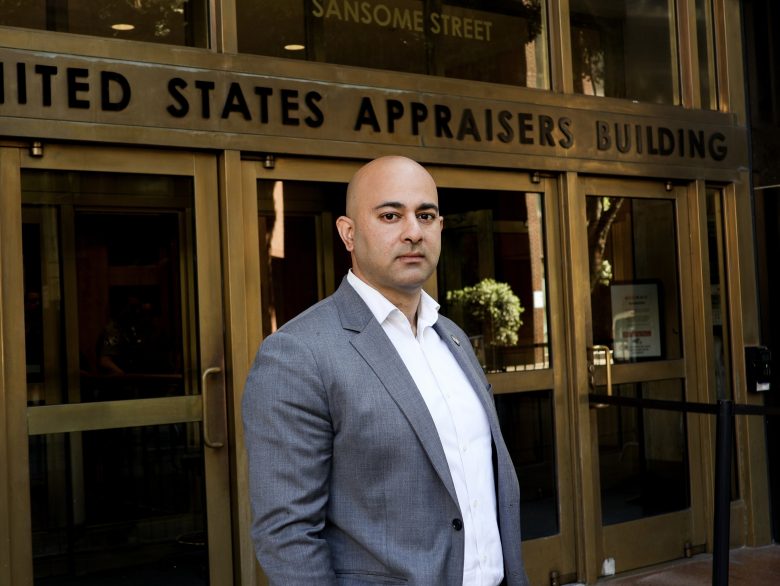

District 5 Supervisor Bilal Mahmood is calling for more transparency at the San Francisco Mayor’s Office of Housing after he discovered that the department had “lost track” of about $5 million sitting in an account waiting to be used for an affordable housing project in the Tenderloin.
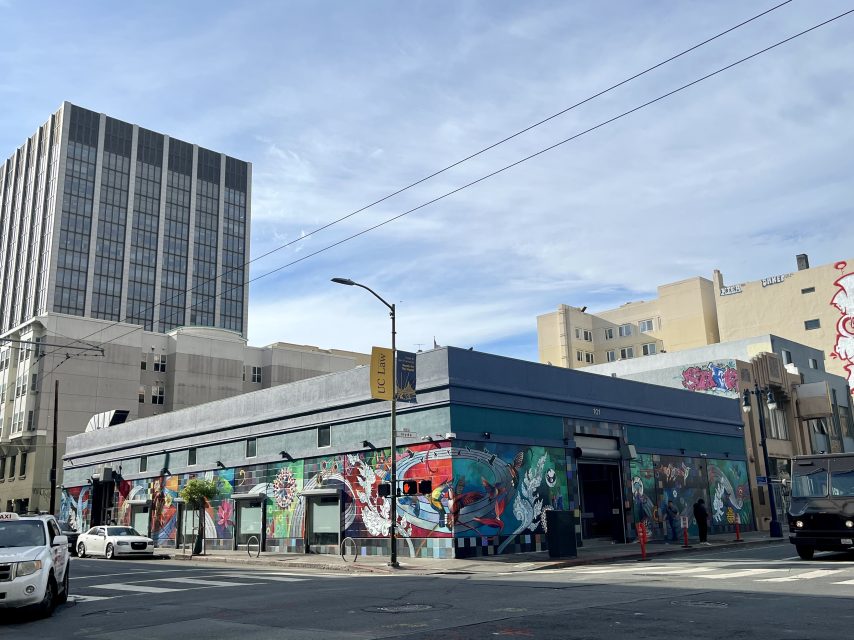
The city approved a development project with 85 affordable housing units at 101 Hyde St., a former post office, in 2015. The building has been in the city’s possession for nearly as long: Shorenstein Properties bought the site in 2016, and gave it to the city that year in a deal to fulfill its affordability requirements for a separate project.
Part of that deal, records show, was a $5 million donation to convert the space into housing. Under the terms of the agreement, the San Francisco Foundation, a private charity, would hold onto that money until it was needed.
But the city “lost track of it,” Mahmood said this month, after Mission Local reported the project’s delay and the supervisor asked for more information from the housing office. “They seemed to have a vague recollection of this deal, but they didn’t know how much money it was, they didn’t know … the specifics of the development agreement in and of itself.”
The San Francisco Foundation’s spokesperson, Ling Woo Liu, said the foundation is a public charity that manages charitable contributions, and carefully tracks them. The foundation has nearly $2 billion in assets according to its website, including the $5 million designated for 101 Hyde. Liu was unaware of any confusion.
On the city’s side, however, it seems there was much confusion. Mahmood said it required a couple of months of back-and-forth with the housing office to figure out who held the funds and how much there were.
He ultimately refused to support extending a lease at the site unless the city committed to making progress on the affordable housing project.
Mahmood said he intends to call a hearing with the housing office about existing monies for affordable housing in the city.
“The red flag that that raises for us is: What other agreements are in place across the city, what other pots of money are earmarked … that we are not making progress on?” he said.
Anne Stanley of the mayor’s housing office told Mission Local in October that, “given limited resources and the competitive nature of affordable housing finance, we must be strategic and responsible stewards of public funds.”
The office did not plan to move forward with the housing project because other projects took priority amid a tight funding climate, Stanley said. The Hyde Street location was a low priority for state funds and had a successful interim use: La Cocina, an incubator kitchen program, had been operating there since 2021.
In December, the mayor’s housing office sought to extend La Cocina’s lease through 2031. Mahmood ultimately prevailed on them to prioritize the housing project and seek a developer within the next two years.
Former Supervisor Jane Kim, who oversaw the Tenderloin during the time of the deal with Shorenstein, said it was a “massive oversight” that the earmarked funds were never spent on the project.
“It was an important reminder for all of us to make sure that we are keeping track of commitments that we’ve made to the neighborhood and victories that we’ve won for the neighborhood,” Kim said.
The housing office for its part, denied the accusation.
“There was never any confusion on the part of MOHCD regarding the funding donated by Shorenstein Properties and held by the San Francisco Foundation,” Audrey Abadilla Rivera, another department spokesperson, wrote in a statement. “The department has been fully aware of these funds throughout the process.”
Mahmood is moving forward with his call for transparency, which he says is needed in a tough funding climate for affordable housing projects.
“Step one is knowing what money we have available,” Mahmood said. “We’re finding some of these examples … [where] we can theoretically make progress on affordable housing goals because there is apparently some money available, but we just don’t have transparency on it.”
“[Mahmood] ultimately refused to support extending a lease at the site unless the city committed to making progress on the affordable housing project.”
It’s fantastic that he played hardball around the temporary activation to ensure the promised affordable housing got built. AND I would like to see him do the same for the Parcel K affordable housing in Hayes Valley, currently taken up by a luxury outdoor gym, fancy coffee/ice cream places, and occasional art shows. Let’s not let “temporary” activations become a permanent blocker on affordable housing *anywhere*, especially in the rich parts of Mahmood’s district.
This is what happens when the MoH “handles” hundreds of millions of dollars per year without any commission oversight.
You know I’m not a big fan of “it’s committees all the way down”, but 5 million is a large enough part of MoH’s budget that there is an email chain about what was done with the money, and it’s interesting they couldn’t share that with a Supervisor….
It would be nice to find out who is keeping track of the fire victims. We seem to lose quite a few housing units each year to fires. We are trying to find out how they are handled once the Red Cross comes in a sets up shop for a week to help the victims. What happened next? Do they hand in reports to someone in city government to track who needs housing due to the fires and what the responsibility is for the landlords and city agencies? If anyone knows please respond.
Speaking of fire victims, I would love to hear what is going on with the site of ML’s former offices at Mission & 22nd. That plot of land has been vacant for over 10 years now, which is an absolute disgrace. The city should use eminent domain to take that land away from greedy slumlord Hawk Lou and finally build some affordable housing there.
I am not aware that the city has any legal or financial obligation to re-house those tenants or owner-occupiers displaced by fire.
And it is certainly not any responsibility of the landlord of a building, unless they caused the fire through negligence or malice. Nor will a landlord’s fire insurance cover such costs.
Tenants should buy and maintain insurance for the costs of any such incident, although few do. Tenants do have a right of first refusal to reoccupy their former home after the building is rebuilt or made habitable again. But since that take several years, few actually do that. Rather they move on.
SF Housing Authority is a joke. It’s who you know in the office of the SF Housing Authority in order to get a place. I’ve been on the public housing wait list for over 30 years and I haven’t heard anything from the SF Housing Authority. What kind of BS is this.