

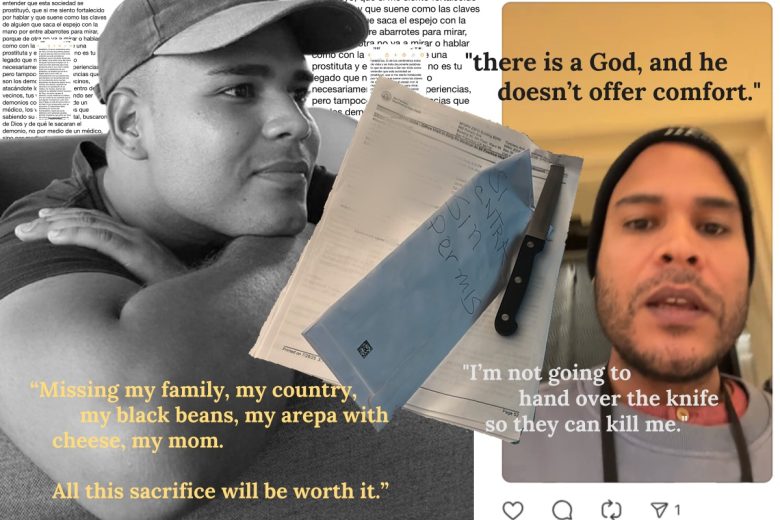
Multiple social media accounts for Wilfredo Tortolero Arriechi, the 35-year-old man accused of stabbing a San Francisco General Hospital social worker to death in early December, show an apparent mental unraveling in the days and weeks before the killing.
Tortolero Arriechi’s posts before he allegedly stabbed social worker Alberto Rangel on Dec. 4 included incoherent ramblings about sexuality, depression, and missing his family in Venezuela.
An October video posted on Instagram Threads shows Tortolero Arriechi rehearsing speaking with his doctor — his alleged target the day he killed Rangel — about changing medications.
Hospital workers and prosecutors at the District Attorney’s Office believe that Tortolero Arriechi was seeking to attack his doctor at Ward 86, the HIV clinic at San Francisco General Hospital, when Rangel intercepted him.
Tortolero Arriechi repeatedly stabbed Rangel, who died two days later.
While Mission Local has not been able to speak with Tortolero Arriechi about the social media accounts, posts reviewed by Mission Local show the same man who has appeared this month at court hearings, with his full name, birthdate, and matching medical information, including his treatment at Ward 86.
Tortolero Arriechi has been charged with murder. His public defender, Sylvia Nguyen, told Mission Local in an interview earlier this month that he was “suffering a mental-health crisis.”
For weeks after the incident, Tortolero Arriechi was held in the jail-operated psychiatric ward, unable to appear in court.
Nguyen did not say what caused the crisis, but Tortolero Arriechi’s posts offer a glimpse into his mental state in the months leading up to the afternoon of Dec. 4. In a video posted Oct. 28, he rehearsed the same conversation with his doctor three times.
“If you can’t give me the pill, then I’m going to have to fire you as my doctor and find another one,” Tortolero Arriechi says into the camera in the video, less than six weeks before the stabbing. “And that will be very sad.”
After a brief pause, Tortolero Arriechi begins another take: “Hola, doctor …”
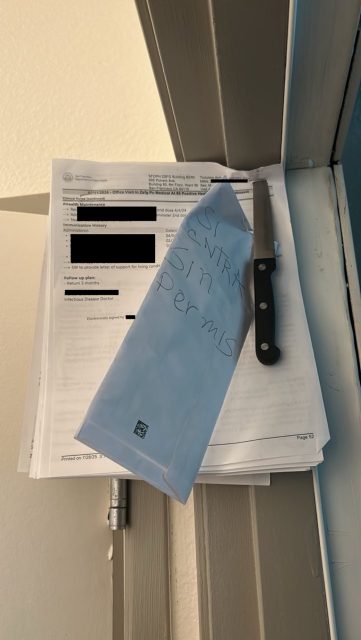
Two days later, on Oct. 30, he posted on his Threads account a photo of his Ward 86 clinic visit summary, printed in July, with a knife piercing through it and into a doorframe. The name of the doctor he was allegedly targeting was on the document.
“The knife is to kill the door,” the post read. “It’s always open.”
Tortolero Arriechi’s doctor reported threatening behavior in the weeks prior to the incident.
In a document obtained by Mission Local summarizing a November security meeting between public health officials, the sheriff’s office, and private contractors, Tortolero Arriechi was “under investigation” following alleged aggressive outbursts toward the Ward 86 doctor.
On the day of the stabbing, which was first reported by Mission Local, a sheriff’s deputy was sent to the clinic on the sixth floor to provide added security at the request of the hospital’s director of security.
According to multiple witnesses, the deputy was not monitoring the entrance to the clinic, and was not nearby when Tortolero Arriechi arrived. The sheriff’s department has backed up its deputy’s actions, stating he was tasked with guarding the doctor, not seeking out Tortolero Arriechi.
The day before the stabbing, on Dec. 3, Tortolero Arriechi posted several cryptic messages on Threads.
“It turns out that now Catholics have demons inside them,” Tortolero Arriechi said, wearing a HenHouse Brewing beanie and smiling into the camera before his face turned grave. “So when you’re Catholic but you don’t have demons, it’s complicated.”
In another video from the same day, Tortolero Arriechi spoke to the camera in the dark: “You know, so they can see it after my death. Because that’s how we artists are.”
Those were the last posts on Tortolero Arriechi’s Threads account before he was arrested.
For years before the stabbing, however, Tortolero Arriechi’s posts showed an extremely positive, family-oriented young man who was dedicated to his work and friends. He posted about his hardships living in Venezuela and leaving his family to work in Colombia. Nevertheless, he seemed motivated to succeed.
‘All this sacrifice will be worth it‘
Mission Local reviewed Tortolero Arriechi’s posts dating back to 2015.
Starting in his mid-20s, Tortolero Arriechi chronicled his life in great detail. He posted selfies in early 2015 amid a massive recession in Venezuela, grumbling to his Instagram followers about standing in line to buy milk, and losing electricity in Maracay, his hometown near the Caribbean coast.
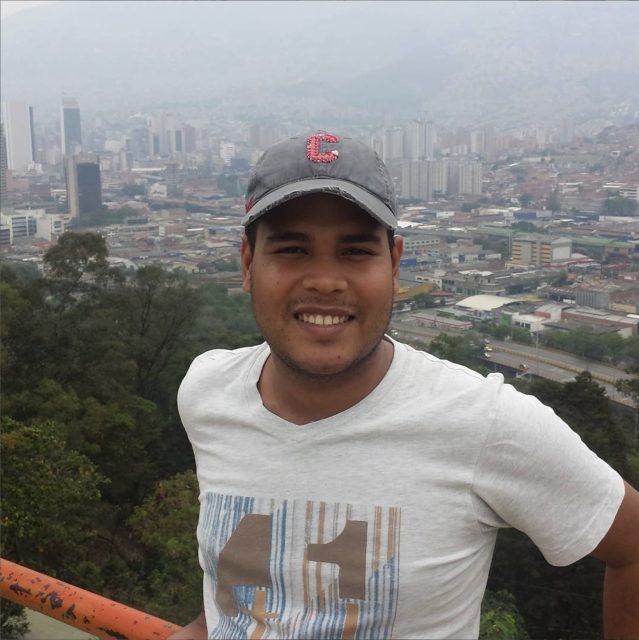
He shared photos of himself with his friends and family, and memes about staying positive through life’s obstacles. His friends, fellow Venezuelans — many of them now in different parts of the world — encouraged him or commiserated about missing home.
“It’s the best feeling to know that you overcame a crisis,” Tortolero Arriechi wrote in a comment to a friend in the months in 2015 before he left Maracay.
By August 2015, Tortolero Arriechi had crossed the border and was living in Cucuta, Colombia. His posts indicate that, aside from some visits home, he remained in Colombia for about seven years.
“Missing my family, my country, my black beans, my arepa with cheese, my mom,” Tortolero Arriechi wrote from Colombia at the end of his first month away from home. “All this sacrifice will be worth it.”
A few weeks later, he took his first airline flight, to Medellín, later posting that he was “a little anxious” about his ability to stay in the country.
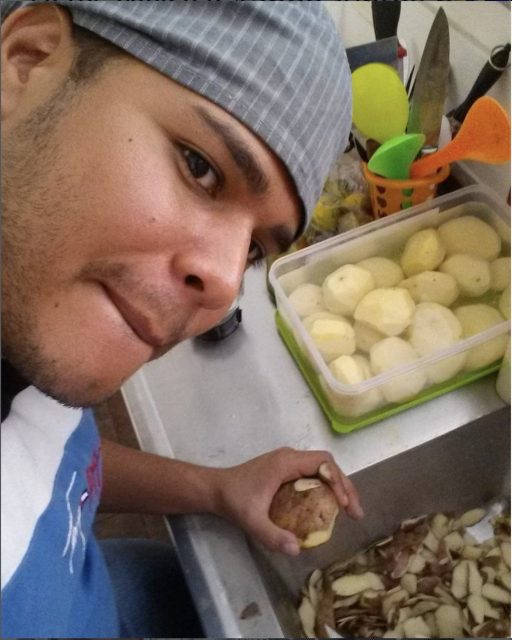
For the next few years in Medellín, and later in Bogotá, Tortolero Arriechi worked in restaurants — work that was an apparent source of pride.
He posted selfies wearing an apron and a cook’s scarf, and wrote on his social media biography: “I’m working hard for me and mine.” On another profile, his biography read: “I am a reasonable and hardworking person.”
He reflected on the tough situation back home, and said he prayed to God that “things would improve in Venezuela.”
But otherwise, he seemed to enjoy life in Colombia, posting photos of himself sightseeing with friends, attending sporting events, even giving out aguapanela and bread to those living in the streets of Medellín.
‘The responsibility of giving or taking a life’
At some point, things changed for Tortolero Arriechi. It is unclear exactly when he arrived in the United States, but in July 2025, he posted, purportedly from San Francisco, that he had been in the country for nearly two years. He left Venezuela, he wrote, seeking “a better place.”
“I returned to Venezuela only to find that it wasn’t my place anymore, saw injustice, saw gay friends die imprisoned,” he wrote. “Far from family, far from my country, not always treated like a human being, but that’s how it is here.”
His cheerful chronicling of life was replaced with screenshots of lengthy, disconnected diatribes written in his phone.
“They are killing me, they are grabbing me,” he wrote on Nov. 28, 2025, less than a week before the stabbing. “I’m not going to hand over the knife so they can kill me.”
That same day, he wrote: “I also want to confess to you that I have been thinking a lot on the topic of death, killing and dying, the responsibility of giving or taking a life.”
But, even on the eve of the stabbing, Tortolero Arriechi was thinking of his family. He posted a comment on a video apparently addressed to his mother, referring to “the explosion,” “the revolution,” and communism.
Then, he lamented: “Imagine, you can’t even go visit your sister … there is a God, and he doesn’t offer comfort.”
Crime is trauma, and the county offers different services, which can be found here. Victims of violent crime can also contact the Trauma Recovery Center at UCSF.
Sounds like he was succumbing to paranoid schizophrenia, which generally has a later onset than other forms of mental illness. This is all very sad and tragic for all involved, including him.
It is very sad indeed. He sounds like he really tried despite the hardship and even racism when he got here. And yes, think if he had gotten the mental health treatment he needed and on time. He tried. To come here alone without a community to be with makes it harder to survive the hardships. So very sad. And for the social worker who tried to help. So important to provide services that actually are supported and supportive so this kind of tragedy is prevented.
Damn! It’s just sad all around.
Imagine if he’d been getting the mental health treatment he needed.
Imagine if he wasn’t in the country.
How did a Venezuelan national end up living in the United States for multiple years, consuming expensive public services and killing our citizens?
As to how someone from another country ended up in this one, I would guess an airplane had something to do with it. They’re quite common, actually. If you can focus on the sky without being distract by chemtrails for long enough, you might even see one. I guess this all could have been avoided if only your Lord and Savior had started his second coup attempt sooner – too bad. Thank you for your attention to this matter!
Surely someone who is aware of the existence of airplanes is familiar with things like “society”, “immigration laws”, and “lawful residents.” It’s carrying water for psycho killers overstaying their welcome that gets people like the current President in charge with the popular vote and unprecedented support by border state Latinos.