

On Friday afternoon, a pair of volunteers were pulling down pastel portraits from the walls of the Tradición Peruana Cultural Center in the Mission District as nearly a dozen schoolchildren worked on crafts at a folding table nearby.
It was a snapshot of the new reality for the country’s longest-running Peruvian cultural center: It has to move out, but its work carries on.
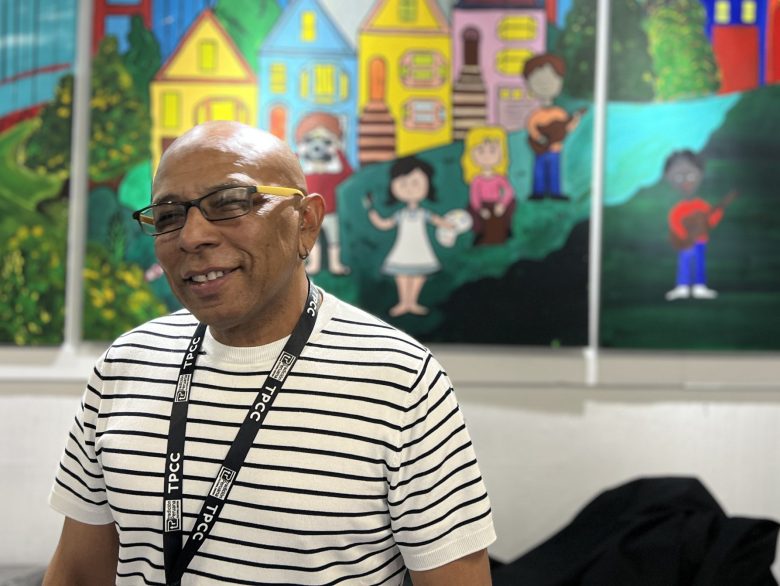
“No matter your community, no matter your age, you can be a part of TPCC,” said center director Juan De Dios Soto. He referenced neat rows of portraits hanging on the gallery wall that highlighted a diversity of people associated with the center, all posing with a cajón, the box-shaped Peruvian percussion instrument.
“The cajón is the bridge to connect with other communities,” he said.
“And he’s a living legend,” said Katie Meza, the center’s communications director, who was working nearby to take down art, in regards to Dios Soto. There are only a couple cajón players in all of the Bay Area, she said, and Dios Soto is recognized as a master.
Yet despite all the bridging and helping, dancing and drumming, the center’s last day in the space was Monday.
“It is a very complicated moment,” Dios Soto said, referring to the fact that funds have dried up for arts and cultural organizations.
The organization, headquartered at 2815 23rd St., had earlier sent out signals of financial distress, and the already expensive rent had become out of reach in a showdown with the landlord that ended up in court the day after Christmas.
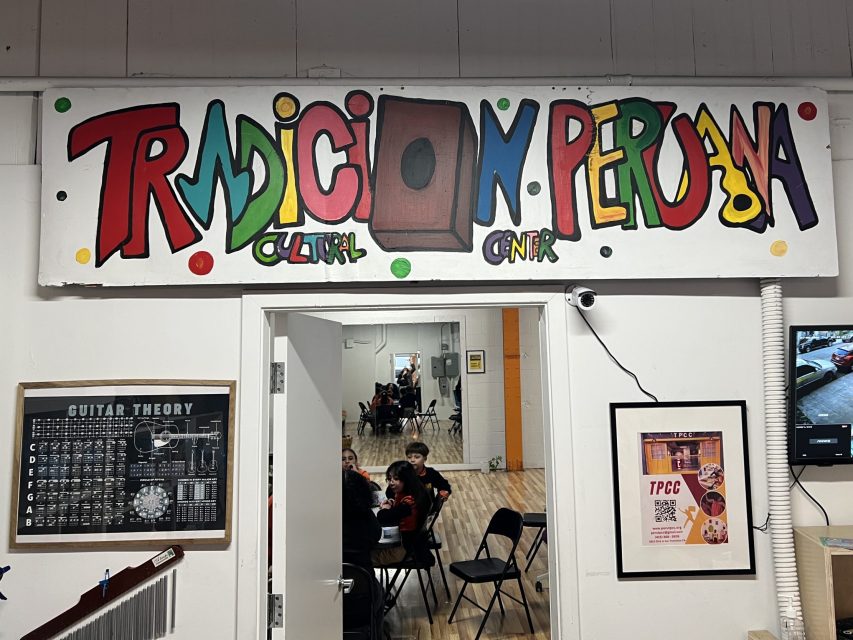
With bills on top of the $5,500 monthly rent, Dios Santo estimates it costs around $8,000 per month to keep the center open, and none of the eight staff members have been taking salaries.
“I’m worried,” he said. “Not because I’m the director, but because this is a space working with different organizations.”
Primary among those is schools. The organization partnered with six last year and hosts the Changemakers afterschool program, which integrates service learning into elementary school curriculum.
It also provides essential services, like food and medical consultations, thanks to in-house partnerships with La Colectiva and Clinica Martin Baró.
Yet what Tradición Peruana can offer on an individual, artistic level can be just as important. Growing up in Minnesota, Katie Meza didn’t know any other Latinos — and she didn’t know any other Peruvians when she moved to San Francisco 16 years ago.
“I had mostly been in white spaces, in terms of working in marketing, advertising and tech, even though I lived in the Mission for a long time,” she said.
That all changed when she saw a flyer for a Mardi Gras celebration with a dance performance by Tradición Peruana. Intrigued by the group’s name, she showed up at the parklet to see an Afro-Peruvian group of all ages brimming with energy.
The group’s leader, Lydia Soto, invited her to a dance class the next day. Meza knew she had to go.
“It was so nice to feel this incredible moment of connecting to this community without any words,” she said. “The music she was playing was music that I had grown up listening to from my parents.”
Meza couldn’t get enough of Soto’s warm, caring energy. She found herself around the center more and more, and soon, with her background in tech and marketing, she took over the organization’s Instagram account, then took a spot on its board of directors.
Today she handles communications, marketing and community outreach for the group she has been with for nearly five years.
“They are so welcoming. They have such big love,” she said of Soto and Dios Soto, who are brother and sister as well as co-founders of the organization. “It’s almost like a puppy in a way, like they don’t know evil.”
The center has played a particularly important role in the community, Meza said, given recent events.
“Specifically this year, there are so many people coming to the center for solace, with ICE raids and questions of documentation and legality and immigration,” Meza said.
“This is a safe space for them,” she said.
While Tradición Peruana will be moving on, it won’t be giving in. The organization has long been a roving one — it secured a physical space only in 2023 with the help of grant funding — and it will revert to that model until it hatches a new plan in the summer.
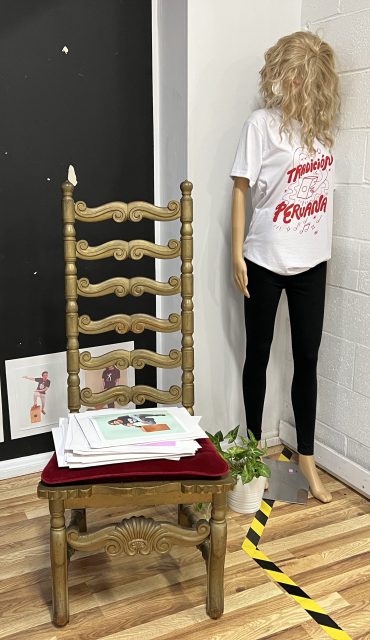
The lack of a physical space means sacrificed opportunities. The gift shop, with its hand-poured candles, artisan shirts and musical instruments — including one made from a donkey jaw — will shut down.
The cheery cafe won’t be pouring espressos from its bright-red machine or serving kids sandwiches and apple juice from its refrigerator. The music and dance across the mirrored hall has fallen silent; the art has been taken down.
But Carnaval, with the Tradición Peruana dancers in it, will continue.
Amazing how there is money to fund ridiculous L E D light installations and silly street parties (that do nothing for retail businesses that close in the evening), but nobody is stepping forward to fund this!