
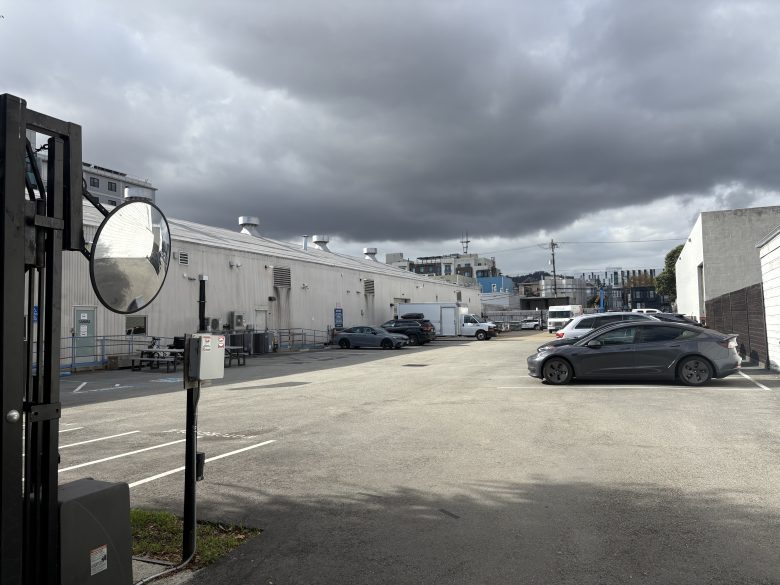

DoorDash, the delivery app company, must now ask permission from the San Francisco Planning Commission to operate drones outdoors at its drone delivery testing site in the Mission District.
The decision caps a drama that saw tech CEOs trading online barbs with District 9 Supervisor Jackie Fielder over the city’s approach to new research and development.
The Board of Supervisors unanimously passed Fielder’s legislation to enact interim zoning controls for outdoor spaces in certain PDR districts — that’s “production, distribution and repair,” which encompasses a range of uses, including auto shops, furniture wholesale and audio engineering.
The proposed legislation inspired hyperbolic online statements from tech luminaries, who characterized it as a wholesale attack on innovation.
“They are *literally trying to ban R&D and innovation in the city*,” wrote Garry Tan, the CEO of startup incubator Y Combinator. Fielder’s proposal sought to put stricter rules on certain light industrial spaces, rather than ban companies from using them, tech or otherwise.
Fielder’s response to these accusations was equally heated.
“Any company whose innovation is equated with killing jobs, injuring or killing humans and pets, and massive privacy violations, can no longer do what they want, when they want,” she wrote in a press release Tuesday.
“The public wants transparency and regulation on these companies, not a free-for-all to line the pockets of tech billionaires.”
The vote adds constraints to a determination by the city’s zoning administrator this August — shortly after DoorDash leased the space — that the company could operate drone testing at the Folsom Street site, which is zoned PDR.
While Fielder’s legislation was clearly inspired by DoorDash’s announcement that it was testing drone delivery, it applies to any company.
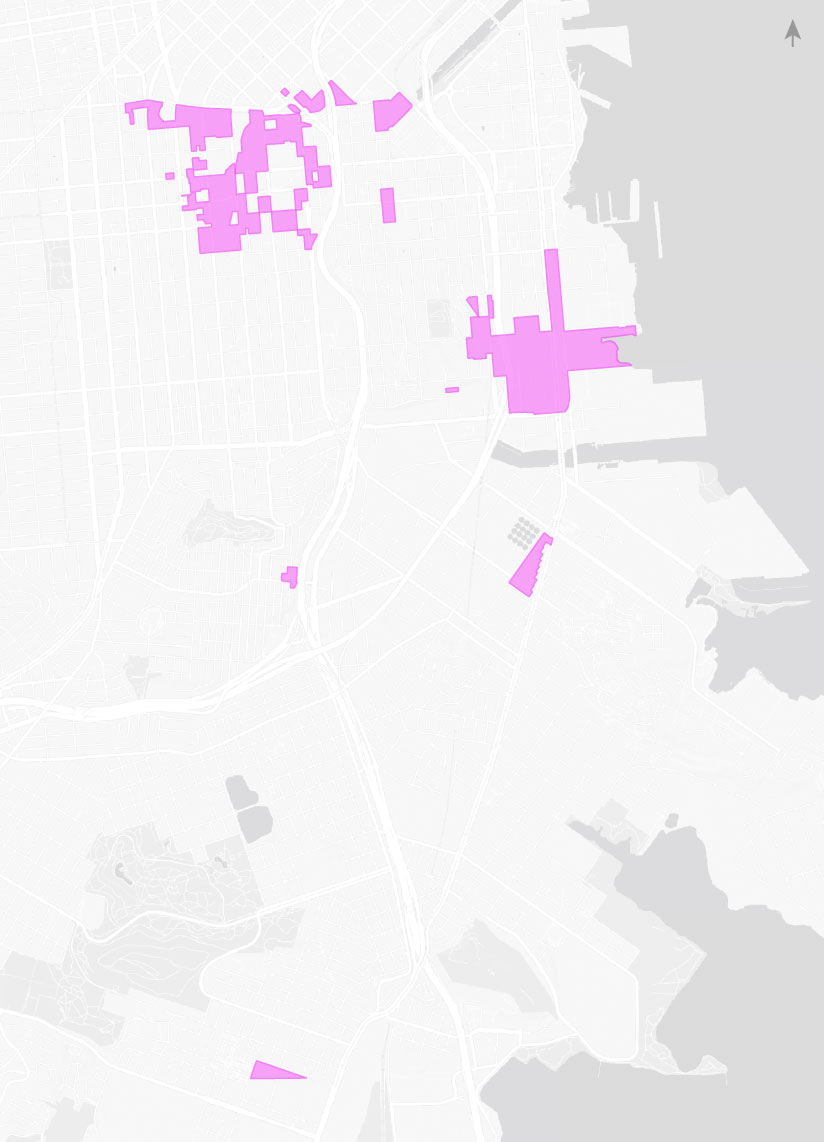
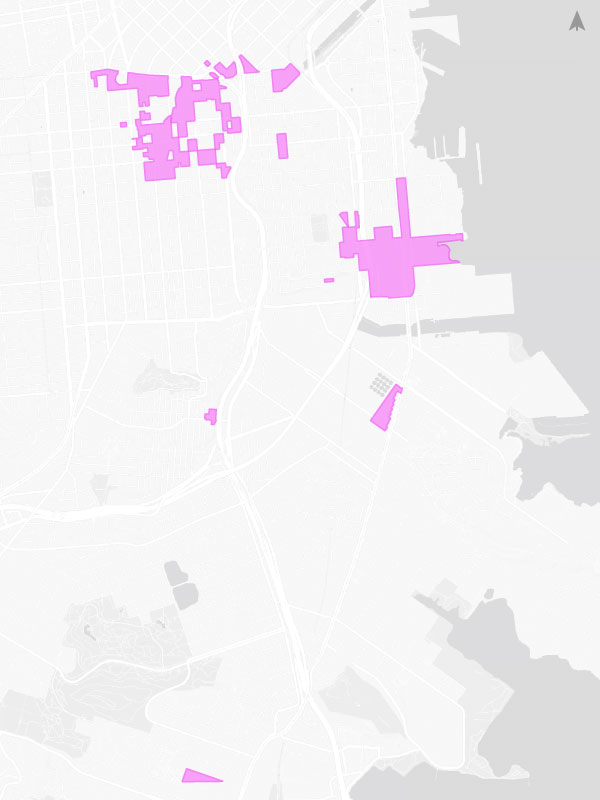
Under the new legislation, for the next 18 months, any company wishing to use an outdoor PDR space for development or engineering “laboratory use” will need to obtain conditional-use authorization from the Planning Commission. That applies to areas in the Mission District and Dogpatch, as well as some smaller pockets in SoMa and Bayview.
The zoning controls do not outright prevent companies, like DoorDash, from using those outdoor spaces for testing, but add an extra step of vetting before they can do so: Namely, acquiring that conditional-use permit.
If DoorDash decides to seek a conditional use permit, the Planning Commission will hold a public hearing to determine whether testing delivery drones outdoors at the Folsom site is “necessary or desirable” to the neighborhood, and whether it would have a negative impact on the surrounding area.
Permits like these are not uncommon in San Francisco. Typically, chain stores, nightlife venues and some restaurants have to obtain them before opening in certain parts of the city.
At Monday’s Land Use Committee meeting, around a dozen people gave public comment when the legislation was discussed. While Fielder’s legislation drew heated scrutiny online, every person who showed up to make in-person public comment spoke in support of the proposed or amended legislation.
Many expressed concerns about protecting manufacturing jobs in the northeast Mission and other PDR zones.
“Safety and privacy are shattered if unregulated delivery drones are allowed to fly around our city. Delivery drones that weigh the same amount as bowling balls hovering over San Francisco streets and neighborhoods at 50 to 100 feet high are not welcome,” said Tony Delorio, principal officer for the Teamsters Union Local 665s, during public comment.
The Teamsters Union Local 665, which represents more than 70,000 workers in the Bay Area, filed a separate appeal earlier against the zoning administrator’s decision, on the grounds that drone testing does not fall within the city’s defined “laboratory” uses.
New interim zoning controls would apply to PDR-1-G zoning districts
N
DOGPATCH
MISSION
DISTRICT
BAYVIEW
VISITACION
VALLEY
N
DOGPATCH
MISSION
DISTRICT
BAYVIEW
VISITACION
VALLEY
Data from S.F. Planning Department via S.F. Open Data. Graphic by Kelly Waldron.
DoorDash did not immediately provide a comment.
A spokesperson for the company previously said, “DoorDash is excited to continue contributing to San Francisco’s economic recovery as the global capital of innovation with our new research and development site at 1960 Folsom.”
Fielder’s legislation was, in earlier drafts, more broadly encompassing. It would have required that companies obtain a conditional use authorization for all “laboratory use” in PDR districts — not just laboratory use in outdoor spaces for development and engineering.
The version that passed today contains amendments written by Supervisor Bilal Mahmood to exclude several categories of companies that would also have been required to get conditional-use permits, including life science laboratories.
“I want to make sure with this legislation and the interim zoning controls that we do not have unintended consequences on scientific innovation,” Mahmood said during Monday’s meeting.
PDR districts were created in the Eastern Neighborhoods Plan amid a citywide effort to retain low- and middle-income residents and manufacturing jobs. Sites like Heath Ceramics’ factory and showroom at 18th and Florida streets, for example, are zoned PDR.
“It’s a legitimate question, when technology advances and the code is stuck: Are we utilizing the land the way it was meant to?” asked Supervisor Myrna Melgar, who chairs the board’s Land Use Committee.
The legislation also requests that the Planning Department conduct a study in the next six months to survey existing PDR spaces and how they are used, to see whether those uses are consistent with the city’s planning goals.
The results of that study could inform more permanent changes to the city’s regulations on PDR spaces.
DoorDash is a parasite. Ask any restaurant operator. Currently it’s insulated from people’s disgust and anger because the concrete manifestation of DoorDash is a bunch of guys on scooters trying to make a marginal living. Remove those guys from the equation and DoorDash will find out what we really think of it. Good news for electronics and robotics hobbyists.
San Francisco is not a free for all laboratory for tech billionaires to use as they wish and those of us living here are not Guinea pigs to be subjected the latest job killing effort from these companies.
“San Francisco is not a free for all laboratory for tech billionaires to use as they wish”
You’re joking, right? Apparently you haven’t lived in SF for very long, surely not for the last twenty-five years.
I bet you are fun at parties. /s
Oh jeez. This is terrible! Let’s just add a bunch of eVOTL into the airspace too and the dystopian nightmare will be complete.
PS I wish there was some policing happening of the very bad driving behavior of the Door Dash delivery drivers.
Cocaine tourism you mean. Coke has been the drug of choice for the “innovators” for the past 40 years, and still is. No one can code all day on fentanyl. Not only that, fentanyl “tourists” really have very little “disposable” income, whereas coke addicts have money to burn and support local businesses.
“I want to make sure with this legislation and the interim zoning controls, that we do not have unintended consequences on scientific innovation,” Mahmood said, during Monday’s meeting.
===
Let’s be clear — this is not scientific innovation. It’s commercial innovation.
Burrito delivery drones = cutting edge scientific innovation.
It’s class war innovation.
where is the concern of drones constantly hovering/zooming over oneself whilst in one’s own little ‘private’ backyard?
and hovering in front of (and filming into) the windows of one’s home?
and hovering and zooming over, and recording, everyone walking on the sidewalk?
this is what people want in their daily life?!!?
as if being constantly filmed by waymo and the numerous “private security” cameras wasn’t enough?!!
totalitarianism anyone ? Orwell’s 1984? hmm?!
really? this is the society you want?
Or… we don’t want that and that’s why Supervisor Fielder’s legislation passed unanimously?
Butterfly nets.
“Fielder’s response to these accusations was equally heated. “Any company whose innovation is equated with killing jobs . . ”
Surely the point of all technology, automation and (now) AI is to reduce labor costs?
There’s a difference between making workers more efficient and eliminating them entirely. This kind of efficiency just results in job loss (albeit not the greatest jobs) and the funneling of profit/income upward to the investors.
The greatest job is no job, just ask Malibu Dan Lurie
Does the area include Garry Tan’s backyard? Maybe they can innovate there or in his basement. My question is whether fries and condiments will be included with the burgers that drop from the sky.
I’d recommend this episode of “Tech won’t save us” for some reporting by an LA journo about the proliferation of delivery robots taking over public sidewalks. It’s not good.
https://podcasts.apple.com/us/podcast/tech-wont-save-us/id1507621076?i=1000733100202
BAN all drone deliveries, I don’t want to get hid on the head by a burrito or anything else.
Anyone ever heard of a Bill of Attainder? You cannot pass a law that targets one individual or 1 particular company. It’s unconstitutional. Perhaps the Board might consider attending an 8th grade civics class.
“ It’s fine by me for those companies to use office space downtown.”
Hilariously tone deaf from Fielder. Contrast her approach to tech/business with Mamdani who also claims to be Socialist but doesn’t kill the golden goose he’s found himself.
This is a misinformed comment. The Mission has among the lowest vacancy rates among office submarkets in the city, while downtown office vacancies are still over 30%. AI companies filling vacant downtown offices instead of displacing long-term viable businesses in the Mission is an across the board economic win.
Sure, let’s not have San Francisco be a center of innovation. Who needs it? We can fill the gap with fentanyl tourism!
Good point! Because being cautious with dystopian technology is exactly the same as being inhospitable to local businesses and forcing fentanyl on visiting fold-overs.