


President Donald Trump has directed federal officials to turn Alcatraz back into an active federal prison, but San Francisco’s youngsters have their own ideas for the island’s future.
Spoiler alert:They involve a lot less jail, and a lot more fun.
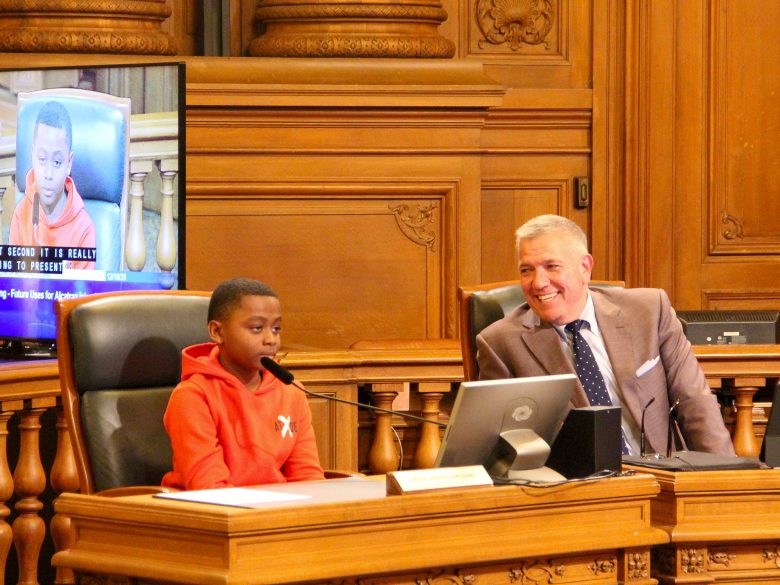
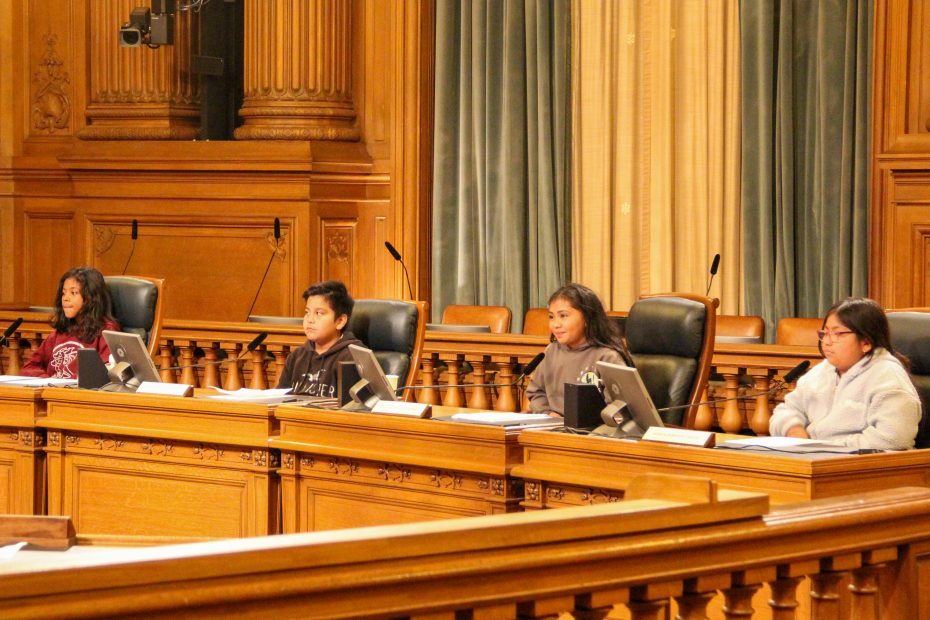
This platform was hammered out by a group of elementary-school kids in Room 250, the legislative chamber for the Board of Supervisors. It was the first time in known board history that the room had been taken over by child legislators.
While the legislation itself was non-binding and no final vote was taken, the (mock) public hearing on the future use of Alcatraz Island was, in keeping with public-records ordinances, recorded by SFGovTV, San Francisco’s official television channel.
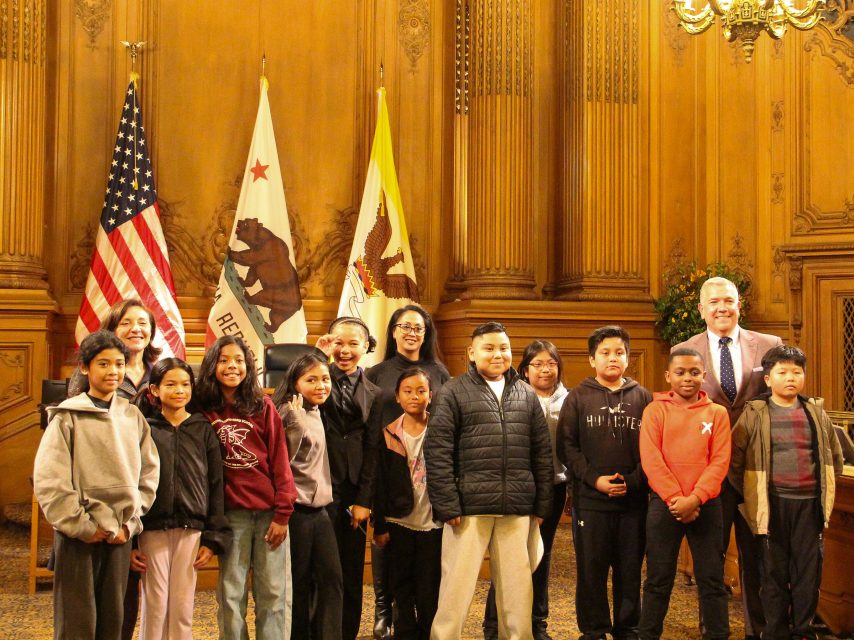
Each student had a role. Seven served as “mock supervisors,” four presented their big ideas, and the rest acted as members of the public testifying in support of different proposals.
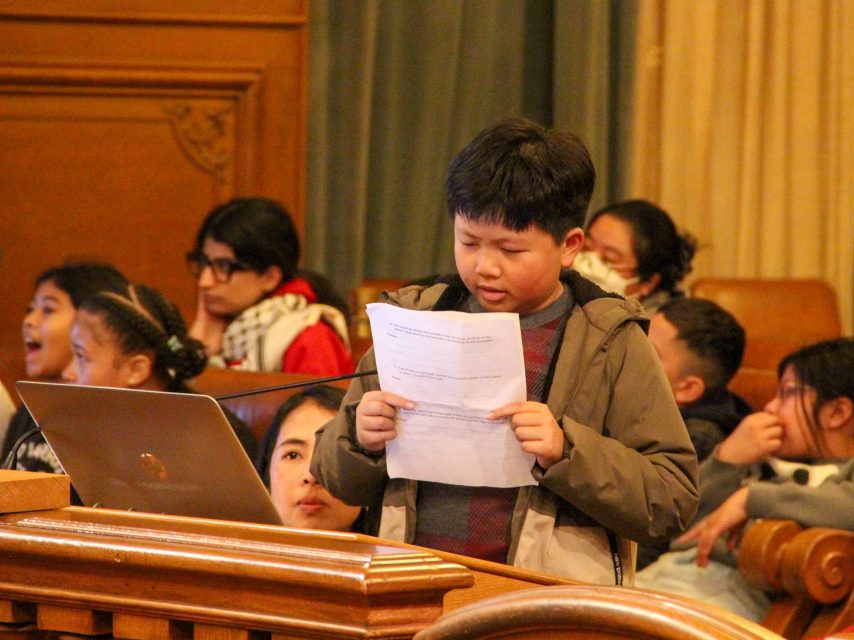
Allen Troung, a 9-year-old from Bessie Carmichael Elementary School, was first to present a proposal for Alcatraz: A sanctuary for birds.
“We need to keep them safe from vehicles that can crush them,” Truong said. “The birds deserve to have their babies in peace.”
Another advantage to turning over the island to the birds, Troung added, is that “we won’t need money from the government.”
At the end of this proposal, the budget-conscious Truong directed those in attendance to “tell the mayor, or the person in charge.”
Myrna Melgar, supervisor for District 7, cheered on Truong’s presentation. Melgar was one of two full-sized district supervisors participating in the hearing (the other, District 6 Supervisor Matt Dorsey, counts Alcatraz as part of his district). The two adults sat among seven “mini-supervisors,” each with their last name printed on a desk plaque.
That afternoon, Melgar, Dorsey and staffers from the board clerk’s office coached the students through the mechanics of a real meeting: How to press the right buttons to join the speaker queue, how long public comment lasts, and how to stay on after presenting to answer supervisors’ questions.
The kids, third- to fifth-graders from Tenderloin Community School, Bessie Carmichael Elementary and Redding Elementary School, are all with 826 Valencia, a writing and publishing program for youth from underserved communities in San Francisco.
“Our city animal is the parrot. What other birds do you think need protection?” Melgar asked Troung.
Troung pondered for about half a minute and finally answered: “Pigeons, I would say.”
Heily Zelaya-Zapata, a 10-year-old from Tenderloin Community School, drew huge interest with her proposal to turn Alcatraz into a big playground.
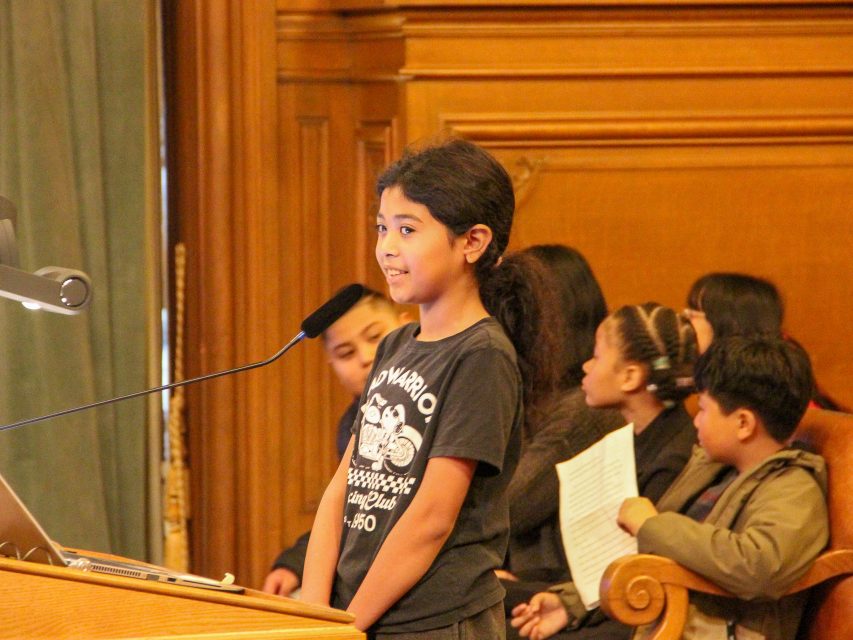
A scorching nine-question lighting round followed, and Zelaya-Zapata handled every single one like a pro.
What play structure will be there? Zelaya-Zapata will survey local schools to assess the community’s needs. Would a park on a rocky island surrounded by pounding surf be safe for small children? Zelaya-Zapata promised to add fences.
Would the playground cover the whole island? Half hiking paths, half play areas. Will there be a bridge to get there? Sure, why not?
How soon can the bridge and playground be completed? Zelaya-Zapata said that she wasn’t a construction expert, but felt confident that, given six months to two years, she can figure it out.
Ten-year-old Aerin Kinard, also from Bessie Carmichael Elementary, proposed turning Alcatraz into a sanctuary for endangered animals. Critics might call it silly, Kinard said, “but it would actually help the ecosystem.”
Kinard came ready with a plan: Small groups of (human) visitors — “maybe 50 max” — so animals don’t get overwhelmed. Start with herbivores, then add a few predators so they can hunt without wiping the others out.
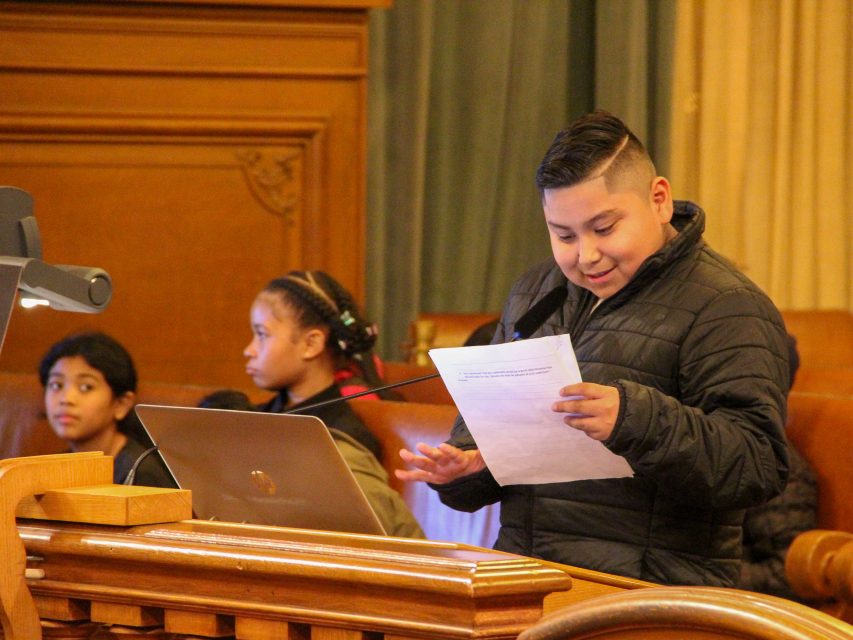
Dylan Can Bojorquez, a 10-year-old, proposed a water park. “There’s no water parks in S.F. because they’re, like, two hours away,” Bojorquez said. “When it’s a hot day, you’re probably going to need to cool off, so we need a water park.”
This water park, Bojorquez continued, would be a model of good governance. No littering is a given, according to Bojorquez.
“If you’re a little kid, and if you try to sneak into a water slide, we will give you three chances,” Bojorquez said. “And if you don’t listen, we will have to tell your parents.”
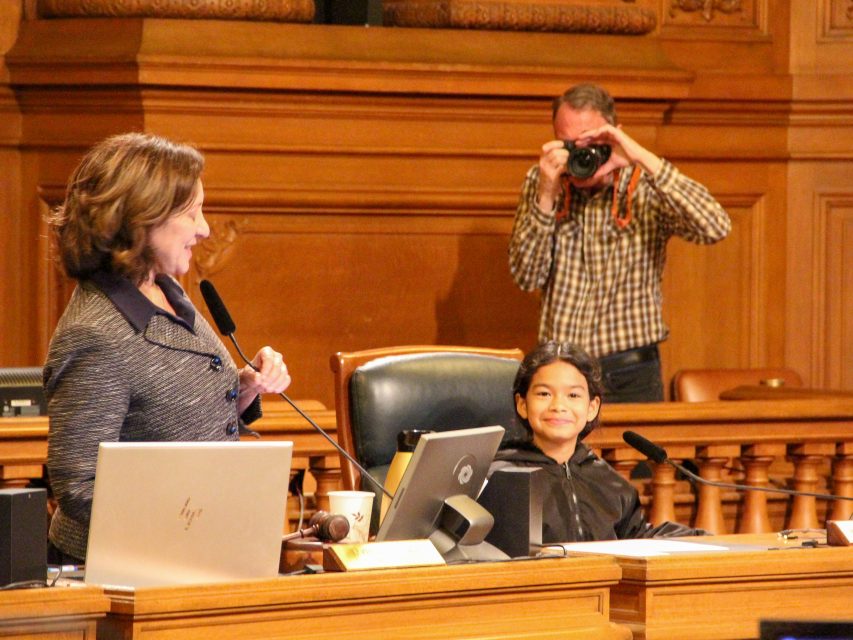
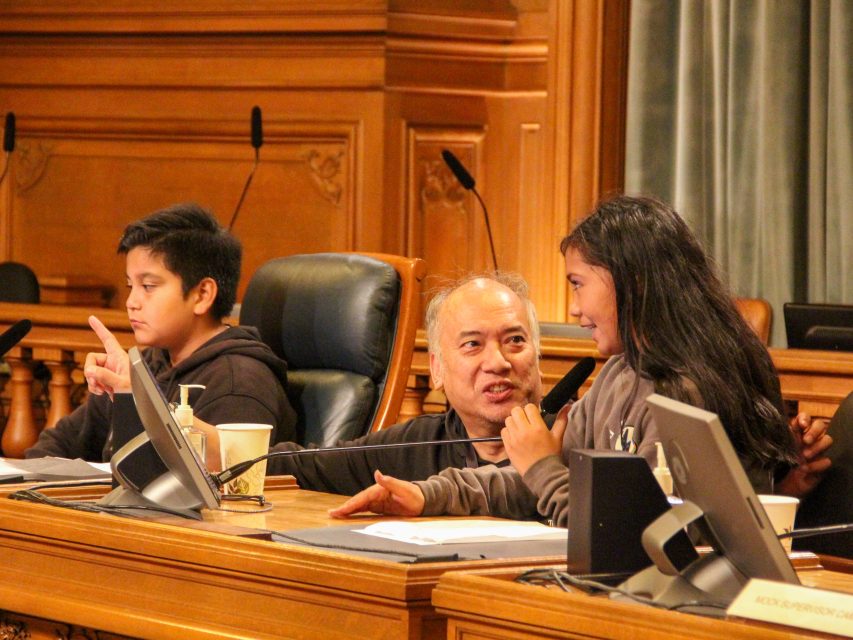
In the end, there was no dramatic vote. The hearing wrapped up with the proposals officially filed and archived. Melgar applauded the kids’ creativity and compassion.
“You care about animals, care about birds, you care about fun in water and taking care of our oceans,” Melgar said. “And that is really wonderful, because you will grow up and do really amazing things.”
De’Mari Dunn, 10, stepped up to salute his fellow presenters: “Can I give a shout out to everyone that presented, because it’s very scary to go up there and have people watch you.” The crowd applauded.
And Dorsey summed it up. “I will say, I’m glad I don’t have to make a choice which one would pick,” Dorsey said. “But I can confidently say that all of these are better ideas than what we have in the Trump administration right now.”
The kids got it right already. Alcatraz is an official bird sanctuary! A lot of the island is off-limits to the public most of the year. Numerous bird species nest on the island. The gardens on the north side and around the prison are actually very beautiful. The island’s real importance isn’t the prion, but the history of the history of the occupation of the island from 1969 to 71, after it was decommissioned as a prison. A water park sounds cool, but unfortunately there is no sewage or water lines to the island. Everything has to be brought in by boat. Still, it beats the heck out of the delusion that it could ever be a prison again, thank God the president apparently doesn’t know there were serious plans to turn it into a casino.
The kids at Bessie Carmichael school got it right – time to make it a wildlife sanctuary. Let’s clear the negative ruins of the past off and restore that beautiful island. Local indigenous tribes can steward the place.