

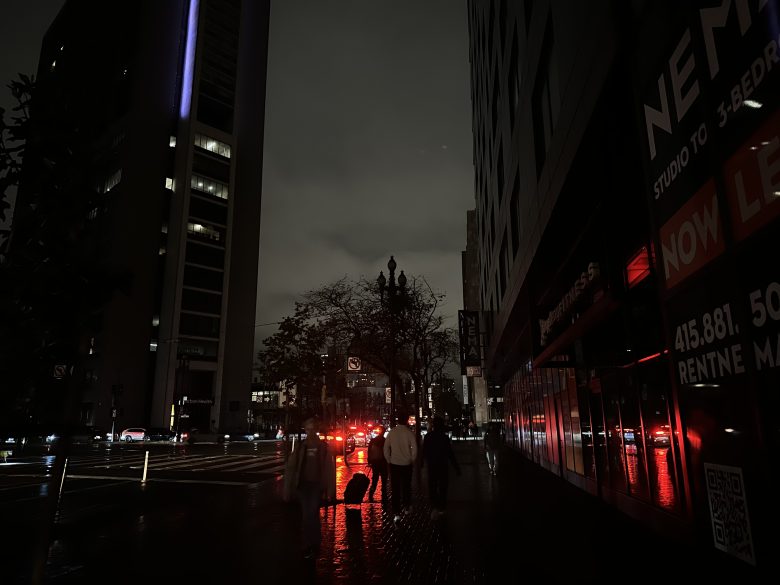

PG&E, the utility company that, last week, reintroduced one-third of San Franciscans to the Dickensian joys of wearing coats indoors and tabulating the losses of spoiled food by candlelight, is not popular.
Last night, in a move that would be on the nose if you could locate your face in the dark, a planned power outage was rudely preceded by an unplanned power outage.
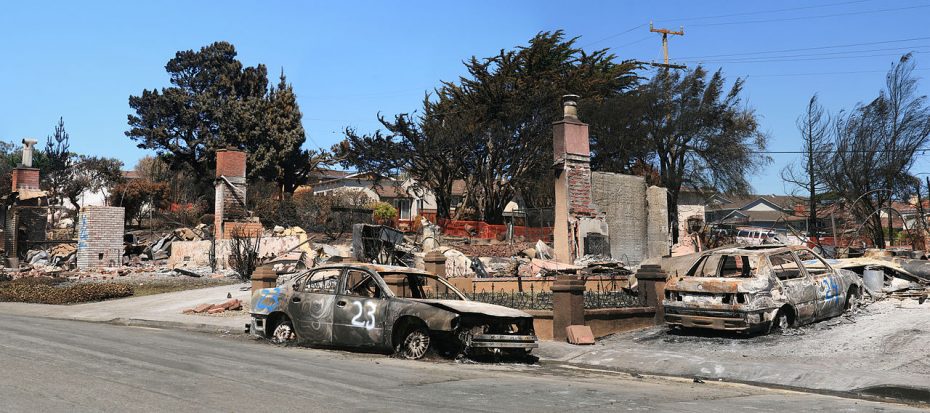
If PG&E executives were visited by three ghosts on Christmas Eve, it wouldn’t have been a shock: In the last two decades and change, the utility company has blown up a quaint Peninsula town, triggered some of California’s most lethal and destructive wildfires, entered into a pair of bankruptcies, been convicted of multiple felonies and has been accused by a federal judge of engaging in a “crime spree” while acting as a “continuing menace to California.”
PG&E was once a City Hall darling: 14 years ago, Mayor Ed Lee blithely described it as a “great company that gets it.” Nobody’s talking like that anymore.
Beating up on the monopolistic utility is now great politics: If the energy generated by local politicians gnashing their teeth and shaking their fists could be harnessed and shunted into the city’s power lines, San Francisco would be well on its way to opening up a municipal utility.
And you know what? We may yet do that. Whether PG&E likes it or not.
In 2019, the city offered PG&E $2.5 billion to buy up those parts of the company’s electrical infrastructure serving San Francisco (not the gas infrastructure, though; the city wasn’t interested in that) in a bid to become one of several municipal utilities across the state. The offer was quickly rebuffed.
But the city’s plan was still afoot. It followed up in July 2021 by filing a petition with the California Public Utilities Commission “For a valuation of certain Pacific Gas & Electric company property pursuant to Public Utilities Code Section 1401-1421.”
In September 2025, after four years and more than 130 legal filings, an administrative law judge issued a decision regarding how to even begin “establishing methods and standards” to evaluate the cost of buying out PG&E.
In other words: Nine years after PG&E spurned the city’s offer, and four years after San Francisco’s formal petition, the parties are ready to negotiate about the shape of the negotiating table.
Electricity moves through the wires at close to the speed of light. The legal process of buying out the monopolistic provider of that electricity is glacial.
Last week’s multi-day blackout, which was purportedly caused by yet another PG&E substation fire, was a convenient reminder of why elected officials and their constituents alike are fed up with the utility.
Buying it out and municipalizing power, once the raison d’être and white whale of the San Francisco Bay Guardian, is now mainstream city policy, and has been for years.
“Right now, literally and figuratively,” says Susan Leal, the former general manager of the San Francisco Public Utilities Commission, “this should be a fire sale.”
It is unlikely that there will be an immediate purchase of smoke-damaged electric infrastructure in San Francisco’s future. The sclerotic pace of the legal process all but guarantees that. Even once the appraisal process is complete, PG&E could well turn down the city’s much more exhaustively researched and documented offer.
And here’s where things get interesting. Nobody in city government will comment on the record, but it is also lost on nobody that an environmental impact report and a fair appraisal, both of which the city has been plodding its way through the process of obtaining, are precursors to eminent domain.
So, yes: We may be witnessing the early stages of a literal power grab.
If PG&E harbored hopes of turning back the clock and getting back into the good graces of this city’s mayor and board of supervisors, last week’s blackout didn’t help at all.
The company’s rapport with the city has, in fact, been dimming for quite a while. When former city controller Ed Harrington left the city’s public utilities commission in 1991, he said, the city and PG&E got along just peachy.
By the time he returned to the PUC in 2008 to become its general manager, “it was war.”
What happened? In 2008, the San Bruno explosion and the worst of the wildfires were yet to come. But things had changed: The deregulation crisis of the early 2000s actually wasn’t PG&E’s fault, but it did drive the utility into bankruptcy.
And, when it emerged from bankruptcy, “to deal with the large amount of debt it incurred, [PG&E] really was intent on reestablishing itself with Wall Street and regaining the goodwill of shareholders,” said Katherine Blunt, the author of “California Burning: The Fall of Pacific Gas And Electric — And What It Means for America’s Power Grid” in a 2022 radio interview.
“At that point, you begin to see an effort in which earnings growth is really a priority. To achieve that, it cut expenses. That turned out to be the wrong choice. The cuts were such that safety was compromised.”
For example, Blunt wrote that the small metal hook on a PG&E power tower that sparked the 2018 Camp Fire, the most destructive wildfire in state history, was forged shortly after World War I, cost 59 cents, and had not been replaced for nearly 100 years.
This, for San Francisco’s modern-day proponents of public power, is an argument for a public utility, instead of a regulated monopoly like PG&E. A municipal utility doesn’t need to curry favor with Wall Street or placate shareholders. Maintenance, at least in theory, would be a virtue, instead of a drain on earnings growth.
PG&E’s overt disasters have strengthened the city’s argument. But, in recent decades, the city and PG&E have had a series of more under-the-radar disagreements.
The Public Utilities Commission has, since 2018, documented and sent to the Board of Supervisors instances of what it describes as “PG&E obstruction of local projects.” Lengthy waits for electricity hook-ups, the city claims, have added more than $20 million to costs on city projects, which were already slow and costly.
This is not just a San Francisco grievance. In the wake of the blackout, Sen. Scott Wiener announced that he would once again introduce legislation to create “a clear, statutory pathway” for local governments to decouple from PG&E and form municipal utilities.
Colleagues as far off as Kern County, Wiener said, have told him that lethargic PG&E electric hookup timetables have led businesses to leave the state.
More than one observer has compared the city’s overtures regarding PG&E to a divorce. Fittingly, the estranged parties are fighting over everything.
In 2023, the San Francisco-born utility and San Francisco even did battle before the Federal Energy Regulatory Committee and at the Washington, D.C. circuit court regarding city efforts to provide more power to San Franciscans using PG&E’s power grid.
Every move, no matter how minor, will be contested, and PG&E won’t give up its monopoly without a fight.
It’s far more efficient for PG&E to provide power to city dwellers like those in San Francisco — who are literally stacked atop one another — than in more spread-out parts of the state. Any steps from this or any city to secede will be challenged with great vengeance and furious anger.
All of which is to say: This will not be pretty. This will not be easy. This will not be quick.
In November 2008, the voters of San Francisco were given the opportunity to approve a ballot measure that would municipalize city electric service.
The political message from PG&E and its allies to voters then was a simple one. Do you want to spend billions of taxpayer dollars so the people in charge of keeping San Francisco functional can now run your electricity company? More than 61 percent said, “hell no.”
That tack probably won’t fly now. San Francisco voters may not be aware of the increasingly acrimonious relationship between this city’s powers-that-be and its power provider.
But they have heard of San Bruno and those wildfires, as their electrical bills, for the most part, inched steadily higher. One-third of us did sit in the dark last week with perhaps even more missing out on Christmas shopping at the worst possible time.
The choice between PG&E and the city isn’t so lopsided anymore, and the coming years could be interesting. Perhaps San Francisco’s future relationship with PG&E will be incendiary in more ways than one.
“[…] lefty conspiracy theorists […]”
Joe, I think you’re trying to be helpful and aren’t cynically whipping the meme beloved of good-think liberals and other fans of monopoly profit extraction. It might be meant tongue-in-cheek, but inserting that framing right in the subhead could predispose some people new to history to oppose the idea that the city should deliver power it generates and owns to our homes and businesses.
If this were a topic regularly covered here, I could see maybe omitting mention of Hetch Hetchy and the Raker Act, but considering that many recent arrivals here might not know where their water and power come from, it would be helpful to let them know that SF owns Hetch Hetchy due to an act of Congress that prohibits the derivation of profits from the resource, and that in violation of the law, the city sells the electricity it generates there to PGE to resell to us for the latter’s profit.
Also, “power grab,” while a clever double entendre, is also unfortunate framing of the city simply complying with an act of Congress.
Yes, yes, no self-respecting “moderate” wants guilt-by-association with SFBG because hippies!radicals!commies!, but they were right all along.
“The commies were right about [insert issue] for the wrong reasons, I was wrong about it for the right reasons.” — The Moderate’s Creed
The only advantage of the public owning the electricity is that they will not be beholden to the shareholders’ profits. On the other hand, I can see myriad issues that we could find ourselves dealing with if the city takes control: The corruption scandals at Public Works, Public Utility, and the Department of Building Inspection, just to name a few. But whatever happens, we know that better management, updated repairs, and a focus on cleaner eneger sources should all be part of the discussion.
Ed Lee was corrupt, so there’s that.
Thanks Joe. PG&E is a criminal organization. It cant be said loud enough or often enough Instead of going to prison, or being hung, PG&E execs get golden parachutes. Instead of PG&E paying to fix the issues in the Sierra that they ignored for over 100 years, ratepayers we handed the bill. Members of the CAPUC, which is the “regulator” worked for PG&E. Ed Lee’s comment doesnt reflect well on PG&E but reflects the corrupt nature of our politics on every level. There is absolutely no reason to assume that the outages are any more than cost cutting and gross incompetence. In the 80s there was a local and statewide organization that tried and failed to end PG&E’s extortionist terror. It failed and these are the consequences.
Pardon what might seem vitriolic in my preceding comment. It’s just exhausting that what little actual journalism there is left these days has to start with a wink and procactive self-defense against inevitable rebuttals invoking the apparently horrific sins of left-wing journalism past. Good piece. Happy New Year.
Looking way ahead, but still: A big part of the City’s efforts should also focus on making sure we don’t end up with a municipal utility run like Muni or DPW or DBI. In addition, something tells me, once this might all go over the line, PG&E’s infrastructure in SF is going to be largely obsolete, and more of a liability than an asset. Come to think of it – if that’s not the case today already.
I realize that this is nothing short term, that a purchase of PG&E would likely be years in the future, but where is SF going to come up with the $$ necessary to do it? And is that the best allocation of those resources when the City has so many other needs?
The city has lots of money, but if they don’t want to redistribute it to buying PGE, they could put it to the voters with a bond. The debt would be made back pretty quick since “SFMUD” would be an enterprise department (ie. takes money in from customers).
Money ain’t really an issue here.
“a purchase of PG&E would likely be years in the future, but where is SF going to come up with the $$ necessary to do it?”
DOL, good question. At minimum the City should do a full financial projection and then put the issue to the voters.
One obvious cost issue is that if you make thousands of PG&E workers into city employees, then that will cost a lot on terms of public sector pensions, healthcare, leave benefits etc. Those things are generally cheaper for the private sector.
Take over, they are useless, only profits..
Regarding who is better suited to run a utility, the City or PG&E ?
Every time I turn on my faucet, I get water. When I flip my light switch, It’s anybody’s guess whether I’m going to get electricity or not — or when.
What a great and informative piece Joe – thank you for your work!
The City already runs the power grid on Treasure Island. I believe they had 28 power outages this year, so I’m not sure it would really be an improvement.
Aging navy infrastructure is to blame out there, but SFPUC is incapable of managing much more than the few isolated areas they currently have.
Sooooo… Even if the city buys out PGE, who will they rely on to deliver the power into the city, how the power is made and from where, and control those brownout days???
*sigh*…
The city owns the generators that produce the power.
SF lines bring the power to Newark in the East Bay. PGE lines take the power to SF from there.
SF sells PGE the power at wholesale rates to resell to us and deliver all the way from….Newark.
Again, SF owns and operates Hetch Hetchy dam (from which we also get our water), the generators at Hetch Hetchy dam, and the power lines that deliver the power we own all the way to Newark in the East Bay.
Editor, at great peril that prudent, well-mannered, and impeccably-groomed moderates will accuse Mission Local of being radical hippie leftwing conspiracy commies, future articles on this issue would benefit greatly from mention of the Raker Act and the amazingly hidden story* of the dam, generators, and power lines the city owns.
Of course the Hetch Hetchy dam was an act of environmental vandalism and, if there were any justice, it would be pulled down and the valley restored to its original beauty which, it has been said, rivalled Yosemite.
How about CleanPowerSF?
The City alrady produces clean power from the generators at Hetch Hetchy. Under the Raker Act it was supposed to be delivered directly to the City by the City but PG&E found a way round that.
See the following for the history: https://www.foundsf.org/The_Hetch_Hetchy_Story,_Part_II:_PG%26E_and_the_Raker_Act
If you were in the Civic Center area during the big pre-Christmas outage, you would have seen the city-operated electric busses running pretty much as normal. On that night, at least, the city-maintained infrastructure was far more reliable than PG&E’s.
Happy to kick PG&E to the curb, but SF city government could never be described as “nimble.” The solution to our problems is to allow multiple power companies to compete, just like how the AT&T monopoly was broken up in the 80s. Trading one monopoly for another won’t do the trick.
That’s already the case… You can choose who generates your power. The issue is transmission. I buy my power from CleanPowerSF, yet a majority of my bill goes to PG&E for delivery.
Such a bummer that we missed out when the price tag was only around $1M to start.
I remember being pleasantly surprised by the reasonable municipal rates Alameda was able to provide during my brief residency there!
It’ll cost us more to do it now as a city, but still less (in the long run) than if we continue to allow PG&E to do whatever is they’re doing or not doing.
Now about the government part of it…
Experts for both sides, SF and PG&E, will opine-testify re the value of PG&E electrical assets in San Francisco, then the state PUC administrative judge(s) will decide on the value. I believe this is to be in the first quarter of 2027. SF will issue bonds to raise that amount. Severance damages (costs) are possible. PG&E’s remaining customers and shareholders are to be left equivalent: no happier than if no split, no less happy.
San Francisco generates its power already and runs it from the Sierras all the way down to Dumbarton point in Newark where they sell it to PG&E. PG&E doubles the price and transports it up to peninsula to San Francisco. Los Angeles, sacramento, modesto, redding, Santa clara, alameda, and many other communities all are Public Power agencies. And all of them charge about half the price of what PG&E charges and they maintain their equipment very well. In fact the LA DWP serves over 4 million people and does it very well.
I have full confidence that the city will, within ten years of any takeover, prove itself to be more incompetent and corrupt than PG&E.
The critical difference between the two is the fact that the city can be held responsible. Everyone likes to bring up past corruption in the city government, but as I recall a number of those folks are now serving prison sentences. I’m not sure the same can be said of PG&E.
PG&E is basically run by the public utilities commission. They are subject to lots of regulations: returning the proceeds of selling the HQ to ratepayers. Whether we can or should trust the PUC is another question
“Buying it out and municipalizing power, once the raison d’être and white whale of the San Francisco Bay Guardian, is now mainstream city policy — and has been for years.”
Over the last few decades SF voters have been asked a few times to vote on public power. That proposition lost every time. And the SFBG died. So if municipal power is “mainstream city policy” then that policy was not approved by the voters and taxpayers.
It almost feels as if the voters do not trust PG&E. But that they trust the City even less. And it does seem that every time the City gets involved in a business, whether that be transportation (Muni), Healthcare (SFGH), housing (public) or education (SFUSD and City College), it gets poor approval ratings.
Good! Lawyers will be overjoyed that instead of suing a utility they get to sue the city. Absent a bankruptcy SF will be on the hook for all perceived wrongs .
PG&E is what happens when you allow the mixing of corporate power and public policy. It’s corrupt to the core and hurts all of us.
These are the same arguments many in California have made about Homelessness Inc. and the nonprofits who own our politicians. Like PG&E, they reduce state capacity and enshittify public services in the worst possible ways. I hope progressives and moderates alike can take this moment to come together on both fronts and restore good governance. We shouldn’t have our state held hostage by these special interests.
What I can’t understand is why anyone believes that our incompetent and often corrupt city government will be able to do a better job running the electric utility than PG&E does.
Nobody is happy when something goes wrong and there is a power outage, but I see no reason to assume that the city will somehow be better at preventing this than PG&E. (And I doubt that a city-owned electric utility will be greasing our palms with $200 credits after their first outage.)
Sorry but SFPUC is no where near capable of running this. From my first hand experience. Their power distribution division is barely a start up. Better to focus on California PUC gifting them rate increases.
Campers,
The original Power Grab by PG@E was illegal.
Still is.
When Congress granted SF the right to build Hetch-Hetchy and bring our own Water and Power to town PG@E hijacked the lines at our border or something violating the legal orders.
Sue em on that basis.
Speaking of Congress ?
Connie Chan for Congress !
and, while we’re getting in that kind of mood …
Katie Porter for Governor
And, if you favor Foot Patrols in more than tease or promise ?
Elect a Police Chief who guarantees it !!
go Niners !!
h.
I do wonder what part of the SF City government is so well run, that people think the City would do a great job of running the electrical system. Is it Muni? The schools? The Building Department? Public Works?
The only thing worse than PG&E running our gas and electric would be the City. Think- your sidewalks, streets, never ending exposures of missing money and cost overruns and taxes per person higher than LA by a huge amount. What could go wrong?
An idea, who’s time has come, and other majors, like the late great London Breed, has suggested it before, but San Francisco does not function well as a city, so how can it run, a utility company?
Yes, the problem is that nobody trusts the City to run anything. What the City really needs is to try and do less, and do it better. Become more focused. But instead, it tries to do more, and becomes worse.
This idea sounds like a distraction – to put us off noticing how bad Muni, public housing and the school board is.