

When Scotty Todd first learned of the death of his social worker, Alberto Rangel, his first impulse was to start drinking to numb the pain.
In the days following Rangel’s death, Todd visited Ward 86 instead and thought to himself, “That’s no way to honor Alberto.”
Todd, 66, has been a patient at Ward 86, the city’s long-term outpatient HIV/AIDS clinic at Zuckerberg San Francisco General Hospital where Rangel worked, since 1983, the year it opened.
He credits the staff there with saving his life. Rangel helped him find supportive housing and connected him with drug addiction services when Todd was struggling.
“He was always there to help me find those resources,” Todd said.
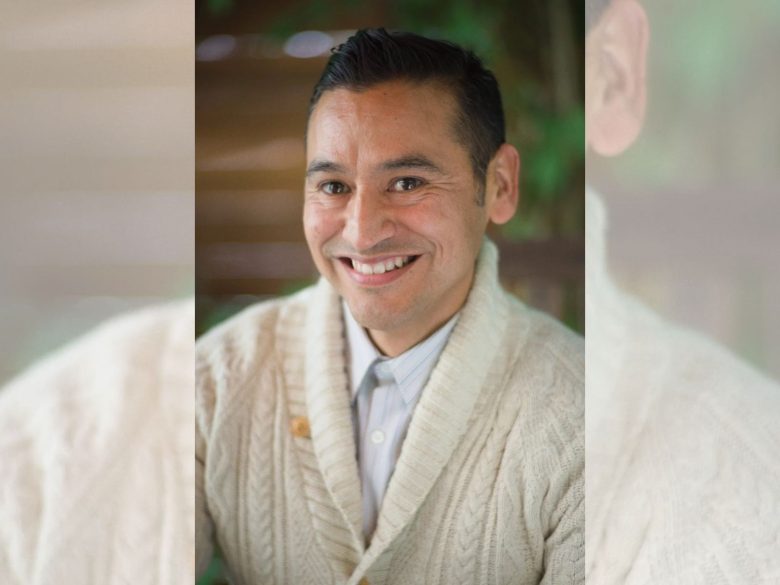
Rangel, 51, was fatally stabbed on Dec. 4 by a patient at Ward 86, where Rangel had worked since 2021. He died two days later. Rangel was remembered widely for his generosity, patience and commitment to helping others.
Rangel grew up in Muscatine, Iowa, before moving to San Francisco, where he lived with his husband of over 20 years, Stuart Moulder. He graduated from the University of Iowa with a degree in Art and Art History, later receiving his master’s degree in Marriage and Family Therapy from the University of Notre Dame de Namur.
At Ward 86, he worked closely with patients like Todd, connecting them to supportive housing and addiction services, and leading weekly sessions for patients with alcohol-use disorders.
Katherine Alvarez started working the front desk of Ward 86 five years ago. Rangel stopped by her desk to introduce himself and she still remembers his warmth, welcoming her to the team. Rangel continued to stop by and chat often, and the two became fast friends, finding moments to joke around and laugh with each other at work.
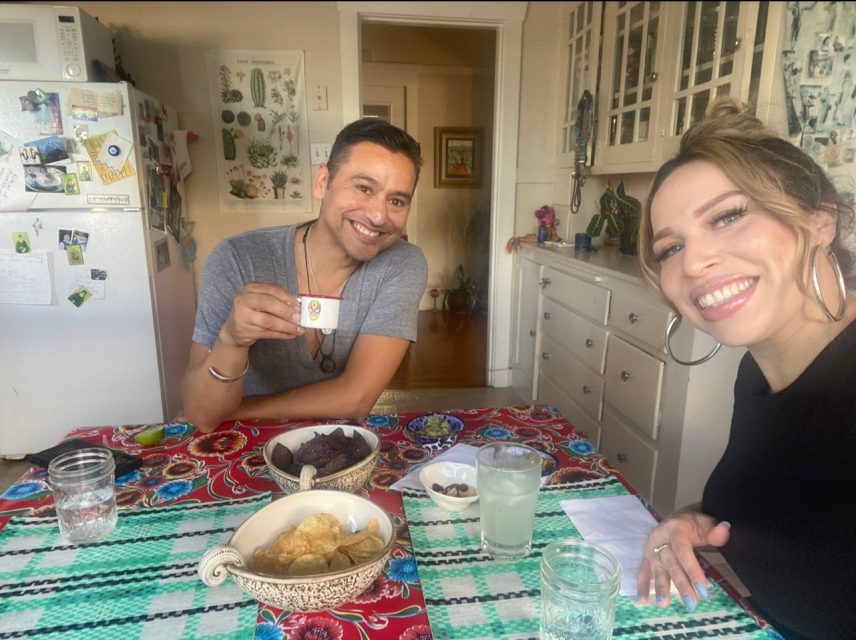
Within a few months of meeting, Rangel asked Alvarez for her address. “Why?” she asked him. “I just wanna send you something, you’ll see.”
The next week, Alvarez received a card from Rangel that said, “Thank you for being in my life. Thank you for being my friend.”
He was a “sweet, loving guy,” said Todd, and a “stand-up social worker” who always maintained a sense of professionalism with his patients.
At one of Todd’s tri-weekly visits to the hospital, Rangel offered him food vouchers from Safeway. Todd tried convincing Rangel to save them for someone else, but Rangel insisted.
“Somehow, he sensed that you really needed it,” said Todd.
Jorge Salazar, a doctor at the hospital who worked closely with Rangel, said that he brought a lively spirit with him to work every day.
Rangel “created a large sense of community in the clinic,” and often invited his coworkers to events outside of work, including art shows, a pumpkin-carving party, his 20th marriage anniversary and his 50th birthday party.
Salazar remembers attending one of Rangel’s art shows at Cafe de Olla in the Mission District. In addition to his passion for social work, Rangel was a talented painter, and many of Rangel’s works, Salazar said, touched on themes of his identity as a gay Latino.
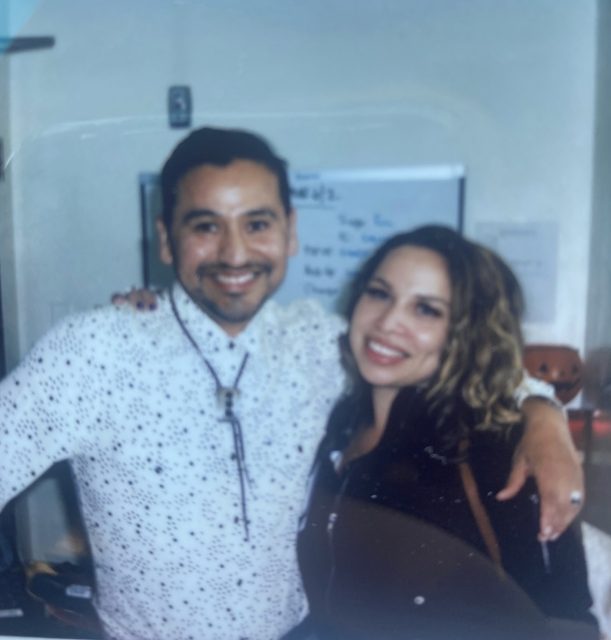
“He was a very proud Mexican,” said both Alvarez and Salazar. It showed in his style: Rangel had a particular sombrero that he often wore to events outside of work, whether it was the S.F. Pride Parade or Carnaval.
Jessica Hoopengardner, a nurse at Ward 86, remembered “slinging lemonades” with Rangel at the Folsom Street Fair, the annual leather festival in SoMa. He was dressed in tiny, sparkly red shorts, a harness and his “giant” sombrero.
Work didn’t stop Rangel from dressing to impress, either. He often wore a floral shirt atop a pair of skinny jeans, complete with jewelry and a pair of boots.
Alvarez remembered hearing Rangel’s boots clacking down the hospital halls towards the reception desk, happily thinking, “Alberto’s coming.”
He was also a Prada lover, and definitely not an outfit repeater, Alvarez said. After all, he owned lots of clothes, many of which were inspired by his mom’s sense of style.
“He had a very sharp eye for fashion,” said Lucretia Bolin, a nurse practitioner who worked with Alberto at the Trauma Recovery Center prior to his job at Ward 86.
She, like many, recalled his “magnetic smile,” that was “disarming” and charmed many of his coworkers and patients.
Whenever she ran into Alberto, Bolin would ask him if he would ever return to the Trauma Recovery Center from Ward 86. But the answer was always no. “I love my job,” he’d tell her with a smile.