
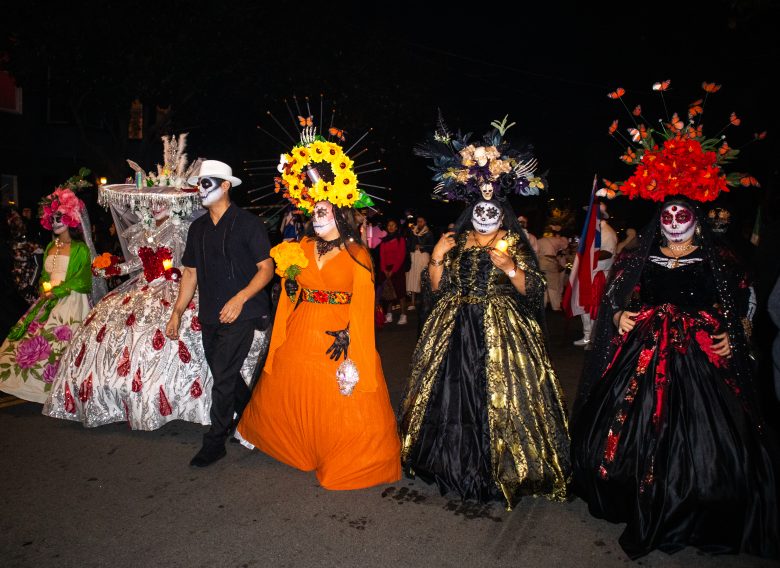

The smell of incense, pupusas and bacon-wrapped hot dogs filled the air on Sunday: It was the 44th annual Día de los Muertos procession through the Mission District.
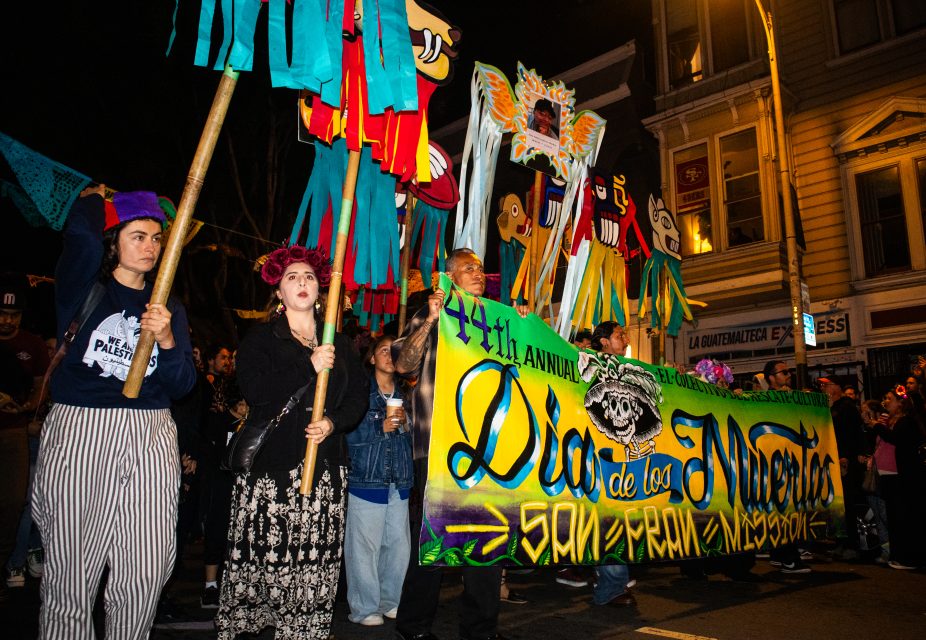
A group of Aztec dancers led the way, followed by performers with the Afro-Brazilian Maracatu Pacifico troupe and hundreds of others holding candles, marigolds and photos of deceased loved ones.
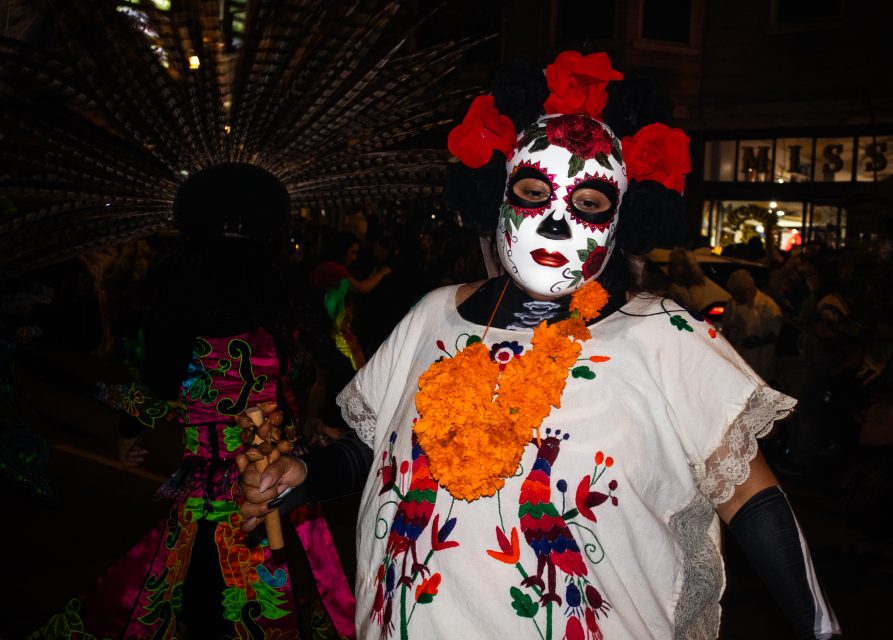
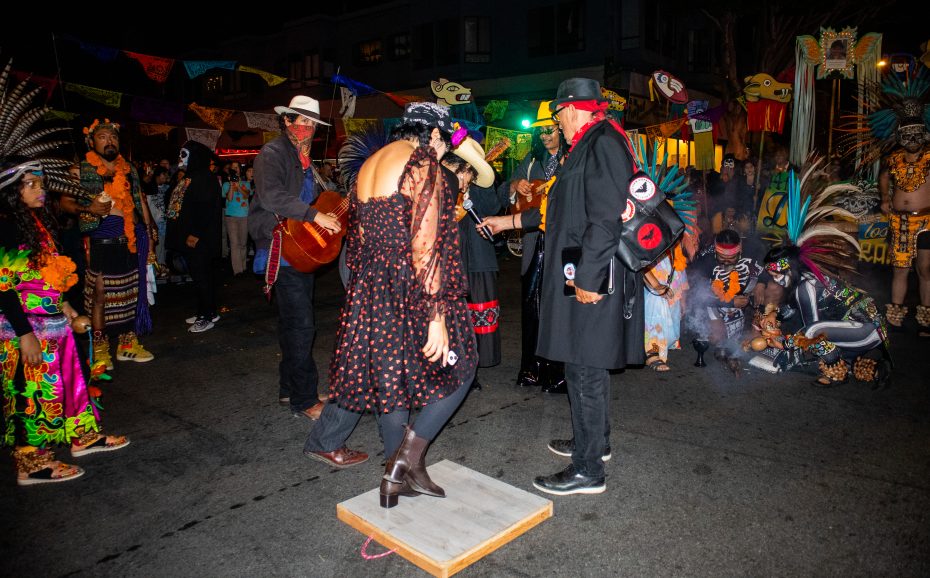
Street vendors sold bouquets of flowers, margaritas, candy skulls and more to those filling the sidewalks to watch the procession. Dancers rattled ayoyotes — an Aztec anklet studded with nuts from the ayoyote tree — and drummers kept the marchers on track.
Some held colorful papel picado and Latin American flags, some marched somberly, and others laughed and chatted with friends. Onlookers of all ages spilled out onto the streets.
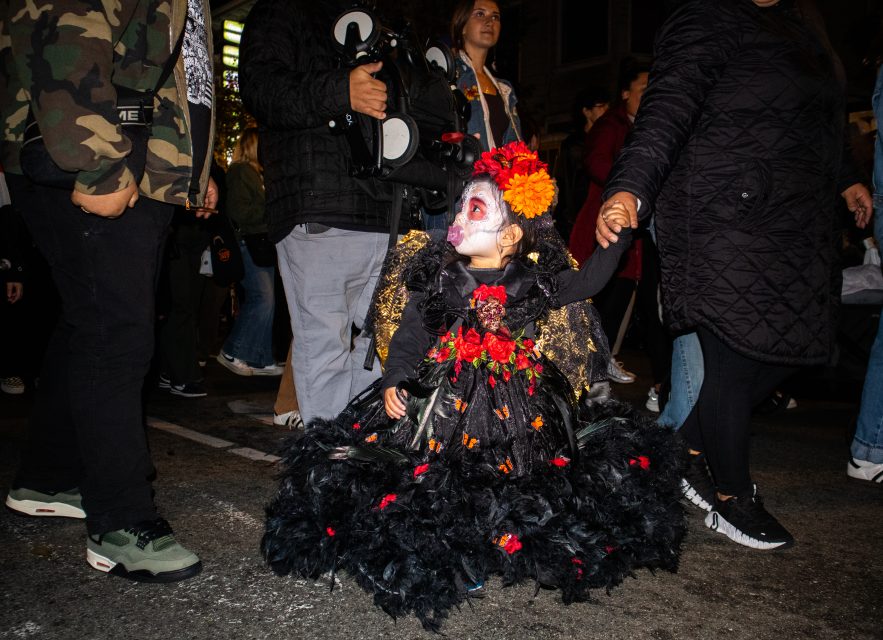
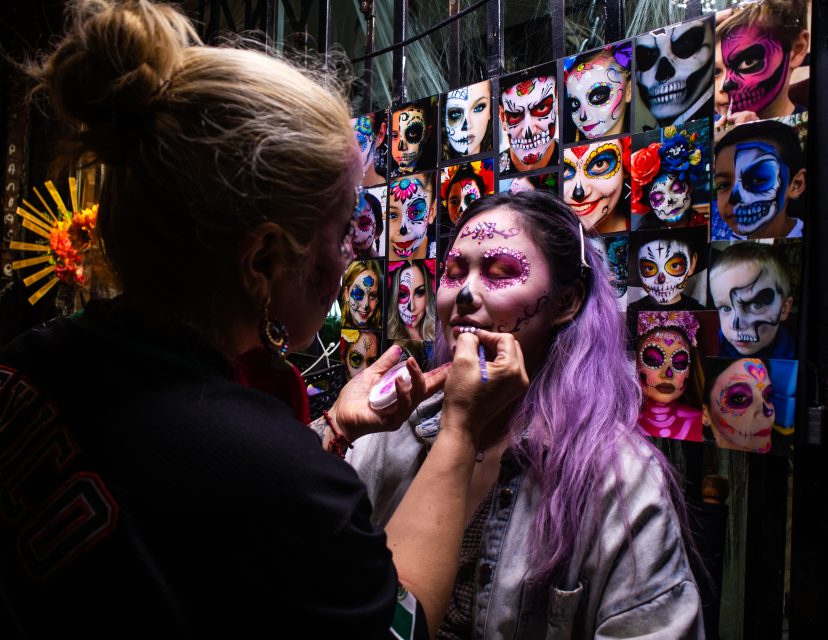
San Francisco police said more than 1,000 people attended.
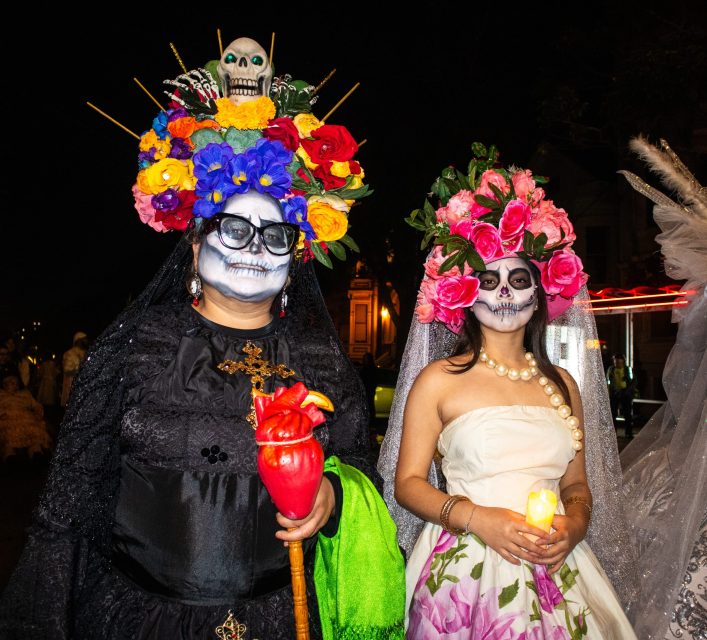
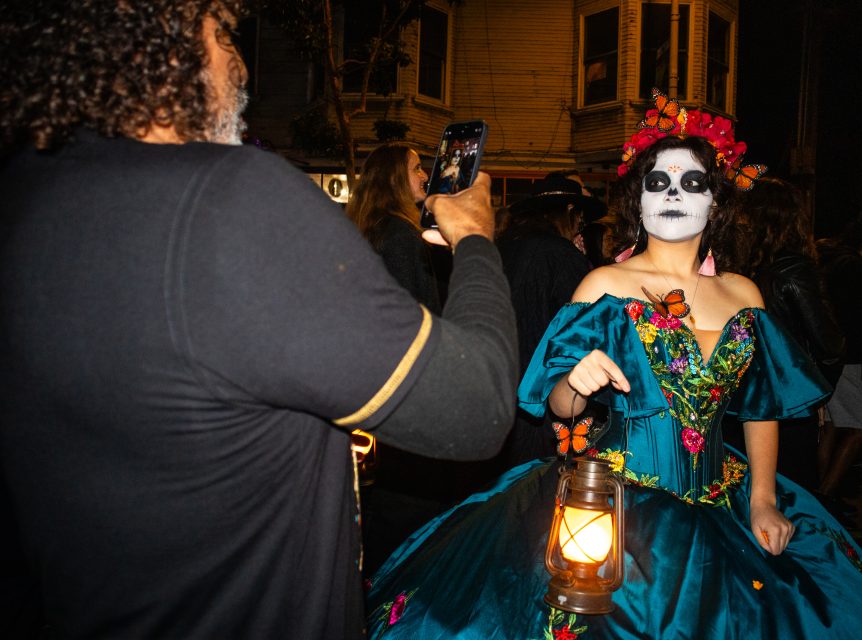
Many dressed up as La Catrina and El Catrín, the historic skeleton symbols typically associated with Day of the Dead in Mexico.
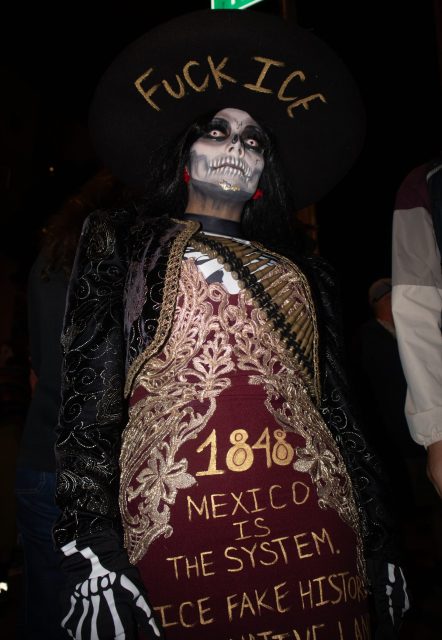
Sandra Calzada was dressed head to toe as La Catrina. She said it was inspired by current anti-immigrant rhetoric: Her outfit, which she made herself, paid homage to Mexican revolutionary leader Pancho Villa and featured a faux military bandolier strapped across an elegant red and gold hand-painted dress reading “1848,” the year of the Mexican-American war.
“We’re not afraid. We’re not scared,” said Calzada, “It’s more than anything for my people.”
Nearby at Potrero del Sol Park, several dozen ofrendas, traditional altars honoring the dead, dotted the grass during the Festival of Altars.
Jessica Fein was one of the many with an altar at the park to honor a deceased loved one: her daughter, Dalia Flaggert, who she and her husband adopted from Guatemala in 2005. Dalia passed away in 2022 at the age of 17.
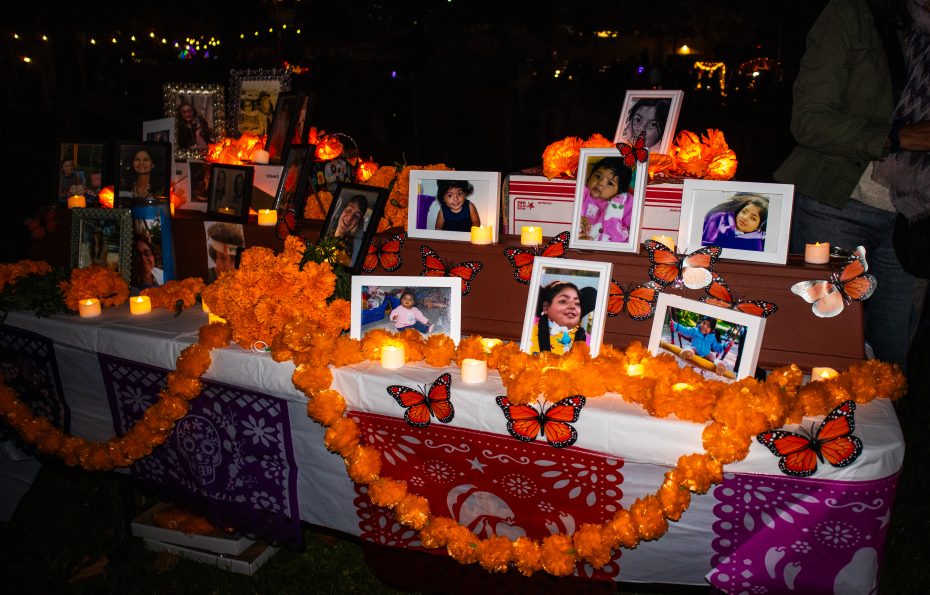
Dalia’s altar featured a white tablecloth covering a small table decorated with marigolds, cutouts of monarch butterflies, and framed photos of Dalia as a baby and in her teens.
Fein and her husband had flown in from Boston, Massachusetts, to put the altar together with Erika Milvi, a close friend from San Francisco who shared the other half of the ofrenda with them. It was their first Day of the Dead in the city.
The couple first made an altar for Dalia last year, and felt drawn to a larger celebration to honor their daughter’s heritage. Since traveling to Guatemala was not feasible this year, they opted for San Francisco instead.
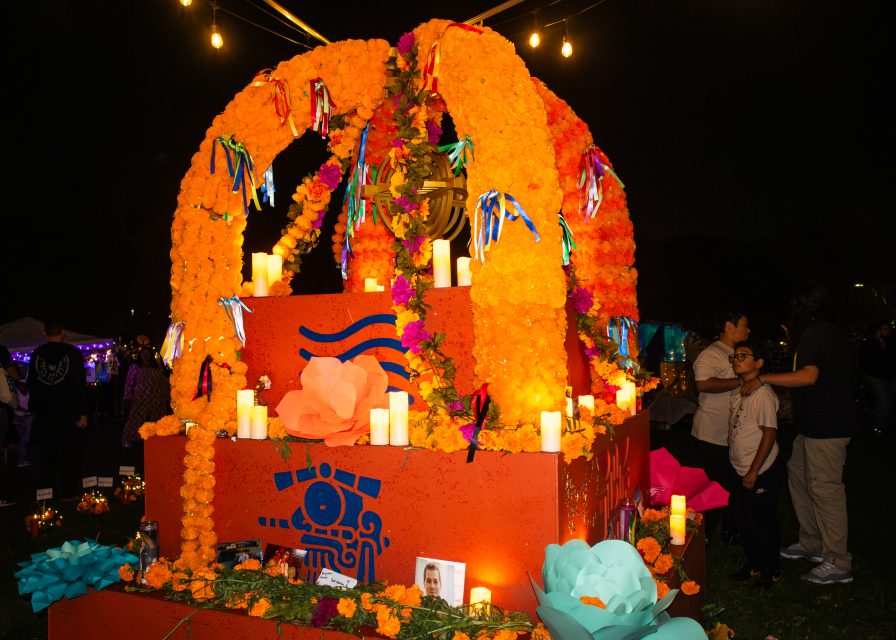
“We felt very drawn to this, to honor her and her heritage,” said Fein. Day of the Dead, she said, is unlike most rituals around death.
“In our society, grief is something that is very isolating,” she added. “What I love is that people are celebrating their people, and they’re being really open about it.”
While I love her photos, and the creative Altars, at the Mission Cultural Center, I no longer attend the Day of the Dead March, due to the fact, it’s been hijacked by the “P.C” crowd to highlight their political agendas. If anyone gets a chance go to Oaxaca, Mexico to see how The Day of the Dead is really done, and the food is to die for-No pun intended.