

This may come as a surprise: Even though a third of San Francisco residents are Asian, and Asian politicians have long filled — and led — City Hall, the city’s Asian elected officials have never formally united to cultivate their successor generation.
Until today.
A group of current and former Asian elected officials on Tuesday launched the Asian-Pacific Islander Building Community Leaders program, an incubator for Asian leadership in the city.
The program will pair up aspiring Asian leaders with seasoned officials focused on the nuts and bolts of running for, and winning, political office.
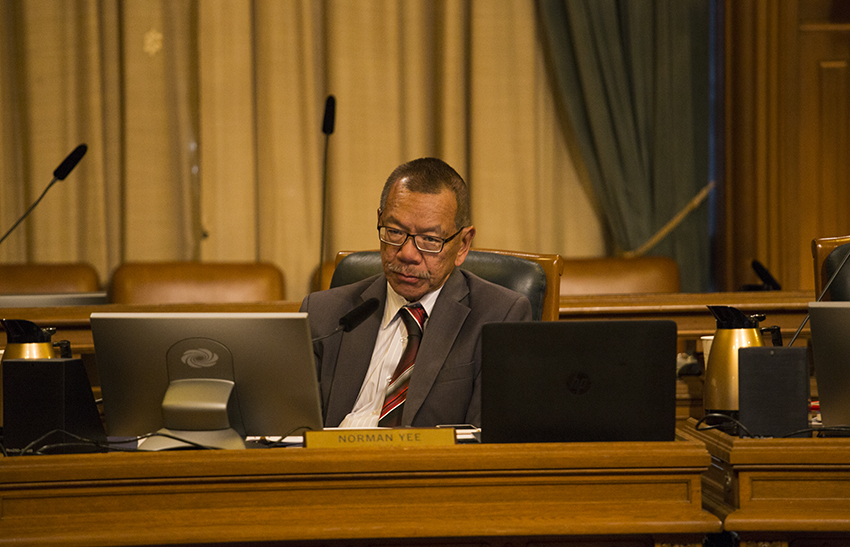
“We are underrepresented, whether it’s in political elected office or on commissions,” said former Board of Supervisors President Norman Yee, the founder of the new group.
The list of elected and appointed officials signing on to mentor aspiring leaders is a who’s-who of past and present Asian leadership in San Francisco: Supervisors Connie Chan and Chyanne Chen, City Attorney David Chiu, City Administrator Carmen Chu, Sheriff Paul Miyamoto, Superintendent Maria Su, former California Assemblymember Phil Ting, and former supervisors Jane Kim and Sandra Lee Fewer. (The list is primarily Chinese, mirroring San Francisco’s Asian demographics.)
Non-Asian politicians, including former Board President Aaron Peskin and Peter Gallotta, a current elected member of the county Democratic Party, also showed interest after Yee invited them to serve as mentors.
The organization is going to be “nonpartisan,” Yee said. It will involve “moderate”-aligned politicians like Chiu, Chu and Miyamoto, and “progressives” like Chan.
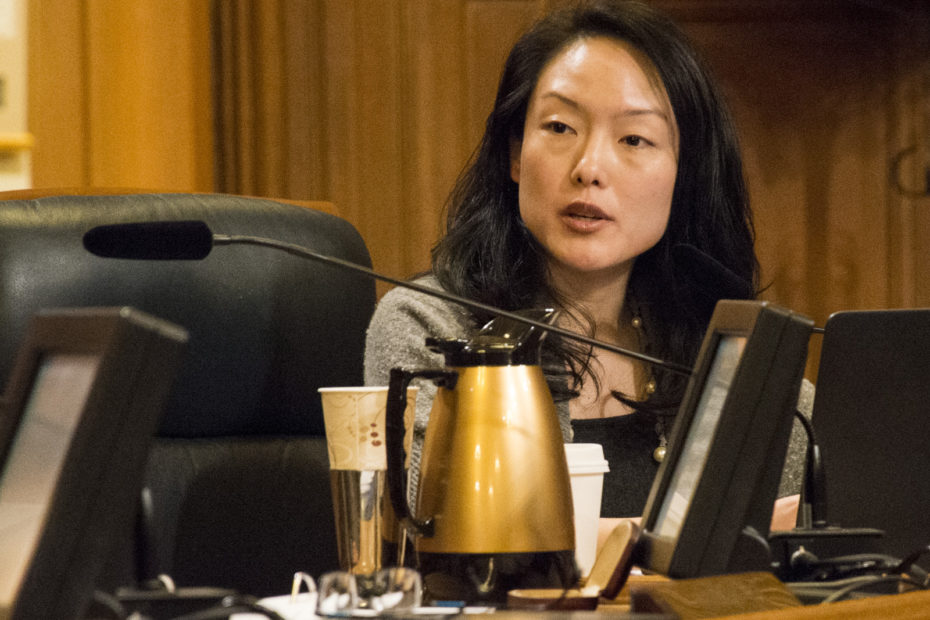
“There is a dearth of mentorship, particularly for Asian Americans to go into electoral politics,” said Kim, who currently recruits and trains younger progressive leaders to run for office as the California director of the Working Families Party.
The group is starting small: Up to 15 people will be selected to participate in campaign boot camps on Nov. 15 and Dec. 6. They will learn the basics of local political campaigns, such as preparing as a candidate, understanding what it takes to run, messaging, and listening to constituents. The deadline to apply is Oct. 19.
In the future, the group hopes to put on eight-to-10-week, cohort-based, leadership training institutes annually, likely in the spring, to demystify political campaigning for younger leaders and provide guidance on pursuing other civic leadership roles, such as commission seats.
Every participant will be paired with mentors who will provide guidance in their own ways, according to Yee. Some may take the mentee under their wing and meet with them weekly. Others may spend a few hours with them once, sharing as much knowledge as they can.
These future training institutes will also help smaller Asian nonprofit organizations to train leaders.
Asian voters have long been courted by anyone hoping to win citywide office. During last year’s mayoral election, all the major campaigns had dedicated Asian outreach strategies, but Mayor Daniel Lurie was the most successful.
He won more Asian-heavy precincts than any other candidate, and had a large, paid team that knocked on the doors of more than 21,000 Chinese-speaking households.
That kind of attention means the Asian community has power, said Kim. But it doesn’t guarantee representation, she said.
“We have to keep doing that investment work, so all the gears that were put into investing in individuals like myself and Sandy and Norman and David, have to continue,” she said.
Former District 1 Supervisor Fewer has heard from young Asians that it’s “daunting” to run for office here. “As a white male, you might not think people pooh-pooh representation, but if you’ve had to fight your way to be at the table … we understand how powerful representation is.”
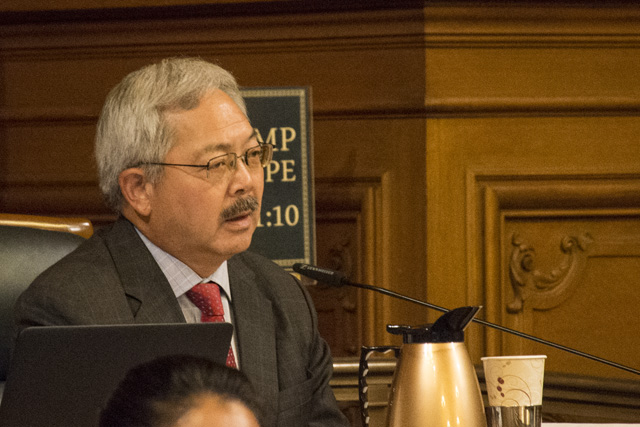
Asian leaders involved in this effort recounted the peak years of 2013 and 2014, when there were five Asian supervisors on the Board of Supervisors: Eric Mar, Chiu, Katy Tang, Kim and Yee, and an Asian mayor, Ed Lee.
But before last November’s election, the number of Asian supervisors dwindled to just one: Chan. There are three Asian supervisors today: Chan, Chen and Bilal Mahmood, the son of Pakistani immigrants. Depending on whom Lurie appoints for the soon-to-be-vacant seat in majority-Asian District 4, it could soon become four.
The boot camp would train participants interested in running for office as soon as 2026, including for supervisor or school board, according to Yee.
It will be fiscally sponsored by Asian Americans for Civil Rights & Equality, a network of 11 Asian American social-justice groups founded by the San Francisco nonprofit Chinese for Affirmative Action.
Michael Nguyen, a current elected member of the county Democratic Party, is “strongly considering” running for District 8 supervisor in November 2026, he said. Nguyen wants to learn “how the different players interact and various factions, how they really exist in San Francisco and why they became that way,” he said.
“Politics is not something you just learn, but you have to acquire it and be exposed to it. Politics is all about repetition,” said David Ho, a longtime political consultant.
“It’s not just about having faces that are Asian American in leadership,” added Angela Chan, a former police commissioner who is now the assistant chief attorney in the public defender’s office.
She is not yet a part of the Building Community Leaders program, but is open to being a mentor. “It’s about making sure that we have thoughtful Asian American leadership that prioritizes advocating for the most vulnerable in San Francisco.”
How about we elect people based on the content of their character and their ideas, rather than have opaque cabals that pick winners and losers based on race first?
I’d vote for an asian candidate all day long – but not BECAUSE they’re asian, that’s insane reasoning actually. Representation ebbs and flows for all groups. I don’t think this city has “forgotten” asian residents as a result in any actual measure. Would it be nice if every board, every department was 100% representative of the demographics of the City, sure… but how realistic is that, and is focusing on that actually leading to more responsive and better managed governance? And in a city where elections are largely decided by proximity to Billionaire interests and thus campaign donations, how is this ‘bloc’ going to stand up against that trend? Asian Billionaires only?
“Politics is all about repetition,” said David Ho, a longtime political consultant.
I think you mean propaganda…