


Mission Local began holding exit interviews with elected officials leaving office after the Nov. 5, 2024 election. Among them: London Breed, Aaron Peskin, Hillary Ronen, Ahsha Safaí and Dean Preston. You can read new interviews as they are published here.
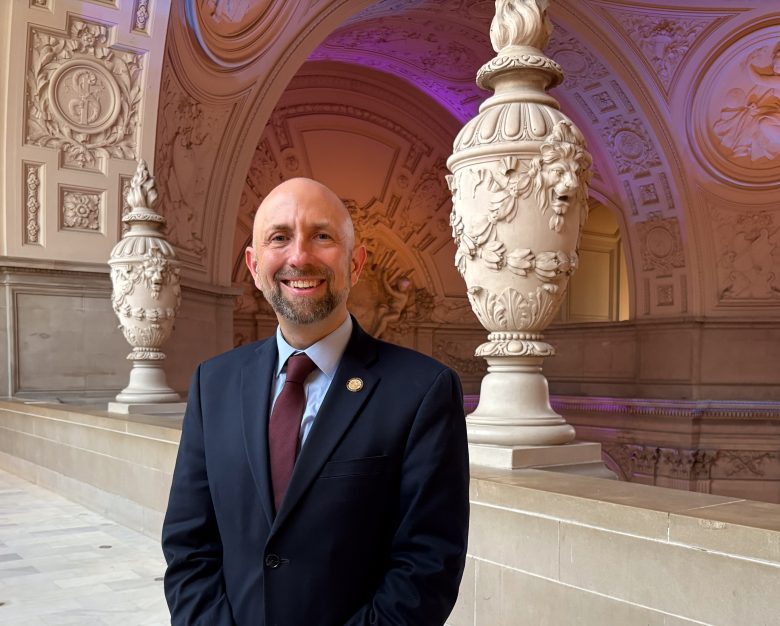
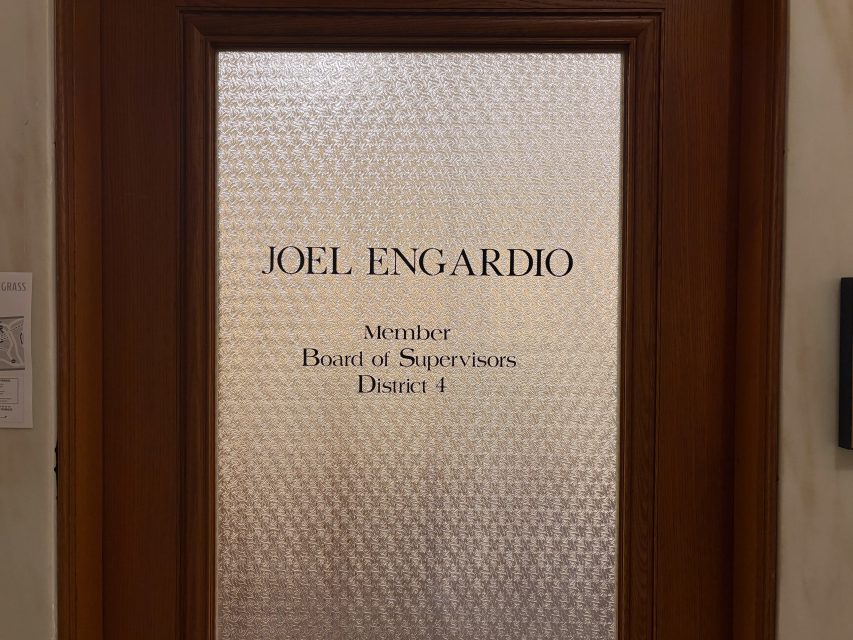
Mission Local caught up with Supervisor Joel Engardio one week before he was set to leave his City Hall office.
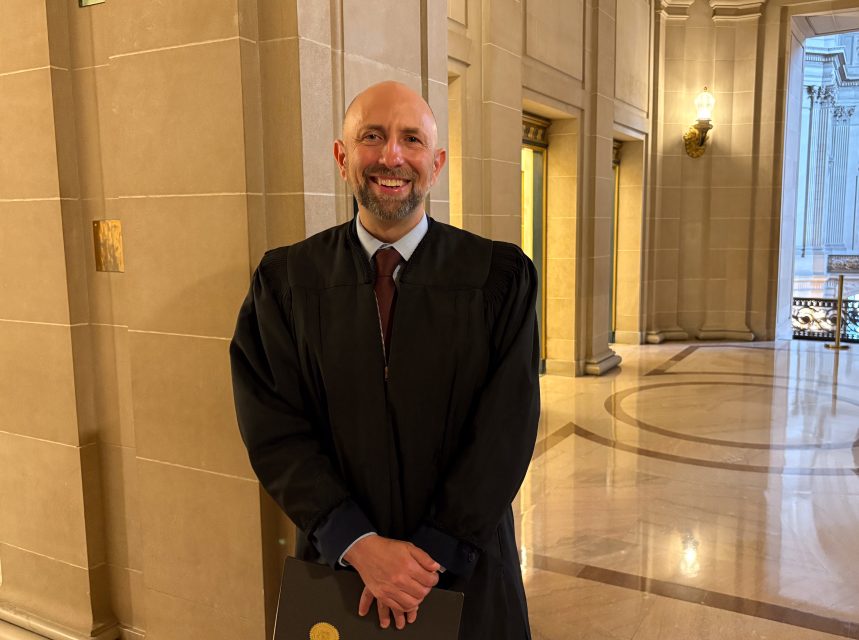
The desks of Engardio’s aides were still cluttered, but the photos and news clippings that once lined the walls were all packed away, as was the office popcorn machine. Engardio had just returned from officiating nine weddings on the second floor outside of the legislative chamber.
As the first supervisor to be successfully recalled in San Francisco history, District 4 Supervisor Joel Engardio was voted out by his own district after sponsoring Proposition K, a ballot measure that proposed closing a portion of the Great Highway to cars and turning it into an oceanside park.
Proposition K passed overwhelmingly citywide, but was unpopular in the Sunset and, particularly, in the exact precincts that led Engardio to victory back in 2022; Engardio had alienated his base.
Prop. K spurred a recall that passed 63-37, even though a total of $829,099 was raised to keep Engardio in office, versus the $257,090 spent to recall him.
Engardio has consistently said it was all worth it. He may be leaving, but the park, now named Sunset Dunes, is still there.
In a two-hour sit-down interview, Engardio reflected on his trajectory from a journalist covering City Hall to an elected official inside of it. He talked about the evolution of the city’s political moderates — his former base — and the thinking behind his decision to stand by Prop. K.
This interview has been edited for length and clarity.
Mission Local: What do you think of the mayor’s statement that many residents on the Westside think the government is “doing things to them, not with them?”
Joel Engardio: There’s a lot of people who didn’t want it to be a park, and a lot of people who did. We needed to have a resolution.
I thought it would be best to rely on more democracy to resolve the issue. It’s important to recognize that many of the people who sought to recall me, back in 2022, put their own measure on the ballot regarding the Great Highway for the whole city to vote on. So, they started the precedent of the entire city voting on the Great Highway.
[Proposition I in November 2022 was put on the ballot by voters through signature gathering. It would have restored private vehicle access to several roads that were partially or completely closed to car traffic during the COVID-19 pandemic, including the Great Highway.
Prop. I failed with a 35-65 vote citywide.]
ML: Some of your critics might say that, as supervisor, your job isn’t necessarily to keep the whole city in mind, but just to represent your constituents — who, as it turns out, were very anti-K. What do you think of that?
JE: Many of the people who were supporting a park were Sunset residents. I have to represent 80,000 residents. When I came into the job, there were a lot of people who were advocating for a park, and a lot of people who were saying we want a full-time highway.
Coming into the office, I met with all sides, and no one was backing down. We had a deadline of the pilot expiring this year.
[The Great Highway Pilot, passed by the Board of Supervisors, closed the same section of the highway covered by Prop. K from December 2022 to December 2025, but only on weekends. ]
The question was: Do we go back to the voters? If we were going to go back to the voters, we had to do it in November 2024, because that was the last election prior to the pilot expiring. If we didn’t go back to the voters, then the Board of Supervisors would decide the fate this year.
Should we have the voters decide, or have the Board of Supervisors decide? You can argue that the coast belongs to everybody. Therefore everybody has a say in what to do with their coast.
ML: But knowing that a majority of your constituents didn’t support this, and then still deciding to support it anyways — why did you make that choice?
JE: No, in District 4, it was actually pretty much 50-50 for Prop. I.
ML: Did you think that people in your district were going to be majority supportive of Prop. K?
JE: My main data point was the Prop. I results, which basically says 50-50.
Either way, people are going to be mad at me. So I needed to take a 30,000-foot view and see what is the best way forward. I thought more democracy might be better, given that there was precedent that this had already been on the ballot.
ML: Were you surprised by the results?
JE: I was humbled by that, because you don’t want to be on the wrong side of your constituents on any issue. But putting it on the ballot allowed for more robust debate.
Because it’s a campaign, there’s going to be all kinds of campaign tactics. There can be disinformation and misinformation. I think, ultimately, the traffic bogeyman played a central figure. A lot of people were probably imagining, “Oh, no, what will the traffic be like?”
But now that we’ve seen the road closed, and it’s been six or seven months, we can see that traffic studies have shown minimal impact. We’re seeing that the park is providing immense benefit. Businesses are reporting an increase in sales.
I’ve knocked on thousands of doors. Many, many people told me they were opposed to Prop. K, but they changed their mind now that they’ve seen the park is nice, and traffic is not as bad as they thought it would be.
I think, in due time, we will wonder what this controversy was about.
ML: If you had known the way the Prop. K vote was going to go — that it was going to essentially cost you your job as supervisor — would you still have made the same choices?
JE: No one has a crystal ball. There were only two options: The voters decide, or the Board of Supervisors decides. We could do a thought experiment, but we don’t know how the ending would be.
I imagine there would be a lot of angry people, and either I would be recalled or just not re-elected, potentially, but I don’t know. I imagine it would probably be just as contentious.
ML: If you had been voting on the park this fall, and knew that your voters were against it, would you have voted for the park or against the park?
JE: I don’t know, because we wouldn’t have a Prop. K vote to definitively look at it. Polls can be wrong. The votes that I take as a supervisor — sometimes you don’t have all the answers. You just have to vote your conscience.
If I can see that the southern extension is closing no matter what, and the traffic has to divert inland no matter what, and if the cars can get where they need to go in the same amount of time, it’s adding up to supporting the park. Because ultimately this is in the best interest of not just the Sunset, but the whole city.
[The “southern extension” or the section of the Great Highway between Sloat and Skyline has been slated for closure since 2012’s Ocean Beach Master Plan. Even if Proposition K hadn’t passed, that section of the highway was scheduled to close in early 2026 due to severe erosion.]
Either way people are going to be mad, whether the supervisors vote or the people vote.
ML: But if you voted against it in the Board meeting, they wouldn’t necessarily have blamed you, right? And then you don’t get recalled?
JE: Yeah. But is it a job of a politician just to always avoid losing their job?
Mayors are forgotten. Governors, even U.S. presidents are forgotten, you know? So ultimately, if you’re spending your time trying to keep your job and be remembered, it’s kind of futile, because your job will end at some point, and then you will be forgotten at some point.
I use the example of BART, because I think that’s something that people can viscerally understand.
If we had tunnels down 19th Avenue and Geary, and multiple crossings to the East Bay and BART to San Jose and BART to Marin, how much better our lives would be today and how much better positioned we would be to fight climate change?
But we don’t have that, because politicians in the 1960s did not have the courage to push for that, because it was not politically popular.
We need to approach this job in a sense of not just trying to feed our egos or trying to preserve our careers, but to truly serve the public.
ML: Do you feel like you understand why voters ended up being upset at you?
JE: There’s a lot of people who adamantly did not want to close the Great Highway.
I met people who said, in the 1970s, they used to drag race on the Great Highway. The Great Highway did not even have traffic signals or pedestrian crossings. It was just a two-mile stretch of road.
Sometimes, when change happens, it feels like their memories are being taken away, or their nostalgia is being diminished in some way. I understand that, for sure.
But you can’t beat Mother Nature. Mother Nature was ensuring that this road could not continue in its current form, no matter what.
ML: In retrospect, do you think there was any way for you to support the park but not get recalled?
JE: I don’t know. I think supporting the park is being on the right side of history. We were going to have to do something. Nothing was not an option.
The state was mandating the closure south of Sloat. Change was going to happen.
Sometimes we are faced with tough choices. When we enter public office, you don’t know what is going to land in your lap. When you face them, you have to make choices.
I didn’t do this alone. I don’t have the power to close a road or create a park by myself. There’s five of us who put this on the ballot; the entire spectrum of the Democratic Party, all shades of blue of San Francisco, from Dean Preston to Matt Dorsey. It can’t get more different than those two.
[Four supervisors were needed to put Prop K. on the ballot. In addition to Engardio, Supervisors Matt Dorsey, Rafael Mandelman, Myrna Melgar, and Dean Preston sponsored it. ]
The coast cannot just belong to one neighborhood. Even if Prop. K never happened, you would have people on the east side of town deciding the fate of the Great Highway. Supervisors who represent other parts of the city would all be weighing in.
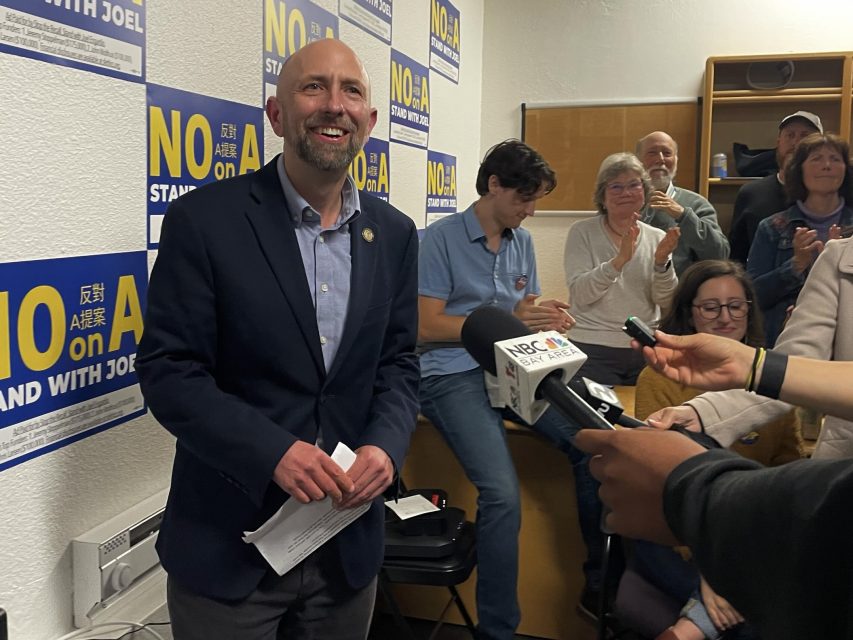
ML: Some of the people and groups who previously supported you didn’t speak out against your recall, including the San Francisco Democratic Party, which decided not to make an endorsement either way. Do you think they should have stood by you?
JE: I think it’s important for Democrats in general to stand up for democracy, especially in this day and age, with what we’re facing with Trump.
On a very small level, I stood up for democracy. I was recalled because I supported putting something on the ballot to give people a choice about what to do with their coast. For the local Democratic Party to stay silent and not weigh in on a recall that was about supporting democracy, it’s not a good look.
[The San Francisco Democratic Party voted 11-11 and took no position on the Engardio recall on the night of Aug 27. Six members abstained from the vote and four were absent.
The vote came about two weeks before the recall election. At that time, more than 7,000 people had already cast their ballots in the recall election. The endorsement was originally scheduled for July 30, and was postponed for about a month.]
ML: What about the mayor? Do you think he should have said something?
JE: The mayor has only said nice things about me. When he was asked about the recall at the budget signing, he said how much he appreciated my work. I’ll take that as a ringing endorsement of my work.
ML: The people who voted you out were your former base. How did that happen?
JE: When I ran for office, the top issues of the city and the Sunset were education and public safety. If you go back in 2021, 2022, it was really top of mind, at crisis level. A lot of people were in alignment with my views on public safety and education.
I’ve been very consistent over the last decade. I’m very much an urbanist. I have talked about bringing Paris to Sunset for 10 years, and the idea of the six-story corner apartment building. I think in 2022, a lot of people ignored that. It just wasn’t the top issue.
As things got better, people could turn their attention. So there were people who really liked my views on public safety and education, [but] who completely abandoned me once it was time to talk about urbanism.
When I am voting on issues, I’m showing my true self. I voted for the ceasefire resolution. I called for the release of the Banko Brown video. I supported and stood up for our sanctuary city policy. I stood with labor when the vote was not unanimous.
These are times where I was not in alignment with the so-called moderates, because I voted my conscience, and I’m proud of that.
I think I lost some support on some of those issues. Ultimately, I think you have to just be your authentic self. People are either going to stick with you or not.
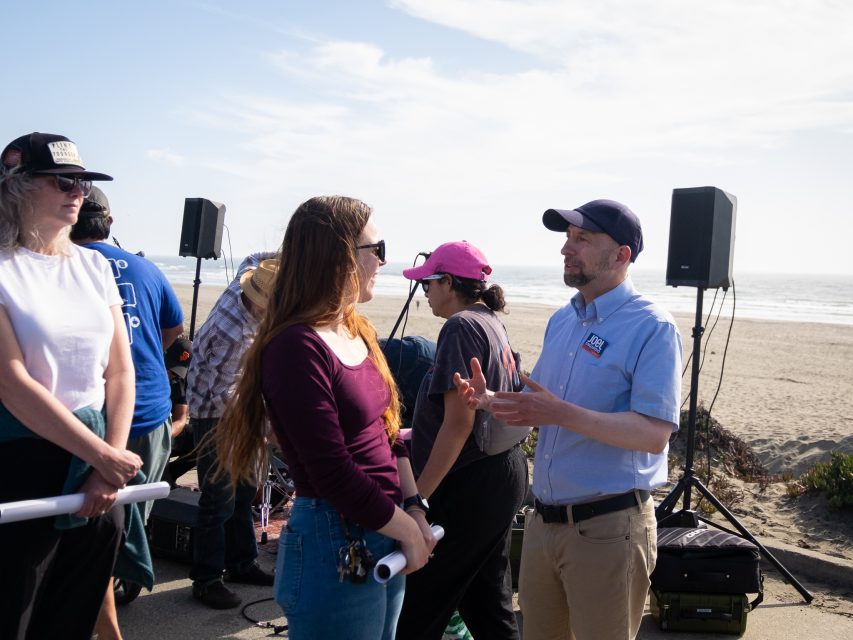
ML: Within the moderate coalition, there are some who are in favor of urbanist issues like Prop. K and upzoning, and then there are some who are against them. Do you think that these two groups of moderates have enough in common to continue forming a political coalition?
JE: I do a seminar called SF Politics 101, and I try to explain to people what I call the million shades of blue in San Francisco. You have to approach local politics like it’s a national primary. A Democrat is not just a Democrat. Are they a Pete Buttigieg Democrat or are they a Bernie Sanders Democrat or a Kamala Harris Democrat?
The moderates definitely built a coalition of urbanists and anti-urbanists, because they came together on public safety and education. They ignored the giant pink elephant in the room of housing and transportation until it reared its ugly head.
Once schools and public safety got under control, now it’s time to talk about housing and roads and parks and bike lanes. Now you see the schism, because there’s less to coalesce around.
Even Republican NIMBYs and some very far left progressives might completely disagree on a whole range of issues, but they do agree on not wanting any apartment buildings in their neighborhood. There’s a lot of strange bedfellows in San Francisco at the moment. It’ll be interesting to see how it all unfolds.
ML: Got any predictions?
JE: Given that I called it an unholy alliance, I don’t think it’s going to end well with people on the extreme right and extreme left coming together on the apartment-building issue. Nothing good can come from that.
ML: Do you think these divisions will create opportunities for progressives in this upcoming election cycle?
JE: Cynical politicians are going to use any wedge issue possible.
When it comes to Sunset Dunes, I think the only reason to put this back on the ballot next June is to cynically use it as a wedge issue, because it’s not in the best interests of the city to re-litigate this, or to even return it to a highway.
How is the park today harming people? It is not. There is no harm. Cars are getting where they need to go. There is only benefit. We’re seeing increased small business sales. We’re seeing benefit to the environment; that dune restoration potential, and just the well-being of everyone who goes out there.
ML: Where’s the YIMBY progressive candidate? Is that not a coalition in the city?
JE: Had I survived this recall, you were going to see an interesting story where I was going to move more to the progressive side. These crazies who might have supported me in 2022? Good riddance. They’ve shown their true colors. I don’t want to be a part of that.
ML: What do you mean, move progressive?
JE: I’m always characterized as the most conservative, which is so not true. When the Chronicle did the analysis of all the board members, I’m closer to Chyanne and Melgar in that analysis.
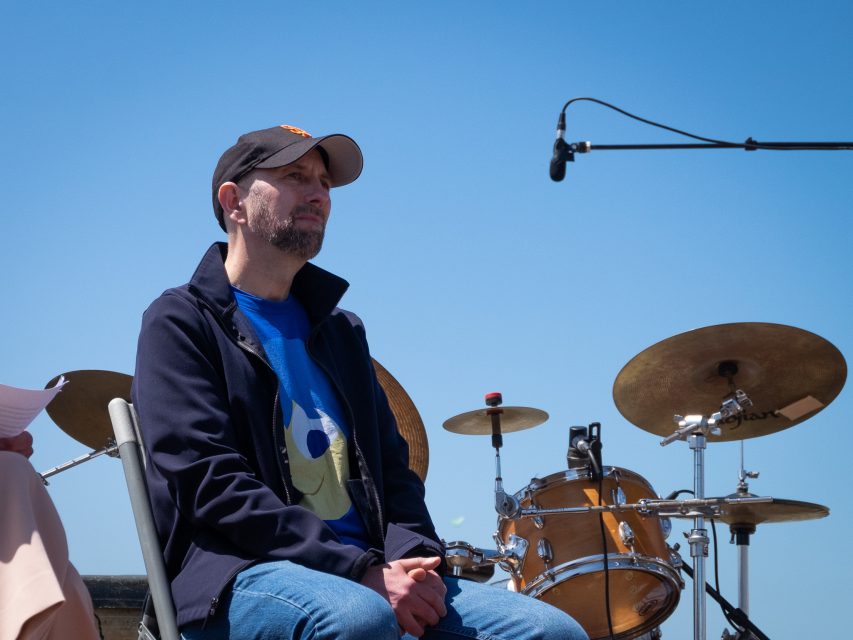
ML: Having now been on the other side of a recall, do you regret working on the school board recall before?
[In 2022, Engardio helped organize the recalls of three school board members. He also supported the recall of former District Attorney Chesa Boudin.]
JE: I’m the last person to say there should be no recalls, given my history with recalls.
Maybe it’s too easy to recall someone. Maybe the bar should be higher. Maybe there should be some more clear definition of what’s the justification for a recall.
I think there’s room to debate this. In my recall, the action I took was signing to put something on the ballot. I got recalled because I supported democracy.
Ultimately, it’s for the people to decide. We’ll see how much more the recall fever goes. Now people are emboldened, and they’re gunning for other supervisors. Maybe there’ll be more appetite to reform recalls if more people get recalled.
ML: Do you think any of your soon-to-be-former colleagues should be worried about recalls?
JE: My recall certainly had a chilling effect on anyone who wants to do anything bold or necessary.
I also believe that the only way that San Francisco is going to realize its full potential is to let ourselves do bold things. We can’t be the most progressive city that fears change. We have to be the most progressive city that embraces the future. We need to do things to improve our city. We can’t just be operating out of fear.
ML: Who do you think should replace you?
JE: That’s for the mayor to decide. I just hope the person will focus on constituent services. That’s something that was near and dear to my heart, to actually focus on the things that we can do to improve people’s lives.
[“Constituent services” are, essentially, the work of tending to the needs of voters in one’s district].

ML: How did you become a journalist?
JE: It goes back to fourth grade. I had this epiphany. We had a little school newspaper, and I volunteered for it. I realized, “Wait, I get to ask the teachers questions. I get to go get a hall pass and walk around the school and go places where people aren’t supposed to go.” And I liked that idea.
I always worked on my school newspaper, in junior high school, in high school. I was the editor of my high-school newspaper, and worked on the newspaper in college. I just had a passion for journalism.
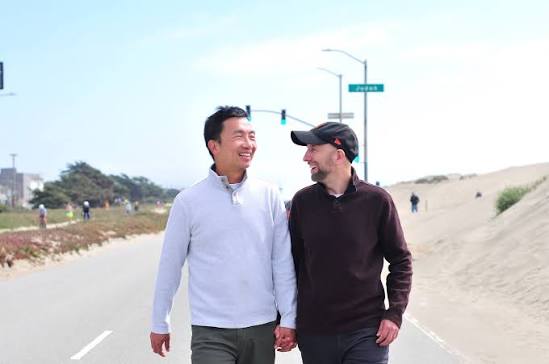
I came out to San Francisco because I was a gay kid growing up in Michigan in the 1980s — which was not a great place to be a gay kid — and ultimately thought, “I gotta get to San Francisco.” So I came out here in the late ’90s and met my husband out here, and built a good life.
ML: Did you enjoy covering City Hall?
JE: As a journalist, I remember thinking to myself, “I could do that better.” Or, “Why did they do that boneheaded thing?” It’s just like, “Really? This is the person who’s the elected official? They’re not that great.” [Engardio laughs.]
That kind of planted the seed to actually run myself.
As you know, the industry imploded. I had to use those skills in other ways. I went and worked for the American Civil Liberties Union and used my journalism skills to find plaintiffs for lawsuits.
This was during the time about 20 years ago when states were running constitutional amendments to ban same sex marriage. My job was to find the couples that we would use to fight those cases.
They would have to meet the legal criteria that the ACLU needed for the case. We also found other criteria that weren’t necessarily legal, but could win in the court of public opinion. Stories. Humanizing the issue.
We lost every single case. But in the face of all that loss, I actually didn’t feel despondent. I felt like we were planting the seeds.
Within ten years, same-sex marriage was legal nationwide. But it is only because people started to hear the stories of same-sex couples.
I remember seeing polls on same-sex marriage where it would say something like “35 percent of Americans support same sex marriage, 65 percent opposed.” And everyone’s like, “Oh my gosh, this is terrible!”
And I thought, “Wait a minute! 35 percent will let same sex couples get married? This is amazing.” Because five years ago, it was zero.
It made me realize, “Wow, in my lifetime, I’m going to be able to get married.” Because I could see there was this not-insignificant minority that believed in something that just a few years earlier was considered impossible. And that number was only moving in the right direction.
To connect it to Sunset Dunes — if you look at Prop. K, 34 percent of the people said, “Yes, let’s make the Great Highway a park.” That is mind-blowing. If you go back just five and certainly 10 years ago, it certainly would have been zero.
No one could even fathom the Great Highway, a highway that had been there for 100 years, to ever be anything other than a highway.
That number is only going to grow higher. Those are the people that I’m with, because I feel that they are the ones on the right side of history.
ML: At the board meeting on Sept. 30 you gave a goodbye speech. You compared yourself to Jimmy Carter. Why was that the analogy you decided to make?
JE: I’ve always been a fan of Jimmy Carter. I’ve had this plaque on my desk that says, “What would Jimmy Carter do?”
You look at the man: He lived to be 100 years old, was very revered in what he accomplished, even though he might not have been popular at certain moments in time. Ultimately, he had the courage to stand by his convictions and try to make the world a better place.
If you’re going to emulate somebody, to me, it seems like there’s no one better than Jimmy Carter. Who would not want to have that legacy to live a long, full life and to have contributed so much to make the world better?
ML: What do you think of your send-off at the Board?
JE: I took a little time to just look around at my surroundings: The ornate ceiling and the walls and the clock. And just to appreciate and savor the privilege to be there. There’s a lot of people who want to be supervisors, but don’t get to sit in those seats.
In almost three years I’ve been here, I’ve always walked up the stairs — never taken the elevator — just to remind myself of how special this seat is, that it’s not forever, and that while you’re here, make the most of it and be grateful.
The break room, it’s actually [board clerk] Angela Calvillo‘s conference room, but she opens it up during board meetings so board members can sit back there and take a break, especially if it’s long late night meetings. She has a little bowl of candy that’s back there.
But right in a corner in that break room, there’s a little picture of Harvey Milk, because that’s where he was assassinated. In 1978, the supervisors had cubicles on the other side of the board chamber that went along the windows. That corner of that room is where Harvey Milk’s cubicle was and that’s where he was found.
It can be a sobering moment where you just think about what life is all about, right? Just putting things in perspective, thinking about the legacy that Harvey left and how it was cut short.
I’m very grateful that Angela has that tribute to Harvey in her office. So I went back during the last meeting, just for one last time, to just commune with that picture by the window.
ML: How has your life changed since the recall?
JE: I have more time with my husband, so he’s happy for that. I didn’t have any vacation this year, because August recess I was knocking on doors five hours a day. I’m looking forward to taking a break and then just resetting and seeing how I can contribute.
I’m still passionate about a lot of things. I want to make sure that we save Sunset Dunes. I want to make sure that we can create the housing we need for our kids and grandkids. And I just want to do whatever I can to fight Trump and make sure San Francisco lives up to its values.
“My recall certainly had a chilling effect on anyone who wants to do anything bold or necessary.”
Bold or necessary like criminal justice reform (Boudin) or DEI at Lowell (Collins, Lopez, Maoliga)??
Bold and necessary like stripping ADU’s of rent control protection?
Rent control should never have applied in those cases anyway.
I don’t like Joel but he was right about that.
This is the same “David” who wants only Millionaires in SF.
Get a life David.
You don’t decide what “should” be by dictate.
You don’t know what you’re talking about. ADU program expediting was specifically aimed at low-income renters, that’s literally why the program was put in at all. Stripping out renter’s rights and making them vulnerable to gouging doesn’t create stability of residency, as anyone who can think past their nose can see. Better luck with your proclamations in the future, King. Try researching a bit first.
“Coming into the office, I met with all sides — and no one was backing down. We had a deadline of the pilot expiring this year. ”
The OBVIOUS solution would have been to extend the compromise that was already agreed to and (if bitterly) swallowed and accepted by both sides.
But no, he had to LIE and slip in his pet project at the last possible second to avoid the “other side” (the large majority of Sunset residents, families) having any chance to oppose the measure and organize against it. Well, he did that, and they organized anyway – TO FIRE HIS LYING HIDE OUT OF A CANNON.
Joel you are a shameless, baldfaced, unapologetic liar and charlatan. Shame on you until you move away, you disgustingly entitled yuppie transplant. You will never be a Sunset and you never were.
@Pete – Nothing obvious about that, not even if you type it in capital letters.
As has been explained to you already, the cars-first people were the ones behind Prop I, and Prop I very explicitly attempted to destroy ✩The✩Compromise✩ “that was already agreed to.” And as has also been explained to you already, ✩The✩Compromise✩ included an expiration date. In this interview, Joel is clear about the choices the Supervisors had for that expiration date.
But when the cars-first people launched their recall tantrum, suddenly they were in favor of ✩The✩Compromise✩ as if it was the most ingenious and OBVIOUS-IN-ALL-CAPS solution ever devised. How dare anybody not agree with compromise, after all?
This line of argument is ever so compelling, if only to people who don’t keep track.
If you don’t see something as obvious, it’s still obvious to everyone else.
We won. Engardio is gone. You didn’t get a say, and rightly not.
Because you don’t live in the district.
The compromise was already in place, Engardio blew it up, and with his lies he blew up his political future. Yes, it is and was obvious.
You just don’t understand, that’s ok.
You don’t want compromise because you’re a bicycle militant.
We get it; and you don’t get a say in our district.
@NP and @RS – Your vapid ad hominem ranting doesn’t exactly dispel the point that this was just a tantrum.
You don’t have a line of argument, obfuscator.
This loser has no idea why people are mad at him for lying to their faces.
He knows…. he just doesn’t have the testicles to admit it to himself. It’s interesting how he changes his facts in every interview. He says he approached people from both sides before putting Prop K on the ballot? A lie. And it was 50-50 between those he spoke to who wanted it and those who didn’t? A total lie.
He still does not acknowledge that he betrayed his constituents, the worst thing an elected official can do. 2,000 words of self-serving excuses and rationalizations do not change that simple fact.
@David – Did you even read the interview? Judging from Prop I, he guessed that his constituents were 50/50 on the issue, and was surprised to find otherwise. That is not betrayal, it’s a miscalculation.
It’s obviously both, nice try. He lied. It’s a betrayal and he was fired accordingly. You don’t live in the district, do you?
@Pete – “Yer not from aroun’ here and we don’t take kindly to strangers in these parts.”
@NP and @RS – The question wasn’t about whether I voted, the reactionary “yer not from aroun’ here” challenge is simply about commenting on a [checks notes] Mission Local site.
So, are you two from aroun’ here, i.e. the Mission? Do you deserve to voice an opinion if you are/aren’t?
No, if you don’t live in the district you A: weren’t lied to and abandoned by Engardio and B: Don’t get a vote.
You’re a tourist here.
That’s right, you don’t live in the district = you don’t get a vote.
Carpetbag along now.
If only there was some other way for an elected official to figure out how his constituents feel about an issue!
I’m sure he thought long and hard on this while he knocked on thousands of doors.
“No one has a crystal ball, and I’ve knocked on thousands of doors, but who could possibly remember the stated policy preferences of the majority of them? Who could ask their constituents what they think? I’m not superman- I’ve come to accept that now.”
Prop I was supported by the San Francisco Labor Council, Coalition for San Francisco Neighborhoods, and Fiona Ma, California State Treasurer, Coalition for San Francisco Neighborhoods, District 11 Council, Concerned Residents of the Sunset, East Mission Improvement Association, and Save Our Amazing Richmond, Older Women’s League – Political Action Committee and San Francisco Gray Panthers, The Arc San Francisco and Access Advisory Support Group of the Fine Arts Museums of San Francisco.
Is he saying Fiona Ma was for the recall?
Is he saying all Chinese-American Democrats are alike?
It was a one off election with nothing else on the ballot. Historically off cycle elections have lower turnout, and this was the most off cycle election it could be. So the people who were the most motivated the recallers voted. I think the results would have been a lot closer if it was during a general election.
There are 50,000 registered voters in D4. Only 21,000 voted in the recall election. 13,000 people decided to recall Engardio! What is wrong with people? Why dont they vote?
No, the Sunset DISTRICT voted to recall the liar.
It was funded with local small dollar donations. Not Google Lawyer or Benioff BS cash from tourists. Locals voted his lying ass out.
Deal with it.
They had no reason to support this carpetbagging liar.
Why do you assume that if more registered voters went to the polls, the result would have been different?
Plenty of reactionary NIMBY nativism from the “pro-recall-of-Engardio” crowd!
By all means expend more negative energy and as many $’s as you choose trying to reverse Prop K via another ballot initiative.
Sunset nativists don’t own the (former) Great Highway and the beat down from the rest of the City will be even greater the next time around. — if such a idiotic backward-looking measure somehow qualifies for the ballot.
Sunset Dunes Park, in its infancy, is already a great and lasting tribute to Supervisor Engardio’s outstanding public service.
Thank you Joel!
Sunset Beach was always a park, now it’s a traffic jam.
Thanks Joel, YOU ARE FIRED LIAR!
Not “bold” and NOT necessary, he made the Sunset streets less safe for residents and he overrode his district’s needs for those of his Billionaire backers.
No Fraud, you lied. Boldly GTFO, it’s necessary. We can’t stand your BS.
Closing a single road is not “environmentalism” – people just go around your lies.
“Because it’s a campaign, there’s going to be all kinds of campaign tactics. There can be disinformation and misinformation.”
The irony of this lying putz is lost on himself.
Good riddance to this guy. Chameleon? No thanks.
“ Had I survived this recall, you were going to see an interesting story where I was going to move more to the progressive side”
I appreciate the BART analogy. Driving down 19th Ave packed with cars is one of the reasons people in the west side are loathe to lose a major north-south roadway. How many of those cars could have been people on BART instead, if politicians of that era had more courage to lead for the future?
San Francisco, including our western neighborhoods, will change over the coming decades. We all need to think about what we want that to look like and start working for the change we want to see. A park that makes our beautiful coastline more of a destination and a place for recreation is a great start.
I share concerns about traffic and road safety with some of those who voted for the recall – I’m curious to hear what solutions they imagine? I bet there’s some common ground we all can work on.
Thanks, Joel, from your west-side neighbor!
Joel lied, first and foremost. “Thanks, liar, but no thanks” applies.
BART is not coming. MUNI is scaling down to meet budget realities.
You faux-futurist transit types need to get real.
Thanks for nothing Joel, from your west-side neighbor who fired you!
Traffic on weekends and during events is ridiculous. It can take almost an hour just to get past Golden Gate Park either direction.
Joel Engardio is a master liar and will be known for nothing more than that.
He can’t answer a straightforward question without twisting and turning his answers. He can’t read his constituents political sensibilities. From what I read here, it’s not that surprising that he was recalled.
Engardio prioritized his own vision over what impacted his own constituents. Good riddance. I used to go to Ocean Beach/Beach Chalet from Pacifica, and used to commute to USF. This change doubles commute time to that area, drives massive traffic through local neighborhoods that weren’t built for this, and has turned 19th into a nightmare on a regular basis. He celebrates this “victory” as “progress”. Glad you were able to vote him out, but he learned nothing.
“Kids and grandkids” can’t AFFORD the market-rate condo towers you promote.
You’re an effing liar. Take a vacation and don’t come back.
Clueless red herring talking point of YIMBYs and breeders: living, breathing San Franciscans must be ritually removed so that our unconsummated, unborn babies might one day afford to buy a home in the city. 🤢🤮
The park should be named SOB (Settler-Occupier Battle) Park. 🙄