


For a hustling young jazz musician coming of age in the early years of the 21st century, the Mission District was an irresistible proving ground.
Growing up in Berkeley and then as an undergrad at Stanford University, Samuel Adams was drawn back again and again as a skilled bassist hungry for new experiences, frequenting jam sessions at Bruno’s and gigging at Amnesia.
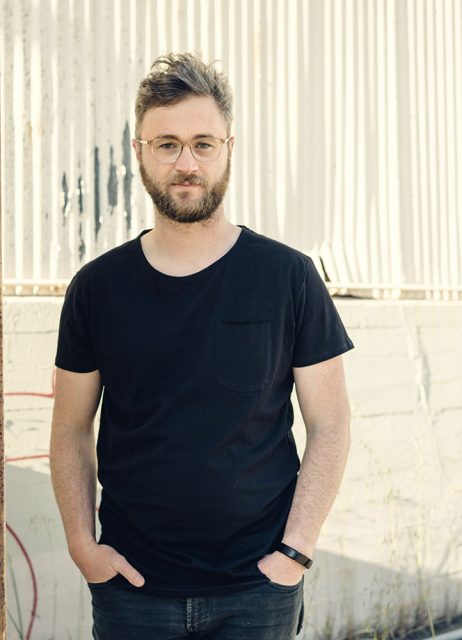
“I still feel a musical kinship to the Mission,” he said. “But it’s changed a lot since those years.”
When it comes to transformations, Adams could be talking about himself. Now living in Washington, where his wife, violinist Helen Kim, is associate concertmaster of the Seattle Symphony, Adams returns to the Mission as one of the featured composers at Other Minds 29.
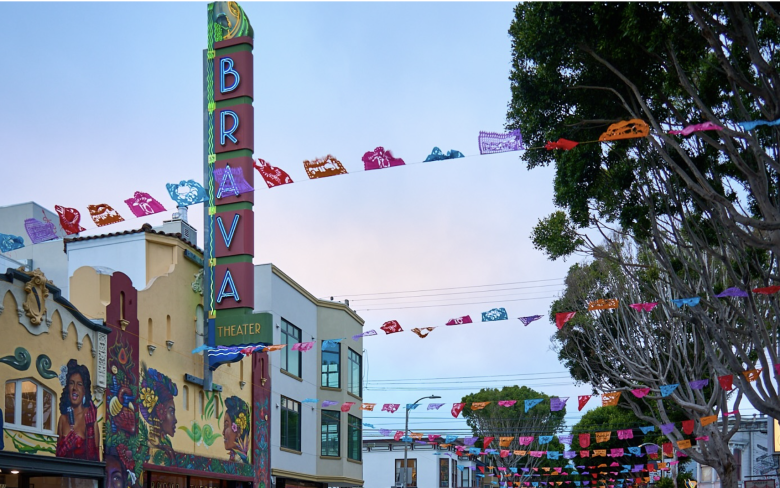
Running Oct. 16-19 at Brava Theater, the new music festival has carved out a singular West Coast niche presenting an far-flung constellation of performers and composers exploring a myriad of experimental musical traditions and techniques.
The son of acclaimed composer John Adams, who attained international fame with his 1987 opera “Nixon In China,” he’s largely given up the jazz life over the past decade as a steady stream of commissions keep him busy.
“I’m really lucky,” he said. “That’s basically what I do: Wake up and go to my studio and work on pieces people have asked me for.”
The work has kept him closely tied to the Bay Area, with projects like the San Francisco Symphony’s 2023 world premiere of his orchestral work “No Such Spring” conducted by Esa-Pekka Salonen.
Next week, Friction Quartet performs his “String Quartet No. 3” Saturday, Oct. 18, at Berkeley Piano Club and Sunday, Oct. 19, at Noe Valley Ministry.
But for a wide-spectrum look at Adams work and creative world, Oct. 17’s OM29 program is singularly revelatory.
Friction Quartet is also part of the program, performing Adams’ early music-influenced piece “Sundial” with East Bay-based Japanese percussion maser Haruka Fujii (a member of the Silkroad Ensemble who bridged the transition from Yo-Yo Ma to Rhiannon Giddens).
Other Adams pieces include “Violin Diptych,” featuring violinist Helen Kim and pianist Conor Hanick, who also performs Adams’ solo piano “Études.”
Berkeley pianist Sarah Cahill, a catalyst for the creation of new music since she was a teenager wunderkind in the 1970s, plays the world premiere of Adams’ “Prelude: Hammer the Sky Bright.”
In one of many fascinating intergenerational connections running through the evening, John Adams wrote one of his first notable pieces for Cahill, “China Gates,” and she’s commissioned several works from Samuel Adams.
“Sarah is an icon of American contemporary music, and I’ve known her since I was a small child,” he said, noting that she first commissioned him to write a piece in honor of composer Terry Riley’s 80th birthday in 2015.
“For this concert, a big part of the evening is reserved for the memory of Ingram Marshall, who was close friend of my father’s in the 1970s when they were hanging out as composer bums on the San Francisco scene.”
Adams got to know Marshall well as a child, and credits his music with providing one of his earliest epiphanies.
Around the age of 9, he was at a performance in San Francisco, “maybe at Theater Artaud, and it was vintage Ingram Marshall, this ambient music with an opiate-like quality that washed over and transfixed me,” he recalled. “It was the most important listening experience of my life.”
He went on to study with Marshall formally for a year, and they remained close until his death in 2022 at 80.
Adams wrote “Prelude: Hammer the Sky Bright” in his honor for solo piano and electronics, “paying tribute to the spaciousness and directness and unabashed sentimentality of his music,” he said.
“I mean sentimentality in a way that never feels saccharine or cloying. There is always something deep and human about it.”
Friday’s program concludes with Marshall’s “Dark Waters” featuring Libby Van Cleve on English horn with recorded media by the composer, a piece partly inspired by Sibelius’s Fifth Symphony.
For composer Charles Amirkhanian, co-founder of Other Minds and its longtime guiding spirit, Marshall’s influence runs through much of OM29.
“Everything Samuel’s done lately is unique to his own vision, but not predictable at all,” Amirkhanian said.
“He uses the melodic line of his music to lead you along, and it’s not formulaic. It’s intuitive. He’s got a good feeling for what works. And because of his upbringing, he was influenced not only his father, who’s music is very unlike Samuel’s, but very much by being around Ingram.”
Other Minds festivals are known for cornucopian offerings, but even by the organization’s standards OM29 overflows with intriguing pieces and players.
The opening program on Thursday features Bay Area composer, vocalist and electronics wizard Pamela Z’s “Simultaneous,” a playfully lapidary work that includes Kyle Bruckmann on oboe and English horn, Del Sol Quartet’s Charlton Lee on viola, cellist Monica Scott, and percussionist Divesh Karamchandani.
Sharing the bill is Peter Garland’s “Songs of Exile and Wine” performed by soprano Maria Tegzes with pianist Geoffrey Burleson.
Both Ingram and Garland were classmates at CalArts in the 1970s, “and we’re presenting Garland’s song cycle, which has never been done well before,” Amirkhanian said.
“He’s also written a book that we’re publishing, ‘Ingram Marshall: A Personal and Musical Appreciation,’ a small paperback maybe 100 pages,” which details their formative years studying with Harold Budd at CalArts.
The centerpiece of Saturday’s program is “Three Pieces for Drum Quartet” by James Tenney, with world premiere of Nancy Karp’s choreography for four dancers.
Harp explorer Zeena Parkins, known for her work with Björk, also performs her “Modesty of the Magic Thing” with percussion maestro William Winant.
And Sunday’s smörgåsbord ranges far and wide, with a program focusing on works by composer and animator, and instrument designer Brian Baumbusch, including the dazzling piano duo ZOFO (Eva-Maria Zimmermann and Keisuke Nakagoshi) performing his “Tombeau” with contemporary Balinese gamelan ensemble Nata Swara.
ZOFO also performs Colin McPhee’s Balinese ceremonial music transcriptions, and “KoSo” by Putu Septa.
“This is one of the festivals where we got an amazing number of people we’ve been trying to get for years,” Amirkhanian said. “I’ve been trying to get Sam, but he’s so in demand. He’s not a self-promoter at all. Think of what would happen if he was.”